
Reliable gas heat for Orange County's long Vermont winters.
Zone 6A winters mean seven-plus months of heating season across Chelsea, Randolph, Bradford, and every hill town in between. Get matched with a trusted local dealer who knows propane delivery routes, venting, and what actually works in an old Vermont farmhouse.
Every Project Starts From One of These Five Situations
Consistent heat, without the wood pile.
Orange County sits in Vermont's climate zone 6A, a designation that puts it in the same heating-load category as Duluth, Minnesota—long, cold winters where a reliable secondary heat source isn't a luxury, it's part of how houses here survive January and February. Most of the county is rural, with towns like Chelsea, Randolph, Bradford, and Thetford spread across hills and river valleys, and very few of those addresses sit anywhere near a natural gas main. That single fact shapes almost every gas fireplace decision in the county: this is propane territory, full stop.
For homeowners weighing wood against gas, the calculus in Orange County often comes down to convenience versus tradition. This county has deep roots in sugar maple, yellow birch, and white ash woodlots, and plenty of households still burn cordwood as primary heat. But a gas fireplace or insert adds something wood can't: instant, thermostat-controlled warmth in a mudroom, a converted farmhouse parlor, or a main living space where nobody wants to tend a fire every two hours. A propane insert set into an old masonry fireplace is one of the most common upgrades a local dealer sees here—it keeps the original hearth look while giving the house heat that turns on with a switch, even during the ice storms that periodically take down power lines in this part of Vermont.
Three steps. No salesperson until you're ready.
Tell us about your project
Your zip code, your situation, and the fuel you're leaning toward—or let the answers point you to one.
See what's actually available
The brands dealers within 100 miles genuinely carry—real options, never a catalog mirage.
Get your dealer & Project Guide
A trusted local dealer, plus the free Project Guide & Parts List that names every component of the job.
Frequently Asked Questions
How much does a gas fireplace installation cost in Orange County?
Because almost every installation in Orange County runs on propane rather than natural gas, cost depends heavily on whether the home already has a propane tank and line in place. A propane insert going into an existing masonry fireplace with propane already on-site is the most affordable path. A new direct-vent fireplace in a room addition or renovation—with framing, venting through an exterior wall, and a new propane line run from an existing or new tank—sits at the higher end. Homes needing a first-time propane tank installation should budget for that as a separate line item from the fireplace itself. A local dealer can give a firm number after seeing the space and the existing fuel setup.
Is natural gas available anywhere in Orange County, or is it all propane?
Practically speaking, it's propane. Orange County is rural and low-density—even its larger towns like Randolph and Bradford don't have natural gas mains running to most residential streets. If you're unsure whether your specific address has natural gas access, it's worth a quick call to check, but the overwhelming majority of gas fireplace installs in this county are propane-fueled, supplied by a regional delivery company with an on-site tank. Every gas fireplace model sold locally can be configured for propane, so this isn't a limitation on your choice of unit—it just determines the fuel line work your installer plans for.
Can I convert my existing wood fireplace to gas?
Yes, and it's a common project in Orange County's older farmhouses and colonial-era homes, many of which have a serviceable masonry chimney but a fireplace that's more decorative than functional at this point. A propane insert typically slides into that existing opening, uses the chimney (fitted with a stainless liner) or a separate direct-vent path for exhaust, and converts a drafty, rarely-used hearth into a heat source that can genuinely offset the furnace or wood stove during shoulder-season months. The main added cost beyond the insert itself is usually the propane line—if the house already has a tank feeding a furnace or range, tying in a line to the fireplace is a relatively simple job for a licensed installer.
Will my gas fireplace work during a power outage?
Most will, which matters in a county where ice storms and windthrow regularly take down rural power lines for hours or days at a time. Gas fireplaces with intermittent pilot ignition (IPI) run on a battery backup that kicks in the moment power drops, so the unit lights and operates normally off the batteries. It's worth checking those batteries each fall before heating season starts. Some manufacturers—Valor is the notable one—go a step further with a pilot that generates its own electricity through a thermocouple, meaning the fireplace never depends on batteries at all. For an Orange County household treating the fireplace as real backup heat, that's worth asking your local dealer about directly.
What's the difference between a gas fireplace, gas insert, and gas stove?
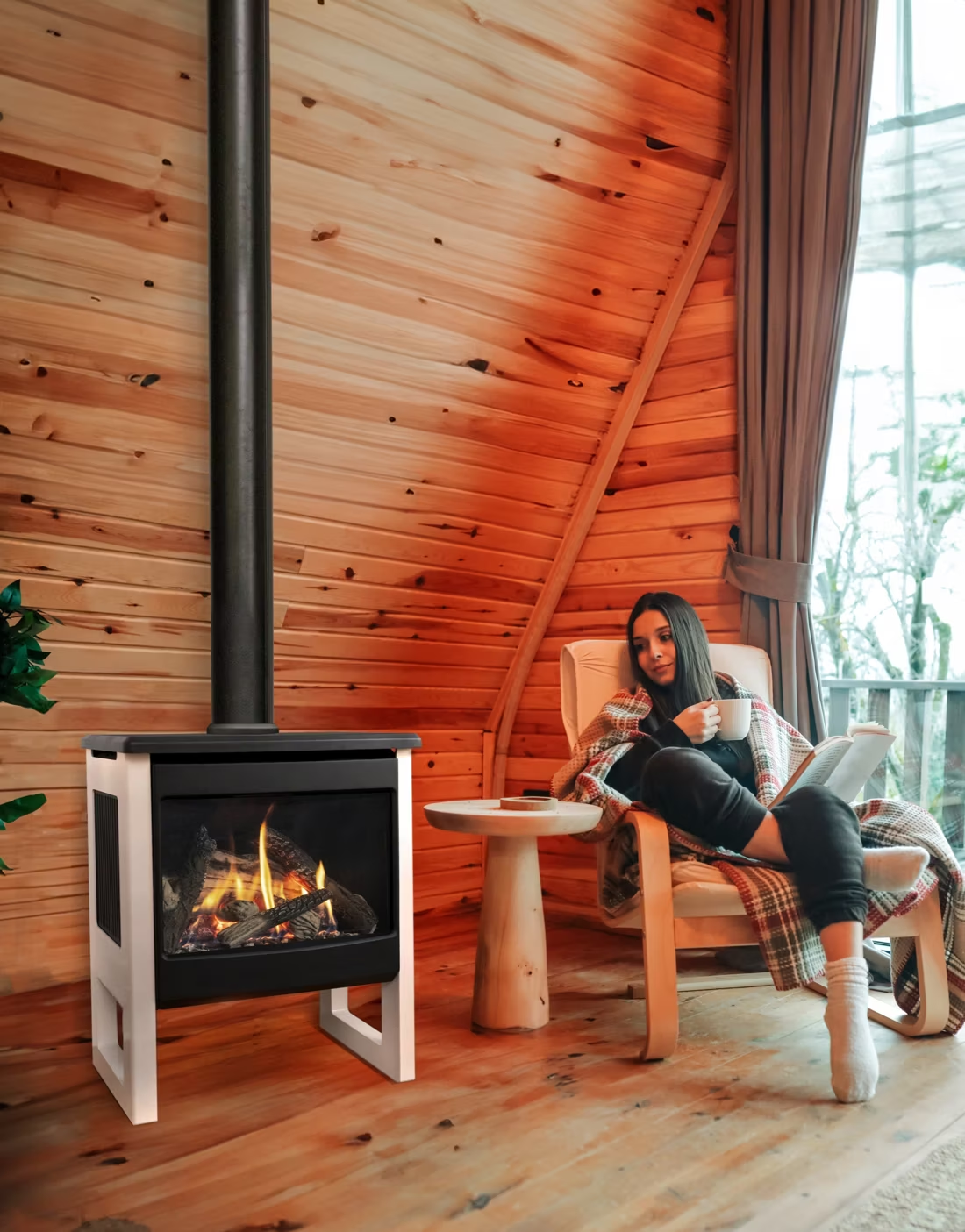
A gas fireplace is a built-in unit framed into a wall, typically chosen for new construction or a full remodel. A gas insert is sized to slide into an existing masonry fireplace opening, which makes it the natural fit for Orange County's older housing stock with existing chimneys. A gas stove is a freestanding cabinet-style unit that sits on the floor, similar in footprint to a wood stove, and works well in a room without any existing fireplace opening—a converted shed, a barn apartment, or a room addition. For most homeowners here upgrading an existing hearth, an insert is the straightforward answer; for new spaces, a stove or built-in fireplace makes more sense.
Do I need a permit to install a gas fireplace in Orange County?
Yes, in most cases. Vermont requires a permit for new fuel-gas appliance installations, and propane line work specifically needs to be done by a licensed gas fitter—this isn't a DIY-friendly step, and skipping it can create real safety and insurance problems. Because Orange County towns handle local permitting individually, requirements and turnaround can vary between Chelsea, Randolph, Bradford, and the smaller townships. A local hearth dealer who regularly works across the county will know the process for your specific town and typically handles the paperwork as part of the installation.
What's the difference between vented and vent-free gas fireplaces?
Vented (direct-vent) gas fireplaces draw combustion air from outside and exhaust the byproducts back outside through a sealed pipe system—they're the standard choice and the safest option in a well-sealed, energy-efficient Vermont home. Vent-free units burn fuel directly into the living space without external venting; they're legal in Vermont but come with strict room-size and ventilation requirements, and they add moisture and combustion byproducts to indoor air. In a zone 6A climate where homes are built tight to conserve heat, that added humidity and air quality tradeoff matters more than it would in a leakier or milder climate. Most Orange County dealers steer homeowners toward direct-vent units for exactly that reason.
How often should my gas fireplace be serviced?
Plan on an annual inspection, ideally in late summer or early fall before the seven-plus-month Orange County heating season gets underway. A technician will check the burner and pilot assembly, inspect the venting for blockage or damage, verify the propane line connections, and clean the glass and firebox interior. This is a much smaller job than a wood chimney sweep, but it matters just as much for safety, especially on units that ran daily through a hard Vermont winter. Expect to pay roughly $150 to $250 for a standard annual service call from a local provider.
Gas vs. wood—which is right for my home in Orange County?
Wood remains a strong choice here given the county's abundance of sugar maple, yellow birch, and white ash woodlots—many homeowners cut or buy cordwood locally, and a wood stove keeps running with zero dependence on a propane truck making it up an icy back road. Gas offers the tradeoff of instant, no-mess heat with thermostat control, which is hard to beat for daily convenience in a main living space or a room where nobody wants to manage a fire every few hours. Given how long and cold the heating season runs in zone 6A, many Orange County households end up running both: wood as primary or backup heat, gas for the rooms where convenience wins out. A local dealer can walk through which rooms and which fuel make sense for your specific house.
Is my gas fireplace wasting gas?
If it was installed more than 15 years ago, probably. Older gas fireplaces keep a standing pilot light burning all the time, and that little flame can cost a couple hundred dollars a year. Newer models use pilot-on-demand ignition—the pilot lights only when you use the fireplace and goes out when you turn it off.
Why is my open fireplace making my house colder?
Open fireplaces suck—literally. As the fire burns, it consumes air your furnace already paid to heat and pulls it out through the chimney, so the house is actually colder after the fire goes out than before you lit it. An insert fixes this: it seals the chimney, puts fixed glass across the front, and turns that hole in your house into a real heat source.
What is an in-home preview and do I need one?
It's a visit where a hearth professional measures your space, confirms the model you picked actually works in your home, and walks the specs—framing, gas line, venting, finish work—before anything is ordered. Some details you just can't know until you see the house. Never make a down payment without one; it's the single most-skipped step that burns buyers.
Can a fireplace actually lower my heating bill?
Yes—by creating a comfort zone. A furnace heats every square foot of the house just to warm the one room you're in; a gas fireplace on low burns roughly a sixth of the gas a typical furnace does. Set the furnace around 55–60 degrees as a baseline, then heat the rooms your family actually uses. Families who heat this way commonly save $20–$60 a month.
Stove and Fireplace Dealers in Orange County
Listings include WhyFire partner dealers, dealers we have verified as authorized for the brands we recommend, and established local businesses that carry hearth products. Every listing shows which one it is. The ones marked Preferred run on WhyFire's software, so they can show you real pricing and book your appointment right here. No manufacturer pays for placement. How we verify dealers →
Chimney Care Inc.
Chimney Savers
Chimney Sweep Fireplace Shop
Mills Hardware Inc.
Chimney Works
Pellergy, LLC
AppleKnockers Store
Find your gas fireplace in Orange County.
Tell us about your home and heating goals, and we'll match you with a trusted local dealer and put together a free Project Guide & Parts List—the exact parts, including the vent kit, for your gas fireplace project in Orange County.
Find Your Fireplace →