
Reliable heat for a town with winters as long and cold as International Falls, Minnesota.
Lyndonville sits at 759 feet in Vermont's Northeast Kingdom, where winter lows average 5°F. We'll help you find a trusted local dealer who knows propane tank sizing, venting, and what actually installs here—no big-box guesswork.
Every Project Starts From One of These Five Situations
Heat on demand when the average low is five degrees.
Lyndonville is a small Caledonia County town of about 1,211 people, sitting at 759 feet with an average winter low of 5°F and a heating season about as long and cold as International Falls, Minnesota—far more demanding than most of New England. Wood heat runs deep here: sugar maple, yellow birch, American beech, white ash, and red oak are split and burned across the Northeast Kingdom, much of it cut under $20-a-cord permits through White Mountain National Forest and Green Mountain & Finger Lakes National Forest. Gas fireplaces have carved out a real role alongside that wood heat, especially for rooms where loading a stove three times a day isn't practical, or as the primary heat source for a smaller home or addition.
There's no natural gas utility serving Lyndonville, so a gas fireplace here almost always means propane, delivered and stored in a tank on your property rather than piped from a street main. The Town of Lyndonville doesn't run its own building department, so fuel gas piping work falls under the Vermont Division of Fire Safety's statewide code, and most installers who work the Northeast Kingdom regularly are used to pulling that permit directly. Electricity from Vermont Electric Cooperative or the Village of Morrisville runs around 23 cents a kWh, well above the national average, and Caledonia County sees its share of winter ice storms—both reasons local homeowners tend to ask about battery backup or standing-pilot models that keep running when the power doesn't.
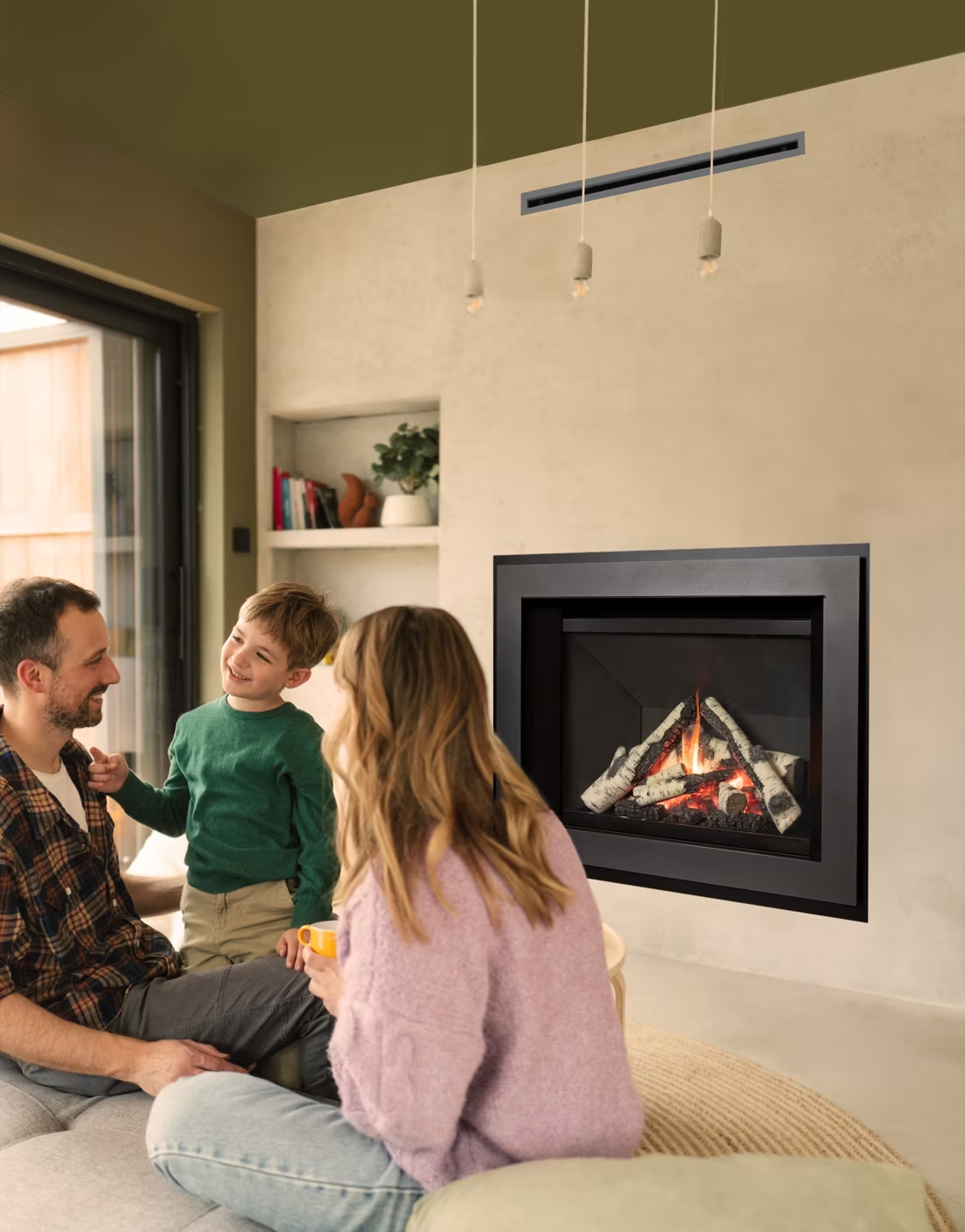
Three steps. No salesperson until you're ready.
Tell us about your project
Your zip code, your situation, and the fuel you're leaning toward—or let the answers point you to one.
See what's actually available
The brands dealers within 100 miles genuinely carry—real options, never a catalog mirage.
Get your dealer & Project Guide
A trusted local dealer, plus the free Project Guide & Parts List that names every component of the job.
Frequently Asked Questions
How much does a gas fireplace installation cost in Lyndonville?
Most propane fireplace and insert installations in Lyndonville run $4,500 to $10,000. An insert dropping into an existing masonry firebox—common in older Caledonia County farmhouses that originally burned sugar maple or yellow birch—lands toward the lower end. A new built-in unit, especially one requiring a fresh propane tank set and line run from the tank to the house, pushes toward the top. Homes already running propane for the furnace or water heater usually save on that part of the job since the supply infrastructure is already in place.
Is natural gas available in Lyndonville, or will I need propane?
Propane. There's no natural gas main serving Lyndonville, so a gas fireplace here is fed by a propane tank on your property, typically refilled by a local delivery service a few times over the heating season. This is standard across most of the Northeast Kingdom—even homes with gas-fired furnaces or ranges in town are almost always running on propane rather than piped utility gas. Your dealer will size the tank and line based on the fireplace's BTU rating plus whatever else in the house already draws from it.
Do I need a permit to install a gas fireplace in Lyndonville?
Yes. Lyndonville doesn't maintain its own building department, so fuel gas piping and appliance installation permits run through the Vermont Division of Fire Safety, which enforces the state fire and building safety code in towns without local jurisdiction. Most hearth dealers who regularly install in Caledonia County are familiar with this process and pull the permit as part of the job, along with scheduling the final inspection on the gas line and venting.
Will my gas fireplace still work during a power outage?
It depends on the ignition system, and in Lyndonville that's worth asking about given how often Northeast Kingdom ice storms knock out Vermont Electric Cooperative service for a day or more. Units with intermittent pilot ignition (IPI) rely on a battery backup that kicks in automatically. Standing-pilot or millivolt models skip batteries entirely—the pilot's own thermocouple generates enough current to run the valve and blower. With electricity here running close to 23 cents a kWh and outages a real seasonal risk, a lot of local buyers lean toward the millivolt option specifically for outage reliability.
What's the difference between a gas fireplace, insert, and stove for my house?
A gas fireplace is a built-in unit framed into a wall during new construction or a remodel. A gas insert slides into an existing masonry firebox, which is the common upgrade path in Lyndonville's older homes that originally had open fireplaces for burning American beech or white ash. A gas stove is freestanding on a hearth pad, similar in footprint to a wood stove but running on propane instead of cordwood. For most existing Caledonia County homes, converting an old masonry fireplace to a propane insert is the least disruptive option and typically the more affordable of the three.
What size gas fireplace do I need for a Lyndonville home?
With a heating season as long and cold as International Falls, Minnesota, and winter lows that regularly sit at 5°F or colder, undersizing is the bigger risk here. If the fireplace is meant to supplement a furnace, a unit in the 20,000-30,000 BTU range is usually enough for a single room. If you're leaning on it to heat a main living area or a smaller older farmhouse with limited insulation, a 30,000-40,000 BTU insert or built-in is more realistic. A local dealer will size it against your actual square footage, ceiling height, and insulation rather than guessing from the floor plan alone.
How does propane tank sizing and winter delivery work in Lyndonville?
Most households running a propane fireplace alongside other appliances use a 250- or 500-gallon tank, buried or set above ground depending on the property. Caledonia County sees heavy snow, so tank placement matters—delivery trucks need plowed, accessible routes to the tank all winter, and a tank tucked behind a snowbank by January is a problem nobody wants to discover at minus ten. Your dealer or propane supplier can advise on placement before the ground freezes, which is the easier time to dig if a new tank setup is part of the project.
Vented vs. vent-free gas fireplaces—what should I know in Lyndonville's climate?
Direct-vent units pull combustion air from outside and exhaust it back outside through sealed pipe, which is the standard choice for serious heating use and handles Lyndonville's deep cold without the condensation and backdrafting issues that can show up with vent-free units in a tightly sealed, well-insulated Vermont home. Vent-free fireplaces are legal in Vermont under the state fire code but carry strict room-volume requirements, and in a climate as cold and long-lasting as International Falls, Minnesota's winters, most local dealers steer homeowners toward direct-vent for a unit that's going to run for hours at a stretch through a long heating season.
Gas vs. wood—which makes more sense for a Lyndonville home?
Wood still wins on raw fuel cost here—sugar maple, yellow birch, and red oak are abundant, and a cutting permit through White Mountain National Forest or Green Mountain & Finger Lakes National Forest runs about $20 a cord. Wood also keeps burning without electricity, which matters during Northeast Kingdom ice storms. Propane wins on convenience: no splitting, stacking, or daily loading, and it's a cleaner option for a bedroom or home office where tending a stove isn't realistic. Plenty of Lyndonville households run both—a wood stove or insert as the primary heat source and workhorse for cold snaps, with a propane fireplace for instant heat in a secondary room or as backup if the wood supply runs low.
What's the difference between an insert and a zero-clearance fireplace?
An insert is a fireplace that slides into a pre-existing wood-burning fireplace—if you don't have one, there's nothing to insert it into. A zero-clearance fireplace is built into a framed wall, which makes it the answer for remodels and new construction. Simple test: existing masonry fireplace means insert; blank or framed wall means zero-clearance.
Is my gas fireplace wasting gas?
If it was installed more than 15 years ago, probably. Older gas fireplaces keep a standing pilot light burning all the time, and that little flame can cost a couple hundred dollars a year. Newer models use pilot-on-demand ignition—the pilot lights only when you use the fireplace and goes out when you turn it off.
Does a fireplace add value to my home?
On average, a fireplace adds back to the home about the same amount you spent installing it. Add the monthly savings from heating the rooms you actually use instead of the whole house—often hundreds of dollars a year—and the value case is strong before you even count what a fire does for how your family uses the room.
Can I install a fireplace myself?
If you're putting a fire in your house on purpose, it's best to work with an expert. Unless you're genuinely experienced in framing, gas line, vent pipe, and the national code on clearances to combustibles, have a professional do it—and ideally the same company that sells you the fireplace, so warranty, service, and liability all live under one roof.
Nearby Dealers
Hearth shops serving Lyndonville and the surrounding area. Every listing shows whether it is a WhyFire partner, a dealer we have verified as authorized for the brands we recommend, or a local business carrying hearth products. No manufacturer pays for placement. How we verify dealers →
We’ve paused dealer listings for this connection today. Enter your zip or postal code above to find dealers near you, or come back tomorrow.
Popular Gas Brands
Where each brand came from, what's inside it today, and every current model. No brand pays to be here. Not every dealer carries every brand, so enter your zip code to see what's sold near Lyndonville.
Kozy Heat
Kozy Heat was founded in 1976 by Dudley Hussong in Lakefield, Minnesota, and incorporated as Hussong Manufacturing Co., Inc. in 1978.
28 gas models →Fireplace Xtrordinair
Fireplace Xtrordinair, now often called FireplaceX, is the fireplace brand of Travis Industries, Inc., of Mukilteo, Washington.
25 gas models →Town & Country
Town & Country Fireplaces is the luxury gas fireplace brand of Pacific Energy Fireplace Products Ltd., of Duncan, British Columbia.
14 gas models →Lopi
Lopi is a wood, pellet, and gas stove brand founded by Kurt Rumens in Bellevue, Washington, in 1979.
7 gas models →Forge & Flame
Forge & Flame is the stove brand Hearth & Home Technologies introduced in August 2023 to bring Vermont Castings, Harman, and Quadra-Fire under one name.
6 gas models →Vermont Castings
Vermont Castings was founded in 1975 by Duncan Syme, the designer, and his brother-in-law Murray Howell, the business partner, in Randolph, Vermont.
6 gas models →Get your free Project Guide & Parts List for a Lyndonville gas fireplace.
Tell us about your home, your current propane setup if you have one, and whether a power outage plan matters to you—we'll help you find a trusted local dealer and send a free Project Guide & Parts List with the exact tank sizing, vent kit, and parts your project needs.
Find Your Fireplace →