
The Fastest Way to Add Heat and Ambiance to a Burlington Home.
No flue, no gas line, no permit hassle for most units—just targeted warmth for a condo, sunroom, or finished basement near Lake Champlain. Find the right unit and connect with a trusted local dealer.
Every Project Starts From One of These Five Situations
Electric heat earns its place in Vermont's coldest corners.
Burlington sits at just 97 feet above sea level on the shore of Lake Champlain, but the numbers don't play along with that low elevation—a winter heating load about like Madison, WI, and an average winter low near 13°F put Burlington in the same cold-climate tier as Madison, WI. Most homes here lean on a primary heat source, usually natural gas through Vermont Gas Systems or a wood stove burning local sugar maple and yellow birch, and treat an electric fireplace as a precise, no-installation-hassle way to add heat exactly where it's needed: a finished basement apartment, a sunroom addition, or a downtown condo where running a chimney or gas line simply isn't possible.
Green Mountain Power's residential rate runs $0.2209 per kWh, notably higher than the New England average, which is worth knowing before anyone imagines heating a whole Burlington house on electric resistance heat alone. Where electric fireplaces genuinely shine here is zone heating—warming the room you're actually sitting in without running the furnace for the whole house—plus the plug-and-play simplicity that Vermont's older Queen Anne and colonial housing stock around the Old North End and Hill Section often demands. Installation costs run $500 to $1,400 depending on whether you're plugging in a freestanding unit or having an electrician run a dedicated circuit for a built-in.
Three steps. No salesperson until you're ready.
Tell us about your project
Your zip code, your situation, and the fuel you're leaning toward—or let the answers point you to one.
See what's actually available
The brands dealers within 100 miles genuinely carry—real options, never a catalog mirage.
Get your dealer & Project Guide
A trusted local dealer, plus the free Project Guide & Parts List that names every component of the job.
Frequently Asked Questions
How much does an electric fireplace installation cost in Burlington?
Most electric fireplace projects in Burlington run $500 to $1,400. A plug-in freestanding or wall-mounted unit on the low end needs no electrical work at all—just a standard 120V outlet. A built-in electric insert or a linear wall unit that needs a dedicated 20-amp circuit runs toward the higher end once you factor in an electrician's time. Compare that to $5,000 to $11,500 for a gas fireplace install through Vermont Gas Systems territory, and it's clear why electric is the go-to for secondary rooms, rentals, and condos where a full hearth project doesn't make financial sense.
Are electric fireplaces expensive to run given Burlington's electric rates?
Green Mountain Power's residential rate of $0.2209 per kWh is on the higher side for New England, so running a 1,500-watt electric fireplace as a whole-home heat source would get costly fast—roughly $0.33 an hour at full output. That's exactly why almost nobody in Burlington uses one that way. The math works when you're heating one room you're actually occupying instead of running a furnace for the whole house, or using the unit purely for ambiance with the heater switched off, which most models allow independently of the flame effect.
Do I need a permit to install an electric fireplace in Burlington?
A plug-in freestanding or tabletop electric fireplace needs no permit—it's an appliance, not a fixed installation. A built-in electric insert or a wall-mounted unit that requires new wiring or a dedicated circuit typically needs an electrical permit through the City of Burlington Department of Permitting & Inspections, and any framed-in installation in a remodel falls under Vermont's Residential Building Energy Standards. A licensed electrician pulling the permit as part of the install is standard practice and avoids issues at resale or insurance inspection.
What's the difference between an electric insert, an electric stove, and a wall-mounted electric fireplace?
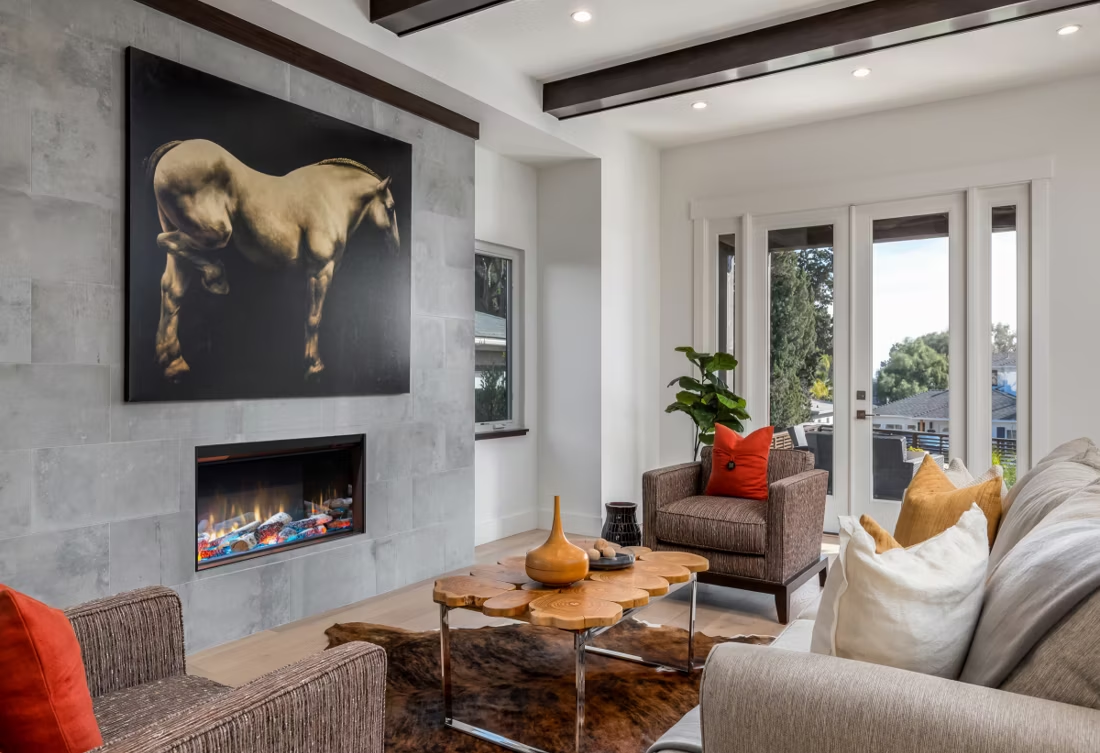
An electric insert is built to slot into an existing masonry fireplace opening, giving an old, unused Burlington fireplace real heat output and a modern flame display without touching the chimney. An electric stove is a freestanding cabinet unit styled like a wood stove—popular in cabins and camps around Chittenden County where the wood-stove look is wanted without the wood. A wall-mounted or linear electric fireplace is a flush, screen-like unit built into a wall or media console, common in newer condo builds downtown and in South End loft conversions. All three plug in or hardwire depending on the model—a local dealer can tell you which fits your specific wall or fireplace opening.
Can I install an electric fireplace in a Burlington condo or rental?
Yes, and it's one of the more common electric fireplace projects in the city given how much of Burlington's downtown and UVM-adjacent housing stock is condos, apartments, and rentals. Because most electric units need no venting, chimney, or gas line, they're often the only fireplace option that's actually allowed under a condo association's rules or a lease. Check with your building or landlord about any restrictions on wall-mounted units requiring anchoring into drywall, but a freestanding plug-in model typically needs no approval at all.
Electric vs. wood—which makes more sense for my Burlington home?
Wood remains the traditional backbone of home heating around Chittenden County, with sugar maple, yellow birch, and white ash all cut locally and permits available through the Green Mountain & Finger Lakes National Forest for $20 a cord. Wood also keeps working during the ice storms and nor'easters that periodically knock out Green Mountain Power service. Electric fireplaces can't provide backup heat during an outage, but they win on installation simplicity, cost ($500-$1,400 versus $4,500-$9,500 for wood), and zero maintenance—no chimney sweeping, no ash, no wood stacking. Many Burlington homes run both: a wood stove or insert for real heat and outage resilience, an electric unit for a bedroom or basement where convenience matters more.
Electric vs. gas fireplace—which should I choose?
Vermont Gas Systems serves much of Burlington, making gas a realistic option for most homes in the city proper. A gas fireplace or insert delivers genuine supplemental heat output and typically runs $5,000 to $11,500 installed, including venting and gas line work. An electric fireplace, by contrast, runs $500 to $1,400 and needs no gas line or venting at all, but its heat output tops out around 5,000 BTU-equivalent from a 1,500-watt heater—enough for one room, not a whole floor. If you have gas service already and want real heat in a primary living space, gas usually wins. If you're in a condo without gas access, want a quick ambiance upgrade, or are heating a small secondary room, electric is the practical choice.
Will an electric fireplace keep my home warm during a power outage?
No—an electric fireplace needs grid power to run, so it goes dark the moment Green Mountain Power service drops, which does happen during Burlington's ice storms and heavy nor'easters. If backup heat during outages matters to you, an electric unit should be a secondary or ambiance-only purchase, paired with a wood stove, wood insert, or a battery-backed gas fireplace with IPI ignition as the household's actual emergency heat source. Local dealers can walk through pairing options if resilience is part of your planning.
What should I look for in an electric fireplace for a Vermont home?
Look for a unit with a heater that can be switched off independently of the flame effect—useful for running the visual year-round without heat in warmer months, and for controlling exactly when you're paying for supplemental heat given Green Mountain Power's $0.2209 rate. A built-in thermostat with a remote is worth the small upcharge for zone-heating a specific room. For Burlington's older housing stock with plaster walls and older wiring, confirm amperage draw before committing to a hardwired linear unit—a local dealer can check whether your panel and circuit can handle it, or whether a plug-in model is the simpler path.
Do electric fireplaces actually produce heat?
Yes—most put out around 4,800–5,000 BTUs from a standard outlet, which comfortably warms a bedroom, office, or den as a comfort-zone heater. What they won't do is carry a whole house the way wood, gas, or pellet can. Think of electric as ambiance-first with honest supplemental heat: flames on with no heat in July, flames plus warmth in January.
Can I put a TV above my fireplace?
Yes—with an asterisk. Fireplaces are hot and TVs don't like heat. Either put a mantel between them to deflect rising warmth, or choose a fireplace with heat-management technology that creates a cool zone on the wall above—the wall stays around 125 degrees, barely warm, while the room still gets full heat. If you like clean lines and don't want a mantel, heat management is the answer.
Does a fireplace add value to my home?
On average, a fireplace adds back to the home about the same amount you spent installing it. Add the monthly savings from heating the rooms you actually use instead of the whole house—often hundreds of dollars a year—and the value case is strong before you even count what a fire does for how your family uses the room.
Can a fireplace actually lower my heating bill?
Yes—by creating a comfort zone. A furnace heats every square foot of the house just to warm the one room you're in; a gas fireplace on low burns roughly a sixth of the gas a typical furnace does. Set the furnace around 55–60 degrees as a baseline, then heat the rooms your family actually uses. Families who heat this way commonly save $20–$60 a month.
Nearby Dealers
Hearth shops serving Burlington and the surrounding area. Every listing shows whether it is a WhyFire partner, a dealer we have verified as authorized for the brands we recommend, or a local business carrying hearth products. No manufacturer pays for placement. How we verify dealers →
Blazing Designs
Stoves & Chimneys
Adirondack Hardware
Taylor Rental
The Stove Depot Inc.
Electric Service in Burlington
An electric fireplace's heater draws about 1,500 watts—pennies per hour at local rates.
Green Mountain Power Corp
Find your electric fireplace in Burlington.
Tell us a bit about your home and we'll match you with the right electric fireplace, insert, or stove, plus a free Project Guide & Parts List—the exact hardware, circuit requirements, and your recommended local Burlington dealer.
Find Your Fireplace →