
Warmth without the woodpile, wired for Bennington County winters
Bennington County runs cold—7,351 heating degree days and winter lows that average 11°F from Woodford to Pownal. Electric fireplaces won't replace the woodstove, but they deliver instant ambiance and zone heat with no chimney, no gas line, and often no permit at all. Find the right unit and connect with a trusted local dealer.
Every Project Starts From One of These Five Situations
A supplemental heat source, not a replacement for the woodstove.
Bennington County sits in Vermont's climate zone 6A, where 7,351 heating degree days and an average winter low of 11°F push most households toward wood, propane, or oil as their primary heat. This is sugar maple, yellow birch, and red oak country—the same hardwoods that fuel woodstoves from Bennington town up through Shaftsbury, Arlington, and Manchester rely on for real heat. Electric fireplaces don't compete with that; they fill a different role, and a genuinely useful one.
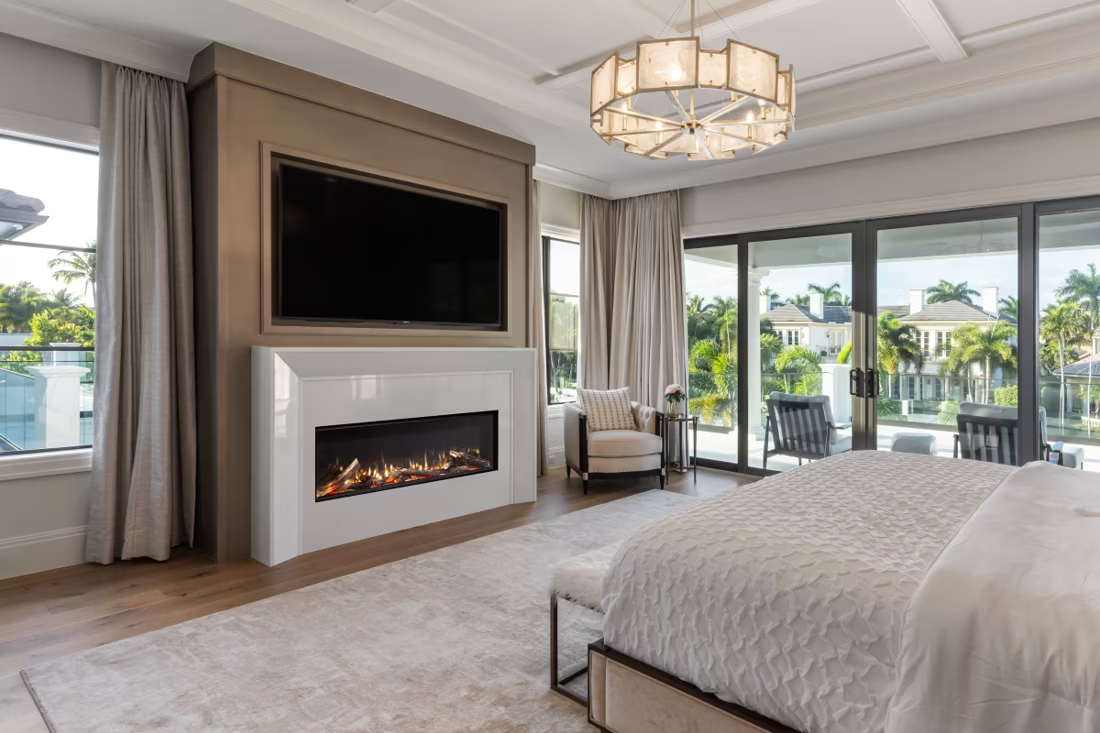
In the condos and rental units near Stratton Mountain and Bromley, in the historic brick rowhouses of downtown Bennington where running a new chimney is impractical, and in finished basements and bedrooms across the county, an electric fireplace or insert delivers instant ambiance and real zone heat without a flue, a gas line, or (in most plug-in cases) a permit. Green Mountain Power serves most of the county, with the Town of Bennington's own municipal electric department covering in-town customers—either way, running a 1,500-watt electric insert costs a predictable amount per hour, which matters when you're already budgeting for wood or propane through a long Vermont winter.
Three steps. No salesperson until you're ready.
Tell us about your project
Your zip code, your situation, and the fuel you're leaning toward—or let the answers point you to one.
See what's actually available
The brands dealers within 100 miles genuinely carry—real options, never a catalog mirage.
Get your dealer & Project Guide
A trusted local dealer, plus the free Project Guide & Parts List that names every component of the job.
Frequently Asked Questions
How much does an electric fireplace installation cost in Bennington County?
Plug-in electric fireplace inserts and freestanding stoves are the least expensive hearth option in Bennington County, typically running $300 to $900 installed since most just need an existing outlet and a bit of trim carpentry. Built-in wall units and full mantel packages run higher—often $1,000 to $2,500—once you add a dedicated 20-amp circuit, an electrician's time, and any surround or hearth finish work. Because there's no chimney, no gas line, and usually no venting to size, electric installs are the fastest and least disruptive project a local dealer will handle for you.
Can an electric fireplace actually heat my home in a Bennington County winter?
Not as a primary heat source—and I'd rather tell you that upfront than let you find out the hard way. With 7,351 heating degree days and winter lows averaging 11°F, most electric fireplaces (typically 4,500–5,000 BTU, or about 1,500 watts) are built to comfortably heat a single room of 400 square feet or so, not a whole Vermont farmhouse. They work well as zone heat for a bedroom, den, or finished basement, or as a way to take the edge off a room while your woodstove, propane furnace, or oil boiler carries the rest of the load.
Do I need a permit to install an electric fireplace in Bennington County?
In most cases, no—a plug-in electric insert or stove that draws from an existing outlet doesn't trigger a building permit. If you're adding a built-in unit that requires a new dedicated circuit, that electrical work typically needs to be pulled by a licensed electrician and may require a permit through your town's building or zoning office—the Town of Bennington, Manchester, and Arlington each handle this locally rather than through a single county office. Either way, a local dealer can tell you in advance whether your specific project needs a permit.
What's the difference between an electric fireplace, insert, and stove?
An electric fireplace is typically a built-in unit set into a wall or mantel surround, designed to look like a traditional fireplace. An electric insert is sized to slide into an existing masonry fireplace opening—a common upgrade for Bennington County's older homes with fireplaces that were never great heat sources to begin with. An electric stove is a freestanding cabinet-style unit that mimics a wood stove's look and can sit anywhere near an outlet. All three plug into standard household wiring in most cases, and none require a chimney or venting.
Will my electric fireplace work during a power outage?
No—and this is the one real trade-off against wood heat in a county that sees its share of ice storms and nor'easters. An electric fireplace goes dark the moment the power does, unlike a wood stove burning local sugar maple or ash that keeps running regardless. If backup heat during outages matters to you, most Bennington County homeowners pair an electric fireplace for everyday ambiance with a wood or propane appliance for the nights when Green Mountain Power's lines come down.
What's the best electric fireplace for ambiance and supplemental heat?
Look at brands like Dimplex, Napoleon, and Amantii, which build the most realistic flame technology on the market and offer both built-in and insert configurations. For a room you actually want warmed—not just lit—check the wattage (1,500 watts is the practical ceiling for a standard outlet) and make sure the unit has a real heater fan, not just a decorative flame effect. A local dealer can match the unit to your room size and tell you whether your existing wiring can support it or whether you'll need a dedicated circuit.
How much does it cost to run an electric fireplace in Bennington County?
A typical 1,500-watt electric fireplace running on the heater setting costs a few cents a minute to operate—the exact number depends on your rate with Green Mountain Power or, if you're in town, the Bennington Electric Department. Running it a few hours an evening for ambiance and supplemental warmth costs far less than most homeowners expect, though it's still more expensive per BTU than a woodstove burning free or low-cost cordwood cut under a Green Mountain National Forest permit.
Electric vs. pellet stove—which is right for my Bennington County home?
Pellet stoves burn bagged fuel from regional suppliers like New England Wood Pellet or Lignetics and put out real heat—enough to serve as a primary or near-primary source in a county with 7,351 heating degree days—but they need electricity to run the auger and blower, and they need a proper vent. Electric fireplaces need no venting at all and cost less upfront, but they're realistically a supplemental or ambiance appliance, not a serious contender for carrying a Vermont winter on their own. If you're weighing real heat output against installation simplicity, that's the core trade-off.
Electric vs. wood—which is right for my home?
Wood is the backbone of heating in this part of Vermont for good reason: sugar maple, yellow birch, and red oak are abundant locally, cutting permits through the Green Mountain National Forest run about $20 a cord, and a woodstove keeps working when the power doesn't. Electric fireplaces can't match that heat output or storm resilience, but they win on convenience—no ash, no wood stacking, no chimney to sweep, and instant on-off operation for a room where you just want warmth and a flame without the maintenance. Many Bennington County homes end up with both: wood for real heat, electric for the rooms where a woodstove doesn't make sense.
Do electric fireplaces actually produce heat?
Yes—most put out around 4,800–5,000 BTUs from a standard outlet, which comfortably warms a bedroom, office, or den as a comfort-zone heater. What they won't do is carry a whole house the way wood, gas, or pellet can. Think of electric as ambiance-first with honest supplemental heat: flames on with no heat in July, flames plus warmth in January.
Can I put a TV above my fireplace?
Yes—with an asterisk. Fireplaces are hot and TVs don't like heat. Either put a mantel between them to deflect rising warmth, or choose a fireplace with heat-management technology that creates a cool zone on the wall above—the wall stays around 125 degrees, barely warm, while the room still gets full heat. If you like clean lines and don't want a mantel, heat management is the answer.
Does a fireplace add value to my home?
On average, a fireplace adds back to the home about the same amount you spent installing it. Add the monthly savings from heating the rooms you actually use instead of the whole house—often hundreds of dollars a year—and the value case is strong before you even count what a fire does for how your family uses the room.
How much should I budget for a fireplace?
For an average home—covering the fireplace, the vent pipe, and basic installation—a budget between $3,900 and $5,500 gives you a lot of options across wood, gas, and pellet. By the time you add finish work, gas line, and electrical, the average complete installation lands between $5,000 and $12,000 all-in. In a remodel or new build, a good rule is to put about 2.5% of the total project cost toward the fireplace.
Stove and Fireplace Dealers in Bennington County
Listings include WhyFire partner dealers, dealers we have verified as authorized for the brands we recommend, and established local businesses that carry hearth products. Every listing shows which one it is. The ones marked Preferred run on WhyFire's software, so they can show you real pricing and book your appointment right here. No manufacturer pays for placement. How we verify dealers →
Black Magic Chimney Sweep
Bennington Pool & Spa
The Stove Depot
Find your electric fireplace in Bennington County.
Tell us about your room and your goals—ambiance, supplemental heat, or both—and we'll match you with a trusted local dealer and a free Project Guide & Parts List for your electric fireplace project in Bennington County.
Find Your Fireplace →