
Clean heat for White City, even on red air days.
Instant, on-demand warmth for Salt Lake Valley homes—no burn restrictions, no smoke, no tending a fire. Find the right gas unit and connect with a trusted local dealer.
Every Project Starts From One of These Five Situations
Reliable heat that skips the inversion problem.
White City sits at 4,524 feet in the Salt Lake Valley, an unincorporated pocket of Salt Lake County tucked between Sandy and Draper. Winters here bring a solid heating season with average lows near 23°F—real heating demand, but the defining weather feature of this valley isn't the cold, it's the inversion. Cold air settles under a warm layer for days at a time, trapping pollution and wood smoke close to the ground until Utah's Division of Air Quality calls a mandatory action day and restricts solid-fuel burning across the county.
Dominion Energy Utah runs natural gas service throughout most of White City and the surrounding valley, so most homes already have a line to build on. That matters for anyone weighing heat sources here: a gas fireplace or insert keeps producing heat on the worst inversion days, when wood-burning restrictions can sideline even a good stove, and it does it without adding more particulate matter to a sky that's already struggling in January.
Three steps. No salesperson until you're ready.
Tell us about your project
Your zip code, your situation, and the fuel you're leaning toward—or let the answers point you to one.
See what's actually available
The brands dealers within 100 miles genuinely carry—real options, never a catalog mirage.
Get your dealer & Project Guide
A trusted local dealer, plus the free Project Guide & Parts List that names every component of the job.
Frequently Asked Questions
How much does a gas fireplace installation cost in White City?
In the Salt Lake Valley, a direct-vent gas insert installed into an existing masonry fireplace where gas is already run near the hearth typically runs $4,000 to $8,000. A new built-in gas fireplace that requires fresh gas line work and venting through an exterior wall—common in additions or remodels—usually lands closer to $6,000 to $11,000. Homes in White City with an existing Dominion Energy meter and a stubbed gas line near the fireplace tend to fall on the lower end; homes needing a new line trenched from the meter add to the total. A local hearth retailer will walk the space and give you a firm number.
Can I convert my existing wood fireplace to gas?
Yes, and it's one of the more common upgrades in the Salt Lake Valley right now, largely because Utah's mandatory action days during winter inversions restrict solid-fuel burning countywide, sometimes even for certified wood stoves, while gas units keep running. The typical approach is sliding a direct-vent gas insert into your existing masonry firebox with a stainless liner run up the old chimney. Expect $4,000 to $7,500 depending on the insert model and whether a new gas line has to be run to the fireplace.
Is natural gas available in White City, or do I need propane?
Most of White City and the surrounding unincorporated Salt Lake County area is served by Dominion Energy Utah's gas mains, so the majority of homes can tie a new fireplace into existing service without much trouble. If your property sits on a private road or a stretch without a nearby main, propane becomes the practical fallback—a local installer can tell you quickly whether trenching a new gas line or setting a propane tank makes more sense for your lot.
Will my gas fireplace still work if the power goes out?
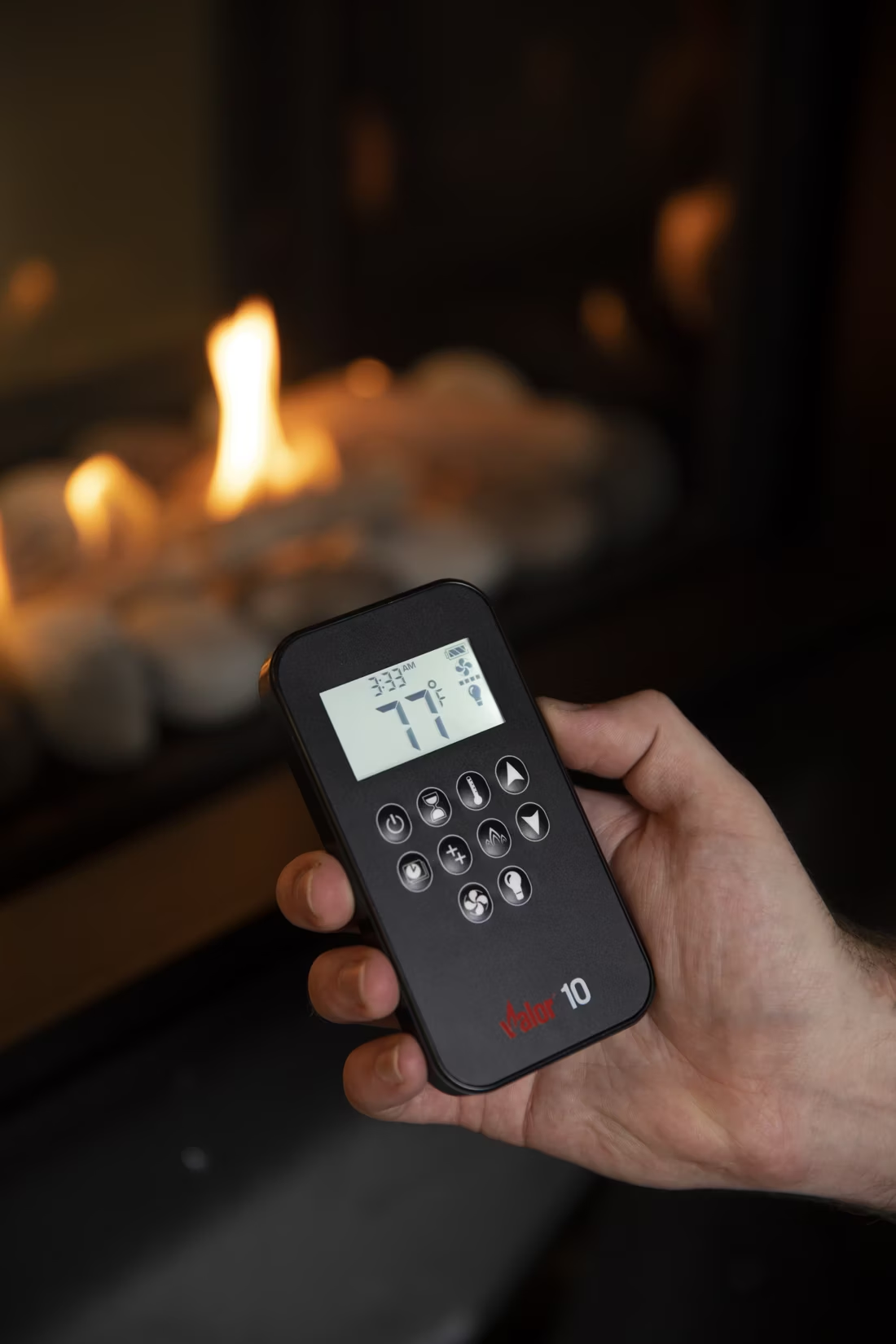
Most direct-vent gas fireplaces with intermittent pilot ignition (IPI) include a battery backup, so the unit keeps lighting on demand even without grid power. Valor takes it a step further—their units generate their own electricity off the pilot's thermocouple, so there's no battery to remember at all. That's worth asking about along the Wasatch Front, where winter windstorms and heavy snow loads occasionally knock out power in the valley for a day or more.
What's the difference between a gas fireplace, insert, and stove?
A gas fireplace is a fully built-in unit framed into a wall—the right call for new construction or a remodel without an existing hearth. A gas insert is sized to slide into an existing masonry fireplace, converting it into a sealed, high-efficiency unit that vents through the original chimney. A gas stove is freestanding, sitting on the floor like a wood stove but running on gas, and works well in a room without any existing fireplace opening. Most White City homeowners upgrading an old wood-burning fireplace go with an insert; new rooms or additions usually call for a built-in or a freestanding stove.
Do I need a permit to install a gas fireplace in White City?
Yes. Because White City is unincorporated, permitting runs through the Salt Lake County Building Services Division rather than a city building department. Any new gas line work also requires a licensed gas-fitter. Most established hearth retailers in the valley handle the permit application, the gas line coordination, and the final inspection as part of the installation, so you're not chasing down separate trades.
Are vent-free gas fireplaces a good option in White City?
Vent-free (unvented) gas units are legal in Utah under strict room-sizing and ventilation rules, but they release combustion byproducts—water vapor, small amounts of CO and NO₂—directly into the room rather than venting outside. Given how often the Salt Lake Valley already deals with poor outdoor air quality during winter inversions, most local installers steer White City homeowners toward direct-vent gas fireplaces instead, which draw combustion air from outside and exhaust it back outside through a sealed pipe. Direct-vent units are the more common choice in this valley for exactly that reason.
How often should my gas fireplace be serviced?
Plan on an annual inspection, ideally before the inversion season sets in each fall. A technician checks the burner, pilot assembly, venting, and gas connections, and cleans the glass and interior—a quicker job than sweeping a wood chimney, but just as important for safe operation. Local gas appliance service providers in the valley typically charge $150 to $250 for this annual visit.
Gas vs. wood—which makes more sense for a White City home?
Wood offers strong heat output and lower fuel costs, especially if you're cutting your own pinyon, juniper, or aspen with a permit from the Uinta-Wasatch-Cache National Forest—permits run roughly $5 to $20 per cord during the May-through-October season. But wood burning in Salt Lake County gets curtailed on the valley's worst inversion days, when the county calls mandatory action days and restricts solid-fuel burning to protect air quality. Gas skips that problem entirely—it keeps producing heat regardless of the air-quality forecast, with no ash, no smoke, and no chimney sweeping. For a primary living space in White City, gas is usually the lower-hassle choice; wood still has a place as backup heat or ambiance for homeowners willing to work around burn restrictions.
Can I put a TV above my fireplace?
Yes—with an asterisk. Fireplaces are hot and TVs don't like heat. Either put a mantel between them to deflect rising warmth, or choose a fireplace with heat-management technology that creates a cool zone on the wall above—the wall stays around 125 degrees, barely warm, while the room still gets full heat. If you like clean lines and don't want a mantel, heat management is the answer.
Why is my open fireplace making my house colder?
Open fireplaces suck—literally. As the fire burns, it consumes air your furnace already paid to heat and pulls it out through the chimney, so the house is actually colder after the fire goes out than before you lit it. An insert fixes this: it seals the chimney, puts fixed glass across the front, and turns that hole in your house into a real heat source.
Can I install a fireplace myself?
If you're putting a fire in your house on purpose, it's best to work with an expert. Unless you're genuinely experienced in framing, gas line, vent pipe, and the national code on clearances to combustibles, have a professional do it—and ideally the same company that sells you the fireplace, so warranty, service, and liability all live under one roof.
Does a fireplace add value to my home?
On average, a fireplace adds back to the home about the same amount you spent installing it. Add the monthly savings from heating the rooms you actually use instead of the whole house—often hundreds of dollars a year—and the value case is strong before you even count what a fire does for how your family uses the room.
Nearby Dealers
Hearth shops serving White City and the surrounding area. Every listing shows whether it is a WhyFire partner, a dealer we have verified as authorized for the brands we recommend, or a local business carrying hearth products. No manufacturer pays for placement. How we verify dealers →
Standard Plumbing
Ignite Fireplace
Degrees Above Fireplaces
Bills Comfort Systems
Wasatch Fireplace & Stove
(Sugar House) Alpine Fireplaces (In Breezeway Next To Theatres)
Comfort Solutions
Modscapes Modern Living
First Class Fireplace
Modscapes Outdoor Living
Croft Fireplaces (Bountiful)
Heritage Homes & Fireplaces
Uintah Fireplace And Design
All Hours Plumbing, Drain Cleaning, Heating & Cooling
Delta Stone Products, Inc.
Find your gas fireplace in White City.
Tell us about your home and we'll match you with the right gas fireplace, insert, or stove for White City's inversion-prone winters, plus a free Project Guide & Parts List and a trusted local dealer to install it.
Find Your Fireplace →