
Heat that keeps running on the valley's worst air days.
Instant, code-compliant heat for West Valley City homes—even when winter inversion shuts down wood burning. Find the right unit and get matched with a trusted local dealer.
Every Project Starts From One of These Five Situations
Reliable heat that doesn't pause for inversion season.
West Valley City sits at 4,346 feet in the floor of the Salt Lake Valley, a geography that traps cold air and pollution against the Wasatch Front every winter. From December through February, the Utah Division of Air Quality routinely calls mandatory no-burn action days when the valley's inversion layer pushes PM2.5 into unhealthy territory—and on those days, older uncertified wood stoves and fireplaces legally have to stay cold. Gas fireplaces are exempt from those restrictions, which is a big part of why they've become the default choice for primary and supplemental heat across West Valley City's newer subdivisions and remodeled homes alike.
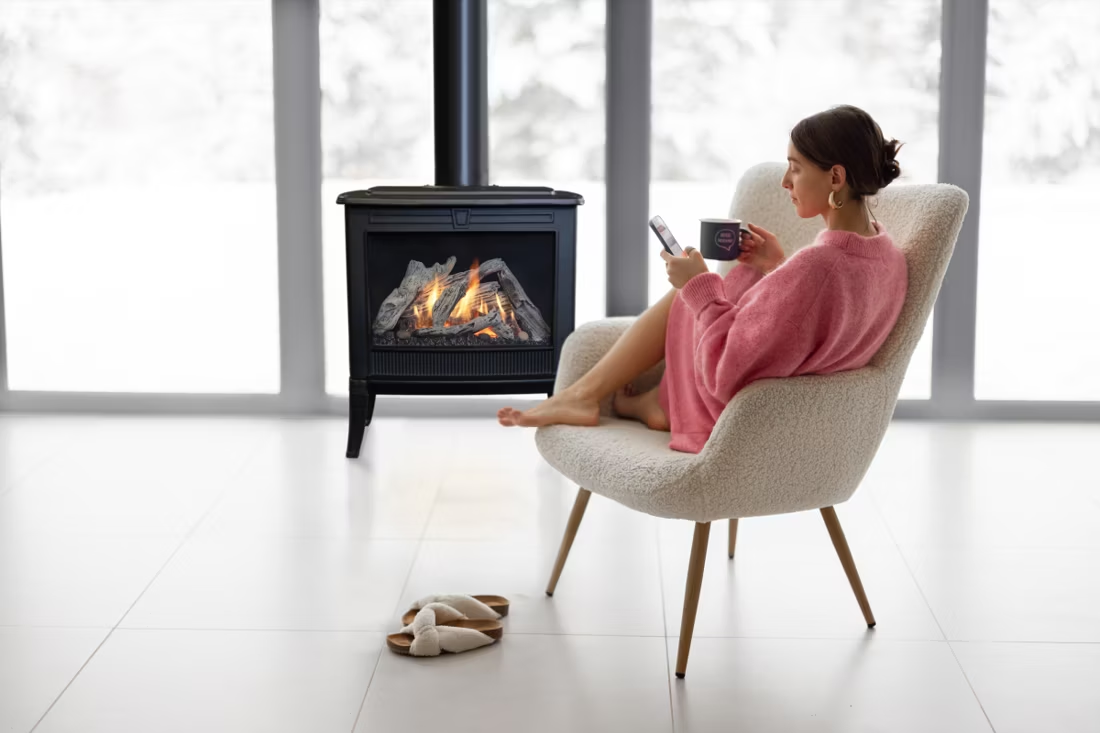
Dominion Energy Utah runs natural gas service through nearly every neighborhood in West Valley City's 84119, 84120, 84128, and surrounding zip codes, so most homes already have a gas line reachable to a fireplace location without a long trenching job. With 5,154 heating degree days and average winter lows around 24°F—a milder profile than places like Helena, Montana, but cold enough that heat matters five months a year—a direct-vent gas fireplace gives West Valley City homeowners instant warmth, a lower utility bill than running electric resistance heat, and one less thing to worry about on a red air-quality day.
Three steps. No salesperson until you're ready.
Tell us about your project
Your zip code, your situation, and the fuel you're leaning toward—or let the answers point you to one.
See what's actually available
The brands dealers within 100 miles genuinely carry—real options, never a catalog mirage.
Get your dealer & Project Guide
A trusted local dealer, plus the free Project Guide & Parts List that names every component of the job.
Frequently Asked Questions
How much does a gas fireplace installation cost in West Valley City?
Most gas fireplace installations in West Valley City run between $3,800 and $10,500. A direct-vent insert dropped into an existing masonry fireplace where a gas line is already nearby sits at the lower end. A new built-in gas fireplace for a remodel or an addition—with framing, venting through an exterior wall, and a fresh gas line run from the meter—lands in the middle to upper range. Homes on the far edges of West Valley City's service area that need a longer Dominion Energy line extension can run higher. A local retailer will give you a firm number after seeing your home.
Can I convert my existing wood fireplace to gas?
Yes, and it's a common project here, partly because it sidesteps the inversion-season no-burn restrictions that apply to older wood stoves. A gas insert typically slides into your existing masonry firebox and vents through a stainless liner run up your current chimney. In West Valley City this usually costs $4,000 to $9,000 depending on whether the home already has a Dominion Energy line nearby and which insert model you choose. The finished fireplace keeps its original opening and mantel but gains instant, thermostat-controlled heat with no wood, ash, or smoke.
Do I need natural gas, or should I use propane?
Almost every home in West Valley City has access to Dominion Energy Utah's natural gas network, so natural gas is the default choice for the vast majority of installations here—there's rarely a reason to go with propane inside city limits. Propane tends to come up only for detached structures or edge-of-county properties without a nearby gas main. If you already run gas appliances like a furnace or water heater, adding a fireplace is usually a straightforward tap into the existing line rather than a new utility hookup.
Will my gas fireplace work during a power outage?
Most modern gas fireplaces will, which matters here—the Wasatch Front sees occasional high-wind events, including the September 2020 windstorm that knocked out power to tens of thousands of Salt Lake Valley homes for days. Units with IPI (intermittent pilot ignition) run on a battery backup, typically AA batteries built into the unit, that kick in automatically when the power drops. Valor fireplaces take a different approach: their pilot generates its own electricity through a thermocouple, so there's no battery to remember at all. Ask your local dealer which ignition system a given model uses before you buy.
What's the difference between a gas fireplace, gas insert, and gas stove?
A gas fireplace is a fully built-in unit framed into a wall—the right choice for new construction or a major remodel. A gas insert is sized to slide into an existing masonry firebox, turning a drafty open fireplace into a sealed, efficient heat source using the chimney you already have. A gas stove is a freestanding cabinet unit, similar in footprint to a wood stove, that can go almost anywhere with a nearby vent path. Most West Valley City homes with an existing wood-burning fireplace are good candidates for an insert; homes without one usually go with a built-in fireplace or freestanding stove instead.
Do I need a permit to install a gas fireplace in West Valley City?
Yes. The West Valley City Building Division requires both a building permit and a mechanical/gas permit for new gas fireplace installations, and the gas line connection has to be completed by a licensed gas-fitter. Most hearth dealers pull these permits as part of the job and schedule the required inspections, so you generally don't have to coordinate the paperwork yourself. Trying to DIY the gas line to save the permit fee is one of the more common—and more expensive to fix—mistakes homeowners make here.
What's the difference between vented and vent-free gas fireplaces, and does it matter here?
Vented (direct-vent) gas fireplaces draw combustion air from outside and exhaust it back outside through a sealed pipe, keeping combustion byproducts out of the house entirely. Vent-free units burn directly into the room and are legal in Utah under specific room-sizing and ventilation rules, but they release some water vapor and trace combustion gases indoors. Given that West Valley City already deals with elevated indoor and outdoor particulate levels during winter inversion, most local dealers steer homeowners toward direct-vent units—they don't add anything to the air you're already breathing on a bad inversion day, and they're accepted everywhere without the room-size caveats vent-free units carry.
How often should my gas fireplace be serviced?
Plan on an annual inspection, ideally in early fall before the valley's cold season sets in. A certified technician checks the burner, pilot assembly, venting, and gas connections, and cleans the glass and interior. This is a much smaller job than wood chimney sweeping but still important—Dominion Energy and local hearth service techs both recommend it as standard maintenance, and it typically runs $150 to $250 in the West Valley City area.
Gas vs. wood—which makes more sense in West Valley City?
Wood burning here means dealing with the Utah Division of Air Quality's mandatory no-burn days during winter inversions—periods that can stretch for a week or more when the valley air is stagnant—plus sourcing cordwood, which locally tends to mean pinyon, juniper, or aspen from Uinta-Wasatch-Cache National Forest permits ($5 to $20 per cord, May through October cutting season). Gas skips all of that: no burn-ban restrictions, no wood handling, and instant on-off heat from a thermostat or remote. Wood still has a place for homeowners who value the ambiance of a real flame or want backup heat that doesn't depend on a gas line, but for most West Valley City homes, especially in neighborhoods without an existing wood-burning setup, gas is the simpler and more consistently usable choice.
What's the difference between an insert and a zero-clearance fireplace?
An insert is a fireplace that slides into a pre-existing wood-burning fireplace—if you don't have one, there's nothing to insert it into. A zero-clearance fireplace is built into a framed wall, which makes it the answer for remodels and new construction. Simple test: existing masonry fireplace means insert; blank or framed wall means zero-clearance.
Can I put a TV above my fireplace?
Yes—with an asterisk. Fireplaces are hot and TVs don't like heat. Either put a mantel between them to deflect rising warmth, or choose a fireplace with heat-management technology that creates a cool zone on the wall above—the wall stays around 125 degrees, barely warm, while the room still gets full heat. If you like clean lines and don't want a mantel, heat management is the answer.
How much should I budget for a fireplace?
For an average home—covering the fireplace, the vent pipe, and basic installation—a budget between $3,900 and $5,500 gives you a lot of options across wood, gas, and pellet. By the time you add finish work, gas line, and electrical, the average complete installation lands between $5,000 and $12,000 all-in. In a remodel or new build, a good rule is to put about 2.5% of the total project cost toward the fireplace.
Does a fireplace add value to my home?
On average, a fireplace adds back to the home about the same amount you spent installing it. Add the monthly savings from heating the rooms you actually use instead of the whole house—often hundreds of dollars a year—and the value case is strong before you even count what a fire does for how your family uses the room.
Nearby Dealers
Hearth shops serving West Valley City and the surrounding area.
(Sugar House) Alpine Fireplaces (In Breezeway Next To Theatres)
Hearth & Home Distributors Of Utah - Salt Lake City
Get your West Valley City gas fireplace project mapped out.
Tell us about your home and we'll send a free Project Guide & Parts List—the exact parts, vent kit, and a trusted local dealer for your gas fireplace or insert in West Valley City.
Find Your Fireplace →