
Keep Your Family Warm and Safe—No Matter What
West Haven sits in the Weber County valley where winter inversions trigger mandatory no-burn days—which changes how (and whether) wood heat makes sense for most homes here.
Every Project Starts From One of These Five Situations
In West Haven, air quality calls more shots than the thermometer.
West Haven's winters aren't extreme by cold-climate standards—average lows sit around 20°F and the area's heating season adds up to a workload similar to about 5,590 degree-days a year, milder than places like Bismarck, ND or Duluth, MN. What sets Weber County apart isn't the cold, it's the air. The valley floor at 4,269 feet traps cold, still air against the Wasatch Front for days at a time each winter, and Weber County has landed in EPA nonattainment territory for fine particulate matter (PM2.5) as a result. The Utah Division of Air Quality runs a mandatory action-day program along the Wasatch Front, and on Red air days—which cluster during exactly the stagnant, cold conditions when a wood stove would otherwise be most useful—solid-fuel burning is restricted unless the device is your only heat source and EPA-certified.
That's why wood ranks as a niche option in West Haven rather than a standard heating choice: it's hard to plan around a heat source that can be legally sidelined on the coldest days of the year. A small number of homeowners still install EPA 2020 NSPS-certified stoves for backup heat during power outages, for cabins and outbuildings, or for the ambiance of an occasional fire on Green and Yellow air days. If you're self-cutting, the Uinta-Wasatch-Cache National Forest issues permits from May through October for $5–$20 per cord, and pinyon, juniper, and aspen are the species most commonly available locally. For most West Haven households, though, gas or electric heat—both standard here and both unaffected by burn restrictions—end up doing more of the day-to-day work.
Firewood Cutting Permits Near West Haven
Three steps. No salesperson until you're ready.
Tell us about your project
Your zip code, your situation, and the fuel you're leaning toward—or let the answers point you to one.
See what's actually available
The brands dealers within 100 miles genuinely carry—real options, never a catalog mirage.
Get your dealer & Project Guide
A trusted local dealer, plus the free Project Guide & Parts List that names every component of the job.
Frequently Asked Questions
Is it legal to install a wood stove in West Haven?
Yes, but with real conditions attached. Any new wood-burning appliance installed in Weber County needs to meet EPA 2020 NSPS certification, and its use is subject to Utah's Wasatch Front air quality action-day program. On Red air days—declared by the Utah Division of Air Quality during winter inversions—burning is prohibited unless the stove is certified as your home's sole source of heat and registered as such. The Weber-Morgan Health Department handles local enforcement and can tell you exactly what documentation qualifies a stove for sole-source status if that's your situation.
Why isn't wood heat more common in West Haven?
It comes down to the inversions. Cold air settles into the Weber County valley and sits there for days, trapping vehicle exhaust, industrial emissions, and wood smoke close to the ground. That's earned the area EPA nonattainment status for PM2.5, and it's why the state restricts solid-fuel burning on the worst air days—which tend to coincide with the coldest, calmest weather, exactly when a wood stove would normally be lit. Most builders and hearth dealers in the area steer new installs toward gas or electric appliances instead, since those aren't affected by burn-restriction days.
What does a wood stove installation cost in West Haven?
There isn't a well-established local price range the way there is in wood-heavy markets, simply because so few dealers around West Haven regularly install solid-fuel appliances. In areas where wood is standard, a stove plus venting typically runs several thousand dollars depending on chimney work and hearth requirements—expect a similar baseline here, but budget extra time to find a dealer who installs wood units at all, since most local hearth retailers focus on gas and electric.
Can I still cut my own firewood near West Haven?
Yes. The Uinta-Wasatch-Cache National Forest sells personal-use cutting permits from May through October, running $5 to $20 per cord depending on the district. Pinyon, juniper, and aspen are the species you'll find most often on permitted cutting units near Weber County. Keep in mind that having firewood on hand doesn't get you around the Red air day burn restrictions—permits govern harvesting, not when you're allowed to light a fire.
If wood isn't practical as primary heat, why would anyone install a stove here?
The honest cases are backup heat and ambiance. An EPA-certified wood stove keeps working when the power goes out—useful given that PacifiCorp, the electric utility serving West Haven, can lose service during severe winter storms just like anywhere else. Some homeowners with cabins, shops, or older rural properties outside the tightest inversion pockets also install a stove purely for the experience of a real fire on Green and Yellow air days. What doesn't make sense for most West Haven homes is planning on wood as a full-time heat source you can count on every cold night.
Does a wood stove still work as backup heat during a power outage?
Generally, yes—a wood stove doesn't need electricity to produce heat, which is its real advantage over gas furnaces with electric ignition or electric heaters when PacifiCorp service goes down. Utah's mandatory burn restrictions do include exceptions in some emergency circumstances, but the rules are specific about what qualifies. If backup heat during outages is your main reason for considering wood, ask the Weber-Morgan Health Department how emergency-use exceptions are handled before you install, so you know exactly where you stand.
Wood stove or pellet stove—does either make more sense in West Haven?
Both face the same basic issue: they're solid-fuel devices subject to the same Wasatch Front air quality restrictions, so neither is a mainstream choice here the way they are in less inversion-prone parts of the state. Pellet stoves burn a bit cleaner and some models qualify more easily for sole-source exemptions, but availability of regional pellet brands like Bear Mountain or Lignetics doesn't change the underlying air-quality math. For most West Haven homes, gas or electric heat sidesteps the issue entirely and is worth serious consideration before committing to either solid-fuel option.
Do I need a building permit for a wood stove in West Haven?
Yes—a new wood-burning appliance installation typically requires a building permit through West Haven City's building division, covering clearances, hearth pad requirements, and venting. Because wood installs are less common locally, it's worth confirming permit requirements directly with the city before you buy a stove, since the process may be less standardized than it would be in a market where wood heat is the norm.
Should I go with wood, or is gas or electric the better call for West Haven?
For most homes here, gas or electric heat is the more practical choice—both are standard options locally, both work reliably regardless of air quality conditions, and neither one risks being sidelined on a Red air day in the middle of a cold snap. Wood still has a place for specific situations: true backup heat during outages, cabins or rural properties, or homeowners who want the experience of a real fire and are willing to work around the area's burn restrictions. If that's your situation, an EPA-certified stove sized correctly for your space is the way to go—just go in with clear eyes about the local rules.
Why is a fireplace insert so efficient?
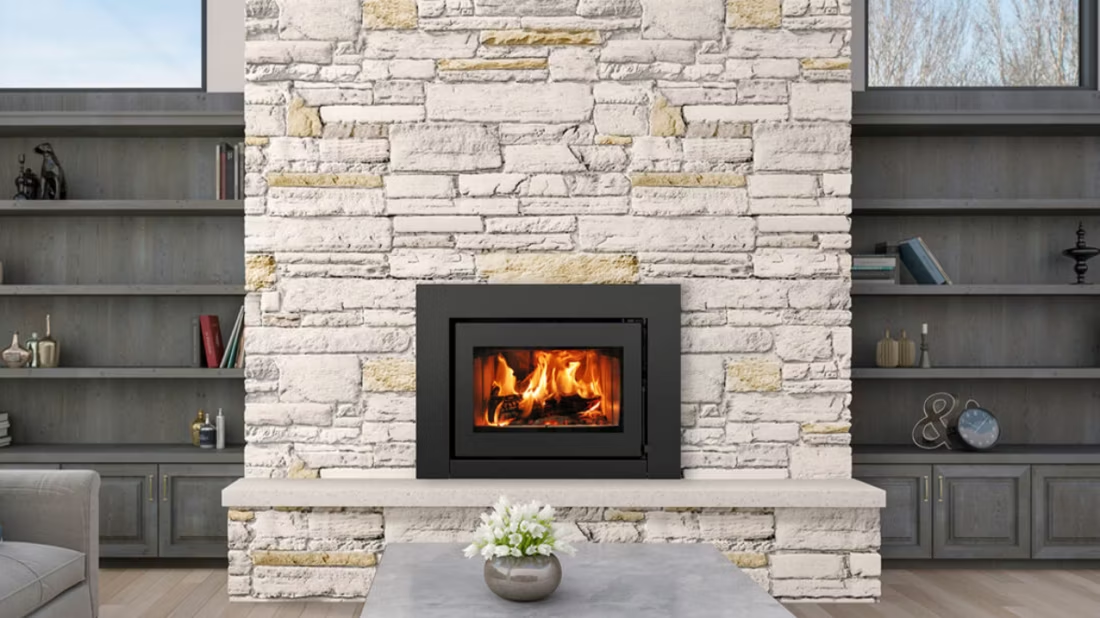
An insert does two things: it seals the chimney completely, so you stop losing air you already paid to heat, and it radiates warmth into the room through the firebox and glass. Most add a heat-exchange fan that pulls cool room air underneath, wraps it around the hot firebox, and pushes it back out warm. Your home is more efficient before you've even lit the first fire.
What does it take to replace an existing fireplace?
Fireplaces are like icebergs—bigger behind the wall than in front of it. Replacement means removing the surrounding tile or stone (the finish material laps onto the fireplace face), pulling the old unit, setting the new one in the same enclosure, and re-finishing the wall. A hearth professional can determine what's behind your wall without demolition during an in-home preview.
How much should I budget for a fireplace?
For an average home—covering the fireplace, the vent pipe, and basic installation—a budget between $3,900 and $5,500 gives you a lot of options across wood, gas, and pellet. By the time you add finish work, gas line, and electrical, the average complete installation lands between $5,000 and $12,000 all-in. In a remodel or new build, a good rule is to put about 2.5% of the total project cost toward the fireplace.
Can I install a fireplace myself?
If you're putting a fire in your house on purpose, it's best to work with an expert. Unless you're genuinely experienced in framing, gas line, vent pipe, and the national code on clearances to combustibles, have a professional do it—and ideally the same company that sells you the fireplace, so warranty, service, and liability all live under one roof.
Nearby Dealers
Hearth shops serving West Haven and the surrounding area. Every listing shows whether it is a WhyFire partner, a dealer we have verified as authorized for the brands we recommend, or a local business carrying hearth products. No manufacturer pays for placement. How we verify dealers →
Comfort Solutions
Stone World Supply
Hearth & Home Dist. Of UT-Ogden
Ogden Lawn & Garden
Rocky Mountain Stove
Utah Air
Timber Ridge Fireplace
Chim Chiminey Fireplace
Croft Fireplaces (Bountiful)
Find your wood fireplace in West Haven.
Tell us about your home and how you plan to use a wood stove—backup heat, ambiance, or a cabin setup—and we'll match you with a local dealer who can tell you honestly what's realistic under Weber County's air quality rules, plus a free Project Guide & Parts List for your project.
Find Your Fireplace →