
Pellet Heat Isn't Common Here—But It's Not Impossible.
With only about 3,200 heating degree days and winter lows averaging 28°F, most Washington City homes don't need a dedicated pellet appliance—but for the ones that do, we'll connect you with a dealer who actually stocks and installs them.
Every Project Starts From One of These Five Situations
Mild Desert Winters Mean Most Homes Don't Need It.
Washington City sits at 2,830 feet in Utah's southwest corner, just outside St. George, in a climate zone (3B) built for cooling loads, not heating loads. At roughly 3,205 heating degree days, this area sees a fraction of the winter heating demand of a place like Bismarck, ND or Duluth, MN, where HDD counts run two to three times higher. Winter lows here average a mild 28°F, and most homes are built around central gas furnaces and heat pumps rather than any kind of standalone wood or pellet appliance—which is why we classify both wood and pellet fuel as not-applicable for this area.
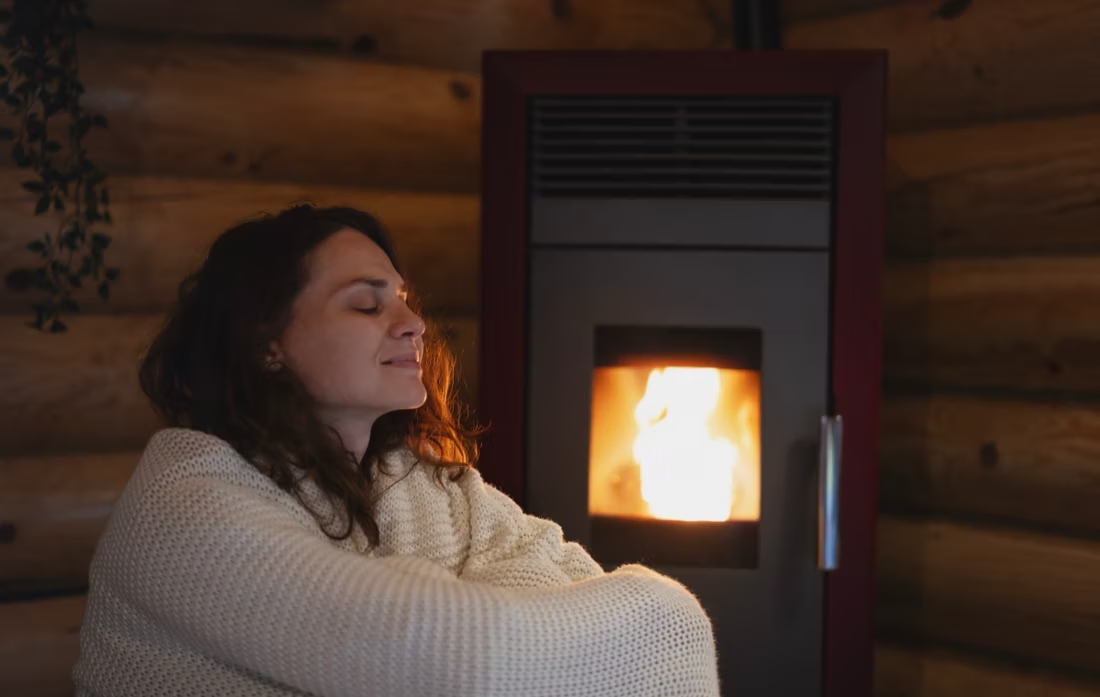
That doesn't mean pellet stoves never show up here. Transplants from colder states, owners of cabins or second homes at higher elevation near Dixie National Forest, and homeowners who simply like the look and ambiance of a stove without the hassle of wood handling still install them occasionally. Regional pellet brands like Bear Mountain, Lignetics, and Forest Energy are distributed through southern Utah, so fuel is findable if you look—it's just not stocked on every shelf the way it would be in a heating-dominant climate. If a pellet stove still makes sense for your Washington City home, a local dealer who's actually installed one nearby will save you a lot of guesswork.
Three steps. No salesperson until you're ready.
Tell us about your project
Your zip code, your situation, and the fuel you're leaning toward—or let the answers point you to one.
See what's actually available
The brands dealers within 100 miles genuinely carry—real options, never a catalog mirage.
Get your dealer & Project Guide
A trusted local dealer, plus the free Project Guide & Parts List that names every component of the job.
Frequently Asked Questions
Are pellet stoves actually used in Washington, UT?
Not commonly, no. With winter lows averaging 28°F and only about 3,205 heating degree days a year, the vast majority of homes in Washington City rely on central gas furnaces or electric heat pumps for primary heat, and don't need supplemental wood or pellet heat to get through winter. When a pellet stove does go in, it's usually for a specific reason—a cabin-style secondary home, a garage or shop that needs zone heat, or a homeowner who moved from a colder climate and wants the ambiance and radiant feel they're used to. It's a legitimate option, just not a mainstream one here the way it would be in, say, Bozeman, MT.
How much does a pellet stove installation cost in Washington City?
Because pellet installs are infrequent here, there isn't a large sample of local jobs to average, but a typical freestanding pellet stove with a fresh-air intake kit and vent-through-wall setup generally runs in the $3,000-$6,000 range regionally, depending on the unit and whether existing venting can be reused. Since few installers in the immediate Washington City / St. George area do this work regularly, expect a dealer to travel from a broader service radius, and expect the quote to include the vent kit as a line item rather than an afterthought—pellet venting is smaller-diameter PVC or stainless, and it has to be sized correctly for the unit.
What size pellet stove would I even need in a climate this mild?
Given the low heating demand—3,205 HDD compared to 7,000-plus in genuinely cold-climate markets—most Washington City installs that do happen are small units meant for supplemental or zone heat rather than whole-home heating. A stove rated for 1,000-1,500 square feet is plenty for a single living area, a converted garage, or a detached shop. Sizing a pellet stove for whole-home heat in this climate is usually overkill; your existing gas furnace or heat pump is already doing that job efficiently.
Where can I buy pellet fuel near Washington, UT?
Selection is thinner here than in colder markets, but it's not nonexistent. Bear Mountain, Lignetics, and Forest Energy pellets circulate through the region and show up at farm-supply and hardware retailers around St. George, sometimes seasonally rather than year-round. Because turnover is slower, it's worth calling ahead before making a special trip, and buying a season's supply (typically by the ton, delivered or picked up as bagged pallets) at once rather than counting on restocks mid-winter.
Can a pellet stove serve as backup heat during a power outage in Washington City?
Not without extra equipment. Pellet stoves rely on an electric auger and blower to feed fuel and move heat, so they shut down in a power outage unless paired with a battery backup or generator. Given Washington City's mild winters, this is less critical than it would be in a harsher climate—a short outage in a 28°F-average winter isn't the emergency it would be at -10°F—but if backup heat during outages is your main goal, a vented gas fireplace with a standing pilot, or a wood-burning option, is a more reliable choice here than pellet.
Does wildfire smoke affect pellet stove use in Washington, UT?
Wildfire smoke is the area's primary air quality concern rather than winter inversion, since this part of southern Utah doesn't see the stagnant winter air patterns that trigger burn bans in basin climates. Pellet stoves burn considerably cleaner than open wood fires—most EPA-certified units emit a small fraction of the particulate matter of a standard wood stove—so they're not typically implicated in local air quality advisories. If regional wildfire smoke is heavy in late summer, it has more to do with visibility and outdoor air quality than anything related to home heating appliances.
Pellet vs. gas—which actually makes sense for a Washington City home?
For nearly every home here, gas wins on practicality. Natural gas and propane fireplaces are common, standard installs in this market, give instant on-demand heat, don't require fuel storage, and don't depend on an electric auger to run. Pellet stoves make sense in narrower cases—a detached shop without gas service, a homeowner who specifically wants the visual and radiant qualities of a pellet fire, or a second home where the owner already has pellet appliances elsewhere. If you're heating a primary living space and don't have a strong reason to choose pellet, a local dealer will likely steer you toward a gas insert or fireplace instead, and that's honest advice for this climate.
What pellet stove brands can a local dealer actually get in Washington, UT?
Even though pellet fuel demand is low here, appliance brands aren't hard to source through regional hearth distributors—dealers serving the St. George and Washington County area can typically order from national pellet stove manufacturers on request. The harder part isn't the appliance, it's finding an installer with recent hands-on pellet experience, since it's a small share of their business in a market this mild. That's exactly the kind of thing worth confirming before you commit to a dealer.
If pellet heat isn't really needed here, why would anyone install one in Washington City?
A handful of legitimate reasons keep coming up: homeowners relocating from colder states who already own pellet stoves and want the same setup, cabin or vacation properties at higher elevation near Dixie National Forest where nights run colder than in the valley, garages and workshops that need occasional zone heat without running ductwork, and people who simply prefer the look and low-maintenance burn of a pellet appliance over a gas log set. None of these are the norm for a typical Washington City living room, but they're real enough that a local dealer can size and vent a pellet stove correctly when one of them applies to you.
Why is a fireplace insert so efficient?
An insert does two things: it seals the chimney completely, so you stop losing air you already paid to heat, and it radiates warmth into the room through the firebox and glass. Most add a heat-exchange fan that pulls cool room air underneath, wraps it around the hot firebox, and pushes it back out warm. Your home is more efficient before you've even lit the first fire.
Why is my open fireplace making my house colder?
Open fireplaces suck—literally. As the fire burns, it consumes air your furnace already paid to heat and pulls it out through the chimney, so the house is actually colder after the fire goes out than before you lit it. An insert fixes this: it seals the chimney, puts fixed glass across the front, and turns that hole in your house into a real heat source.
Does a fireplace add value to my home?
On average, a fireplace adds back to the home about the same amount you spent installing it. Add the monthly savings from heating the rooms you actually use instead of the whole house—often hundreds of dollars a year—and the value case is strong before you even count what a fire does for how your family uses the room.
How much should I budget for a fireplace?
For an average home—covering the fireplace, the vent pipe, and basic installation—a budget between $3,900 and $5,500 gives you a lot of options across wood, gas, and pellet. By the time you add finish work, gas line, and electrical, the average complete installation lands between $5,000 and $12,000 all-in. In a remodel or new build, a good rule is to put about 2.5% of the total project cost toward the fireplace.
Nearby Dealers
Hearth shops serving Washington and the surrounding area.
Pellet Brands Stocked Around Washington
Manufacturers will point you to the nearest stocking dealer.
See what's realistically available for pellet heat in Washington, UT.
Tell us about your home and your reason for considering pellet—cabin, shop, or ambiance—and we'll match you with a local dealer who can size the unit, vent it correctly, and hand you a free Project Guide & Parts List.
Find Your Fireplace →