
Pellet Heat in Sunset: An Uncommon but Real Option.
Natural gas heats most of Sunset, but pellet stoves still earn a place for backup heat, inversion-season clean burning, and homes without easy access to a gas line. Find the right unit and connect with a trusted local dealer.
Every Project Starts From One of These Five Situations
Natural gas runs this town—pellet fills a narrow niche.
Sunset sits at 4,532 feet in Davis County, part of the Ogden-Clearfield corridor along the Wasatch Front, with winter lows averaging 21°F and roughly 5,850 heating degree days a year. It's a small, densely built city of about 5,400 people, much of it adjacent to Hill Air Force Base, and piped natural gas reaches nearly every block. That infrastructure, plus the convenience of a gas furnace and a gas fireplace or insert, is why most Sunset homeowners never seriously consider a pellet appliance.
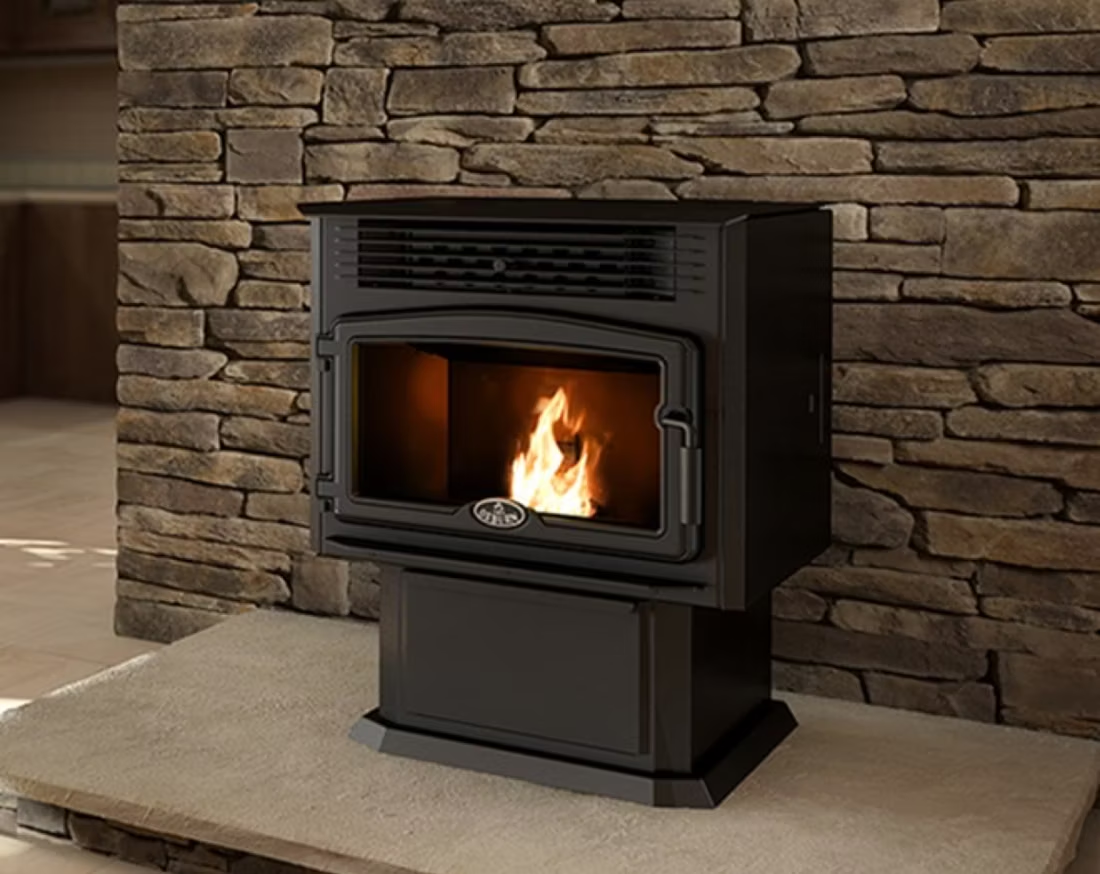
Where pellet stoves do show up in Sunset, it's usually for a specific reason: a detached shop or garage without a gas line, a backup heat source for the power outages that come with Wasatch Front windstorms, or a homeowner who wants a cleaner-burning solid-fuel option during the Salt Lake valley's notorious winter inversions. Utah's Division of Air Quality issues mandatory no-burn actions on the worst PM2.5 days, and EPA-certified pellet appliances are typically treated differently than older wood stoves in a way that matters if you burn regularly. It's a small market here, most hearth retailers are set up to sell and service gas, but a handful of dealers across the Wasatch Front do carry and install pellet stoves for homeowners who have a real use case for one.
Three steps. No salesperson until you're ready.
Tell us about your project
Your zip code, your situation, and the fuel you're leaning toward—or let the answers point you to one.
See what's actually available
The brands dealers within 100 miles genuinely carry—real options, never a catalog mirage.
Get your dealer & Project Guide
A trusted local dealer, plus the free Project Guide & Parts List that names every component of the job.
Frequently Asked Questions
How much does a pellet stove installation cost in Sunset?
Because pellet stoves are a specialty item here rather than a stocked product, pricing depends heavily on which dealer you use. Expect somewhere in the range of $3,000 to $6,000 installed for a freestanding pellet stove with venting through an exterior wall, and more if you're converting an existing masonry fireplace to a pellet insert with a full liner. Sunset and Davis County don't have the volume of pellet installers that Salt Lake City or Ogden do, so it's worth getting quotes from a couple of regional dealers rather than assuming a single local price.
Why aren't pellet stoves more common in Sunset?
Piped natural gas reaches most of the city, and a gas furnace paired with a gas fireplace or insert is simply the default here. It's cheaper to install, doesn't require fuel deliveries or hopper loading, and doesn't need electricity to run like a pellet stove's auger and blower do. Pellet heat tends to show up in homes with a specific gap: a detached garage without a gas line, a rental cabin, or a household that wants backup heat that doesn't rely on cordwood or a generator.
Where can I buy pellet fuel near Sunset?
Regional brands like Bear Mountain, Lignetics, and Forest Energy are distributed through building-supply stores and farm and ranch retailers across the Wasatch Front, though you won't find the shelf space you'd see in a heavier pellet-heat market like the Pacific Northwest. Pricing varies by season and supplier, so it's worth calling ahead in early fall—pellet stock tends to sell through fast once the first hard freeze hits Davis County.
Is wood a better option than pellet for my Sunset home?
Neither is a mainstream choice here. Wood stoves are just as uncommon in Sunset as pellet stoves, mostly because of the same natural gas infrastructure and because Davis County sits inside an area prone to PM2.5 winter inversions that trap wood smoke in the valley. If you already have access to firewood, pinyon, juniper, and aspen are the common species cut on nearby Uinta-Wasatch-Cache National Forest land, with permits running $5 to $20 per cord during the May-to-October season, wood might make sense for a cabin or second property. But for a primary heat source inside city limits, pellet burns cleaner and is less likely to draw scrutiny on a bad air-quality day.
Do pellet stoves get exempted from Utah's winter no-burn restrictions?
In most cases, yes. Utah's Division of Air Quality issues mandatory and voluntary no-burn actions for solid-fuel devices during periods of poor air quality along the Wasatch Front, and EPA-certified pellet stoves are generally treated differently than uncertified wood stoves and open fireplaces because they burn more completely and produce far less particulate matter. That said, rules can change and vary by device certification, so confirm the current status of your specific model with Davis County before you count on burning through a bad air day.
What happens to my pellet stove during a power outage?
Pellet stoves rely on an electric auger to feed fuel and a blower to distribute heat, so a standard unit stops working the moment the power goes out—a real consideration in Sunset, where PacifiCorp's lines occasionally go down during Wasatch Front windstorms. Homeowners who want pellet heat as backup heat typically pair the stove with a small battery backup system or a portable generator sized to run the auger and blower, which only draw a modest amount of power. Ask your dealer for the stove's wattage draw so you can size a generator correctly.
Do I need a permit to install a pellet stove in Sunset?
Yes, a new solid-fuel appliance installation requires a building permit through Davis County, covering the appliance, venting, and hearth clearances. Because pellet stoves vent horizontally through an exterior wall rather than needing a full masonry chimney, the permitting and inspection process is usually simpler and faster than a wood stove install. Your installer should pull the permit as part of the job rather than leaving it to you.
What size pellet stove do I need?
Sizing depends on the space you're heating and how well-insulated it is. A small pellet stove, under 1,000 square feet, is enough for a shop, detached garage, or single room; a medium unit, 1,000 to 1,800 square feet, covers a typical Sunset home's main living area; larger units can handle more square footage but are rarely necessary given how few Sunset homes use pellet as a primary heat source. Because Sunset sits at 4,532 feet with roughly 5,850 heating degree days a year, don't undersize for supplemental use—a stove that's too small will run constantly during a hard cold snap and burn through a hopper of pellets fast.
Pellet vs. gas—which makes more sense for my Sunset home?
For nearly all Sunset homeowners, gas is the more practical choice: it's tied into existing piped infrastructure, requires no fuel storage or hopper loading, and starts instantly with a switch or remote. Pellet makes sense in narrower circumstances—a space without a gas line, a desire for backup heat that doesn't depend on cordwood, or a preference for a visible, real flame with hopper-fed convenience rather than a log set. If you're on the fence, most local dealers will tell you plainly that gas is the default here and pellet is worth the added cost only if you have a specific reason for it.
Why is a fireplace insert so efficient?
An insert does two things: it seals the chimney completely, so you stop losing air you already paid to heat, and it radiates warmth into the room through the firebox and glass. Most add a heat-exchange fan that pulls cool room air underneath, wraps it around the hot firebox, and pushes it back out warm. Your home is more efficient before you've even lit the first fire.
What do I measure to size a fireplace insert?
Four numbers tell you what fits: the front width, the front height, the back width, and the overall depth of your existing fireplace opening. Grab a tape measure, jot those down, and snap a photo of the wall—those two things do more to move your project forward than anything else you can do today.
How much should I budget for a fireplace?
For an average home—covering the fireplace, the vent pipe, and basic installation—a budget between $3,900 and $5,500 gives you a lot of options across wood, gas, and pellet. By the time you add finish work, gas line, and electrical, the average complete installation lands between $5,000 and $12,000 all-in. In a remodel or new build, a good rule is to put about 2.5% of the total project cost toward the fireplace.
What is an in-home preview and do I need one?
It's a visit where a hearth professional measures your space, confirms the model you picked actually works in your home, and walks the specs—framing, gas line, venting, finish work—before anything is ordered. Some details you just can't know until you see the house. Never make a down payment without one; it's the single most-skipped step that burns buyers.
Nearby Dealers
Hearth shops serving Sunset and the surrounding area. Every listing shows whether it is a WhyFire partner, a dealer we have verified as authorized for the brands we recommend, or a local business carrying hearth products. No manufacturer pays for placement. How we verify dealers →
Timber Ridge Fireplace
Stone World Supply
Rocky Mountain Stove
Comfort Solutions
Hearth & Home Dist. Of UT-Ogden
Ogden Lawn & Garden
Utah Air
Croft Fireplaces (Bountiful)
Pellet Brands Stocked Around Sunset
Manufacturers will point you to the nearest stocking dealer.
Find your pellet fireplace in Sunset.
Tell us about your home and your reason for considering pellet heat, and we'll put together a free Project Guide & Parts List—the exact parts, including the vent kit, and a trusted local dealer who can actually install a pellet stove in Sunset.
Find Your Fireplace →