
Warm Up Without Adding to the Inversion.
Instant, clean-burning heat for South Salt Lake homes sitting in the Salt Lake Valley's winter inversion zone. Find the right gas fireplace and connect with a trusted local dealer.
Every Project Starts From One of These Five Situations
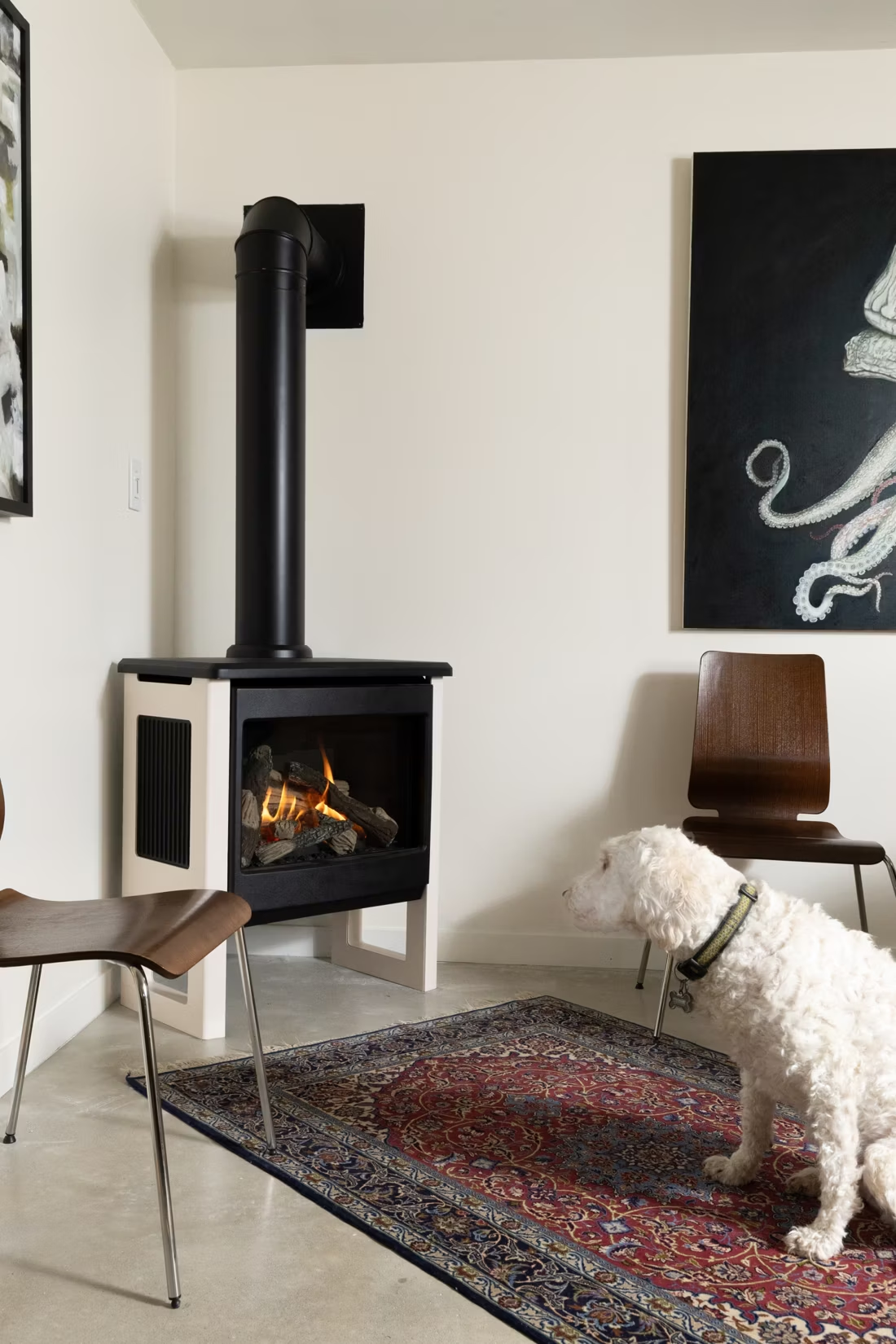
In this valley, gas is the practical default.
South Salt Lake sits at 4,246 feet in the floor of the Salt Lake Valley, boxed in by the Wasatch Range and the Oquirrh Mountains—geography that traps cold, stagnant air against the ground every winter and produces the inversions this stretch of the Wasatch Front is known for. With about 4,724 heating degree days and average winter lows near 28°F, homes here need real heat for months at a time, but Salt Lake County's nonattainment status for fine particulate matter means solid-fuel burning is tightly restricted, especially in newer construction. That combination is exactly why wood and pellet appliances are essentially off the table locally, and why gas has become the standard heating fuel of choice.
Dominion Energy Utah runs natural gas mains through nearly every neighborhood in South Salt Lake, so most homes already have a gas meter and don't need new utility infrastructure to add a fireplace. A direct-vent gas fireplace or insert delivers real, immediate heat with no ash, no smoke to worsen a red-air-quality day, and no mandatory no-burn notices to check before you light it. For older South Salt Lake homes built with a traditional masonry fireplace, converting to gas is one of the most common projects local dealers handle—it keeps the look of the original hearth while eliminating the burn-day guesswork entirely.
Three steps. No salesperson until you're ready.
Tell us about your project
Your zip code, your situation, and the fuel you're leaning toward—or let the answers point you to one.
See what's actually available
The brands dealers within 100 miles genuinely carry—real options, never a catalog mirage.
Get your dealer & Project Guide
A trusted local dealer, plus the free Project Guide & Parts List that names every component of the job.
Frequently Asked Questions
How much does a gas fireplace installation cost in South Salt Lake?
Most gas fireplace and insert installations in South Salt Lake run between roughly $3,800 and $9,500. A direct-vent insert dropped into an existing masonry fireplace where a gas line is already nearby sits at the lower end. A new built-in gas fireplace for a remodel or addition—with framing, direct-vent piping through an exterior wall, and a gas line extension from the meter—lands in the middle to upper range. Because Dominion Energy Utah service already reaches most South Salt Lake properties, homeowners here typically avoid the steep costs of running gas from scratch that rural buyers elsewhere face.
Can I convert my existing wood-burning fireplace to gas?
Yes, and given Salt Lake County's periodic no-burn restrictions on solid-fuel devices during inversion season, it's one of the more common upgrades local dealers see in South Salt Lake's older brick and bungalow-style homes. A gas insert typically installs into the existing masonry firebox, using a stainless liner run up the original chimney for direct venting. Expect a cost range of about $4,200 to $8,500 depending on the insert and whether the gas line needs to be extended from the meter to the fireplace location. Once converted, the fireplace can be used freely on days when wood-burning would otherwise be restricted.
Is natural gas or propane more common for fireplaces in South Salt Lake?
Natural gas is by far the standard here—South Salt Lake is a fully built-out urban city with Dominion Energy Utah gas mains running to nearly every block, so the vast majority of installations tie directly into existing utility service. Propane shows up occasionally for specific situations, like a detached casita or an outbuilding where running a new gas line isn't practical, but it's the exception rather than the rule within city limits. Most local dealers will default to natural gas unless your specific property lacks service.
Will my gas fireplace still work if the power goes out?
Most direct-vent gas fireplaces will, provided they use an intermittent pilot ignition (IPI) system with a battery backup—the fireplace lights on demand off the batteries even with the electricity out. Millivolt pilot-light systems work the same way without needing batteries at all, since the standing pilot generates its own small electrical current. Valor's lineup takes this a step further: their units self-generate power through the pilot's thermocouple with no batteries required, ever. Given how sharply Salt Lake Valley temperatures can drop overnight in winter, ask your local dealer specifically about the ignition system before you buy.
Gas fireplace, gas insert, or gas stove—what's the difference for a South Salt Lake home?
A gas insert slides into an existing masonry firebox and is the most common fit for South Salt Lake's older housing stock, much of which was built with a traditional wood fireplace decades before the area's current air quality restrictions existed. A built-in gas fireplace is framed into a wall from scratch and suits newer construction or remodels without an existing chimney. A gas stove is a freestanding cast-iron or steel unit that vents through a wall or existing flue and works well in smaller homes or additions where a full fireplace surround isn't practical. A local dealer can tell you within minutes which option fits your existing structure.
Do I need a permit to install a gas fireplace in South Salt Lake?
Yes—the City of South Salt Lake Building Division requires a building permit for the fireplace installation and a separate gas permit for any new or modified gas line, and the gas line work has to be done by a licensed gas fitter. Most established hearth dealers handle both permits as part of the installation, coordinating the gas line, venting, and inspection together. One upside worth knowing: unlike wood-burning appliances, properly permitted gas fireplaces aren't subject to the mandatory no-burn restrictions Salt Lake County issues during winter inversion events.
Should I get a vented or vent-free gas fireplace?
Vented, direct-vent units are the strong recommendation for South Salt Lake. They pull combustion air from outside and exhaust it back outside through sealed venting, so they don't add any moisture, CO, or particulates to your indoor air. Vent-free gas fireplaces are technically legal in Utah but release combustion byproducts directly into the room, which is a harder sell in a valley that already deals with air quality advisories for months out of the year. Nearly every dealer serving South Salt Lake will steer you toward direct-vent for this reason, and it also tends to produce a more realistic-looking flame.
How often does a gas fireplace need to be serviced?
Plan on an annual inspection, ideally in early fall before the valley's cold settles in. A certified technician checks the burner, pilot assembly, venting, and any electronic ignition components, and cleans the glass and interior—a much lighter job than a wood chimney sweep, but still important for safe operation. Most gas service providers in the Salt Lake Valley charge around $125 to $225 for a standard annual visit, and it's worth having done before your first cold snap of the season rather than after.
Why is gas so much more common than wood in South Salt Lake?
Salt Lake County sits in a federal nonattainment area for fine particulate pollution, and the Wasatch Front's winter inversions trap that pollution close to the ground for days at a time. Utah's air quality rules restrict new solid-fuel burning devices in areas like this and impose mandatory no-burn periods on existing wood stoves and fireplaces when air quality drops, which is exactly why wood and pellet appliances see so little use here compared to most of the country. Gas fireplaces aren't subject to those burn restrictions, run clean, and tie into the Dominion Energy Utah gas service most South Salt Lake homes already have—which is why gas has become the default rather than an alternative.
Can I put a TV above my fireplace?
Yes—with an asterisk. Fireplaces are hot and TVs don't like heat. Either put a mantel between them to deflect rising warmth, or choose a fireplace with heat-management technology that creates a cool zone on the wall above—the wall stays around 125 degrees, barely warm, while the room still gets full heat. If you like clean lines and don't want a mantel, heat management is the answer.
What's the difference between an insert and a zero-clearance fireplace?
An insert is a fireplace that slides into a pre-existing wood-burning fireplace—if you don't have one, there's nothing to insert it into. A zero-clearance fireplace is built into a framed wall, which makes it the answer for remodels and new construction. Simple test: existing masonry fireplace means insert; blank or framed wall means zero-clearance.
How much should I budget for a fireplace?
For an average home—covering the fireplace, the vent pipe, and basic installation—a budget between $3,900 and $5,500 gives you a lot of options across wood, gas, and pellet. By the time you add finish work, gas line, and electrical, the average complete installation lands between $5,000 and $12,000 all-in. In a remodel or new build, a good rule is to put about 2.5% of the total project cost toward the fireplace.
Can I install a fireplace myself?
If you're putting a fire in your house on purpose, it's best to work with an expert. Unless you're genuinely experienced in framing, gas line, vent pipe, and the national code on clearances to combustibles, have a professional do it—and ideally the same company that sells you the fireplace, so warranty, service, and liability all live under one roof.
Nearby Dealers
Hearth shops serving South Salt Lake and the surrounding area.
(Sugar House) Alpine Fireplaces (In Breezeway Next To Theatres)
Hearth & Home Distributors Of Utah - Salt Lake City
Find your gas fireplace in South Salt Lake.
Tell us a bit about your home and we'll match you with a trusted local dealer and send over a free Project Guide & Parts List—the exact fireplace or insert, vent kit, and installation plan for your South Salt Lake project.
Find Your Fireplace →