
Pellet Heat Is Rare in South Ogden—Here's Why (and How)
Along Utah's Wasatch Front, gas and electric dominate home heating. Pellet stoves are the exception here—mostly reserved for cabins, workshops, and secondary heat. If pellet is genuinely the right fit for your space, we'll match you with a local dealer equipped to do it correctly.
Every Project Starts From One of These Five Situations
Winter inversions push South Ogden toward cleaner-burning fuels.
South Ogden sits at 4,677 feet at the base of the Wasatch Range in Weber County, where Climate Zone 5B winters bring average lows near 21°F and roughly 5,850 heating degree days a season—cold enough that solid-fuel heat would make sense on paper. But South Ogden also sits inside one of Utah's persistent winter inversion zones, where cold air pools in the valley and traps PM2.5 pollution for days at a stretch. Weber County is part of the Wasatch Front's PM2.5 nonattainment area, and state air quality guidance leans homeowners toward natural gas and electric heat over new solid-fuel burning appliances, wood and pellet alike, since neither adds particulate load to an already-struggling inversion layer.
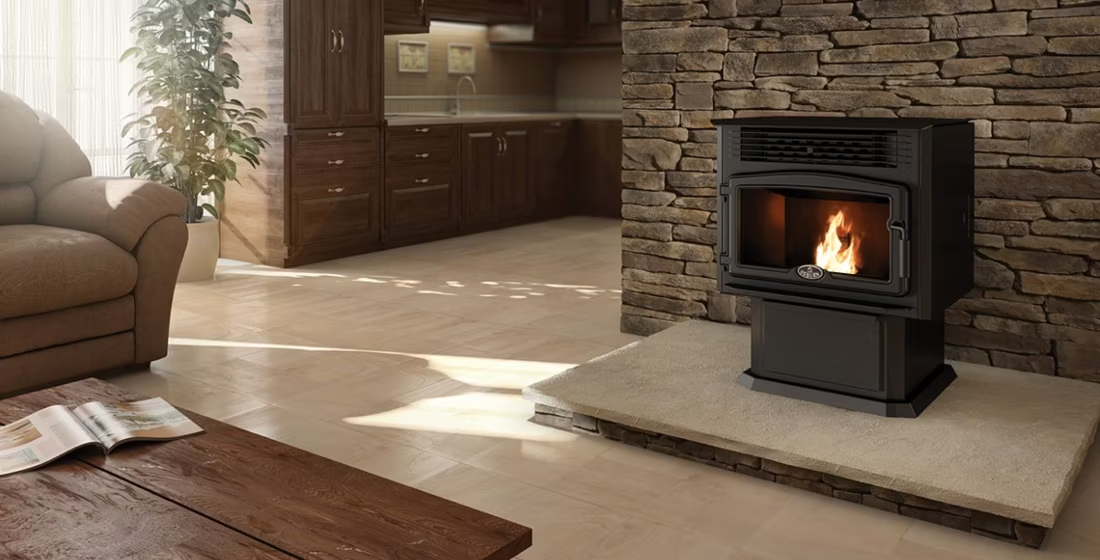
That's why pellet relevance here is genuinely limited rather than a marketing gap. Most South Ogden homeowners who want supplemental heat choose a direct-vent gas insert or an electric fireplace instead. Still, a small number of households install pellet stoves anyway—often in a detached shop, a cabin up Ogden Canyon, or a home where the owner wants the look of a real fire without cutting and hauling cordwood from the pinyon, juniper, and aspen stands common in this part of the Wasatch. Because EPA-certified pellet stoves burn far cleaner than open cordwood, they're typically treated more leniently than uncertified wood stoves during mandatory action day restrictions—one of the only practical advantages pellet holds over wood in this air basin.
Three steps. No salesperson until you're ready.
Tell us about your project
Your zip code, your situation, and the fuel you're leaning toward—or let the answers point you to one.
See what's actually available
The brands dealers within 100 miles genuinely carry—real options, never a catalog mirage.
Get your dealer & Project Guide
A trusted local dealer, plus the free Project Guide & Parts List that names every component of the job.
Frequently Asked Questions
Why is pellet stove relevance rated so low for South Ogden specifically?
It comes down to air quality policy and fuel availability, not a lack of interest in solid-fuel ambiance. Weber County sits inside the Wasatch Front's PM2.5 nonattainment area, and new solid-fuel burning devices—wood and pellet—are treated as an added source of wintertime particulate during inversion events. At the same time, natural gas service is standard throughout South Ogden, so most homeowners who want a low-maintenance heat source default to a gas insert rather than sourcing pellet bags from a regional supplier. Pellet stoves aren't banned here, but they're genuinely uncommon, and fewer local hearth dealers stock them compared to gas or electric units.
Will I be allowed to burn a pellet stove during a bad air day?
Generally yes, more so than with a wood stove. Utah's mandatory action day rules along the Wasatch Front are aimed primarily at open wood-burning devices, since they produce far more fine particulate per hour of burn than an EPA-certified pellet appliance. A pellet stove that's your sole source of heat, or one that carries current EPA emissions certification, typically avoids the strictest curtailment applied to uncertified wood stoves during red air days. That said, rules shift year to year, so confirm current status with Weber County or the Utah Division of Air Quality before counting on burning through a full inversion season.
What size pellet stove makes sense for a workshop or cabin near South Ogden?
For a detached shop or a cabin up Ogden Canyon in the 800 to 1,200 square foot range, a small-to-medium pellet stove in the 40,000 to 60,000 BTU range is usually enough, especially at this elevation—around 4,677 feet, with winter lows averaging near 21°F. Larger cabins or poorly insulated older structures need more capacity. Since so few South Ogden homes run pellet as primary heat, sizing here is less about a whole-house heat loss calculation and more about matching the specific space you're actually trying to heat. A local dealer can walk the space and size it properly.
Do I need a permit to install a pellet stove in South Ogden?
Yes. A new solid-fuel or pellet-burning appliance typically requires a building permit through the City of South Ogden's building department, or through Weber County's building department if the installation falls outside city limits. The permit process confirms proper venting clearances and hearth protection. Because pellet installs are infrequent here, it's worth confirming directly that the reviewing office is familiar with pellet-specific venting—a double-wall pellet vent kit terminates differently than a wood stove's Class A chimney, and not every inspector sees one regularly.
How much does a pellet stove installation typically cost?
Because pellet is a low-volume category in South Ogden, get quotes from at least two dealers rather than relying on a single published number. As a general guide from Western markets with similarly niche pellet demand, a freestanding pellet stove with a wall-through vent kit typically runs in the $3,000 to $6,000 range installed, while a pellet insert set into an existing masonry fireplace usually costs somewhat more once the connector pipe and hopper access are accounted for. Ask any quote to break out the vent kit separately, since that's the piece most often underspecified on a low-volume install.
Where can I buy pellet fuel near South Ogden?
Regional brands like Bear Mountain, Lignetics, and Forest Energy are the most commonly available pellets across Utah and the broader Intermountain West, typically sold through farm supply stores and hardware chains rather than dedicated pellet depots. Because pellet stoves are uncommon in South Ogden specifically, don't assume every nearby retailer stocks bags year-round—call ahead in early fall before cold weather hits, and consider buying a season's supply at once since availability can tighten during peak winter inversion months.
Pellet vs. gas—which makes more sense for a South Ogden home?
For the overwhelming majority of South Ogden homes, gas wins. Natural gas service is standard throughout the area, a gas insert or fireplace requires no fuel storage or hopper refilling, and it sidesteps the air-quality debate entirely since it adds no particulate load during winter inversions. Pellet only makes sense in specific situations—a detached structure without gas service, a homeowner who wants the visual and radiant quality of a real flame, or someone drawn to pellet's lower per-BTU fuel cost compared to electric resistance heat. If your home already has gas plumbed in, there's little practical reason to choose pellet instead.
What maintenance does a pellet stove need, and is it worth it for occasional use?
Pellet stoves need the burn pot and ash pan cleaned every few days of regular use, the hopper and auger checked periodically for jams, a full glass and venting cleaning at least once a season, and an annual inspection of the exhaust blower and gaskets. That's meaningfully more hands-on than a gas insert, which mostly just needs an annual once-over. For a South Ogden homeowner using a pellet stove as occasional cabin or shop heat rather than daily primary heat, the maintenance is manageable, but it's worth being honest about whether you'll actually keep up with it before choosing pellet over a lower-maintenance gas or electric option.
Can a pellet stove run during a power outage?
No, not without a backup power source. Pellet stoves rely on an electric auger to feed fuel and a blower to distribute heat and vent combustion gases, so they shut down the moment PacifiCorp power drops—unlike a wood stove, which keeps burning with no electricity at all. If backup heat during outages is a priority for your South Ogden home, either pair a pellet stove with a battery backup or small generator, or consider whether a wood stove or a battery-backed gas unit better fits that specific need.
Why is my open fireplace making my house colder?
Open fireplaces suck—literally. As the fire burns, it consumes air your furnace already paid to heat and pulls it out through the chimney, so the house is actually colder after the fire goes out than before you lit it. An insert fixes this: it seals the chimney, puts fixed glass across the front, and turns that hole in your house into a real heat source.
What's the difference between an insert and a zero-clearance fireplace?
An insert is a fireplace that slides into a pre-existing wood-burning fireplace—if you don't have one, there's nothing to insert it into. A zero-clearance fireplace is built into a framed wall, which makes it the answer for remodels and new construction. Simple test: existing masonry fireplace means insert; blank or framed wall means zero-clearance.
Can I install a fireplace myself?
If you're putting a fire in your house on purpose, it's best to work with an expert. Unless you're genuinely experienced in framing, gas line, vent pipe, and the national code on clearances to combustibles, have a professional do it—and ideally the same company that sells you the fireplace, so warranty, service, and liability all live under one roof.
Can a fireplace actually lower my heating bill?
Yes—by creating a comfort zone. A furnace heats every square foot of the house just to warm the one room you're in; a gas fireplace on low burns roughly a sixth of the gas a typical furnace does. Set the furnace around 55–60 degrees as a baseline, then heat the rooms your family actually uses. Families who heat this way commonly save $20–$60 a month.
Nearby Dealers
Hearth shops serving South Ogden and the surrounding area. Every listing shows whether it is a WhyFire partner, a dealer we have verified as authorized for the brands we recommend, or a local business carrying hearth products. No manufacturer pays for placement. How we verify dealers →
Rocky Mountain Stove
Stone World Supply
Timber Ridge Fireplace
Ogden Lawn & Garden
Comfort Solutions
Hearth & Home Dist. Of UT-Ogden
Utah Air
Croft Fireplaces (Bountiful)
Chim Chiminey Fireplace
Pellet Brands Stocked Around South Ogden
Manufacturers will point you to the nearest stocking dealer.
Find your pellet fireplace in South Ogden.
Tell us about your space and heating goals, and we'll match you with a local dealer who actually stocks pellet equipment—plus a free Project Guide & Parts List with the exact parts, vent kit, and recommended installer for your South Ogden project.
Find Your Fireplace →