
Warmth built for Wasatch Back winters.
At 6,483 feet in the Snyderville Basin, gas is the practical hearth choice. Find the right fireplace or insert and connect with a trusted local dealer.
Every Project Starts From One of These Five Situations
Instant heat for one of Utah's coldest zip codes.
Snyderville sits in the Snyderville Basin at 6,483 feet, wedged between Kimball Junction and Park City along the Wasatch Back. At Climate Zone 6B with 7,934 heating degree days, this area logs more heating demand than notoriously cold Bozeman, Montana - winter lows average 16°F, but the basin's elevation and exposure mean many nights dip well below that. Wood-burning is essentially absent here: HOA covenants in basin communities like Pinebrook, Silver Springs, and Jeremy Ranch prohibit wood smoke, and wildfire-smoke concerns keep Summit County's air quality posture tight on solid-fuel appliances. Pellet stoves are similarly rare. Gas has become the default hearth fuel for the mountain-modern homes that dominate the basin's newer subdivisions.
Dominion Energy Utah runs natural gas lines through most of the Basin's established neighborhoods near Kimball Junction and Newpark, while some of the higher, more remote subdivisions run on propane delivered by regional suppliers. Either way, a direct-vent gas fireplace or insert handles the demands of this climate well: instant heat for the great rooms and vaulted ceilings common in Snyderville's mountain architecture, zone heating to take the load off a furnace during extended cold snaps, and - with the right ignition system - a way to keep at least one room warm if a heavy snowstorm knocks out power along the Wasatch Back.
Three steps. No salesperson until you're ready.
Tell us about your project
Your zip code, your situation, and the fuel you're leaning toward—or let the answers point you to one.
See what's actually available
The brands dealers within 100 miles genuinely carry—real options, never a catalog mirage.
Get your dealer & Project Guide
A trusted local dealer, plus the free Project Guide & Parts List that names every component of the job.
Frequently Asked Questions
How much does a gas fireplace installation cost in Snyderville?
Expect $4,500 to $12,000 for a gas fireplace installation in Snyderville, with the wide range driven by elevation and architecture as much as the unit itself. Many basin homes have steep rooflines, tall chases, and long vertical vent runs to clear heavy snow loads, which adds labor and materials compared to a single-story install elsewhere. A straightforward direct-vent insert into an existing fireplace with gas already run to the room sits at the lower end; a new propane installation requiring a fresh line from an outdoor tank, or a built-in unit in new construction, lands toward the top. Local dealers who work regularly in the Snyderville Basin and Park City area will quote firm numbers after seeing your specific chase and roofline.
Can I convert my existing wood fireplace to gas?
Yes, and it's a common upgrade in the Basin's older homes built before many HOAs restricted wood burning. A gas insert typically drops into your existing masonry firebox, using a stainless liner run through your current chimney, and runs $4,500 to $9,500 depending on whether you're on natural gas or need a propane conversion. Because open-hearth wood fireplaces lose most of their heat up the flue, swapping to a sealed gas insert is also one of the more noticeable comfort upgrades in a drafty older mountain home.
Do I need natural gas, or can I use propane?
Either works, and which one you have usually comes down to where in the Basin you live. Dominion Energy Utah serves natural gas to most of the established neighborhoods around Kimball Junction and Newpark. Homes in some of the higher or more remote subdivisions - parts of Jeremy Ranch, Timber Ridge, and similar developments - often run on propane from a buried or above-ground tank instead. Most gas fireplace models can be set up for either fuel with the correct orifice; your installer handles that during installation regardless of which you have.
Will my gas fireplace work during a power outage?
Most will, with the right ignition system. Units with intermittent pilot ignition (IPI) run on AA battery backup that kicks in automatically when the power drops, so the fireplace still lights on demand. Valor fireplaces go a step further - their pilot generates its own electricity through a thermocouple, so there are no batteries to maintain at all. That distinction matters more here than in milder climates: the Wasatch Back sees heavy snow events that can knock out power for hours, and a working gas fireplace is a genuine backup heat source at 6,483 feet when the furnace stops running.
What's the difference between a gas fireplace, gas insert, and gas stove?
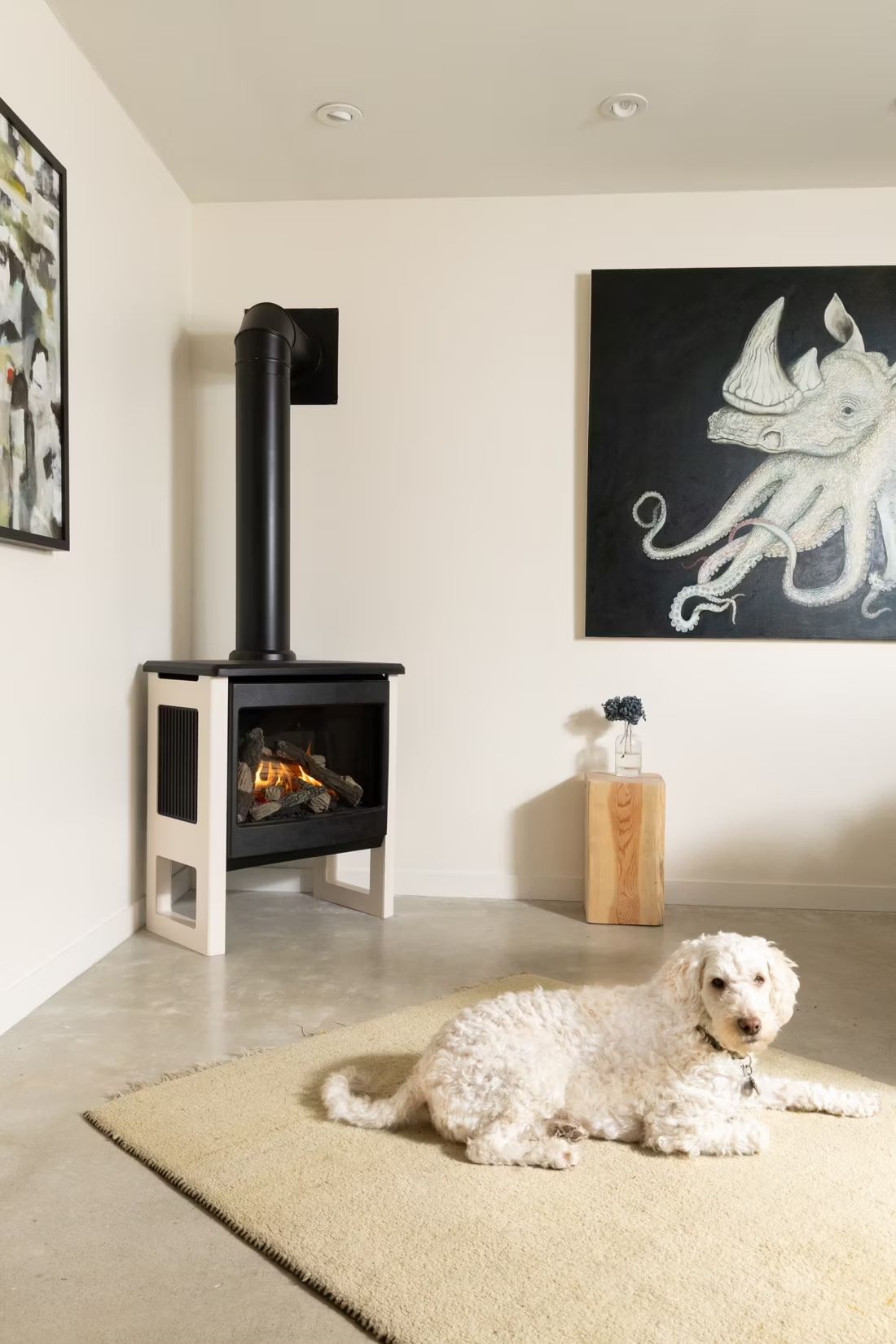
A gas fireplace is a built-in unit framed into a wall, standard for new construction or a remodel where you're building the hearth from scratch. A gas insert fits into an existing masonry fireplace opening, using your current chimney or a liner as the vent path - this is the common choice for the basin's older homes with existing wood fireplaces. A gas stove is a freestanding unit that sits on the floor on its own hearth pad, useful in a room without an existing chimney or opening. For most Snyderville homeowners upgrading from an old wood-burning fireplace, an insert is the straightforward path.
Do I need a permit to install a gas fireplace in Snyderville?
Yes. Snyderville is unincorporated, so building permits go through the Summit County Building Department rather than Park City's municipal office, and any new gas line work requires sign-off tied to Dominion Energy Utah's connection standards. Most hearth dealers who install regularly in the Basin handle both the county permit and the gas line coordination as part of the job, which saves you from managing separate trades.
What's the difference between vented and vent-free gas fireplaces?
Vented (direct-vent) units draw combustion air from outside and exhaust it back outside through a sealed pipe - they're the standard choice and code-compliant everywhere. Vent-free units burn directly into the room without external venting and are legal in Utah, but they're a poor match for Snyderville's elevation: vent-free appliances are rated and tested near sea level, and their combustion efficiency and BTU output derate as elevation climbs. At 6,483 feet, that derating is significant enough that most local dealers steer homeowners toward direct-vent units instead, which perform consistently regardless of altitude and don't put any combustion byproducts into the room.
How often should my gas fireplace be serviced?
Plan on an annual inspection, ideally in early fall before the Basin's cold sets in. A technician checks the burner, pilot assembly, venting, and gas connections, and cleans the glass and interior - usually $150 to $250. Given how many days a season a gas fireplace gets used as supplemental heat in Snyderville's long winters, skipping this isn't worth the risk of a fouled pilot or venting issue showing up on the coldest night of the year.
Gas vs. wood - which is right for my home?
In most of Snyderville, this isn't really a close call. Wood-burning appliances are rare here - many HOA covenants in basin communities prohibit them outright, and Summit County's air quality posture around wildfire smoke adds another layer of restriction. Public land cutting permits exist through the Uinta-Wasatch-Cache National Forest for $5 to $20 per cord, but the short May-through-October season and covenant restrictions mean very few homes actually burn wood locally. Gas is the practical default: instant heat, no smoke or ash, and it fits the architecture of the mountain-modern homes that make up most of the Basin's housing stock.
What's the difference between an insert and a zero-clearance fireplace?
An insert is a fireplace that slides into a pre-existing wood-burning fireplace—if you don't have one, there's nothing to insert it into. A zero-clearance fireplace is built into a framed wall, which makes it the answer for remodels and new construction. Simple test: existing masonry fireplace means insert; blank or framed wall means zero-clearance.
What do I measure to size a fireplace insert?
Four numbers tell you what fits: the front width, the front height, the back width, and the overall depth of your existing fireplace opening. Grab a tape measure, jot those down, and snap a photo of the wall—those two things do more to move your project forward than anything else you can do today.
Can I install a fireplace myself?
If you're putting a fire in your house on purpose, it's best to work with an expert. Unless you're genuinely experienced in framing, gas line, vent pipe, and the national code on clearances to combustibles, have a professional do it—and ideally the same company that sells you the fireplace, so warranty, service, and liability all live under one roof.
Does a fireplace add value to my home?
On average, a fireplace adds back to the home about the same amount you spent installing it. Add the monthly savings from heating the rooms you actually use instead of the whole house—often hundreds of dollars a year—and the value case is strong before you even count what a fire does for how your family uses the room.
Nearby Dealers
Hearth shops serving Snyderville and the surrounding area. Every listing shows whether it is a WhyFire partner, a dealer we have verified as authorized for the brands we recommend, or a local business carrying hearth products. No manufacturer pays for placement. How we verify dealers →
Uintah Fireplace And Design
All Hours Plumbing, Drain Cleaning, Heating & Cooling
Delta Stone Products, Inc.
(Sugar House) Alpine Fireplaces (In Breezeway Next To Theatres)
Comfort Solutions
Ignite Fireplace
Bills Comfort Systems
Standard Plumbing
Degrees Above Fireplaces
Croft Fireplaces (Bountiful)
Wasatch Fireplace & Stove
Find your gas fireplace in Snyderville.
Tell us about your home and gas setup, and we'll match you with a trusted local dealer who knows Snyderville's elevation and building requirements - plus a free Project Guide & Parts List for your project, vent kit included.
Find Your Fireplace →