
Warmth Without the Winter Smoke.
Clean, instant ambiance and supplemental heat for Santaquin homes—no chimney, no burn-day restrictions, no gas line required. Find the right unit and connect with a trusted local dealer.
Every Project Starts From One of These Five Situations
Heat that never touches an inversion day.
Santaquin sits at the southern tip of Utah Valley at nearly 5,000 feet, in the shadow of Mount Nebo. Winters bring an average low near 20°F and a heating season about on par with Buffalo, NY, minus the lake-effect snow and with a lot more dry high-desert air. Wood has deep roots here, with pinyon, juniper, and aspen common on the surrounding Uinta-Wasatch-Cache and Manti-La Sal national forest land. But Utah County is also ground zero for the Wasatch Front's notorious winter temperature inversions, when the Utah Division of Air Quality calls mandatory 'no-burn' action days that restrict solid-fuel devices unless they're EPA-certified. An electric fireplace sidesteps that entire conversation—it produces zero on-site emissions and runs the same on a red day as a green one.
Rocky Mountain Power (PacifiCorp) serves Santaquin at a residential rate around $0.1252 per kWh, among the more affordable rates in the Mountain West, which keeps an electric insert or wall unit cheap to run as supplemental zone heat or pure ambiance. There's no chimney to build, no gas line to run, and no venting to size—which matters in the newer subdivisions climbing the benches toward Mount Nebo, in finished basements without existing flue access, and in homes where an HOA or rental agreement rules out anything that burns. A qualified local dealer can look at your specific wall or framing situation and tell you within minutes whether a plug-in insert or a hardwired built-in is the better fit.
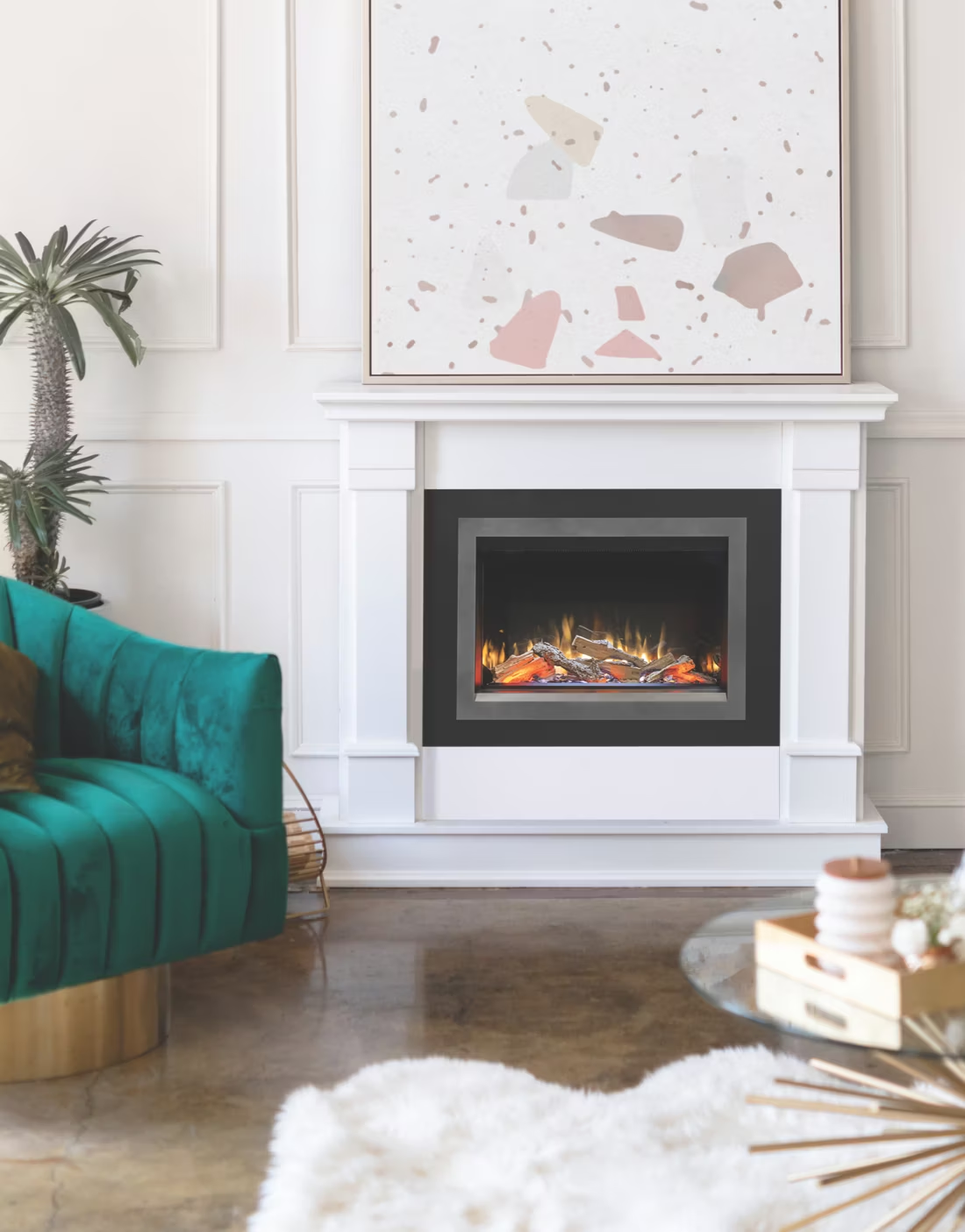
Three steps. No salesperson until you're ready.
Tell us about your project
Your zip code, your situation, and the fuel you're leaning toward—or let the answers point you to one.
See what's actually available
The brands dealers within 100 miles genuinely carry—real options, never a catalog mirage.
Get your dealer & Project Guide
A trusted local dealer, plus the free Project Guide & Parts List that names every component of the job.
Frequently Asked Questions
How much does an electric fireplace installation cost in Santaquin?
Simple plug-in electric inserts and freestanding stoves typically run $300 to $1,200 including the unit, since most just need a standard outlet and no wiring, framing, or permit. Hardwired wall units—the kind built into a mantel surround or a custom media wall—run higher, generally $1,200 to $4,000, once you factor in a dedicated circuit, a licensed electrician, and any surrounding cabinetry or trim work. Local dealers can walk your specific space and give you a firm number.
Can I use an electric fireplace during a winter inversion or red air quality day?
Yes—that's one of the strongest arguments for electric heat in Santaquin. When the Utah Division of Air Quality calls a mandatory action day during a winter inversion, wood-burning devices that aren't EPA-certified are restricted from operating, and even certified stoves can face limits on the worst days. An electric fireplace isn't a solid-fuel device, so it's never subject to those restrictions. You get ambiance or supplemental heat regardless of what the inversion is doing to the valley air outside.
Do I need a permit to install an electric fireplace in Santaquin?
It depends on the unit. A plug-in insert or freestanding electric stove that runs off an existing outlet typically doesn't require a permit. A hardwired built-in unit—especially one requiring a new dedicated circuit—does need an electrical permit through the City of Santaquin Building Department, and the wiring should be pulled by a licensed electrician. Most local dealers who sell hardwired units either employ a licensed electrician or coordinate one as part of the installation.
How much does it cost to run an electric fireplace in Santaquin?
At Rocky Mountain Power's residential rate of roughly $0.1252 per kWh, a typical 1,500-watt electric fireplace running on high costs about 19 cents an hour to operate—under $5 for an evening's use. Most models let you run the flame effect without the heater engaged, which draws only a few watts and costs pennies a night if you just want the visual without the warmth.
Electric vs. wood—which makes more sense for my Santaquin home?
Wood is the traditional choice here, with pinyon, juniper, and aspen readily available through low-cost Forest Service permits ($5 to $20 per cord) on the nearby Uinta-Wasatch-Cache and Manti-La Sal national forests, and it keeps working during a power outage. Electric is the cleaner, lower-maintenance option—no chimney, no ash, no wood to split or store, and no exposure to Utah County's mandatory no-burn days during winter inversions. If you want a backup heat source that works when the power's out, wood wins. If you want simple, clean, always-available ambiance or zone heat with zero smoke contribution to valley air quality, electric is usually the better fit.
Will an electric fireplace heat my whole house?
No—electric fireplaces are supplemental heaters, capped at about 1,500 watts (roughly 5,100 BTU) by U.S. electrical code for a standard 120V circuit. That's enough to noticeably warm a single room or open living area, but it won't replace a furnace on a 20°F morning in Santaquin. Most homeowners here use electric fireplaces to take the edge off a bonus room, finished basement, or home office, while the central system handles the rest of the house.
What's the difference between an electric insert and a built-in electric fireplace?
An electric insert is sized to slide into an existing masonry or wood-burning fireplace opening, letting you keep the surround and mantel while swapping the firebox for a clean electric unit—a popular option for older Santaquin homes converting away from an underused wood fireplace. A built-in electric fireplace is designed to be framed into a wall from scratch, common in new construction or remodels where there's no existing fireplace opening. Both come in small, medium, and wide linear formats, and a local dealer can measure your opening or framing bay to match the right unit.
Does an electric fireplace work during a power outage?
No—unlike a wood stove, an electric fireplace stops working the moment the power goes out, since it has no combustion source of its own. For Santaquin homes where winter storm outages are a real concern, many households pair an electric fireplace for daily convenience and ambiance with a wood stove or generator for outage backup. If outage-proof heat is your top priority, wood is worth considering as at least a secondary system.
What's the best electric fireplace for a Santaquin home?
For ambiance-focused installs—a media wall, a bedroom accent, a basement rec room—linear wall-mount units from brands like Dimplex, Napoleon, or Amantii are popular for their realistic flame technology and wide viewing area. For homes wanting a bit more supplemental heat alongside the visual, an electric stove-style unit designed to mimic a wood stove's footprint works well in a smaller room. Because electric units vary widely in flame quality and heater wattage, it's worth seeing one running in person before you buy—a local dealer showroom is the best way to judge that before committing.
Can I put a TV above my fireplace?
Yes—with an asterisk. Fireplaces are hot and TVs don't like heat. Either put a mantel between them to deflect rising warmth, or choose a fireplace with heat-management technology that creates a cool zone on the wall above—the wall stays around 125 degrees, barely warm, while the room still gets full heat. If you like clean lines and don't want a mantel, heat management is the answer.
Does an electric fireplace need a vent or chimney?
No—that's its superpower. An electric fireplace needs a wall and an outlet, period. No vent pipe, no gas line, no clearances to design around, which is why it works in bedrooms, offices, apartments, and walls where venting a gas or wood unit would be impractical or impossible. Installation is typically the simplest and least expensive of any fireplace type.
Does a fireplace add value to my home?
On average, a fireplace adds back to the home about the same amount you spent installing it. Add the monthly savings from heating the rooms you actually use instead of the whole house—often hundreds of dollars a year—and the value case is strong before you even count what a fire does for how your family uses the room.
How much should I budget for a fireplace?
For an average home—covering the fireplace, the vent pipe, and basic installation—a budget between $3,900 and $5,500 gives you a lot of options across wood, gas, and pellet. By the time you add finish work, gas line, and electrical, the average complete installation lands between $5,000 and $12,000 all-in. In a remodel or new build, a good rule is to put about 2.5% of the total project cost toward the fireplace.
Nearby Dealers
Hearth shops serving Santaquin and the surrounding area. Every listing shows whether it is a WhyFire partner, a dealer we have verified as authorized for the brands we recommend, or a local business carrying hearth products. No manufacturer pays for placement. How we verify dealers →
Southwest Plumbing Supply - Springville
Modscapes Outdoor Living
First Class Fireplace
Modscapes Modern Living
Electric Service in Santaquin
An electric fireplace's heater draws about 1,500 watts—pennies per hour at local rates.
Find your electric fireplace in Santaquin.
Tell us a bit about your home and we'll match you with the right electric fireplace or insert, plus a free Project Guide & Parts List—the exact parts list and a trusted local Santaquin-area dealer to install it.
Find Your Fireplace →