
Keep Your Family Warm and Safe—No Matter What
Wood heat still works in Salt Lake City if you understand the inversion rules. Find the right EPA-certified stove or insert, and connect with a local dealer who knows the DAQ requirements cold.
Every Project Starts From One of These Five Situations
Wood heat here means understanding the inversion.
Salt Lake City sits at 4,224 feet in a bowl formed by the Wasatch Range and the Oquirrh Mountains, and that geography is the whole story. With a winter heating season that's noticeably milder than a place like Helena, Montana, and a 28-degree average winter low, the valley isn't nearly as brutally cold—but the same mountains that shelter it also trap cold, stagnant air against the valley floor for days or weeks at a time. Those temperature inversions turn the Salt Lake Valley into one of the worst PM2.5 nonattainment areas in the country every winter, and wood smoke is one of the pollutants the Utah Division of Air Quality (DAQ) watches closely.
That doesn't mean wood heat is off the table—it means the stove matters more here than almost anywhere else. During DAQ Voluntary and Mandatory Action Days, older or uncertified wood stoves in Salt Lake County are required to stay cold, and even EPA-certified stoves face restrictions unless they're registered as a home's sole source of heat. Homeowners who cut their own wood typically pull permits through the Uinta-Wasatch-Cache National Forest for $5 to $20 per cord during the May-through-October season, bringing home pinyon, juniper, and aspen from the nearby Wasatch and Uinta foothills. The right modern, low-emission stove—installed by someone who understands both the building code and the DAQ rules—is what makes wood heat realistic in this valley.
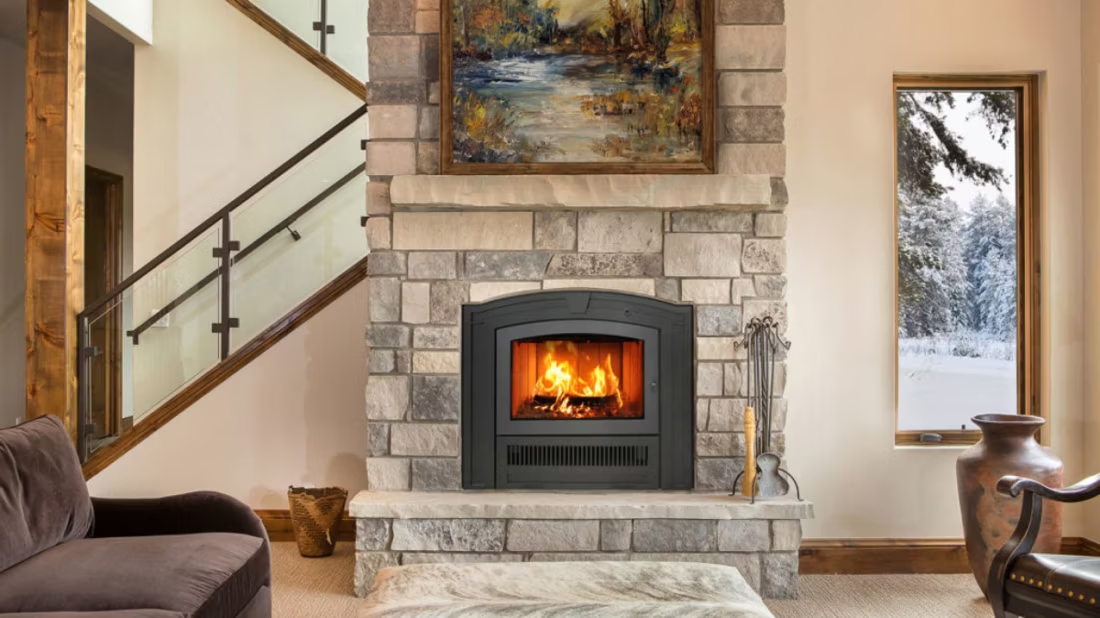
Firewood Cutting Permits Near Salt Lake City
Three steps. No salesperson until you're ready.
Tell us about your project
Your zip code, your situation, and the fuel you're leaning toward—or let the answers point you to one.
See what's actually available
The brands dealers within 100 miles genuinely carry—real options, never a catalog mirage.
Get your dealer & Project Guide
A trusted local dealer, plus the free Project Guide & Parts List that names every component of the job.
Frequently Asked Questions
How much does a wood stove installation cost in Salt Lake City?
A typical wood stove installation in Salt Lake City runs about $4,000 to $8,500, depending on the stove, whether new Class A chimney pipe is needed, and whether a hearth pad has to be upgraded for clearance. Installing an insert into an existing masonry fireplace tends to land on the lower end since the chimney chase already exists. New construction or homes without an existing chimney—where the installer has to run pipe through a roof or exterior wall—sit at the higher end. Salt Lake City Building Services (or Salt Lake County Community Development for unincorporated areas) requires a permit for the install, and most hearth dealers handle that paperwork as part of the job.
Can I even burn wood in Salt Lake City given the air quality rules?
Yes, but the Utah Division of Air Quality's Action Day program controls when. On Voluntary Action Days, residents are asked to avoid burning; on Mandatory Action Days, burning in any solid-fuel device—including EPA-certified stoves—is prohibited in Salt Lake County unless the stove is registered with the DAQ as a home's only source of heat. Uncertified, pre-1990 stoves face the tightest restrictions and can't burn on either type of day. This is exactly why the stove you choose matters: a current EPA-certified catalytic or non-catalytic unit gives you the most flexibility to burn legally through a Wasatch Front winter, and a local dealer can walk you through registering as a sole-heat-source household if that applies to you.
What size wood stove or insert do I need for my home?
Sizing depends on square footage, ceiling height, insulation, and whether the stove is your primary heat or a supplement. Given Salt Lake City's relatively moderate winter heating needs compared to colder mountain towns, many homes here do fine with a small-to-medium stove (rated for 1,000-1,800 sq ft) rather than the largest catalytic units built for sub-zero climates. Older bungalows in the Avenues or Sugar House with less insulation may need more capacity than a newer, tighter-built home in the same square footage. A local dealer will size the unit based on an in-home visit—oversizing leads to smoldering, low-temperature burns that produce more smoke, which matters even more here given the inversion-season scrutiny on emissions.
Where can I find certified wood stove installers near me?
Look for NFI (National Fireplace Institute) certified installers or CSIA (Chimney Safety Institute of America) credentials—both indicate real training in wood-burning appliance clearances and venting. In the Salt Lake Valley, most hearth shops that sell stoves also install them, which keeps warranty coverage and code compliance under one roof. Given the local emissions scrutiny, it's also worth asking whether the installer is familiar with DAQ sole-heat-source registration, since that's a step generic contractors typically don't know exists.
What's the difference between a wood stove and a wood insert?
A wood stove is a freestanding unit on its own hearth pad that vents through a chimney and can go almost anywhere with proper clearances. A wood insert slides into an existing masonry fireplace opening and uses the existing chimney (typically relined with stainless steel) to vent—it converts a drafty, inefficient open fireplace into a sealed, high-output heater. Many of Salt Lake City's older brick homes in neighborhoods like Rose Park or the Avenues already have a masonry fireplace, which makes an insert the simpler, less invasive upgrade. Homes without an existing fireplace are usually better matched to a freestanding stove.
Do I need a permit to install a wood stove in Salt Lake City?
Yes. A building permit is required through Salt Lake City Building Services within city limits, or Salt Lake County for unincorporated areas, and the stove itself has to meet current EPA emissions standards to pass inspection. Most hearth dealers pull the permit as part of the installation. Separately, if you plan to rely on the stove during DAQ Mandatory Action Days, you'll also want to register it with the Division of Air Quality as your home's sole source of heat—that's a DAQ process, not a building permit, and it's worth doing at install time rather than scrambling later.
What's the best wood stove for Salt Lake City's climate and air quality rules?
Given the DAQ's focus on emissions during winter inversions, current-generation EPA-certified stoves are the practical choice here, not older or grandfathered units. Catalytic stoves from brands like Blaze King burn cleanly at low, steady output—useful for overnight burns without triggering the smoky, low-temperature fires that draw DAQ complaints. Non-catalytic stoves from Pacific Energy or Lopi are simpler to run and still meet current emissions standards, and they're a solid fit for the valley's more moderate winters compared to true high-elevation mountain climates. A local dealer can also tell you which models qualify most easily for sole-heat-source DAQ registration.
How often should my chimney be inspected and cleaned?
The CSIA recommends an annual inspection for any wood-burning appliance, and that holds true in Salt Lake City regardless of how mild a given winter feels. Plan for a full sweep before burning season starts, typically in September or October. Homes burning pinyon or juniper—both of which run pitchier than aspen—may see faster creosote buildup and benefit from a mid-season check if the stove sees heavy use. Skipping inspections is the leading cause of residential chimney fires, and it's an easy step to schedule alongside your fall furnace tune-up.
Where can I get firewood or cut my own near Salt Lake City?
Self-cut firewood permits are available through the Uinta-Wasatch-Cache National Forest for $5 to $20 per cord, valid during the May-through-October cutting season—the forest closes to cutting once snow makes access difficult. Pinyon, juniper, and aspen are the most common species you'll bring home from the surrounding foothills and canyons. If you'd rather buy split and seasoned wood, several local suppliers deliver by the cord throughout the valley, generally in the $250-$375 range depending on species and whether it's kiln-dried. One advantage of wood over pellets here: pellet stoves need Rocky Mountain Power (PacifiCorp) electricity to run the auger and blower, while a wood stove keeps heating through an outage—worth factoring in if you're weighing the two.
Why is a fireplace insert so efficient?
An insert does two things: it seals the chimney completely, so you stop losing air you already paid to heat, and it radiates warmth into the room through the firebox and glass. Most add a heat-exchange fan that pulls cool room air underneath, wraps it around the hot firebox, and pushes it back out warm. Your home is more efficient before you've even lit the first fire.
Do I have to leave the stove door cracked open to start a fire?
On many stoves, yes—a new fire needs extra air, and cracking the door a couple inches is how most stoves get it. But some modern stoves offer an automatic startup air system: engage it when you light, and timed air jets feed the fire for the first 20 minutes with the door fully shut, then close automatically. It's mechanical—like an egg timer, no electricity—and it means you can load it, light it, and walk away.
How much should I budget for a fireplace?
For an average home—covering the fireplace, the vent pipe, and basic installation—a budget between $3,900 and $5,500 gives you a lot of options across wood, gas, and pellet. By the time you add finish work, gas line, and electrical, the average complete installation lands between $5,000 and $12,000 all-in. In a remodel or new build, a good rule is to put about 2.5% of the total project cost toward the fireplace.
Can a fireplace actually lower my heating bill?
Yes—by creating a comfort zone. A furnace heats every square foot of the house just to warm the one room you're in; a gas fireplace on low burns roughly a sixth of the gas a typical furnace does. Set the furnace around 55–60 degrees as a baseline, then heat the rooms your family actually uses. Families who heat this way commonly save $20–$60 a month.
Nearby Dealers
Hearth shops serving Salt Lake City and the surrounding area. Every listing shows whether it is a WhyFire partner, a dealer we have verified as authorized for the brands we recommend, or a local business carrying hearth products. No manufacturer pays for placement. How we verify dealers →
Comfort Solutions
(Sugar House) Alpine Fireplaces (In Breezeway Next To Theatres)
Croft Fireplaces (Bountiful)
Bills Comfort Systems
Degrees Above Fireplaces
Ignite Fireplace
Wasatch Fireplace & Stove
Standard Plumbing
Timber Ridge Fireplace
Find your wood fireplace in Salt Lake City.
Tell us about your home and burning habits, and we'll match you with a local dealer who understands both the installation and Salt Lake City's DAQ rules—plus a free Project Guide & Parts List with the exact parts, vent kit, and recommended installer for your project.
Find Your Fireplace →