
Clean-Burning Heat for Inversion Season.
Pellet heat that keeps running on the red-air days when wood stoves in the Salt Lake Valley have to sit cold. Find the right unit and connect with a trusted local dealer.
Every Project Starts From One of These Five Situations
Built for the valley's inversion problem.
Salt Lake City sits at 4,224 feet in a bowl-shaped valley boxed in by the Wasatch Range to the east and the Oquirrh Mountains to the west. That geography is great for views and terrible for winter air—cold, dense air gets trapped under a warmer layer above it, and pollution has nowhere to go. With 4,724 heating degree days and average winter lows around 28°F, the cold here is real but not extreme compared to a place like Bozeman, MT or Fargo, ND. The bigger local factor is what happens to the air once you burn something in it.
Salt Lake County is a designated nonattainment area for fine particulate matter, and Utah's Division of Air Quality issues mandatory and voluntary action days throughout the winter restricting solid-fuel wood burning across the Wasatch Front. EPA-certified pellet stoves are generally exempt from those restrictions because of their far lower particulate output—which is a big part of why pellet heat has caught on here even among households that would otherwise burn wood. Regional brands like Bear Mountain, Lignetics, and Forest Energy stock hearth retailers throughout the valley, so fuel supply is rarely an issue.
Three steps. No salesperson until you're ready.
Tell us about your project
Your zip code, your situation, and the fuel you're leaning toward—or let the answers point you to one.
See what's actually available
The brands dealers within 100 miles genuinely carry—real options, never a catalog mirage.
Get your dealer & Project Guide
A trusted local dealer, plus the free Project Guide & Parts List that names every component of the job.
Frequently Asked Questions
How much does a pellet stove installation cost in Salt Lake City?
Most pellet stove and insert installations in the Salt Lake Valley run roughly $3,000 to $6,500, depending on the unit, whether it's a freestanding stove or an insert going into an existing masonry fireplace, and what electrical and venting work is needed. Every pellet stove needs a dedicated 120V outlet to run the auger and combustion blower, and if your existing fireplace doesn't have power nearby, that adds an electrician to the job. Direct-vent through an exterior wall is usually simpler and cheaper than routing a full liner up an existing chimney. A local hearth retailer will give you a firm number after seeing your fireplace or install location.
What size pellet stove do I need for my Salt Lake City home?
It depends on square footage, ceiling height, and how much of your home you're trying to heat. Salt Lake City has a wide mix of housing stock—older bungalows in Sugar House and the Avenues with smaller, more compartmentalized floor plans, versus newer, more open construction in areas like Daybreak. Smaller units (under 1,500 sq ft) suit a single zone or a supplemental role; mid-size units (1,500–2,500 sq ft) handle most main living areas; larger units can carry a well-insulated open-concept home as a primary heat source. Hopper size matters too—a larger hopper means fewer daily refills during a long inversion stretch when you might be running the stove around the clock. A local dealer will size this properly during an in-home visit.
Where can I find certified pellet stove installers near me?
Look for NFI (National Fireplace Institute) certified technicians, which most established hearth retailers in the Salt Lake Valley employ. Pellet stove installation is less venting-intensive than wood, but it still involves gas-tight connections if you're near a masonry chimney, correct wall or roof penetration for direct venting, and a properly placed electrical outlet. Working with the retailer who sold you the unit typically simplifies warranty coverage and gets the permitting handled as part of the job, rather than piecing it together yourself with a general contractor.
What's the difference between a pellet stove and a pellet insert?
A pellet stove is a freestanding unit that sits on its own hearth pad and vents through a wall or existing chimney chase—it can go almost anywhere with the right clearances. A pellet insert is built to slide into an existing masonry fireplace opening, using a vent liner run up through your current chimney. For Salt Lake City's older housing stock, especially homes in the Avenues, Sugar House, or Rose Park with existing wood-burning fireplaces, an insert is often the more straightforward retrofit since it reuses the chimney chase you already have. Homes without an existing fireplace opening are usually better suited to a freestanding stove.
Do I need a permit to install a pellet stove in Salt Lake City?
Yes. New pellet stove installations require a building permit, and within city limits that goes through Salt Lake City's Building Services Division; unincorporated Salt Lake County installations go through Salt Lake County's building and planning department. Because pellet stoves need a dedicated electrical circuit, an electrical permit is often part of the job as well. Most hearth retailers coordinate this paperwork as part of the installation, so you typically aren't filing anything yourself—worth confirming with whichever dealer you choose.
Can I run my pellet stove during a winter inversion no-burn day?
In most cases, yes. Utah's Division of Air Quality issues mandatory and voluntary action days during winter inversions that restrict solid-fuel wood-burning devices across Salt Lake County, but EPA-certified pellet stoves are generally exempt from those restrictions because they burn far cleaner than cordwood. This is one of the main reasons pellet heat has grown in popularity along the Wasatch Front—homeowners with a pellet stove aren't left without a working backup heat source on the very days a wood stove has to go cold. Always check the current UDAQ air quality action status for specifics, since rules can be updated.
What's the best pellet stove for Salt Lake City's climate?
With 4,724 heating degree days and stretches where you'll want the stove running continuously through inversion season, look for a unit with a larger hopper capacity (40+ lbs) so you're not refilling multiple times a day, plus a reliable auger feed system and easy-clean firepot for regular ash maintenance during heavy use. Mid-size to large units in the 1,500–2,800 sq ft heating range cover most Salt Lake Valley homes. Regional pellet supply from Bear Mountain, Lignetics, and Forest Energy is consistent, so fuel availability shouldn't be a limiting factor when choosing a stove.
Where can I buy wood pellets in Salt Lake City?
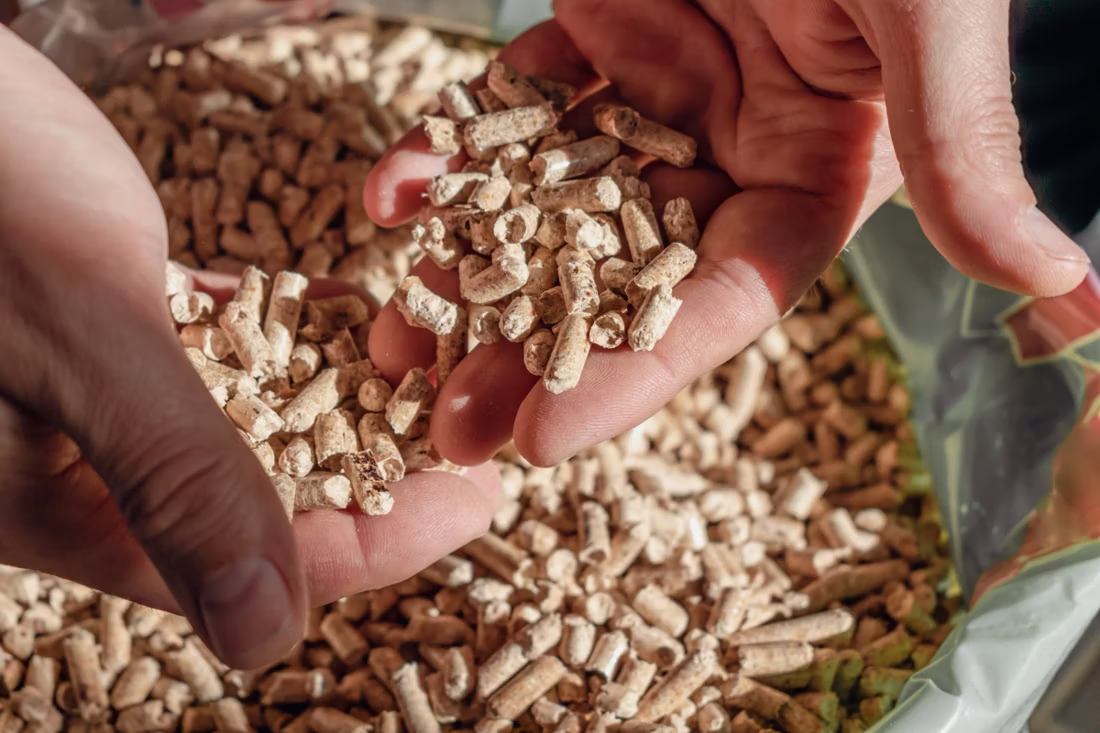
Hearth retailers and hardware stores throughout the valley carry Bear Mountain, Lignetics, and Forest Energy pellets, all regional brands milled in the Mountain West. Bags typically run in the $5–$7 range, with a ton (roughly a season's supply for a mid-size home) landing somewhere around $250–$350 depending on brand and time of year—buying in the off-season (spring/summer) usually gets a better price than waiting until inversion season hits. Softwood pellets are the standard choice for stove efficiency; hardwood blends are less common locally.
Pellet vs. wood—which is right for my Salt Lake City home?
Wood offers no dependence on electricity, lower fuel cost if you're cutting your own from the Uinta-Wasatch-Cache National Forest (permits run $5–$20 per cord, May through October), and a traditional fire experience—pinyon, juniper, and aspen are the common local species. But wood stoves are exactly the appliances restricted on mandatory no-burn inversion days, which can stack up for a week or more some winters. Pellet stoves need electricity to run the auger and blower—a real consideration during a power outage—but they're typically exempt from burn restrictions and produce far less particulate matter, which matters in a valley that already struggles with winter air quality. Many Salt Lake City homeowners choose pellet specifically to have reliable heat on the days wood can't legally burn.
How often does a pellet stove need cleaning?
A clean pellet stove is a happy pellet stove. Plan on cleaning the burn pot about once a week when you're burning regularly—ash and clinkers gum up the air holes just like a pellet barbecue. Most pellet stove problems trace back to skipped cleaning that nobody explained up front. Some designs make it easy with a trapdoor burn pot: pull a lever and the gunk drops into the ash pan.
Why is my open fireplace making my house colder?
Open fireplaces suck—literally. As the fire burns, it consumes air your furnace already paid to heat and pulls it out through the chimney, so the house is actually colder after the fire goes out than before you lit it. An insert fixes this: it seals the chimney, puts fixed glass across the front, and turns that hole in your house into a real heat source.
Does a fireplace add value to my home?
On average, a fireplace adds back to the home about the same amount you spent installing it. Add the monthly savings from heating the rooms you actually use instead of the whole house—often hundreds of dollars a year—and the value case is strong before you even count what a fire does for how your family uses the room.
How much should I budget for a fireplace?
For an average home—covering the fireplace, the vent pipe, and basic installation—a budget between $3,900 and $5,500 gives you a lot of options across wood, gas, and pellet. By the time you add finish work, gas line, and electrical, the average complete installation lands between $5,000 and $12,000 all-in. In a remodel or new build, a good rule is to put about 2.5% of the total project cost toward the fireplace.
Nearby Dealers
Hearth shops serving Salt Lake City and the surrounding area. Every listing shows whether it is a WhyFire partner, a dealer we have verified as authorized for the brands we recommend, or a local business carrying hearth products. No manufacturer pays for placement. How we verify dealers →
Comfort Solutions
(Sugar House) Alpine Fireplaces (In Breezeway Next To Theatres)
Croft Fireplaces (Bountiful)
Bills Comfort Systems
Degrees Above Fireplaces
Ignite Fireplace
Wasatch Fireplace & Stove
Standard Plumbing
Timber Ridge Fireplace
Pellet Brands Stocked Around Salt Lake City
Manufacturers will point you to the nearest stocking dealer.
Find your pellet stove in Salt Lake City.
Tell us about your home and inversion-season heating needs, and we'll match you with a trusted local dealer plus a free Project Guide & Parts List—the exact parts, including the vent kit, for your Salt Lake City pellet stove or insert project.
Find Your Fireplace →