
No chimney, no cordwood—just electric warmth in Roosevelt.
Zone heat and real ambiance for Uinta Basin winters, without venting, gas lines, or a woodpile—running on some of the cheapest power in the region through Moon Lake Electric.
Every Project Starts From One of These Five Situations
Cheap co-op power meets a seven-month heating season.
Roosevelt sits at 5,195 feet in the Uinta Basin, where a long, cold winter season and winter lows averaging 2°F put it in the same cold-climate territory as Bismarck, ND. That's a long, serious heating season by any measure. What sets Roosevelt apart is who's supplying the power: Moon Lake Electric Association, a member-owned rural cooperative billing residential customers at roughly $0.0898 per kWh—well under the national average. That rate changes the math on electric heat in a way it doesn't in most of the country.
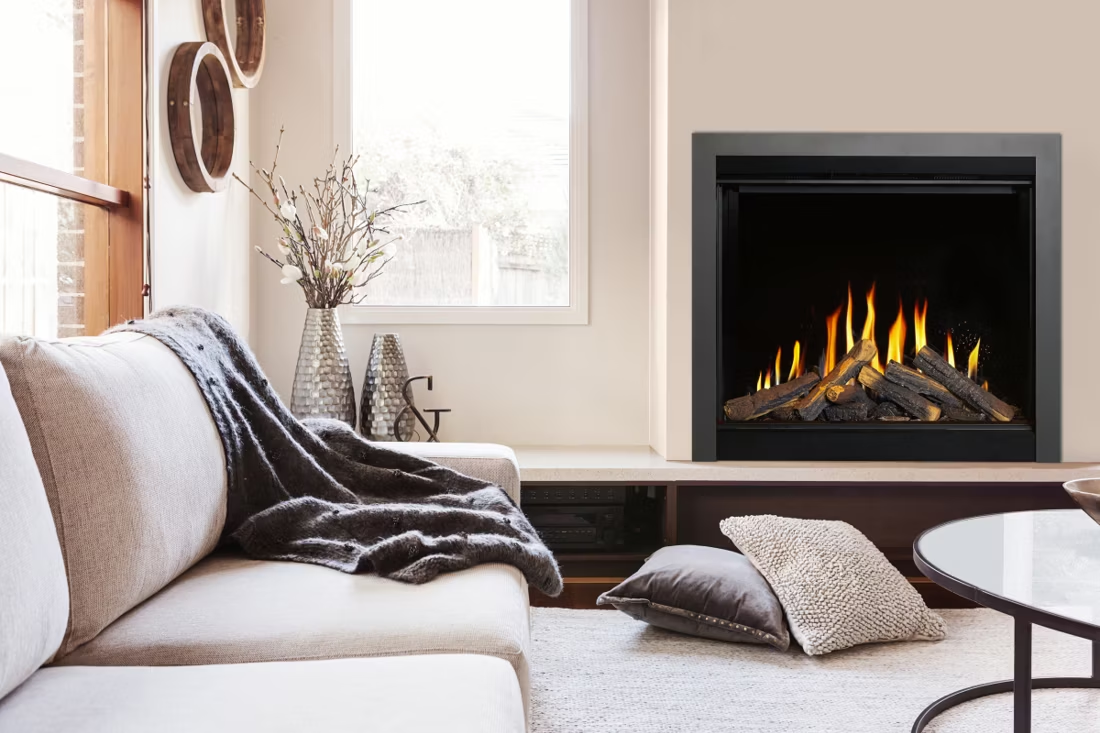
Because electric fireplaces top out around 5,000 BTU, they rarely serve as a home's primary heat source in a climate this cold—most Roosevelt households lean on propane or a wood stove burning local pinyon, juniper, or aspen for the deep winter stretch. Where electric earns its place is zone heating: a finished basement, a primary bedroom, an addition without existing ductwork, or a living room where you want real flame-look ambiance without a chimney, a gas line, or an annual inspection. No permit hassle, no venting, no wood handling—just an outlet or a simple circuit.
Three steps. No salesperson until you're ready.
Tell us about your project
Your zip code, your situation, and the fuel you're leaning toward—or let the answers point you to one.
See what's actually available
The brands dealers within 100 miles genuinely carry—real options, never a catalog mirage.
Get your dealer & Project Guide
A trusted local dealer, plus the free Project Guide & Parts List that names every component of the job.
Frequently Asked Questions
How much does it cost to install an electric fireplace in Roosevelt?
Freestanding, tabletop, or wall-mount electric fireplaces typically run $200 to $800 for the unit, and most simply plug into a standard outlet with no installation cost at all. Built-in electric inserts or mantel packages that need a dedicated 20-amp circuit run higher—usually $800 to $2,500 installed once you factor in an electrician's time to run new wiring. Either way, electric installs in Roosevelt cost a fraction of wood or gas options since there's no chimney, venting, or gas line work involved.
Can an electric fireplace heat my whole house in Roosevelt's winters?
Not realistically. With a long, cold winter season and winter lows averaging 2°F—comparable to Bismarck, ND—Roosevelt's heating season is long and cold, and a typical electric fireplace's 1,500-watt heater (about 5,000 BTU) is built for a single room, not a house. Most local homeowners use electric fireplaces as zone heat for a bedroom, den, or finished basement, backed by a propane furnace or a wood stove burning pinyon, juniper, or aspen for the coldest weeks of January and February.
Do I need a permit for an electric fireplace in Roosevelt?
Plug-in electric fireplaces don't require any permit—you can set one up the day it arrives. Built-in inserts or units that need a new dedicated circuit are a different story: that electrical work should go through a licensed electrician and typically requires an electrical permit from the Duchesne County Building Department. It's a much lighter permitting process than wood or gas installs, which usually also require a separate building permit for venting or chimney work.
What will it actually cost to run an electric fireplace on Moon Lake Electric's rates?
At Moon Lake Electric's residential rate of about $0.0898 per kWh, a 1,500-watt electric fireplace running eight hours a day costs roughly $1.08 per day, or about $32 a month for regular evening use. That's noticeably cheaper than running the same unit on the national average rate of around $0.16 per kWh. It's still not competitive with a wood stove burning free or cheap self-cut fuel, but for zone heat and ambiance, Roosevelt's co-op rates make electric a reasonably low-cost option.
What type of electric fireplace works best for a home like mine in Roosevelt?
For actual heat output rather than just visual ambiance, look for infrared quartz models from brands like Dimplex or Touchstone—they heat more evenly than standard resistance-coil units and hold up well as daily-use zone heaters. Built-in inserts from Napoleon or Dimplex work well for homeowners converting an old, drafty masonry fireplace that was never great for heat anyway. If you're mainly after flame-look ambiance in a room already served by central heat, a lower-wattage wall-mount unit is plenty—a local dealer can walk you through which category fits your room.
Electric vs. wood—which makes more sense for my Roosevelt home?
Wood remains the workhorse fuel in this part of the Uinta Basin—pinyon, juniper, and aspen are all available through Ashley National Forest or Manti-La Sal National Forest cutting permits for roughly $5 to $20 per cord during the May-to-October season, and a wood stove keeps running during a power outage, which matters when winter storms hit the Basin. Electric fireplaces can't do that—no power, no heat—but they produce zero smoke (a real plus given regional wildfire smoke concerns), need no chimney maintenance, and turn on and off instantly. Many Roosevelt households run both: wood or propane for primary heat, electric for a low-maintenance secondary room.
What happens to my electric fireplace during a power outage?
It stops working—most electric fireplaces have no battery backup, so a Moon Lake Electric outage during a winter storm means no heat and no flame effect until power is restored. Given how common weather-related outages can be in the Basin during heavy snow, it's worth keeping a wood stove, propane heater, or at minimum a portable backup power source available if your electric fireplace is your only heat source in a given room.
Electric vs. propane fireplace—which is right for my Roosevelt home?
Roosevelt isn't served by natural gas utility lines, so propane is the standard combustion-fuel option for homeowners who want a fireplace with real heat output—propane units need a tank, gas line, and venting, plus a building permit, but they can genuinely heat a room in sub-zero weather and many models keep working in a power outage. Electric skips all the tank, venting, and permit steps but tops out around 5,000 BTU and goes dark the moment the power does. For a supplemental room or an ambiance-focused install, electric is simpler and cheaper; for real backup heat, propane usually wins.
Where can I find a local installer for an electric fireplace in Roosevelt?
Duchesne County is rural, and the hearth and electrical trades serving Roosevelt often cover the wider Uinta Basin, including Vernal and Duchesne, rather than being based in Roosevelt alone. That makes it worth confirming who actually installs and stands behind the unit before you buy—a big-box fireplace with no local install support is a common regret out here. Find My Fireplace matches you with a trusted local dealer who knows the area's wiring realities and can handle the job start to finish.
Can I put a TV above my fireplace?
Yes—with an asterisk. Fireplaces are hot and TVs don't like heat. Either put a mantel between them to deflect rising warmth, or choose a fireplace with heat-management technology that creates a cool zone on the wall above—the wall stays around 125 degrees, barely warm, while the room still gets full heat. If you like clean lines and don't want a mantel, heat management is the answer.
Does an electric fireplace need a vent or chimney?
No—that's its superpower. An electric fireplace needs a wall and an outlet, period. No vent pipe, no gas line, no clearances to design around, which is why it works in bedrooms, offices, apartments, and walls where venting a gas or wood unit would be impractical or impossible. Installation is typically the simplest and least expensive of any fireplace type.
Can I install a fireplace myself?
If you're putting a fire in your house on purpose, it's best to work with an expert. Unless you're genuinely experienced in framing, gas line, vent pipe, and the national code on clearances to combustibles, have a professional do it—and ideally the same company that sells you the fireplace, so warranty, service, and liability all live under one roof.
How much should I budget for a fireplace?
For an average home—covering the fireplace, the vent pipe, and basic installation—a budget between $3,900 and $5,500 gives you a lot of options across wood, gas, and pellet. By the time you add finish work, gas line, and electrical, the average complete installation lands between $5,000 and $12,000 all-in. In a remodel or new build, a good rule is to put about 2.5% of the total project cost toward the fireplace.
Nearby Dealers
Hearth shops serving Roosevelt and the surrounding area. Every listing shows whether it is a WhyFire partner, a dealer we have verified as authorized for the brands we recommend, or a local business carrying hearth products. No manufacturer pays for placement. How we verify dealers →
A. Johnson Heating & Air
Howa And Sons
Southwest Plumbing Supply - Price
Bridger Valley Propane
Benedict Trading Company
Delta Stone Products, Inc.
All Hours Plumbing, Drain Cleaning, Heating & Cooling
Uintah Fireplace And Design
Southwest Plumbing Supply - Springville
Modscapes Outdoor Living
Window & Door Store
Electric Service in Roosevelt
An electric fireplace's heater draws about 1,500 watts—pennies per hour at local rates.
Moon Lake Electric Assn Inc
Find your electric fireplace in Roosevelt.
Tell us a bit about your home and we'll match you with a trusted local dealer and send over a free Project Guide & Parts List—the exact parts for your Roosevelt electric fireplace project, including any wiring or circuit work, and who locally can install it.
Find Your Fireplace →