
Real heat for a Uinta Basin winter.
Wood, gas, pellet, and electric fireplace resources for every city and rural community in Duchesne County—from Roosevelt to Altamont. Get matched with a local hearth retailer who knows what actually holds a fire through single-digit nights here.
Every Project Starts From One of These Five Situations
Cold-desert heating in the Uinta Basin.
Duchesne County sits in the Uinta Basin at roughly 5,000 to 6,000 feet, ringed by the Uinta Mountains to the north. Climate zone 6B and winters on par with Bismarck, ND put this area in tough heating territory—average lows around 2°F, and basin cold pooling on clear nights can push temperatures lower still. The heating season runs long, from October into April. Pinyon and juniper are the traditional cut-your-own fuels off Ashley National Forest and Manti-La Sal National Forest permits, while aspen from higher elevations burns hot but fast—good kindling, not an overnight fuel on its own.
What you'll find on this hub: hearth retailers, service technicians, and fuel suppliers covering the whole county—Duchesne, Roosevelt, Myton, Altamont, Tabiona, Neola, and the ranch country in between. Pick a fuel below to see local dealers, real installation costs, and the units that actually perform at basin elevation. Whether you're heating a ranch house outside Neola or a cabin near the forest boundary, this is where to start.
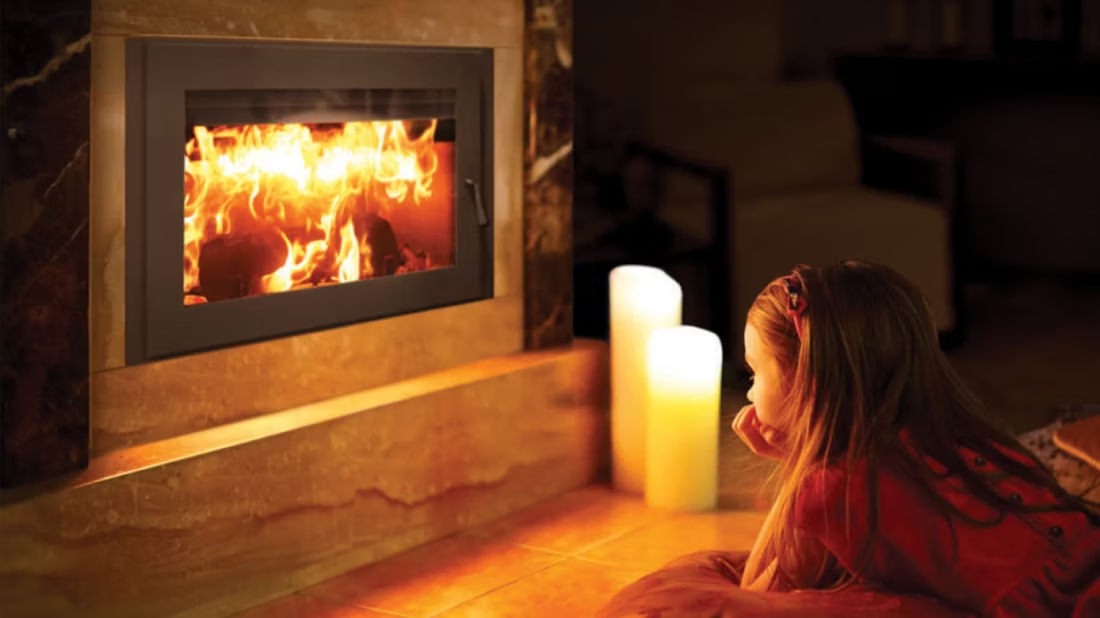
Four fuels. One honest answer for Duchesne County.
Three steps. No salesperson until you're ready.
Tell us about your project
Your zip code, your situation, and the fuel you're leaning toward—or let the answers point you to one.
See what's actually available
The brands dealers within 100 miles genuinely carry—real options, never a catalog mirage.
Get your dealer & Project Guide
A trusted local dealer, plus the free Project Guide & Parts List that names every component of the job.
Frequently Asked Questions
Which fuel makes sense for a home in Duchesne County?
It depends on the home and how remote it is. Wood remains a serious primary-heat choice here—pinyon and juniper cut under Ashley National Forest or Manti-La Sal permits keep fuel cost low, and a catalytic or high-mass stove can hold overnight heat through the basin's single-digit lows. Gas (mostly propane outside the incorporated towns) offers instant, no-labor heat and works well as a backup for wood-heated homes during long winter storms. Pellet is a solid middle path—Bear Mountain and Lignetics pellets are both regionally available—but stock up before winter, since basin roads and rural delivery can get slow after heavy snow. Electric fireplaces are fine for supplemental warmth in a bedroom or den, but they're not a realistic primary heat source through a long, Bismarck-caliber winter. Most Duchesne County homes run wood or propane as the main heater, with a second fuel type as backup.
Do I need a permit to install a fireplace in Duchesne County?
Generally yes, for anything beyond a plug-in electric unit. Wood stoves, wood inserts, gas fireplaces, gas inserts, gas stoves, and pellet stoves typically require a building permit, and gas work needs a separate gas line permit pulled by a licensed installer. If you're planning to cut your own firewood on Forest Service land, that's a separate permit process entirely—through Ashley National Forest or Manti-La Sal National Forest, depending on which side of the county you're on—and it's unrelated to the county building permit for the stove itself. Most local hearth retailers handle the building permit paperwork as part of a full installation, so you're not usually tracking down forms yourself.
Is wood burning restricted in Duchesne County?
There's no formal winter curtailment program here the way there is in some Utah metro counties, but wildfire smoke is the real air-quality concern in this part of the basin—summer and fall fire activity on nearby forest land can affect outdoor burning and, at times, prompt advisories that also touch woodstove use. Winter wood heat itself isn't restricted the way it is along the Wasatch Front. That said, a newer EPA-certified stove burns pinyon and juniper more completely and produces less visible smoke than an older unit—worth factoring in if you're replacing an aging stove.
Can one local retailer handle wood, gas, pellet, and electric?
Coverage varies by dealer, and in a county this size, most retailers carry two or three fuel types rather than all four with full display floors of each. A dealer that does wood and gas well may only carry a couple of pellet models, or handle electric fireplaces as a special-order item rather than a stocked line. If you're not sure which fuel fits your home, ask a retailer directly which types they install and service regularly—that tells you more than what's simply on the showroom floor. The county + fuel pages above list which local dealers actively carry and install each fuel type in Duchesne County.
How does service work for homes outside Roosevelt or Duchesne?
Most technicians are based in Roosevelt or Duchesne and drive out to Altamont, Tabiona, Neola, Myton, and the ranch roads beyond. Expect a modest trip fee for calls outside town, and expect scheduling to tighten up fast once the first real cold hits—basin roads can slow response times after a heavy snow event. The smart move is booking annual chimney sweeps and gas inspections in September or early October, before the rush, rather than waiting for a mid-January problem. If you're heating with wood as primary, keep a backup fuel source (propane heater, generator for a pellet stove) on hand for the stretches when a service call or fuel delivery just can't get through right away.
What does fireplace installation typically cost across fuel types in Duchesne County?
Costs run close to regional norms with some added travel cost baked in for rural installs. Wood stove or insert: roughly $4,200–$8,500 for a standard install, more if a full masonry chimney is being built new. Gas fireplace, insert, or stove: roughly $4,000–$10,000, with propane tank and line work adding to the low end of that range compared to homes already on a gas line. Pellet stove or insert: roughly $4,200–$7,000 for a typical setup. Electric fireplace: $200–$3,000 for the unit itself, plus $400–$1,200 in labor for anything beyond a simple plug-in wall unit. See the county + fuel pages above for cost detail tied to specific local retailers.
What is an in-home preview and do I need one?
It's a visit where a hearth professional measures your space, confirms the model you picked actually works in your home, and walks the specs—framing, gas line, venting, finish work—before anything is ordered. Some details you just can't know until you see the house. Never make a down payment without one; it's the single most-skipped step that burns buyers.
Can I install a fireplace myself?
If you're putting a fire in your house on purpose, it's best to work with an expert. Unless you're genuinely experienced in framing, gas line, vent pipe, and the national code on clearances to combustibles, have a professional do it—and ideally the same company that sells you the fireplace, so warranty, service, and liability all live under one roof.
Wood, gas, pellet, or electric—how do I choose?
Match the fuel to your life, not the other way around. Wood: lowest fuel cost and total power-outage independence, but you're hauling and stacking. Gas: press a button, set a thermostat, no maintenance to speak of. Pellet: wood economics with automatic feeding, in exchange for weekly cleaning and a need for electricity. Electric: plugs in anywhere with honest supplemental heat. Nobody regrets the fuel that fits how they actually live.
Should the dealer who sells my fireplace also install it?
Ideally, yes. A fireplace project involves vent pipe, gas line, electrical, and often tile or stone. Hire three or four separate trades and you own the liability and the game of telephone between them. One company selling and installing means one accountable party, start to finish—ask about factory training, on-time completion records, and what happens if an inspection fails.
Stove and Fireplace Dealers in Duchesne County
Listings include WhyFire partner dealers, dealers we have verified as authorized for the brands we recommend, and established local businesses that carry hearth products. Every listing shows which one it is. The ones marked Preferred run on WhyFire's software, so they can show you real pricing and book your appointment right here. No manufacturer pays for placement. How we verify dealers →
Howa And Sons
A. Johnson Heating & Air
Southwest Plumbing Supply - Price
Find your fireplace in Duchesne County.
Pick your fuel below and I'll match you with a trusted local dealer and send over a free Project Guide & Parts List—the exact parts, including the vent kit, for your project and home.
Find Your Fireplace →