
Pellet heat built for Plain City's inversion season.
Clean-burning heat that keeps running on the winter days when Weber County's air quality shuts wood stoves down. Find the right pellet unit and connect with a trusted local dealer.
Every Project Starts From One of These Five Situations
The Wasatch Front's inversion problem is a pellet stove's advantage.
Plain City sits at about 4,200 feet on the valley floor of Weber County, boxed in by the Wasatch Range to the east and the Great Salt Lake to the west. That geography is scenic most of the year, but it's also what traps cold air and PM2.5 pollution against the ground every winter, producing the inversion haze the Wasatch Front is known for. With a long, demanding heating season and average winter lows near 20°F, homeowners here need real supplemental heat—but Weber County is also part of Utah's PM2.5 nonattainment area, and that changes which appliances make sense.
When the Utah Division of Air Quality calls a mandatory Action Day during a winter inversion, uncertified and even many EPA-certified wood stoves are ordered off. EPA-certified pellet stoves are typically exempt from those burn restrictions, which is one of the biggest reasons pellet appliances have gained ground in Plain City and the rest of Weber County. Regional bagged-pellet brands like Bear Mountain, Lignetics, and Forest Energy are widely stocked at hearth shops and hardware stores along the Wasatch Front, so fuel supply isn't the obstacle it can be in more remote parts of the state—the trade-off is that pellet stoves need household electricity from PacifiCorp to run the auger and blower, which is worth planning around before you buy.
Three steps. No salesperson until you're ready.
Tell us about your project
Your zip code, your situation, and the fuel you're leaning toward—or let the answers point you to one.
See what's actually available
The brands dealers within 100 miles genuinely carry—real options, never a catalog mirage.
Get your dealer & Project Guide
A trusted local dealer, plus the free Project Guide & Parts List that names every component of the job.
Frequently Asked Questions
How much does a pellet stove or insert installation cost in Plain City?
A typical pellet stove installation in Plain City runs roughly $3,500 to $6,500, depending on the unit, whether it's a freestanding stove or an insert going into an existing masonry fireplace, and how much venting work is required. Pellet appliances vent through a smaller-diameter pipe than wood stoves and can often exhaust through an exterior wall rather than requiring a full chimney, which keeps costs down compared to a wood install. Units with larger hoppers or automatic ignition sit toward the higher end of that range. A local dealer can give you a firm number after seeing your fireplace or install location.
What size pellet stove do I need for my Plain City home?
Sizing depends on square footage, ceiling height, and whether the stove is your primary heat or a supplement to central heat. For a home in Plain City's climate—average winter lows around 20°F and a long, demanding heating season—a small pellet stove (under 1,000 sq ft) suits a single room or addition, a medium stove (1,000–2,000 sq ft) covers most main living areas, and a large stove can carry a well-insulated whole home through the coldest stretches. Oversizing wastes pellets and shortens burn efficiency; undersizing means the auger runs constantly on the coldest nights. A local dealer will size it based on an in-home look at your space.
Where can I find a qualified installer for a pellet stove near me?
Look for a hearth dealer whose installers carry NFI (National Fireplace Institute) certification, and who's familiar with Weber County's permitting and Utah DAQ rules for solid-fuel appliances. Most pellet stove retailers along the Wasatch Front sell and install as a package, which simplifies warranty coverage since the same company that sized your unit also handled the venting. Avoid a general contractor install for a pellet appliance—vent sizing and clearance-to-combustible requirements are specific to each manufacturer, and getting them wrong affects both safety and how the exemption from burn restrictions applies to your unit.
What's the difference between a pellet stove and a pellet insert?
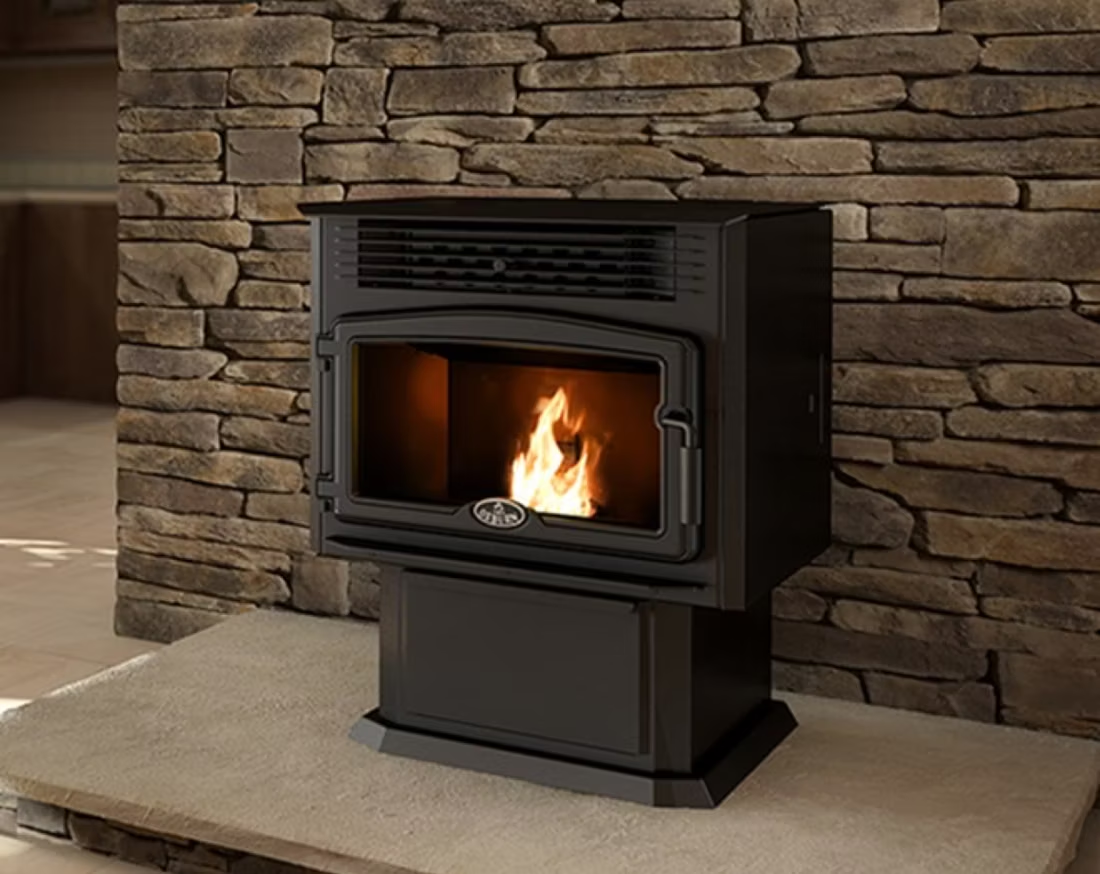
A pellet stove is a freestanding appliance that sits on a hearth pad and vents through a wall or existing chimney chase—it can go almost anywhere with the right clearances. A pellet insert is built to slide into an existing masonry fireplace opening, turning a drafty open hearth into a sealed, thermostatically controlled heat source while reusing the chimney you already have. For Plain City homes with an older wood-burning fireplace, an insert is often the simpler retrofit. Homes without an existing fireplace, or new construction, are usually better suited to a freestanding stove.
Do I need a permit to install a pellet stove in Plain City?
Yes—new pellet stove and insert installations require a building permit, handled through the Weber County Building Department, which covers permitting for Plain City. Most local hearth dealers include the permit and inspection as part of the installation, so you generally don't need to file anything yourself. Unlike wood stoves, pellet stoves don't require a Forest Service cutting permit since they run on manufactured pellets rather than cut firewood, which simplifies the paperwork side considerably.
Can I still burn my pellet stove during a winter inversion Action Day?
In most cases, yes. Weber County sits inside Utah's PM2.5 nonattainment area along the Wasatch Front, and the Utah Division of Air Quality calls mandatory no-burn Action Days for wood-burning devices during bad winter inversions. EPA-certified pellet stoves are generally exempt from those mandatory restrictions because they burn more completely and produce far less particulate matter than an open wood fire. That exemption is one of the main reasons Plain City homeowners switch to or add pellet heat—you keep supplemental warmth running on exactly the days a wood stove would be ordered off. Confirm your specific unit's certification with your dealer, since exemptions apply to certified appliances, not all pellet-burning devices.
Will my pellet stove still work if the power goes out?
Not without a backup power source. Pellet stoves rely on an electric auger to feed fuel and a blower to circulate heat, so a PacifiCorp outage will shut the stove down even with a full hopper. Some homeowners pair their stove with a small battery backup or generator sized to the stove's low wattage draw, which keeps it running through a short outage. If backup heat during power failures is a priority for your Plain City home, that's worth discussing with a local dealer—some households choose to keep a wood-burning appliance as a second unit specifically for outages, since it doesn't need electricity to operate.
Where can I buy pellets in Plain City, and what do they cost?
Bagged pellets from regional brands like Bear Mountain, Lignetics, and Forest Energy are commonly stocked at hearth shops, farm stores, and home centers along the Wasatch Front, typically running $250 to $320 per ton depending on the brand and whether you buy by the bag or the ton pallet. A ton lasts an average Plain City home roughly one to two months of regular heating-season use, depending on how much the stove is run. Buying a full season's supply in fall, before the first inversion-driven cold snap, is the common local approach—pellets store fine in a garage or shed as long as they stay dry.
Pellet stove vs. wood stove—which makes more sense in Plain City?
Wood is cheaper if you're willing to cut your own—a Uinta-Wasatch-Cache National Forest cutting permit runs about $5 to $20 per cord for local pinyon, juniper, and aspen, available May through October—and it works without electricity, which matters during outages. Pellet stoves cost more per BTU in fuel but burn far cleaner, need less daily attention, and—critically for this area—stay legal to burn on the mandatory Action Days that Weber County's winter inversions regularly trigger. For a primary heat source in a valley with the Wasatch Front's air-quality restrictions, pellet often wins. For backup heat that works no matter what the power grid or the air-quality board are doing, wood still has a place. Several local dealers carry both, so it's worth discussing your household's priorities before deciding.
How often does a pellet stove need cleaning?
A clean pellet stove is a happy pellet stove. Plan on cleaning the burn pot about once a week when you're burning regularly—ash and clinkers gum up the air holes just like a pellet barbecue. Most pellet stove problems trace back to skipped cleaning that nobody explained up front. Some designs make it easy with a trapdoor burn pot: pull a lever and the gunk drops into the ash pan.
Why is a fireplace insert so efficient?
An insert does two things: it seals the chimney completely, so you stop losing air you already paid to heat, and it radiates warmth into the room through the firebox and glass. Most add a heat-exchange fan that pulls cool room air underneath, wraps it around the hot firebox, and pushes it back out warm. Your home is more efficient before you've even lit the first fire.
How much should I budget for a fireplace?
For an average home—covering the fireplace, the vent pipe, and basic installation—a budget between $3,900 and $5,500 gives you a lot of options across wood, gas, and pellet. By the time you add finish work, gas line, and electrical, the average complete installation lands between $5,000 and $12,000 all-in. In a remodel or new build, a good rule is to put about 2.5% of the total project cost toward the fireplace.
Should the dealer who sells my fireplace also install it?
Ideally, yes. A fireplace project involves vent pipe, gas line, electrical, and often tile or stone. Hire three or four separate trades and you own the liability and the game of telephone between them. One company selling and installing means one accountable party, start to finish—ask about factory training, on-time completion records, and what happens if an inspection fails.
Nearby Dealers
Hearth shops serving Plain City and the surrounding area. Every listing shows whether it is a WhyFire partner, a dealer we have verified as authorized for the brands we recommend, or a local business carrying hearth products. No manufacturer pays for placement. How we verify dealers →
Hearth & Home Dist. Of UT-Ogden
Comfort Solutions
Utah Air
Ogden Lawn & Garden
Stone World Supply
Rocky Mountain Stove
Chim Chiminey Fireplace
Timber Ridge Fireplace
Pellet Brands Stocked Around Plain City
Manufacturers will point you to the nearest stocking dealer.
Find your pellet fireplace in Plain City.
Tell us about your home and we'll send you a free Project Guide & Parts List for your pellet stove or insert—sized correctly, with the vent kit specified, and matched to a trusted local dealer near Plain City.
Find Your Fireplace →