
Warm Rooms, Clean Air, No Chimney Required.
Zone heat that works with Utah Valley's inversion season instead of adding to it. Find the right electric fireplace or insert, and get matched with a trusted local dealer.
Every Project Starts From One of These Five Situations
Zero-emission heat for a valley that already fights for clean air.
Orem sits at 4,766 feet in Utah Valley along the Wasatch Front, with a heating season running from about November through March and winter lows averaging 20°F—cold enough that most homes run supplemental heat from November through March. But Utah Valley has a second winter problem beyond temperature: multi-day temperature inversions trap pollution against the valley floor, and Utah County regularly logs some of the worst episodic PM2.5 readings in the country during those inversion stretches. Local air quality rules routinely restrict solid-fuel burning on Red and Yellow advisory days along the Wasatch Front, which is part of why wood and pellet appliances have become less practical for many Orem households.
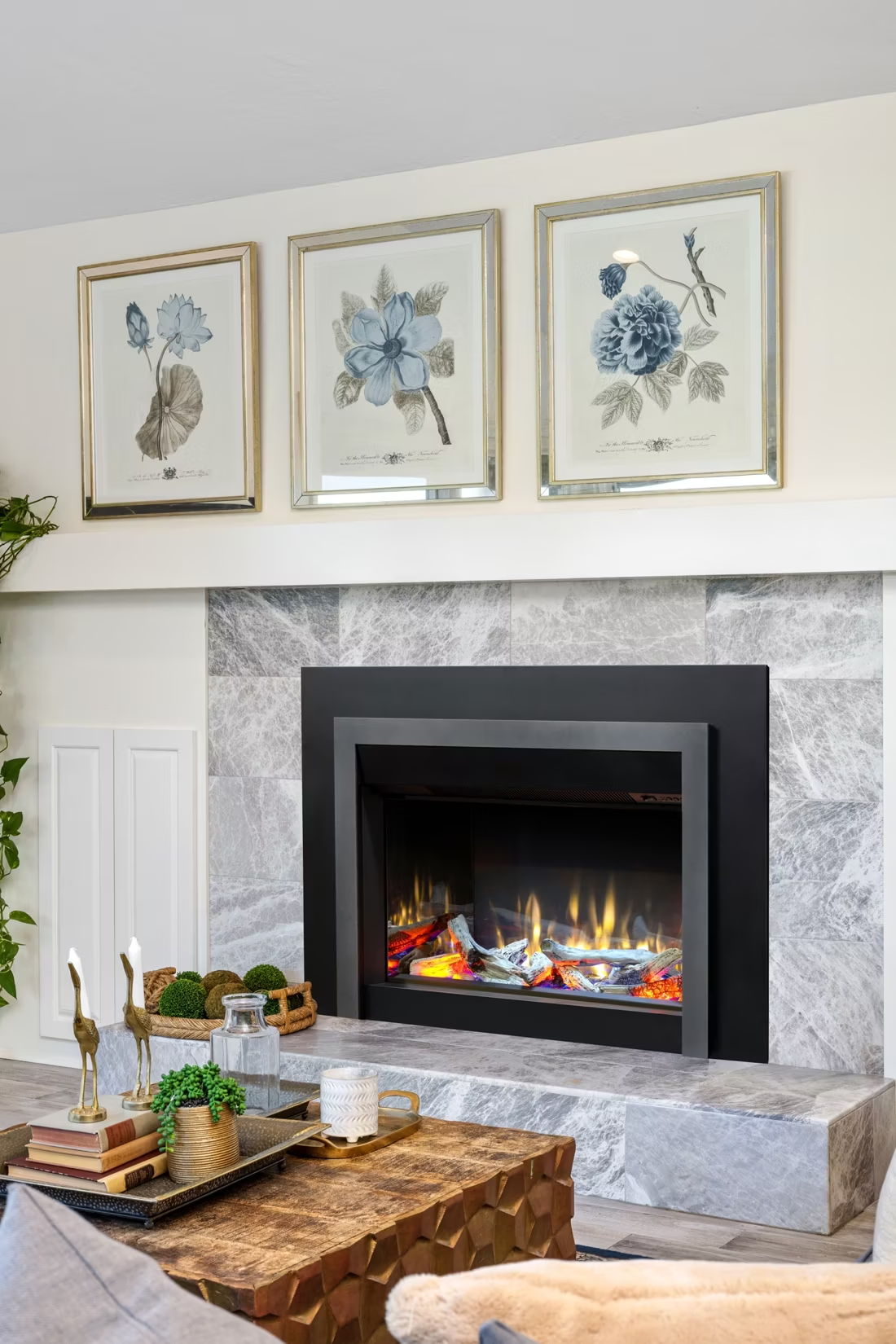
Electric fireplaces sidestep the inversion problem entirely—no combustion, no venting, no particulate emissions added to an airshed that's already under strain. PacifiCorp serves Orem at roughly 12.5 cents per kWh, which keeps a supplemental electric unit cheap to run for zone heating in a bedroom, basement, or family room. Whether it's a plug-in insert dropped into an existing fireplace opening or a built-in unit set into a new wall for a remodel, electric heat gives Orem homeowners a clean, code-simple option that never gets shut down on an inversion day.
Three steps. No salesperson until you're ready.
Tell us about your project
Your zip code, your situation, and the fuel you're leaning toward—or let the answers point you to one.
See what's actually available
The brands dealers within 100 miles genuinely carry—real options, never a catalog mirage.
Get your dealer & Project Guide
A trusted local dealer, plus the free Project Guide & Parts List that names every component of the job.
Frequently Asked Questions
How much does an electric fireplace installation cost in Orem?
Costs vary widely because electric fireplaces span a wide range of product types. A plug-in insert that drops into an existing fireplace opening typically runs $150 to $700 for the unit itself, with no real installation cost beyond plugging it in. A built-in electric fireplace set into a wall or new mantel surround—common in Orem remodels and basement finishes along the Wasatch Front—usually runs $1,500 to $4,000 including framing, trim, and electrical work. Larger linear electric fireplaces with custom tile or stone surrounds can run $3,000 to $6,000. A licensed electrician may need to add a dedicated 120V or 240V circuit depending on the unit's wattage, which a local dealer can quote during an in-home visit.
What size electric fireplace do I need for my Orem home?
Most electric fireplaces are rated for supplemental zone heat, not whole-home heating—with a heating season running from about November through March and winter lows around 20°F, an electric unit alone won't replace a furnace in an Orem home during the coldest stretches. As a rough guide, a 1,500-watt unit (the max most 120V plug-in models draw) comfortably takes the chill off a 300-400 square foot room. For larger open-concept living areas common in newer Orem construction, a built-in linear unit on a dedicated circuit can cover more square footage, but a local dealer should confirm sizing based on your room's insulation and layout.
Do I need a licensed electrician to install an electric fireplace in Orem?
For a simple plug-in insert on an existing standard outlet, no—it's a household appliance. But most built-in units, especially larger linear models, require a dedicated circuit and sometimes 240V service, which does require a licensed electrician. The hearth dealers we match Orem homeowners with typically coordinate the electrical work as part of the installation, so you're not left hiring a separate trade or guessing at circuit requirements yourself.
What's the difference between an electric insert, a built-in unit, and a wall-mount fireplace?
An electric insert is sized to slide into an existing masonry or wood-fireplace opening, making it the easiest retrofit for older Orem homes that already have a fireplace they want to modernize. A built-in electric fireplace is designed to be framed into a wall during a remodel or basement finish—very common in Orem's newer subdivisions where builders often skip a wood-burning fireplace altogether. A wall-mount unit hangs directly on the wall like a flat-screen TV and needs only a nearby outlet, making it the fastest option for a bedroom or family room with no existing hearth.
Do I need a permit to install an electric fireplace in Orem?
A simple plug-in insert generally doesn't require a permit since no wiring or venting changes are involved. A built-in unit that requires new wiring, a dedicated circuit, or framing changes typically does need an electrical permit through Orem City's Building Division, and sometimes a building permit if wall framing is altered. Because electric units don't burn fuel or vent outside, they avoid the chimney and clearance inspections that wood and gas installations require—one reason they're a simpler retrofit in existing Orem homes.
What's the best electric fireplace for Orem's climate?
Because electric fireplaces max out around 4,600-5,000 BTU on a standard 120V circuit, look for units built for real supplemental heat output rather than pure ambiance. Brands like Dimplex, Napoleon, and Touchstone make models with true 1,500-watt heaters and adjustable thermostats that can meaningfully warm a room during Orem's colder months. If you want heat for a larger space or plan to run it daily through the winter, ask a local dealer about 240V linear models—they draw more power but deliver more consistent heat output for bigger rooms.
How much does it cost to run an electric fireplace in Orem?
At PacifiCorp's residential rate of about 12.5 cents per kWh, a typical 1,500-watt electric fireplace running on high for 8 hours costs roughly $1.50 a day, or around $45 for a month of daily evening use. Most units also let you run the flame effect alone without the heater, which draws only a few watts—useful if you want the ambiance without the electric cost on milder days. That operating cost is a fraction of running a gas fireplace or wood stove, though electric units also produce far less total heat.
Electric vs. gas fireplace—which is right for my Orem home?
Gas fireplaces put out considerably more heat—often 20,000-30,000 BTU compared to an electric unit's roughly 5,000 BTU—making gas the better choice if you want a fireplace to meaningfully offset furnace use during Orem's cold months. Electric fireplaces cost far less to install, require no gas line or venting, produce zero combustion byproducts, and can go anywhere there's an outlet, including apartments, condos, and rooms where venting a gas unit isn't practical. Given Utah Valley's inversion-season air quality concerns, some Orem homeowners specifically choose electric for secondary rooms even when they already have gas heat in the main living space.
Why are electric fireplaces more common in Orem than wood stoves?
Utah Valley's winter inversions trap pollution for days at a time, and Utah's Division of Air Quality regularly calls mandatory no-burn days along the Wasatch Front during Red advisory periods, restricting wood and pellet appliances precisely when people want them most. While pinyon, juniper, and aspen are cut locally under Forest Service permits through the Uinta-Wasatch-Cache and Manti-La Sal National Forests, burning them inside Orem city limits runs into those seasonal restrictions. Electric fireplaces are never subject to burn bans, which is a major reason they've become the practical choice for supplemental heat and ambiance in newer Orem construction and remodels alike.
Can I put a TV above my fireplace?
Yes—with an asterisk. Fireplaces are hot and TVs don't like heat. Either put a mantel between them to deflect rising warmth, or choose a fireplace with heat-management technology that creates a cool zone on the wall above—the wall stays around 125 degrees, barely warm, while the room still gets full heat. If you like clean lines and don't want a mantel, heat management is the answer.
Do electric fireplaces actually produce heat?
Yes—most put out around 4,800–5,000 BTUs from a standard outlet, which comfortably warms a bedroom, office, or den as a comfort-zone heater. What they won't do is carry a whole house the way wood, gas, or pellet can. Think of electric as ambiance-first with honest supplemental heat: flames on with no heat in July, flames plus warmth in January.
What is an in-home preview and do I need one?
It's a visit where a hearth professional measures your space, confirms the model you picked actually works in your home, and walks the specs—framing, gas line, venting, finish work—before anything is ordered. Some details you just can't know until you see the house. Never make a down payment without one; it's the single most-skipped step that burns buyers.
Does a fireplace add value to my home?
On average, a fireplace adds back to the home about the same amount you spent installing it. Add the monthly savings from heating the rooms you actually use instead of the whole house—often hundreds of dollars a year—and the value case is strong before you even count what a fire does for how your family uses the room.
Nearby Dealers
Hearth shops serving Orem and the surrounding area.
Electric Service in Orem
An electric fireplace's heater draws about 1,500 watts—pennies per hour at local rates.
Find your electric fireplace in Orem.
Tell us a bit about your home and we'll put together a free Project Guide & Parts List for your electric fireplace project—including the right unit, wiring needs, and a trusted local dealer in Orem to install it.
Find Your Fireplace →