
Gas Heat Built for Salt Lake Valley Winters.
Instant, clean-burning heat for Millcreek homes at the base of the Wasatch—no smoke, no ash, no inversion-season restrictions. Find the right unit and connect with a trusted local dealer.
Every Project Starts From One of These Five Situations
Clean-burning heat for a valley that watches its air.
Millcreek sits at 4,561 feet against the western face of the Wasatch Range, where winter lows average 23°F and the city has a heating season on par with Madison, WI. But the bigger factor shaping heating choices here isn't the cold, it's the air. Salt Lake County is a federally designated PM2.5 nonattainment area, and Millcreek sits right in the winter inversion zone where trapped pollutants trigger mandatory no-burn advisories from the Utah Division of Air Quality. That's a big reason wood and pellet appliances have become impractical for most local homeowners, while gas fireplaces—which burn far cleaner and aren't subject to those red-air-day restrictions—have become the default.
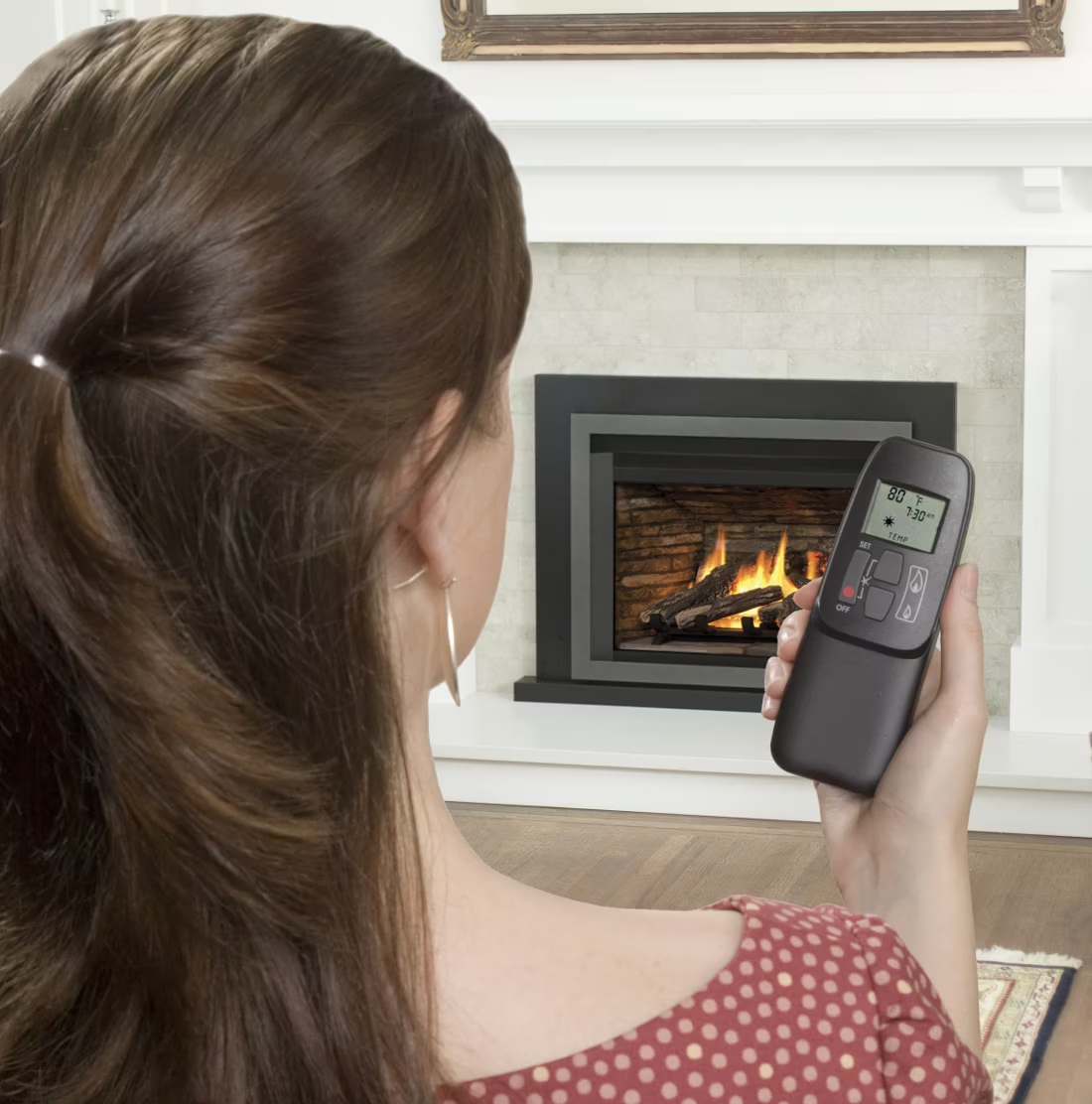
Dominion Energy Utah serves natural gas throughout nearly all of Millcreek, so most homes already have the infrastructure a gas fireplace needs. The result: instant heat at the flip of a switch or remote, zone heating that takes pressure off a central furnace during the coldest stretches of January, and—with the right ignition system—a fireplace that still works when a winter storm knocks out power along the bench.
Three steps. No salesperson until you're ready.
Tell us about your project
Your zip code, your situation, and the fuel you're leaning toward—or let the answers point you to one.
See what's actually available
The brands dealers within 100 miles genuinely carry—real options, never a catalog mirage.
Get your dealer & Project Guide
A trusted local dealer, plus the free Project Guide & Parts List that names every component of the job.
Frequently Asked Questions
How much does a gas fireplace installation cost in Millcreek?
Most gas fireplace installations in Millcreek run $4,000 to $10,000, depending on the unit, whether a new gas line needs to be run from an existing Dominion Energy service line, and the venting path. A direct-vent insert going into an existing masonry fireplace with gas already nearby sits at the lower end. A new built-in unit in a remodel—with framing, a fresh gas tap, and venting through an exterior wall—lands in the middle to upper end. Local dealers will confirm exact pricing after seeing your fireplace or wall location in person.
Can I convert my existing wood-burning fireplace to gas?
Yes, and it's one of the most common projects local installers handle in Millcreek, largely because of the county's winter air quality rules. When UDAQ calls a mandatory no-burn action day during an inversion, wood-burning fireplaces and stoves in Salt Lake County are legally required to sit cold—a gas insert isn't restricted the same way. Converting typically means installing a direct-vent gas insert into your existing masonry firebox using a stainless liner through the current chimney, and it usually runs $4,500 to $8,500 depending on the insert and whether your home already has a nearby gas line.
Do I need natural gas service, or can I use propane?
Dominion Energy Utah provides natural gas to nearly every neighborhood in Millcreek, from the flats near 84107 up into the foothill streets closer to Mount Olympus, so most homeowners here simply tap into existing service. Propane is a fallback mainly for a handful of higher-elevation properties without a nearby gas main. Almost every gas fireplace model can be configured for either fuel—your installer sets the correct orifice and regulator during install.
Will my gas fireplace still work if the power goes out?
Most modern gas fireplaces will, as long as they use intermittent pilot ignition (IPI) with battery backup—a small battery pack keeps the igniter working when the grid goes down, which matters during the occasional Wasatch Front windstorm outage. Valor fireplaces skip batteries entirely: their pilot assembly generates its own electricity through a thermocouple, so the unit works during an outage indefinitely with no batteries to remember. Worth asking about directly if backup heat during a storm is a priority for your Millcreek home.
What's the difference between a gas fireplace, gas insert, and gas stove?
A gas fireplace is a built-in unit installed into new framing—common in Millcreek remodels and the newer construction going up near 84109 and 84106. A gas insert slides into an existing masonry firebox and uses the existing chimney as a vent chase, which is the most common upgrade for the area's many mid-century ranch homes with an old wood-burning fireplace already in place. A gas stove is a freestanding cabinet unit that sits on the floor, useful in rooms without any existing fireplace opening. For most Millcreek homeowners replacing a wood fireplace, an insert is the simplest and least invasive option.
Do I need a permit to install a gas fireplace in Millcreek?
Yes. Millcreek incorporated as its own city in 2016 and now handles building permits through the Millcreek Community & Economic Development Department rather than unincorporated Salt Lake County, and any new gas line work also requires a licensed gas-fitter and inspection. Most hearth dealers coordinate the building permit, gas line permit, and final inspection as part of the installation, so you generally don't have to manage separate trades yourself. One upside worth noting: gas appliances aren't subject to UDAQ's mandatory no-burn action days the way wood stoves are, so there's no seasonal use restriction to plan around.
What's the difference between vented and vent-free gas fireplaces?
Vented (direct-vent) units draw combustion air from outside and exhaust it back outside through a sealed pipe—they're the standard, code-friendly choice everywhere in Utah, including Millcreek. Vent-free units burn without external venting and release combustion byproducts into the room; they're legal in Utah with correct room-sizing and oxygen depletion sensors, but given how seriously Salt Lake County already treats indoor and outdoor air quality during inversion season, most local dealers steer homeowners toward direct-vent models rather than adding another indoor emissions source. Ask a local installer about both if you're weighing the tradeoff.
How often should a gas fireplace be serviced?
Plan on an annual inspection, ideally in early fall before the valley's cold settles in. A technician checks the burner, pilot assembly, venting, and gas connections, and cleans the glass—a much smaller job than chimney sweeping but still important, since a dirty burner or degraded gasket is the most common cause of a fireplace that won't stay lit. Local hearth service providers in the Millcreek area typically charge $150 to $250 for this annual visit.
Should I go with gas instead of a wood or pellet appliance?
For most Millcreek homes, yes. Wood-burning and pellet appliances face real headwinds here: Salt Lake County's PM2.5 nonattainment status and frequent winter inversions mean wood stoves get shut down on mandatory no-burn days, and cutting your own firewood means a drive out to the Uinta-Wasatch-Cache National Forest for a permit (about $5-$20 per cord, May through October season)—workable, but not convenient for a suburban lot. Gas sidesteps all of that: no burn-day restrictions, no ash, and instant heat through Dominion Energy's existing infrastructure. Wood still has a place for cabins or properties outside the inversion zone, but within Millcreek proper, gas is the practical default.
Can I put a TV above my fireplace?
Yes—with an asterisk. Fireplaces are hot and TVs don't like heat. Either put a mantel between them to deflect rising warmth, or choose a fireplace with heat-management technology that creates a cool zone on the wall above—the wall stays around 125 degrees, barely warm, while the room still gets full heat. If you like clean lines and don't want a mantel, heat management is the answer.
Why is a fireplace insert so efficient?
An insert does two things: it seals the chimney completely, so you stop losing air you already paid to heat, and it radiates warmth into the room through the firebox and glass. Most add a heat-exchange fan that pulls cool room air underneath, wraps it around the hot firebox, and pushes it back out warm. Your home is more efficient before you've even lit the first fire.
How much should I budget for a fireplace?
For an average home—covering the fireplace, the vent pipe, and basic installation—a budget between $3,900 and $5,500 gives you a lot of options across wood, gas, and pellet. By the time you add finish work, gas line, and electrical, the average complete installation lands between $5,000 and $12,000 all-in. In a remodel or new build, a good rule is to put about 2.5% of the total project cost toward the fireplace.
What is an in-home preview and do I need one?
It's a visit where a hearth professional measures your space, confirms the model you picked actually works in your home, and walks the specs—framing, gas line, venting, finish work—before anything is ordered. Some details you just can't know until you see the house. Never make a down payment without one; it's the single most-skipped step that burns buyers.
Nearby Dealers
Hearth shops serving Millcreek and the surrounding area.
(Sugar House) Alpine Fireplaces (In Breezeway Next To Theatres)
Hearth & Home Distributors Of Utah - Salt Lake City
Find your gas fireplace in Millcreek.
Tell us a bit about your home and we'll match you with a trusted local dealer and send over your free Project Guide & Parts List—the exact parts, vent kit, and installation plan for a gas fireplace or insert in Millcreek.
Find Your Fireplace →