
Reliable Gas Heat for Layton's Wasatch Front Winters.
Instant, clean heat for Layton homes at 4,460 feet, where winter lows settle around 20°F and gas is the practical default. Find the right unit and connect with a trusted local dealer.
Every Project Starts From One of These Five Situations
Gas is the practical choice on the Wasatch Front.
Layton sits in Davis County along the base of the Wasatch Front, where a long, cold heating season and winter lows near 20°F mean sustained heat matters for months at a time. It's also inside the valley's winter inversion zone—the same air that traps PM2.5 over Salt Lake and Davis Counties settles over Layton too, and the Utah Division of Air Quality regularly calls mandatory no-burn days for solid-fuel devices during red and yellow air alerts. That's a big reason wood and pellet stoves are uncommon here even though pinyon, juniper, and aspen grow locally in the surrounding foothills—gas fireplaces simply don't trigger those restrictions.
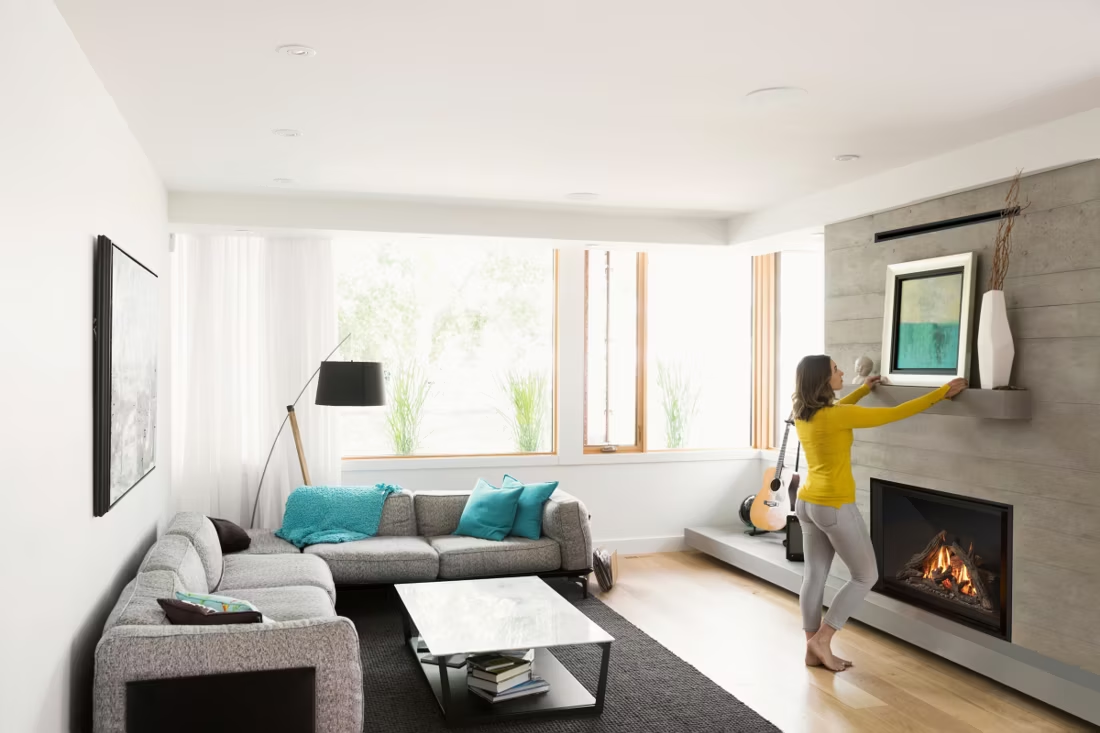
Natural gas service through Dominion Energy Utah covers essentially all of Layton, so most homes already have the gas infrastructure a fireplace or insert needs. A direct-vent gas fireplace or insert gives you real, on-demand heat without adding to inversion-season air quality problems, works as zone heating alongside your central HVAC, and—with the right ignition system—keeps running through a winter power outage. For a growing Wasatch Front city where wood-burning days are limited by regulation, gas is the fuel most local homeowners land on.
Three steps. No salesperson until you're ready.
Tell us about your project
Your zip code, your situation, and the fuel you're leaning toward—or let the answers point you to one.
See what's actually available
The brands dealers within 100 miles genuinely carry—real options, never a catalog mirage.
Get your dealer & Project Guide
A trusted local dealer, plus the free Project Guide & Parts List that names every component of the job.
Frequently Asked Questions
How much does a gas fireplace installation cost in Layton?
Most gas fireplace and insert installations in Layton run between roughly $4,000 and $10,000, depending on the unit, the venting path, and whether new gas line work is needed. A direct-vent insert going into an existing masonry fireplace with a nearby gas line already run tends to land on the lower end. New construction, remodels, or installations that require extending a gas line from the meter push toward the higher end. A local hearth dealer will give you a firm number after seeing your existing chimney or wall configuration.
Can I convert my existing wood-burning fireplace to gas?
Yes, and it's a common project in Layton given how much of the year falls under UDAQ's mandatory no-burn periods for solid fuel devices. A gas insert typically slides into your existing masonry firebox, running a stainless liner up the chimney for venting. Costs usually fall between $4,000 and $8,500 depending on the insert and whether the home is already plumbed for gas. Beyond the convenience, converting removes your fireplace from wood-burning curtailment restrictions entirely, since gas units aren't subject to red or yellow air-quality burn bans.
Do I need natural gas service, or can I use propane instead?
Dominion Energy Utah provides natural gas throughout nearly all of Layton, so if your home already has gas appliances—a furnace, water heater, or range—adding a fireplace is usually a straightforward tie-in. Propane is a fallback mainly for the handful of rural or unincorporated pockets of Davis County without natural gas mains. Most gas fireplace models can be configured for either fuel; your installer sets the correct orifice and regulator for whichever you're running.
Will my gas fireplace still work if the power goes out?
Most modern gas fireplaces will, yes. Units with intermittent pilot ignition (IPI) include a battery backup—typically AA batteries in the control compartment—that keeps the unit firing normally when utility power drops. Valor fireplaces take it a step further: their pilot assembly generates its own electricity through the thermocouple, so there's no battery to remember at all. Given how exposed Layton is to Wasatch Front winter storms, that's worth asking about when you're comparing units with a local dealer.
What's the difference between a gas fireplace, insert, and stove?
A gas fireplace is a built-in unit framed into a wall—the right call for new construction or a full remodel. A gas insert is sized to slide into an existing masonry firebox, using your current chimney as the vent path with a liner. A gas stove is freestanding, sitting on the floor on its own hearth pad, similar in footprint to a wood stove but running on gas. For Layton homes with an older wood-burning fireplace sitting unused due to inversion-season burn restrictions, an insert is usually the simplest upgrade.
Do I need a permit to install a gas fireplace in Layton?
Yes. New gas fireplace installations require a building permit through the City of Layton Building Division, and the gas line portion requires a licensed gas-fitter and its own permit. Most established hearth dealers coordinate both—the appliance permit and the gas line work—so you're not managing separate inspections yourself. Homes just outside city limits fall under Davis County Building Inspection instead.
Should I get a vented or vent-free gas fireplace?
Vented (direct-vent) units draw combustion air from outside and exhaust it back outside through sealed pipe—no byproducts released indoors. Vent-free units burn directly into the room, which is legal in Utah under specific room-size and oxygen-sensor rules but does put moisture, CO, and NO₂ into your indoor air. In a valley that already deals with winter inversions and PM2.5 buildup, most Layton homeowners and dealers lean toward direct-vent units—they avoid adding anything to indoor air quality on top of what's already sitting outside during a red air day.
How often does a gas fireplace need to be serviced?
Plan on an annual inspection, ideally before heating season ramps up in the fall. A technician checks the burner, pilot assembly, venting, and gas connections, and cleans the glass and interior. It's a much lighter service visit than chimney sweeping for a wood unit—most Layton-area gas service providers charge in the $150 to $250 range for a standard annual check.
Should I consider wood heat instead of gas in Layton?
Realistically, no—not as a primary option. Layton falls within the Wasatch Front's PM2.5 nonattainment zone, and the Utah Division of Air Quality calls mandatory no-burn days for wood stoves and fireplaces during red and yellow air alerts, which happen regularly through the winter inversion season. Local pinyon, juniper, and aspen are available for cutting through the Uinta-Wasatch-Cache National Forest, but a wood appliance you can't legally run on the coldest, stillest days loses a lot of its value as a heat source. That's the core reason wood and pellet stoves stay rare in Layton while gas—which isn't subject to those burn restrictions—has become the default.
Is my gas fireplace wasting gas?
If it was installed more than 15 years ago, probably. Older gas fireplaces keep a standing pilot light burning all the time, and that little flame can cost a couple hundred dollars a year. Newer models use pilot-on-demand ignition—the pilot lights only when you use the fireplace and goes out when you turn it off.
What's the difference between an insert and a zero-clearance fireplace?
An insert is a fireplace that slides into a pre-existing wood-burning fireplace—if you don't have one, there's nothing to insert it into. A zero-clearance fireplace is built into a framed wall, which makes it the answer for remodels and new construction. Simple test: existing masonry fireplace means insert; blank or framed wall means zero-clearance.
How much should I budget for a fireplace?
For an average home—covering the fireplace, the vent pipe, and basic installation—a budget between $3,900 and $5,500 gives you a lot of options across wood, gas, and pellet. By the time you add finish work, gas line, and electrical, the average complete installation lands between $5,000 and $12,000 all-in. In a remodel or new build, a good rule is to put about 2.5% of the total project cost toward the fireplace.
Can I install a fireplace myself?
If you're putting a fire in your house on purpose, it's best to work with an expert. Unless you're genuinely experienced in framing, gas line, vent pipe, and the national code on clearances to combustibles, have a professional do it—and ideally the same company that sells you the fireplace, so warranty, service, and liability all live under one roof.
Nearby Dealers
Hearth shops serving Layton and the surrounding area.
Find your gas fireplace in Layton.
Tell us a bit about your home and we'll match you with a trusted local Layton dealer and send over a free Project Guide & Parts List—the exact parts, including the vent kit, for your gas fireplace or insert project.
Find Your Fireplace →