
Clean, Instant Warmth for Layton's Inversion Season.
Layton sits in the Wasatch Front's inversion belt, where winter lows average 20°F and burning restrictions can sideline wood and pellet appliances for weeks at a time. An electric fireplace gives you real flame-look warmth with no chimney, no gas line, and no smoke—matched with a trusted local dealer who installs it right.
Every Project Starts From One of These Five Situations
The cleanest heat option along the Wasatch Front.
Layton sits at 4,460 feet on the eastern shore of the Great Salt Lake in Davis County, where winter lows average around 20°F and heating degree days run near 6,124—a climate comparable to Helena, Montana. Like much of the Wasatch Front, Layton is prone to winter temperature inversions that trap smoke and fine particulates against the valley floor, plus wildfire smoke drifting in during late summer and fall. Utah's Division of Air Quality calls mandatory no-burn days during the worst inversions, which makes wood stoves and pellet appliances impractical as reliable heat sources for most homes here—they simply aren't a fit for this page.
Electric fireplaces sidestep that problem entirely. There's no combustion, no chimney, and no restriction tied to air-quality alerts—you can run one on the reddest inversion day of the year without a second thought. PacifiCorp serves Layton's electric needs at a residential rate around 12.5 cents per kWh, and most electric fireplace projects install in a single afternoon: a plug-in unit needs nothing more than an outlet, while a built-in or wall-mounted unit may call for a dedicated circuit. I match Layton homeowners with a trusted local dealer who can size the right unit for the room and handle any wiring work—not just point you toward whatever's on a big-box shelf.
Three steps. No salesperson until you're ready.
Tell us about your project
Your zip code, your situation, and the fuel you're leaning toward—or let the answers point you to one.
See what's actually available
The brands dealers within 100 miles genuinely carry—real options, never a catalog mirage.
Get your dealer & Project Guide
A trusted local dealer, plus the free Project Guide & Parts List that names every component of the job.
Frequently Asked Questions
How much does an electric fireplace installation cost in Layton?
Electric fireplace installations in Layton typically run much lower than wood or gas projects, since there's no chimney, venting, or gas line involved. A basic plug-in insert or mantel unit runs $150 to $600 for the unit itself, with little to no installation cost if it's just plugging into an existing outlet. A built-in electric fireplace or insert that needs a new dedicated 120V or 240V circuit typically adds $300 to $900 in electrician labor, putting a full built-in project in the $600 to $1,800 range depending on the wall work and trim kit. Ask your local dealer for a firm quote once they know the model and whether new wiring is needed.
Do I need a permit to install an electric fireplace in Layton?
Plug-in electric fireplaces don't require any permit—they're no different from any other appliance you plug into a wall outlet. If you're having a unit hardwired into a new dedicated circuit, or building a wall recess for a built-in model, Davis County's building department (or the City of Layton's building division if you're inside city limits) will typically require an electrical permit for the new circuit. Your electrician or the dealer's installer usually pulls this as part of the job.
Will an electric fireplace actually heat my room?
Electric fireplaces are supplemental heaters, not whole-home furnaces. Most units top out around 4,600–5,000 BTU (roughly 1,500 watts), which is enough to noticeably warm a single room but won't replace your furnace on Layton's coldest nights, when lows average around 20°F. That said, for zone heating a living room or basement family room while your central system handles the rest of the house, electric performs well and costs far less to run than cranking the furnace for one occupied room.
Electric vs. gas fireplace—which is right for my Layton home?
Gas fireplaces put out real, whole-room heat (20,000+ BTU on many direct-vent units) and can run during a power outage if equipped with battery backup—a genuine advantage during winter storms. Electric units skip the gas line and venting entirely, install in an afternoon, and produce zero combustion byproducts, which matters on Davis County's red air-quality-action days. If you want supplemental ambiance and don't need the fireplace as a real heat source, electric is simpler and cheaper. If you want it to actually replace furnace heat in a room, gas is the better performer.
Why are electric fireplaces so popular in Layton specifically?
Davis County sits inside the Wasatch Front's PM2.5 nonattainment area, and winter temperature inversions regularly trap smoke and particulates against the valley floor from December through February. Utah's Division of Air Quality calls mandatory no-burn days during these inversions, restricting wood-burning devices. That's a big part of why wood and pellet appliances are uncommon here and why electric fireplaces have become a popular way to get real flame-look ambiance without adding to inversion-season air quality problems.
What styles of electric fireplaces are available?
Electric fireplaces come in a few basic formats: wall-mounted units that hang like a TV, freestanding mantel packages that look like a traditional fireplace, and insert-style units built into an existing opening or a new stud wall. Most modern units use LED flame technology rather than the older mirror-and-bulb style, and many separate the heater function from the flame display so you can run the visual effect without the heat—useful for Layton's shoulder-season evenings when you want ambiance but not extra warmth.
How much does it cost to run an electric fireplace in Layton?
At PacifiCorp's residential rate of about 12.5 cents per kWh, a typical 1,500-watt electric fireplace running on high costs roughly 19 cents an hour to operate—about $1.50 for an 8-hour evening of use. That's meaningfully cheaper than heating a whole room with your furnace, which is part of why electric fireplaces are popular for zone heating a den or basement without running the whole-house system harder.
Why isn't wood heat more common in Layton?
Wood-burning appliances are genuinely uncommon in Layton—Davis County's inversion-season no-burn restrictions make wood stoves impractical as a reliable heat source for most in-town homeowners, and you won't find many local dealers pushing new wood installations here. A handful of rural Davis County properties outside the restricted zone still burn pinyon, juniper, or aspen cut from the Uinta-Wasatch-Cache National Forest, but inside Layton proper, electric and gas have largely taken over as the practical choices.
Why not a pellet stove instead of electric?
Pellet stoves face the same air-quality restrictions as wood appliances in much of Davis County during inversion season, and regional pellet brands like Bear Mountain and Lignetics are more commonly sold to customers outside the Wasatch Front nonattainment area. For Layton homeowners, electric fireplaces sidestep that issue entirely—no combustion, no ash, no hopper to load, and no exemption paperwork to track during red-air days.
Can I put a TV above my fireplace?
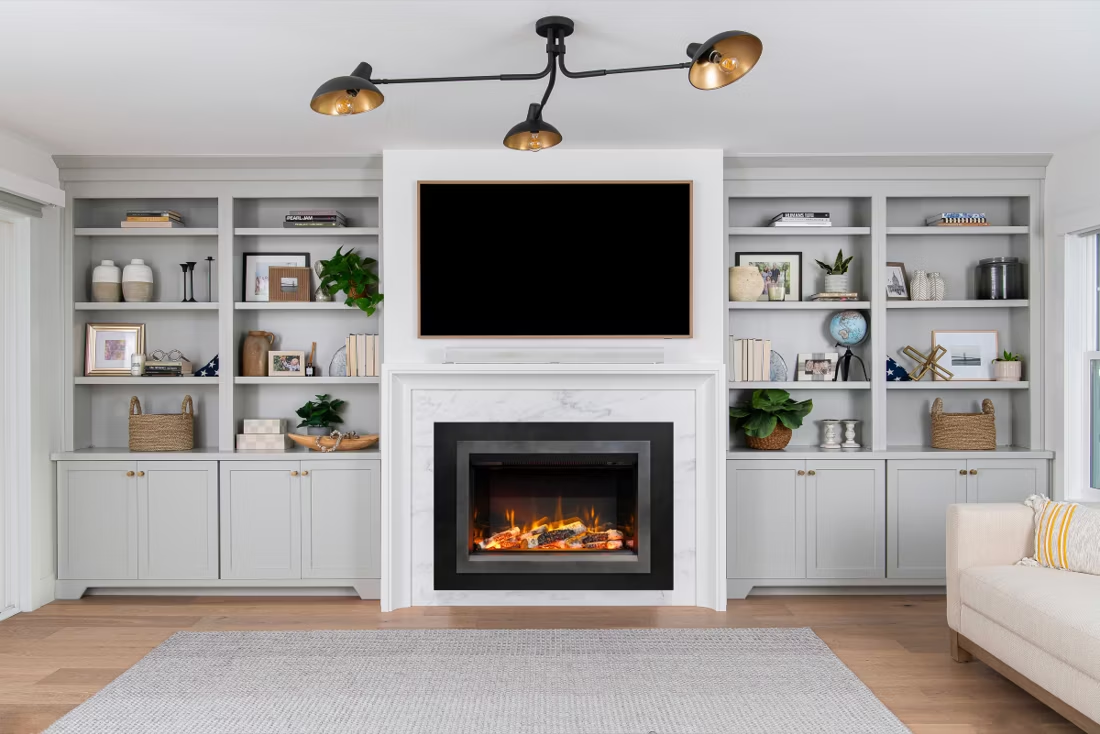
Yes—with an asterisk. Fireplaces are hot and TVs don't like heat. Either put a mantel between them to deflect rising warmth, or choose a fireplace with heat-management technology that creates a cool zone on the wall above—the wall stays around 125 degrees, barely warm, while the room still gets full heat. If you like clean lines and don't want a mantel, heat management is the answer.
Does an electric fireplace need a vent or chimney?
No—that's its superpower. An electric fireplace needs a wall and an outlet, period. No vent pipe, no gas line, no clearances to design around, which is why it works in bedrooms, offices, apartments, and walls where venting a gas or wood unit would be impractical or impossible. Installation is typically the simplest and least expensive of any fireplace type.
What is an in-home preview and do I need one?
It's a visit where a hearth professional measures your space, confirms the model you picked actually works in your home, and walks the specs—framing, gas line, venting, finish work—before anything is ordered. Some details you just can't know until you see the house. Never make a down payment without one; it's the single most-skipped step that burns buyers.
How much should I budget for a fireplace?
For an average home—covering the fireplace, the vent pipe, and basic installation—a budget between $3,900 and $5,500 gives you a lot of options across wood, gas, and pellet. By the time you add finish work, gas line, and electrical, the average complete installation lands between $5,000 and $12,000 all-in. In a remodel or new build, a good rule is to put about 2.5% of the total project cost toward the fireplace.
Nearby Dealers
Hearth shops serving Layton and the surrounding area.
Electric Service in Layton
An electric fireplace's heater draws about 1,500 watts—pennies per hour at local rates.
Find your electric fireplace in Layton.
Tell us about your space and we'll match you with a trusted local Layton dealer and send over your free Project Guide & Parts List—the exact electric fireplace, mounting or insert kit, and wiring plan for your room.
Find Your Fireplace →