
Keep Your Family Warm and Safe—No Matter What
Real fire warmth for red rock country—pinyon, juniper, and aspen cordwood, sized right for a mild desert climate. Find the right stove and connect with a trusted local dealer.
Every Project Starts From One of These Five Situations
Supplemental warmth for mild desert winters.
Hurricane sits at 3,258 feet in Utah's Dixie region, near Zion National Park, in climate zone 3B—a mixed-dry zone where winter lows average around 29°F and the winter heating load runs about a third of what a northern mountain town like Helena, MT sees, so wood heat here plays a different role than it does in colder climates: less about surviving brutal cold, more about supplemental warmth, ambiance, and backup heat during the occasional cold snap or power interruption.
Firewood is genuinely local here. Pinyon and juniper are the dominant species across Washington County's high desert terrain, burning hot and aromatic (though a bit resinous), while aspen from higher elevations burns cleaner and cooler for easier everyday use. Cutting permits through the Dixie National Forest run $5 to $20 per cord during the May-to-October season. The dry conditions that make this landscape beautiful also mean wildfire smoke is a real seasonal concern—many homeowners here pair a modern EPA-certified stove with attention to defensible space and local burn restrictions during fire season.
Firewood Cutting Permits Near Hurricane
Three steps. No salesperson until you're ready.
Tell us about your project
Your zip code, your situation, and the fuel you're leaning toward—or let the answers point you to one.
See what's actually available
The brands dealers within 100 miles genuinely carry—real options, never a catalog mirage.
Get your dealer & Project Guide
A trusted local dealer, plus the free Project Guide & Parts List that names every component of the job.
Frequently Asked Questions
How much does a wood stove installation cost in Hurricane?
Most wood stove installations in the Hurricane area run roughly $3,500 to $8,000, depending on the stove model, whether an existing chimney can be reused, and whether new Class A pipe and roof penetration are needed. Homes with an existing masonry fireplace converting to an insert tend to land on the lower end; new construction or a freestanding stove with no existing flue runs higher. A local hearth retailer will give you a firm number after seeing your chimney or venting path in person.
What size wood stove do I need for my home?
Because Hurricane's winters are relatively mild compared to higher-elevation Utah towns, most homeowners here are sizing for supplemental heat or a single main living area rather than whole-home primary heat. A small to medium stove (up to about 1,500 sq ft) covers most great rooms and open floor plans in this area comfortably. Oversizing is the more common mistake locally—a stove sized for a much colder climate will run too hot and burn through wood faster than needed here. A local dealer can size it correctly based on your layout and insulation.
Where can I find certified wood stove installers near Hurricane?
Look for installers with NFI (National Fireplace Institute) or CSIA (Chimney Safety Institute of America) credentials. In the St. George/Washington County market, most hearth retailers handle installation directly with certified staff, which keeps warranty coverage and code compliance in one hand rather than splitting the job between a stove seller and a separate contractor. Given the dry climate and wildfire concerns locally, proper spark arrestor installation on the chimney cap is also worth confirming with your installer.
What's the difference between a wood stove and a wood insert?
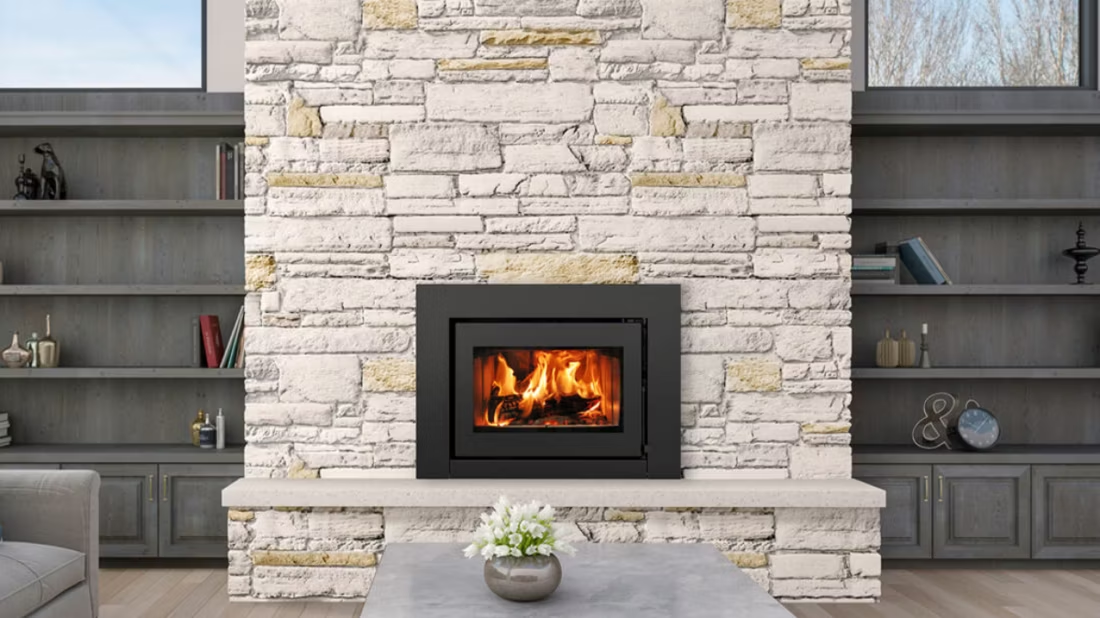
A wood stove is a freestanding unit on a hearth pad that vents through its own chimney—flexible for placement anywhere with proper clearances. A wood insert slides into an existing masonry fireplace and uses that chimney (typically with a stainless liner) to dramatically improve heat output over an open hearth. Many older homes around Hurricane and La Verkin already have a masonry fireplace, making an insert the simpler upgrade; newer construction without an existing chimney is usually better suited to a freestanding stove.
Do I need a permit to install a wood stove in Hurricane?
Yes—new wood stove installations require a building permit, generally through Washington County or the City of Hurricane Building Department depending on your address, and the stove must meet current EPA 2020 NSPS emissions standards. Most local installers handle the permit paperwork as part of the job. Unlike winter-inversion areas of the state, Hurricane doesn't have routine winter burn curtailment days, but Washington County can issue burn restrictions during wildfire season or Red Flag Warning conditions—worth checking before burning in late summer or fall.
What's the best wood stove for Hurricane's climate?
Given the milder winters here compared to places like Bozeman, MT, you generally don't need an ultra-long-burn catalytic stove built for sub-zero overnight lows. Mid-size non-catalytic stoves from brands like Lopi, Pacific Energy, or Regency are a good fit for supplemental heat in a main living area, and they're simpler to operate and maintain. If you're heating a larger or drafty older home, a catalytic model like Blaze King can still make sense for extended burn times on the occasional cold desert night, but for most Hurricane homes it's more capacity than needed.
How often should my chimney be inspected and cleaned?
An annual inspection is recommended for any wood-burning appliance, and Hurricane is no exception—even though the dry climate here tends to produce somewhat less creosote buildup than damp coastal or mountain regions. Plan on a sweep and inspection each late summer before wildfire season restrictions lift and burning season starts. If you're burning resinous pinyon or juniper regularly, keep an eye on buildup, since those species can leave more residue than aspen.
Where can I get firewood in the Hurricane area?
Pinyon and juniper are the most common local species, with aspen available from higher-elevation sources—pinyon and juniper burn hot with a strong, resinous aroma, while aspen burns cooler and cleaner and is easier to split. For self-cut firewood, the Dixie National Forest issues cutting permits for $5 to $20 per cord during the May-to-October season. Several local suppliers also sell and deliver split cordwood by the truckload if you'd rather skip the cutting.
Wood stove vs. pellet stove—which is right for me?
Wood stoves burn cordwood, work without electricity, and pair naturally with low-cost Dixie National Forest cutting permits—a real advantage if you want heat that doesn't depend on the grid. Pellet stoves, using regional brands like Bear Mountain, Lignetics, or Forest Energy, are more convenient to load and burn cleaner, but they need electricity for the auger and blower. Power outages are relatively uncommon with Dixie Escalante REA and Hurricane City Power serving the area, so that tradeoff matters less here than in storm-prone regions—it often comes down to whether you'd rather split wood or fill a hopper.
Why is my open fireplace making my house colder?
Open fireplaces suck—literally. As the fire burns, it consumes air your furnace already paid to heat and pulls it out through the chimney, so the house is actually colder after the fire goes out than before you lit it. An insert fixes this: it seals the chimney, puts fixed glass across the front, and turns that hole in your house into a real heat source.
Why won't my new wood stove get going like my old one?
New wood stoves are 70%+ efficient, so far less heat goes up the flue—which also means less draft to get a fire established. The rule: build a genuinely hot fire for about 45 minutes before you choke it down. Skip that and you get smoke in the room, creosote in the chimney, and a fire that never takes off. Most performance complaints trace straight back to this.
Does a fireplace add value to my home?
On average, a fireplace adds back to the home about the same amount you spent installing it. Add the monthly savings from heating the rooms you actually use instead of the whole house—often hundreds of dollars a year—and the value case is strong before you even count what a fire does for how your family uses the room.
How much should I budget for a fireplace?
For an average home—covering the fireplace, the vent pipe, and basic installation—a budget between $3,900 and $5,500 gives you a lot of options across wood, gas, and pellet. By the time you add finish work, gas line, and electrical, the average complete installation lands between $5,000 and $12,000 all-in. In a remodel or new build, a good rule is to put about 2.5% of the total project cost toward the fireplace.
Nearby Dealers
Hearth shops serving Hurricane and the surrounding area. Every listing shows whether it is a WhyFire partner, a dealer we have verified as authorized for the brands we recommend, or a local business carrying hearth products. No manufacturer pays for placement. How we verify dealers →
Dixie Fireplace
Custom Fireplace
Carpet Plus
Find your wood stove in Hurricane.
Tell us a bit about your home and we'll match you with a trusted local dealer and send over a free Project Guide & Parts List—the right stove, the vent kit, and a plan built for your Hurricane home.
Find Your Fireplace →