
Reliable heat for a No-Burn Zone along the Wasatch Front.
Hooper sits at 4,195 feet with winter lows averaging 20°F and a long, demanding heating season each year—cold enough to need real supplemental heat, in a valley where winter inversions make burning wood a poor fit. I'll match you with a vetted local dealer who knows the gas line work and the venting for your street.
Every Project Starts From One of These Five Situations
Clean heat when wood isn't really an option.
Hooper sits in Weber County along the Wasatch Front, close enough to the Great Salt Lake to catch the same winter inversions that settle over Ogden and the rest of the valley. At 4,195 feet with an average winter low of 20°F and a long, demanding heating season, this is a climate that genuinely needs a working heat source through a long winter—it's not a mild-winter town, even though it sits well south of places like Bismarck or Fargo in overall winter severity.
What sets Hooper apart is why wood and pellet appliances barely register here: Weber County falls inside the Wasatch Front's PM2.5 nonattainment area, and Utah's Division of Air Quality calls mandatory No Burn days during winter inversion events, when solid-fuel appliances are supposed to stay cold regardless of certification. Pinyon, juniper, and aspen still grow in the surrounding foothills, and a handful of households burn them anyway, but most homeowners here have shifted to natural gas or electric for anything beyond occasional ambiance—fuels that keep running, and keep the air clean, on exactly the stagnant, smoke-prone days when a fireplace gets used most.
Three steps. No salesperson until you're ready.
Tell us about your project
Your zip code, your situation, and the fuel you're leaning toward—or let the answers point you to one.
See what's actually available
The brands dealers within 100 miles genuinely carry—real options, never a catalog mirage.
Get your dealer & Project Guide
A trusted local dealer, plus the free Project Guide & Parts List that names every component of the job.
Frequently Asked Questions
How much does a gas fireplace installation cost in Hooper?
Most Hooper installs land in the $4,500 to $10,000 range, with the spread coming down to how much new gas line and venting the job needs. A direct-vent insert going into an existing masonry firebox with a gas line already nearby—common in Hooper's older farmhouse-style lots—sits toward the low end. A new built-in unit for a garage conversion or addition, with fresh gas line run from the meter and full wall or roof venting, runs toward the top. Homes outside Dominion Energy Utah's service footprint that need propane instead should budget extra for a tank set.
Can I convert an existing wood-burning fireplace to gas?
Yes, and given how little sense wood-burning makes here once you factor in the Wasatch Front's mandatory No Burn days, it's a common upgrade. Older Hooper homes with a masonry firebox originally built for pinyon or juniper can usually take a direct-vent insert with a stainless liner run through the existing chimney, typically $4,500 to $9,000 depending on gas line distance. It solves two problems at once—you stop worrying about inversion-day burn restrictions, and you get a fireplace that lights on demand instead of needing seasoned wood on hand.
Is Hooper on natural gas, or do I need propane?
Most of Hooper is served by Dominion Energy Utah, so if your furnace or water heater already runs on natural gas, adding a fireplace is usually a straightforward tie-in for a licensed gas fitter. A smaller number of outlying properties on the edges of Hooper toward the wetlands and farmland run on propane instead, which just means budgeting for a tank alongside the fireplace install. Either fuel path works with the direct-vent units most local dealers carry.
Will my gas fireplace still work if the power goes out?
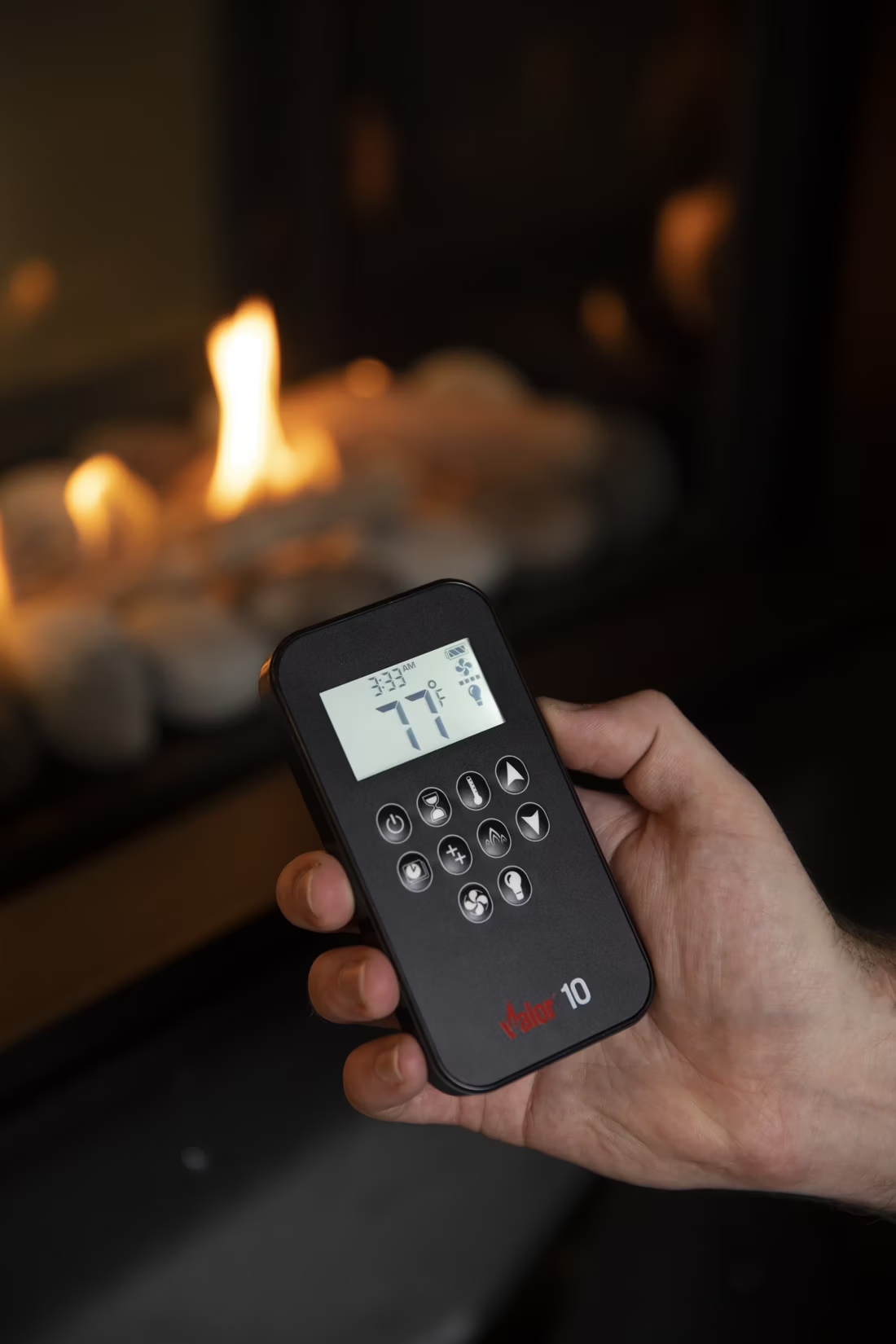
Most will, and that matters in Hooper—the Wasatch Front sees periodic high-wind events (the kind that toppled trees and cut power across Weber and Davis counties in past windstorms) that can knock out electricity for hours. Units with intermittent pilot ignition (IPI) run on AA battery backup that kicks in automatically. Some Valor models skip the battery entirely because their pilot generates its own current through the thermocouple. If outage resilience matters to you, ask your dealer which ignition system is on any model before you buy.
What's the difference between a gas fireplace, insert, and stove?
A gas fireplace is a built-in unit framed into new construction or a remodeled wall. A gas insert fits inside an existing masonry firebox, which is the common route for older Hooper homes that started out with a wood-burning setup for pinyon or juniper. A gas stove is freestanding on a hearth pad, similar footprint to a wood stove but running off a gas line or propane tank instead of cordwood. For most existing Hooper homes, an insert is the least disruptive way to modernize a fireplace that's rarely burned anyway because of inversion-season restrictions.
Do I need a permit to install a gas fireplace in Hooper?
Yes. Hooper City permitting runs through Weber County's Building Inspection Division, and you'll need both a building permit for the unit and venting plus a separate mechanical/gas permit tied to the licensed gas-fitter work on the line. Most hearth dealers who install in Weber County handle both permits and schedule the final inspection as part of the job, so you're not coordinating trades and paperwork on your own.
How often does a gas fireplace need to be serviced in Hooper?
Plan on an annual service, ideally in late summer or early fall before winter inversion season sets in and burn advisories start piling up demand for indoor heat. A technician checks the burner, pilot assembly, gas connections, and venting, and cleans the glass—expect roughly $150-$250 for a standard visit. Skipping it on a unit that runs daily through a five-month-plus Hooper heating season is how a pilot or ignition problem surfaces on the coldest night of the year rather than during a routine check.
Should I choose a vented or vent-free gas fireplace given Hooper's air quality?
Direct-vent is the right call for almost every Hooper install. It draws combustion air from outside and exhausts it back outside through sealed venting, so it adds nothing to indoor air during exactly the stagnant, inversion-heavy days when the fireplace is running hardest. Vent-free units are legal in Utah under specific room-sizing rules and burn into the living space, but most local dealers steer Hooper homeowners away from them given how much of the year already carries a winter inversion or wildfire-smoke advisory—one less source of indoor combustion byproducts is worth the tradeoff.
Gas vs. electric—which makes more sense for a Hooper home?
Electric fireplaces are the cheaper entry point here, typically $400-$1,200 installed, and they run on PacifiCorp power at roughly 12.5 cents per kWh with zero venting or gas line work—a good fit for a bedroom or basement that just needs ambiance and light supplemental warmth. But with winter lows averaging 20°F and inversion-season stretches that keep everyone indoors, gas simply throws more heat for less running cost when you're trying to warm a main living space through a real Utah winter. Wood and pellet stoves rarely enter the conversation in Hooper at all, since the Wasatch Front's mandatory No Burn days make them impractical as a primary heat source.
Why is my open fireplace making my house colder?
Open fireplaces suck—literally. As the fire burns, it consumes air your furnace already paid to heat and pulls it out through the chimney, so the house is actually colder after the fire goes out than before you lit it. An insert fixes this: it seals the chimney, puts fixed glass across the front, and turns that hole in your house into a real heat source.
Is my gas fireplace wasting gas?
If it was installed more than 15 years ago, probably. Older gas fireplaces keep a standing pilot light burning all the time, and that little flame can cost a couple hundred dollars a year. Newer models use pilot-on-demand ignition—the pilot lights only when you use the fireplace and goes out when you turn it off.
How much should I budget for a fireplace?
For an average home—covering the fireplace, the vent pipe, and basic installation—a budget between $3,900 and $5,500 gives you a lot of options across wood, gas, and pellet. By the time you add finish work, gas line, and electrical, the average complete installation lands between $5,000 and $12,000 all-in. In a remodel or new build, a good rule is to put about 2.5% of the total project cost toward the fireplace.
Can a fireplace actually lower my heating bill?
Yes—by creating a comfort zone. A furnace heats every square foot of the house just to warm the one room you're in; a gas fireplace on low burns roughly a sixth of the gas a typical furnace does. Set the furnace around 55–60 degrees as a baseline, then heat the rooms your family actually uses. Families who heat this way commonly save $20–$60 a month.
Nearby Dealers
Hearth shops serving Hooper and the surrounding area. Every listing shows whether it is a WhyFire partner, a dealer we have verified as authorized for the brands we recommend, or a local business carrying hearth products. No manufacturer pays for placement. How we verify dealers →
Comfort Solutions
Hearth & Home Dist. Of UT-Ogden
Stone World Supply
Ogden Lawn & Garden
Rocky Mountain Stove
Timber Ridge Fireplace
Utah Air
Get your free Project Guide & Parts List for a Hooper gas fireplace.
Tell me about your home and whether you're on Dominion Energy Utah or propane, and I'll match you with a trusted local dealer and send a free Project Guide & Parts List with the exact vent kit and parts your project needs.
Find Your Fireplace →