
Clean Heat for Hooper, Without the Smoke.
Hooper sits in the Wasatch Front's winter inversion basin, where burning restrictions are common. An electric fireplace gives you real zone heat with none of the particulate load—and we'll match you with a local dealer who installs it right.
Every Project Starts From One of These Five Situations
Weber County's air rules make electric the practical choice.
Hooper sits at 4,195 feet in the Weber River valley, part of the Wasatch Front airshed that traps cold, stagnant air against the Wasatch Range every winter. That inversion pattern is well documented—Weber County is inside a federal PM2.5 non-attainment area, and on Red and Yellow air quality action days, wood and pellet burning restrictions kick in across the valley. That's a big part of why wood and pellet appliances don't get much traction here, even though pinyon, juniper, and aspen are all available a short drive up into the Uinta-Wasatch-Cache National Forest, where cutting permits run $5 to $20 per cord from May through October. It's simply harder to justify a wood-burning appliance as a daily heat source when the valley air can shut it down on the coldest, stillest nights of the year.
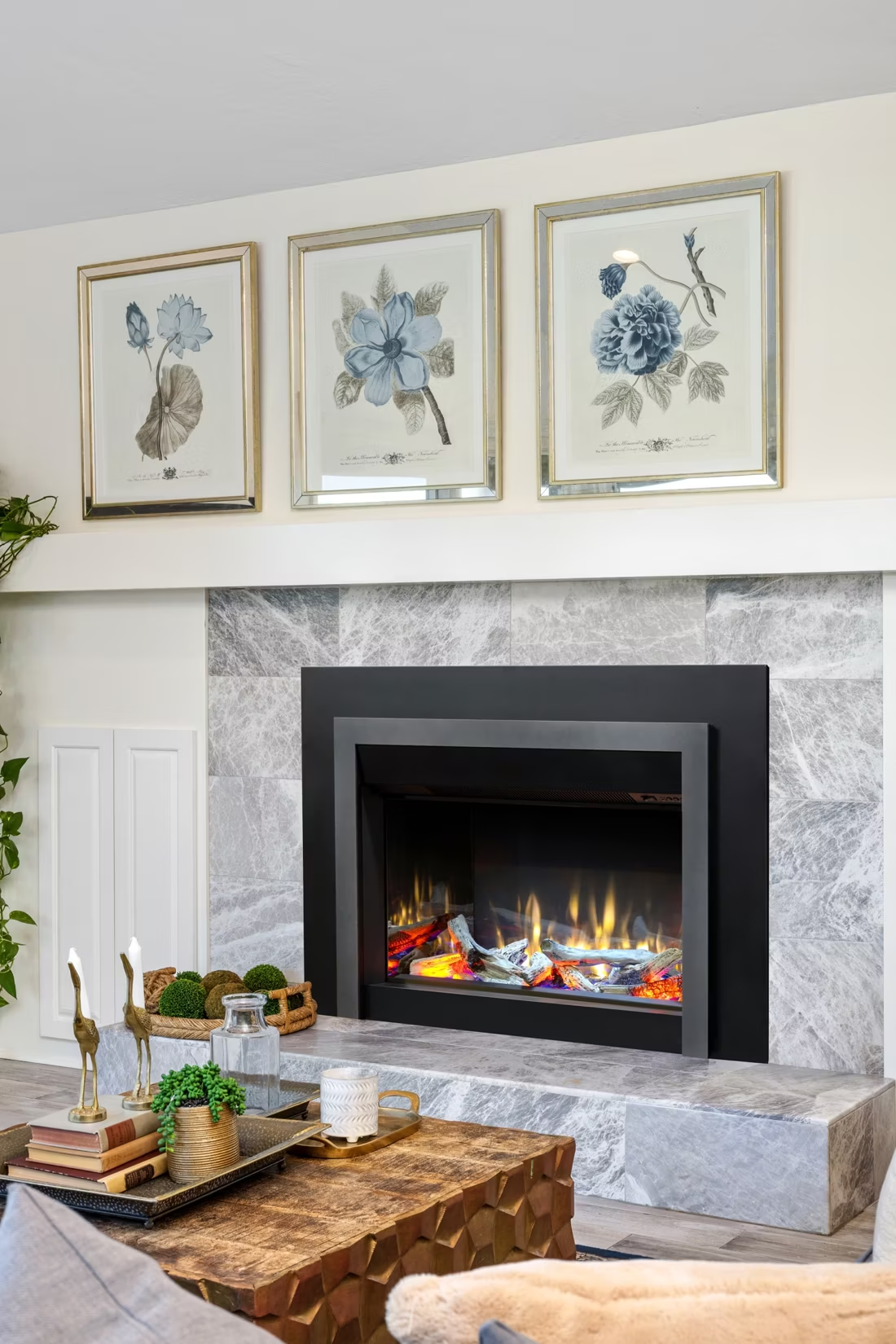
Electric solves that problem outright—no combustion, no particulates, no smoke advisory to check before you light it. With Hooper's climate running about 5,590 heating degree days a year and average winter lows near 20°F (a heating season roughly on par with Madison, WI, longer than most Utahns assume), a well-placed electric fireplace or insert adds real, comfortable zone heat to a bedroom, basement, or living room without touching your furnace load. PacifiCorp serves Hooper's electric accounts at a residential rate around 12.5 cents per kWh, which keeps day-to-day running costs modest for supplemental use.
Three steps. No salesperson until you're ready.
Tell us about your project
Your zip code, your situation, and the fuel you're leaning toward—or let the answers point you to one.
See what's actually available
The brands dealers within 100 miles genuinely carry—real options, never a catalog mirage.
Get your dealer & Project Guide
A trusted local dealer, plus the free Project Guide & Parts List that names every component of the job.
Frequently Asked Questions
How much does it cost to install an electric fireplace in Hooper?
Electric fireplaces are the least expensive hearth appliance to install, largely because there's no venting, no gas line, and no chimney work involved. A basic plug-in insert or wall-mount unit can run under $500 installed if it plugs into an existing standard outlet. Built-in electric fireplaces set into custom framing, cabinetry, or a mantel surround—with a dedicated 20-amp circuit run by an electrician—typically land in the $1,200 to $3,000 range depending on finish work. Because there's no combustion appliance involved, most Hooper installs move faster than a gas or wood project, often completed in a day.
Why isn't wood heat more common in Hooper if there's forest nearby?
It's not that firewood isn't available—pinyon, juniper, and aspen are all cut locally under Uinta-Wasatch-Cache National Forest permits for $5 to $20 per cord. The issue is where Hooper sits: inside the Wasatch Front's winter inversion basin, which traps smoke and fine particulate matter (PM2.5) against the valley floor for days at a time. Weber County falls within a federal non-attainment area, and mandatory no-burn actions are issued on the worst air days each winter, which makes relying on a wood stove as daily heat impractical for most households here. Electric doesn't carry that limitation—it works the same whether the air quality index reads green or red.
What does it cost to run an electric fireplace with PacifiCorp's rates?
Most electric fireplaces draw around 1,500 watts on their highest heat setting. At PacifiCorp's residential rate of about 12.5 cents per kWh, that works out to roughly 19 cents an hour of full-heat operation—call it $1.50 to $2.50 for a typical evening of use with the heater cycling on and off. Used as ambiance-only (heater off), draw drops to 40–100 watts, essentially pennies per hour. For a supplemental heat source in one room, that's a manageable add to a Hooper household's power bill, especially compared to running a space heater around the clock.
Is an electric fireplace just a glorified space heater?
Functionally, the heating element in most electric fireplaces is similar to what's in a space heater—resistive coil or infrared heat. What you're paying for beyond that is the fixed installation, the realistic flame display, and in many cases zone-controlled thermostats that a portable space heater doesn't offer. A built-in electric fireplace also frees up floor space and looks like a permanent fixture rather than an appliance you unplug and store each spring. If your only goal is raw heat output per dollar, a space heater is cheaper up front—but most Hooper homeowners choosing electric are after both the ambiance and the heat, which is where a proper electric fireplace or insert earns its cost.
Do I need a permit to install an electric fireplace in Hooper?
A plug-in electric fireplace that uses an existing standard outlet typically doesn't require any permit—it's treated like any other appliance. If your installation involves adding a new dedicated circuit, running wire through a wall, or built-in framing with electrical work, a licensed electrician will need to pull an electrical permit through the local building department as part of the job. There's no venting, gas line, or clearance-to-combustibles review required the way there would be for a wood or gas unit, which is part of why electric installs move through permitting quickly when a permit is needed at all.
What's the best type of electric fireplace for a Hooper home?
For supplemental heat in a bedroom or family room, a mid-size wall-mount or freestanding electric insert (1,500-watt heater, thermostat control) covers most needs without any construction. For a more finished look, built-in units set into a custom mantel or media wall—from brands like Dimplex, Napoleon, or Touchstone—give you the visual presence of a real fireplace with none of the venting requirements. Given Hooper's inversion-season air restrictions, some homeowners are also using electric inserts to replace an existing but rarely-usable wood-burning fireplace, keeping the masonry opening but swapping in electric heat and flame effect. A local dealer can walk you through sizing based on your room and existing wiring.
Will an electric fireplace heat my whole house during a cold snap?
No, and it's worth being direct about that. With Hooper averaging around 5,590 heating degree days a year and winter lows near 20°F, most homes need a real central heating system—typically a natural gas furnace—to carry the whole-house heating load through the season. An electric fireplace is best treated as zone heat: warming the room you're actually in so you can turn down the thermostat elsewhere, or adding comfort to a basement or addition your furnace doesn't reach well. It's not designed, and shouldn't be relied on, as your only heat source in a Weber County winter.
Electric vs. gas fireplace—which makes more sense in Hooper?
Gas fireplaces are common in Weber County homes with existing natural gas service, and they put out significantly more heat than electric units, which matters if you want a fireplace that can meaningfully offset furnace use on a cold night. Electric fireplaces cost far less to install, require no gas line or venting, and produce zero emissions—a real advantage during winter inversion season when air quality actions are in effect. If you already have gas plumbed to the room and want serious heat output, gas is usually the better fit. If you want low-cost installation, flexibility on room placement, and a unit that runs clean regardless of the day's air quality index, electric is the more practical pick for most Hooper households.
Is electric heat a good option during Wasatch Front air quality inversions?
Yes—this is one of the clearest local arguments for electric. During inversion season, cold air gets trapped in the valley and pollution (including wood smoke) builds up rather than dispersing, which is why Weber County periodically issues mandatory no-burn actions for wood and pellet appliances. An electric fireplace has no combustion byproducts at all, so it keeps running exactly the same on a Red air quality day as it does on a clear one. For households in Hooper who want supplemental heat they can count on regardless of the day's air quality status, that reliability is a real practical advantage over solid-fuel appliances.
Does an electric fireplace need a vent or chimney?
No—that's its superpower. An electric fireplace needs a wall and an outlet, period. No vent pipe, no gas line, no clearances to design around, which is why it works in bedrooms, offices, apartments, and walls where venting a gas or wood unit would be impractical or impossible. Installation is typically the simplest and least expensive of any fireplace type.
Can I put a TV above my fireplace?
Yes—with an asterisk. Fireplaces are hot and TVs don't like heat. Either put a mantel between them to deflect rising warmth, or choose a fireplace with heat-management technology that creates a cool zone on the wall above—the wall stays around 125 degrees, barely warm, while the room still gets full heat. If you like clean lines and don't want a mantel, heat management is the answer.
How much should I budget for a fireplace?
For an average home—covering the fireplace, the vent pipe, and basic installation—a budget between $3,900 and $5,500 gives you a lot of options across wood, gas, and pellet. By the time you add finish work, gas line, and electrical, the average complete installation lands between $5,000 and $12,000 all-in. In a remodel or new build, a good rule is to put about 2.5% of the total project cost toward the fireplace.
What is an in-home preview and do I need one?
It's a visit where a hearth professional measures your space, confirms the model you picked actually works in your home, and walks the specs—framing, gas line, venting, finish work—before anything is ordered. Some details you just can't know until you see the house. Never make a down payment without one; it's the single most-skipped step that burns buyers.
Nearby Dealers
Hearth shops serving Hooper and the surrounding area. Every listing shows whether it is a WhyFire partner, a dealer we have verified as authorized for the brands we recommend, or a local business carrying hearth products. No manufacturer pays for placement. How we verify dealers →
Comfort Solutions
Hearth & Home Dist. Of UT-Ogden
Stone World Supply
Ogden Lawn & Garden
Rocky Mountain Stove
Timber Ridge Fireplace
Utah Air
Electric Service in Hooper
An electric fireplace's heater draws about 1,500 watts—pennies per hour at local rates.
Find your electric fireplace in Hooper.
Tell us about your room and your goals, and we'll put together a free Project Guide & Parts List for your Hooper home—sized right, with a trusted local dealer who can install it.
Find Your Fireplace →