
A Rare Fit in Fruit Heights—But Not Impossible.
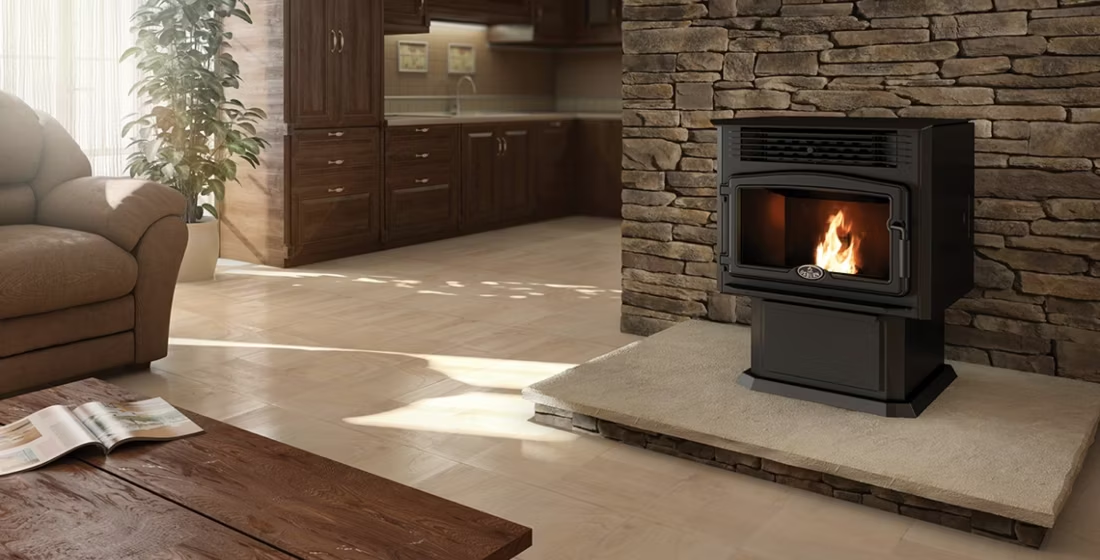
Pellet stoves are the exception, not the rule, in Fruit Heights—natural gas reaches nearly every lot in Davis County and winter inversion rules restrict solid-fuel burning on the worst air days. If you still want pellet heat for a cabin, a backup, or a detached space, we'll match you with a dealer who carries it.
Every Project Starts From One of These Five Situations
Natural gas and inversion rules crowd out pellet heat.
Fruit Heights is a small city of about 6,000 people tucked against the Wasatch Front foothills in Davis County, at 4,556 feet elevation with winter lows averaging in the low 20s and roughly 5,700 heating degree days a year—genuinely cold enough for supplemental heat. But pellet stoves have never caught on here the way they have in more rural or off-grid parts of the Mountain West. Two things work against them: near-universal natural gas service across Davis County makes a direct-vent gas insert the default upgrade, and Fruit Heights sits inside the Wasatch Front's winter inversion airshed, where trapped cold air and wildfire-season haze both draw scrutiny to anything that burns.
During Utah Division of Air Quality mandatory action days—declared when inversion smog pushes the Wasatch Front into the red or orange air quality range—solid-fuel burning devices are restricted unless registered as a home's sole source of heat, a rule that applies to pellet stoves just as it does to wood stoves. That's why most of the pellet installs that do happen out of this zip code are either backup-heat setups for winter power outages or units going into cabins and second homes up toward the Uinta-Wasatch-Cache National Forest, where wood cutting permits run $5 to $20 per cord and gas service doesn't reach. If that's your situation, regional pellet brands like Bear Mountain, Lignetics, and Forest Energy are stocked by hearth dealers serving the Ogden-to-Salt Lake corridor.
Three steps. No salesperson until you're ready.
Tell us about your project
Your zip code, your situation, and the fuel you're leaning toward—or let the answers point you to one.
See what's actually available
The brands dealers within 100 miles genuinely carry—real options, never a catalog mirage.
Get your dealer & Project Guide
A trusted local dealer, plus the free Project Guide & Parts List that names every component of the job.
Frequently Asked Questions
Does a pellet stove make sense for a home in Fruit Heights?
Not for most homes. With natural gas running to nearly every subdivision in Davis County and Fruit Heights' place inside the Wasatch Front inversion airshed, gas inserts have become the default upgrade for this zip code, and pellet fuel relevance here is genuinely limited. That said, pellet stoves still make sense for specific situations: a mountain cabin above the gas line, a detached shop or garage, or a household that wants solid-fuel backup heat for winter power outages without the cutting, splitting, and hauling that cordwood requires. If that's you, a local hearth dealer can walk through whether a stove or insert fits your space.
How much does a pellet stove installation cost in Fruit Heights?
Expect roughly $3,500 to $6,500 installed for a freestanding pellet stove, including the appliance, PL venting through an exterior wall, and a dedicated 120-volt outlet for the auger and blower motors—pellet units don't need a masonry chimney the way wood stoves do, which keeps venting costs down. A pellet insert dropped into an existing wood-burning fireplace, using the old chimney chase for the vent liner, tends to land in the same range or slightly higher depending on liner length. Because pellet installs are uncommon here, get quotes from two dealers if you can; installer experience with pellet-specific venting varies more than it does for gas.
Why don't more homes along the Wasatch Front burn pellets?
Two local factors work against it. First, Davis County has some of the most complete natural gas coverage in the state, so a direct-vent gas fireplace or insert is usually cheaper to run and easier to permit than a solid-fuel appliance. Second, Fruit Heights sits inside the winter inversion airshed that traps cold, stagnant air against the Wasatch Front—when the Utah Division of Air Quality calls a mandatory 'no-burn' action day during a red or orange air quality event, solid-fuel burning devices, pellet stoves included, are restricted unless they're registered as a home's sole source of heat. That restriction, more than anything else, is why gas has become the default choice in this area.
Will a pellet stove keep working if the power goes out?
Not on its own. Pellet stoves rely on an electric auger to feed fuel and a blower to distribute heat, so a standard unit shuts down the moment power drops—unlike a wood stove, which keeps burning through an outage. If backup heat during a storm is part of why you're considering pellet, ask your dealer about pairing the stove with a small battery backup or inverter setup, or plan on a generator sized for the stove's low wattage draw. Given how PacifiCorp and Kaysville City Corporation service this area, outages here tend to be short, but foothill neighborhoods can lose power longer during heavy wind events.
Where do I buy pellets near Fruit Heights?
There's no pellet mill in Davis County itself, but regional brands like Bear Mountain, Lignetics, and Forest Energy are carried by hearth dealers and farm-supply stores serving the Ogden-to-Salt Lake corridor. Expect to pay somewhere in the $260 to $320 per ton range for bagged premium hardwood or softwood pellets, picked up or delivered. Because demand is lower here than in more pellet-heavy markets, it's worth confirming a dealer keeps stock through the winter rather than special-ordering each pallet.
Do I need a permit to install a pellet stove in Fruit Heights?
Yes. Fruit Heights follows the Davis County building code for mechanical and fuel-burning appliance permits, and a new pellet stove or insert needs a permit covering the appliance listing, clearances to combustibles, and the through-wall vent termination. Most hearth dealers who install pellet equipment in this area pull the permit as part of the job. Because pellet installs are less common here than gas, confirm your installer has handled pellet-specific vent terminations before—the clearance and termination rules differ from both wood chimneys and gas direct-vent pipe.
What's the difference between a pellet stove and a pellet insert—and does either fit my Fruit Heights home?
A pellet stove is a freestanding appliance that vents through an exterior wall with PL pipe, so it can go almost anywhere with power and a place to route the vent. A pellet insert is built to slide into an existing masonry wood-burning fireplace, using the old chimney chase to run a vent liner. For the small number of Fruit Heights homes where pellet makes sense—a converted fireplace, a detached shop, a cabin without gas—the insert is usually the better fit if you already have a working masonry fireplace, since it reuses infrastructure you already have. New construction or homes without an existing fireplace almost always do better with gas, given how close natural gas service runs to nearly every lot in this area.
I have an old wood-burning fireplace—should I convert it to pellet or gas?
For most Fruit Heights homes, gas wins this comparison. Natural gas service reaches nearly every subdivision in the city, a gas insert lights instantly with no fuel storage or hopper refilling, and it isn't subject to the Division of Air Quality's mandatory no-burn restrictions that apply to solid-fuel devices during winter inversion events. Pellet remains worth considering if you specifically want a solid-fuel backup for power outages, want to avoid a gas line extension, or are converting a fireplace at a cabin property outside the gas service area. Either conversion typically reuses your existing chimney chase for the vent liner, which keeps the job simpler than an all-new installation.
Are there properties near Fruit Heights where a pellet stove is actually the right call?
Yes—mostly up in the foothills and canyon areas toward the Uinta-Wasatch-Cache National Forest, where some cabins and second homes sit outside natural gas service entirely. In those spots, a pellet stove offers most of the convenience of gas—a thermostat, a hopper instead of a woodpile—without needing a propane tank or gas line run. If you'd rather cut your own fuel, Forest Service permits through the Uinta-Wasatch-Cache run $5 to $20 per cord during the May-through-October cutting season for pinyon, juniper, and aspen—though that firewood feeds a wood stove, not a pellet hopper, so it's a separate project if you're weighing both.
Why is my open fireplace making my house colder?
Open fireplaces suck—literally. As the fire burns, it consumes air your furnace already paid to heat and pulls it out through the chimney, so the house is actually colder after the fire goes out than before you lit it. An insert fixes this: it seals the chimney, puts fixed glass across the front, and turns that hole in your house into a real heat source.
How often does a pellet stove need cleaning?
A clean pellet stove is a happy pellet stove. Plan on cleaning the burn pot about once a week when you're burning regularly—ash and clinkers gum up the air holes just like a pellet barbecue. Most pellet stove problems trace back to skipped cleaning that nobody explained up front. Some designs make it easy with a trapdoor burn pot: pull a lever and the gunk drops into the ash pan.
Can I install a fireplace myself?
If you're putting a fire in your house on purpose, it's best to work with an expert. Unless you're genuinely experienced in framing, gas line, vent pipe, and the national code on clearances to combustibles, have a professional do it—and ideally the same company that sells you the fireplace, so warranty, service, and liability all live under one roof.
Does a fireplace add value to my home?
On average, a fireplace adds back to the home about the same amount you spent installing it. Add the monthly savings from heating the rooms you actually use instead of the whole house—often hundreds of dollars a year—and the value case is strong before you even count what a fire does for how your family uses the room.
Nearby Dealers
Hearth shops serving Fruit Heights and the surrounding area. Every listing shows whether it is a WhyFire partner, a dealer we have verified as authorized for the brands we recommend, or a local business carrying hearth products. No manufacturer pays for placement. How we verify dealers →
Timber Ridge Fireplace
Croft Fireplaces (Bountiful)
Rocky Mountain Stove
Stone World Supply
Comfort Solutions
Ogden Lawn & Garden
Hearth & Home Dist. Of UT-Ogden
Comfort Solutions
Utah Air
(Sugar House) Alpine Fireplaces (In Breezeway Next To Theatres)
Pellet Brands Stocked Around Fruit Heights
Manufacturers will point you to the nearest stocking dealer.
Find your pellet stove in Fruit Heights.
Tell us about your home, cabin, or backup-heat plans and we'll match you with a local dealer who actually stocks pellet equipment in this market—plus a free Project Guide & Parts List with the exact venting and parts your install needs.
Find Your Fireplace →