
Clean Heat for the Wasatch Front's Inversion Season.
Farmington sits at the base of the Wasatch Range along the Great Salt Lake, where winter inversions trap smoke in the valley. Find the right gas fireplace or insert, and connect with a trusted local dealer.
Every Project Starts From One of These Five Situations
The valley's air quality rules point straight to gas.
Farmington sits at roughly 4,250 feet at the foot of the Wasatch Range, where the Davis County bench meets the shore of the Great Salt Lake. Winters here are milder than a Midwest heating season like Minneapolis, MN—average lows sit around 22°F and the area logs about 5,709 heating degree days a year—but the valley has a heating problem entirely its own: winter temperature inversions that trap cold, stagnant air, and everything burning in it, against the Wasatch Front for days or weeks at a time.
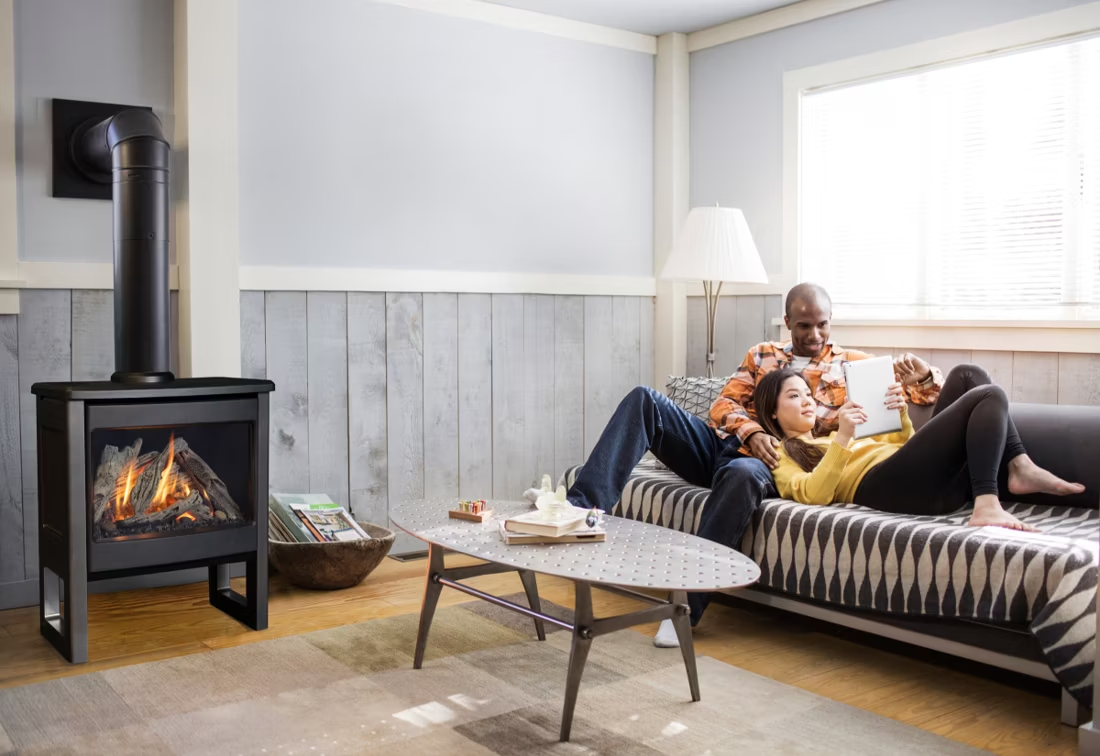
During red and yellow air-quality days, Davis County restricts uncertified solid-fuel burning, which is a big part of why wood and pellet appliances see little demand inside Farmington itself—most residents who want a wood fire save that for a cabin up in the Uinta-Wasatch-Cache National Forest rather than their primary residence. Gas fireplaces sidestep the issue entirely: they burn cleanly enough to run on inversion days, they don't need a wood supply or ash cleanup, and they pair naturally with the natural gas furnaces most Farmington homes already run for whole-house heat. For most homeowners here, a gas fireplace or insert is about zone heat and ambiance in a family room or basement, not primary heat—the furnace handles that.
Three steps. No salesperson until you're ready.
Tell us about your project
Your zip code, your situation, and the fuel you're leaning toward—or let the answers point you to one.
See what's actually available
The brands dealers within 100 miles genuinely carry—real options, never a catalog mirage.
Get your dealer & Project Guide
A trusted local dealer, plus the free Project Guide & Parts List that names every component of the job.
Frequently Asked Questions
How much does a gas fireplace installation cost in Farmington?
Most gas fireplace installations in Farmington run $4,000 to $9,500, depending on the unit, whether you're running new gas line, and the venting path. A direct-vent insert going into an existing masonry fireplace with gas already at the wall sits at the low end. A new built-in unit in a remodeled family room or basement—with framing, a fresh gas line run from the meter, and venting through an exterior wall or the roof—lands in the middle to upper end. Local dealers will size the job and give you a firm number after walking the space.
Can I convert my wood-burning fireplace to gas?
Yes, and it's a common project in Farmington's older bench neighborhoods, where many homes built from the 1970s through 1990s still have an open masonry fireplace. A gas insert typically runs $4,000 to $8,000 installed, using your existing chimney as the vent path with a liner. Beyond the convenience, converting removes your fireplace from Davis County's inversion-season burn restrictions—a gas insert can run on a red air day when an open wood fireplace legally can't.
Do I need natural gas service, or can I use propane?
Farmington and most of Davis County are well served by natural gas—Dominion Energy is the regional utility—so if your home already has a gas furnace or water heater, adding a fireplace usually means a short line extension from existing gas piping. Propane is the fallback for homes further up the bench or in the canyons above town where gas mains don't reach. Most gas fireplace models can be set up for either fuel; your installer configures the orifice and regulator for whichever you have.
Will my gas fireplace still work if the power goes out?
In most cases, yes. Farmington Canyon is known for producing strong downslope wind events that can take out power along the Davis County bench, so backup heat matters here. Gas fireplaces with IPI (intermittent pilot ignition) run on a small battery backup that kicks in automatically when line power drops—you just need to keep fresh batteries in the unit. Valor fireplaces go a step further: their pilot assembly generates its own electricity through a thermocouple, so there are no batteries to remember at all. Ask your local dealer about the ignition system on any model you're considering.
What's the difference between a gas fireplace, insert, and stove?
A gas fireplace is a fully built-in unit framed into a wall—the standard choice for new construction or a remodel in a Farmington subdivision home. A gas insert is sized to slide into an existing masonry firebox, sealing it up and using the chimney as a vent. A gas stove is freestanding, sitting on the floor with its own venting, similar in footprint to a wood stove. Homeowners with an existing wood fireplace they want to modernize almost always go with an insert; new rooms without a fireplace already framed in are better suited to a built-in unit.
Do I need a permit to install a gas fireplace in Farmington?
Yes. The City of Farmington Building Department requires a building permit for the fireplace installation and a separate gas permit for any new gas line work, and the gas piping itself has to be run by a licensed gas-fitter. Most hearth dealers who install fireplaces in Farmington handle both permits as part of the job, coordinating the gas line and venting inspections so you're not managing separate trades yourself.
Should I get a vented or vent-free gas fireplace?
Vented (direct-vent) units draw combustion air from outside and exhaust all combustion byproducts back outside through sealed piping—nothing enters the room. Vent-free units burn gas directly into the living space and are legal in Utah under specific room-sizing and oxygen-sensor rules, but given that Farmington already deals with valley-wide air quality concerns during winter inversions, most local dealers steer homeowners toward direct-vent models. They perform just as well for heat output and don't add any moisture or combustion byproducts to indoor air on top of what's already sitting outside the window.
How often does a gas fireplace need servicing?
Plan on an annual inspection, ideally before the start of inversion season each fall. A technician checks the burner, pilot assembly, venting, and gas connections, and cleans the glass and interior. It's a much smaller job than chimney sweeping on a wood system, but skipping it is still the most common reason a fireplace won't light reliably when the first cold snap hits. Local gas appliance technicians typically charge $150 to $250 for the annual visit.
Why don't more Farmington homes burn wood?
Wood-burning appliances are uncommon inside Farmington itself, mostly because of the Wasatch Front's inversion problem. During red and yellow air-quality days, Davis County restricts burning in uncertified wood stoves and open fireplaces, which makes wood impractical as a dependable heat source in a valley home. Homeowners who do want a wood fire generally look toward cabins or second homes up in the Uinta-Wasatch-Cache National Forest, where cutting permits run $5 to $20 per cord during the May-to-October season and pinyon, juniper, and aspen are the common local species. For a primary residence in Farmington, gas is the far more practical choice—it burns clean enough to run on inversion days and doesn't require a woodpile.
Why is a fireplace insert so efficient?
An insert does two things: it seals the chimney completely, so you stop losing air you already paid to heat, and it radiates warmth into the room through the firebox and glass. Most add a heat-exchange fan that pulls cool room air underneath, wraps it around the hot firebox, and pushes it back out warm. Your home is more efficient before you've even lit the first fire.
Why is my open fireplace making my house colder?
Open fireplaces suck—literally. As the fire burns, it consumes air your furnace already paid to heat and pulls it out through the chimney, so the house is actually colder after the fire goes out than before you lit it. An insert fixes this: it seals the chimney, puts fixed glass across the front, and turns that hole in your house into a real heat source.
Does a fireplace add value to my home?
On average, a fireplace adds back to the home about the same amount you spent installing it. Add the monthly savings from heating the rooms you actually use instead of the whole house—often hundreds of dollars a year—and the value case is strong before you even count what a fire does for how your family uses the room.
Can a fireplace actually lower my heating bill?
Yes—by creating a comfort zone. A furnace heats every square foot of the house just to warm the one room you're in; a gas fireplace on low burns roughly a sixth of the gas a typical furnace does. Set the furnace around 55–60 degrees as a baseline, then heat the rooms your family actually uses. Families who heat this way commonly save $20–$60 a month.
Nearby Dealers
Hearth shops serving Farmington and the surrounding area.
Find your gas fireplace in Farmington.
Tell us about your home and we'll match you with a trusted local dealer and send over your free Project Guide & Parts List—the exact equipment, vent kit, and recommended installer for your Farmington gas fireplace project.
Find Your Fireplace →