
Real fireplace warmth that keeps Farmington's air clear.
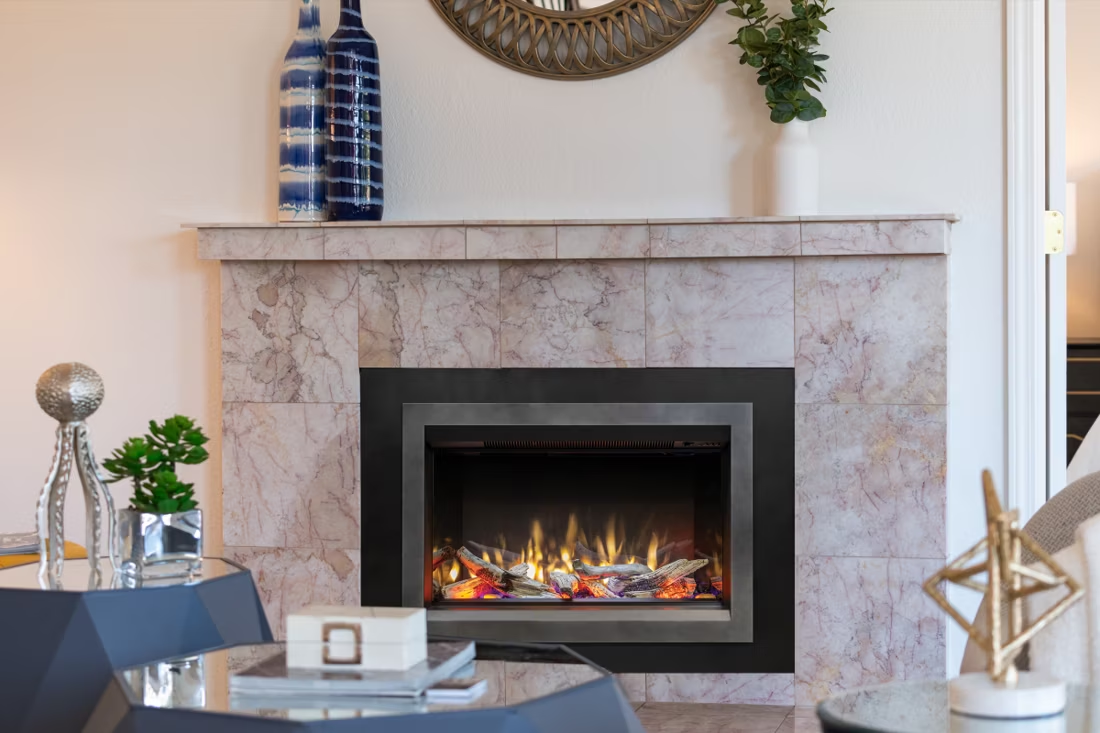
An electric fireplace or insert adds heat and ambiance to a Davis County home without adding smoke to a valley that already fights winter inversion. Get matched with a local dealer who knows what actually fits your space.
Every Project Starts From One of These Five Situations
The cleanest option on a smoggy stretch of the Wasatch Front.
Farmington sits at about 4,246 feet at the base of the Wasatch Range, between the mountains and the Great Salt Lake. Winters here aren't extreme by Rocky Mountain standards—average lows hover around 22°F and the area sees a moderate heating season, nowhere near what a place like Bozeman or Fargo sees—but the valley has a well-known problem: winter temperature inversions trap cold air and pollution against the ground for days at a time. The Utah Division of Air Quality regularly calls mandatory no-burn actions on red and orange air days along the Wasatch Front, restricting wood stoves and other solid-fuel devices exactly when people want a fire most.
That's a big part of why wood and pellet appliances see little demand in Davis County even though pinyon, juniper, and aspen are cuttable from the Uinta-Wasatch-Cache National Forest. Electric fireplaces sidestep the whole issue—no combustion, no particulate emissions, nothing that adds to inversion smog, and nothing that gets shut off on a bad air day. With PacifiCorp (and Kaysville City Corporation serving parts of the area) running residential rates around 12.5 cents per kWh, running one for supplemental zone heat or evening ambiance is inexpensive, and there's no chimney, no venting, and no cutting permit to think about.
Three steps. No salesperson until you're ready.
Tell us about your project
Your zip code, your situation, and the fuel you're leaning toward—or let the answers point you to one.
See what's actually available
The brands dealers within 100 miles genuinely carry—real options, never a catalog mirage.
Get your dealer & Project Guide
A trusted local dealer, plus the free Project Guide & Parts List that names every component of the job.
Frequently Asked Questions
How much does an electric fireplace installation cost in Farmington?
Plug-in electric inserts and freestanding units run $400 to $1,200 installed, since most just need a standard 120V outlet and mounting—often a same-day job. Larger built-in electric fireplaces or wall units that call for a dedicated 240V circuit run closer to $1,200 to $2,500 once an electrician runs new wiring and a local retailer handles the surround or mantel finish work. Either way, costs stay well below a wood or gas install in Farmington because there's no chimney, no gas line, and no exterior venting to size or permit.
Why don't more homes in Farmington use wood-burning fireplaces?
Air quality is the main reason. Farmington sits low in a valley that traps smoke during winter inversions, and Utah's Division of Air Quality regularly issues mandatory no-burn actions for solid-fuel devices on red and orange air days—sometimes for stretches of a week or more each winter. You can technically cut pinyon, juniper, or aspen with a permit from the Uinta-Wasatch-Cache National Forest for $5 to $20 per cord, but between the burn restrictions and Davis County's largely suburban housing stock, wood stoves and pellet appliances just aren't a common fit here. Electric fireplaces don't get shut off on bad air days because there's nothing being combusted.
Do I need a permit to install an electric fireplace in Farmington?
Usually not. A plug-in insert or freestanding electric fireplace that uses an existing outlet requires no permit at all. If you're installing a larger built-in unit that needs a new dedicated 240V circuit, that electrical work typically requires a permit through the City of Farmington building department, and it needs to be pulled by a licensed electrician. Most local retailers who sell built-in electric fireplaces either employ a licensed electrician or coordinate with one, so this is usually handled for you as part of the installation.
Will an electric fireplace actually heat my home?
An electric fireplace is a supplemental heat source, not a replacement for your furnace. Most units are rated for 400 to 1,000 square feet and use a built-in fan-forced heater, similar to a space heater, to warm a single room. Given Farmington's winter lows average around 22°F rather than the deep-freeze extremes of somewhere like Duluth, an electric unit is genuinely useful for taking the chill off a living room or bonus room on cold evenings without running the whole-house HVAC system harder. For true backup heat during a power outage, electric isn't the right tool—it needs power to run.
What's the difference between an electric insert, a built-in unit, and a freestanding electric stove?
An electric insert is sized to slide into an existing masonry fireplace opening, giving an old, unused fireplace real heat output and flickering flame effects without any venting work. A built-in electric fireplace is designed to be framed into a wall during a remodel or new construction, similar to how a gas fireplace would be installed, and often needs that dedicated 240V circuit for full heat output. A freestanding electric stove mimics the look of a wood stove and just needs floor space and an outlet. For most Farmington homes with an existing but rarely-used fireplace, an insert is the simplest upgrade.
How much does it cost to run an electric fireplace in Farmington?
At the local residential rate of about 12.5 cents per kWh from PacifiCorp or Kaysville City Corporation, a typical 1,500-watt electric fireplace running on high costs roughly 19 cents an hour. Most owners run the heater setting only when they're in the room and rely on the flame-only mode (which draws only a few watts) the rest of the time. Compared to running a gas fireplace or supplemental space heater, electric units are inexpensive to operate for the amount of ambiance and spot heat they add, especially since Utah's electricity rates run below the national average.
Is it safe to run an electric fireplace during a winter inversion?
Yes, and this is one of the clearest advantages of electric heat along the Wasatch Front. Electric fireplaces produce zero combustion byproducts—no smoke, no particulate matter, no carbon monoxide—so they're never affected by the Utah Division of Air Quality's mandatory no-burn actions that restrict wood stoves and fireplaces on red and orange air days. If you want fire ambiance on the exact days when solid-fuel burning is restricted, electric is the one option that stays available.
How much maintenance does an electric fireplace need?
Very little. There's no chimney to sweep, no creosote to worry about, and no annual gas line inspection. Maintenance is mostly dusting the unit, occasionally replacing an LED light strip or ember bed if it dims over years of use, and keeping the fan intake clear of dust for units with a heater function. Most electric fireplaces carry a 1- to 3-year manufacturer's warranty on electronics, and local retailers can usually handle a warranty repair without a service call to your home.
Electric vs. gas fireplace—which makes more sense for a Farmington home?
Gas is the more common choice in Davis County for a primary living-space fireplace, since natural gas service is widely available and a direct-vent gas unit puts out real heat with the look of a traditional fire. Electric makes more sense for rooms without existing gas lines or venting access, rentals, finished basements, bedrooms, or anywhere you want supplemental warmth and flame ambiance without construction. Electric also has the edge on install cost and on air-quality days when the valley's inversion triggers burn restrictions—though gas fireplaces here aren't subject to the same no-burn rules as wood. Many Farmington homeowners end up choosing gas for the main living area and electric for a secondary room.
Do electric fireplaces actually produce heat?
Yes—most put out around 4,800–5,000 BTUs from a standard outlet, which comfortably warms a bedroom, office, or den as a comfort-zone heater. What they won't do is carry a whole house the way wood, gas, or pellet can. Think of electric as ambiance-first with honest supplemental heat: flames on with no heat in July, flames plus warmth in January.
Can I put a TV above my fireplace?
Yes—with an asterisk. Fireplaces are hot and TVs don't like heat. Either put a mantel between them to deflect rising warmth, or choose a fireplace with heat-management technology that creates a cool zone on the wall above—the wall stays around 125 degrees, barely warm, while the room still gets full heat. If you like clean lines and don't want a mantel, heat management is the answer.
Can I install a fireplace myself?
If you're putting a fire in your house on purpose, it's best to work with an expert. Unless you're genuinely experienced in framing, gas line, vent pipe, and the national code on clearances to combustibles, have a professional do it—and ideally the same company that sells you the fireplace, so warranty, service, and liability all live under one roof.
What is an in-home preview and do I need one?
It's a visit where a hearth professional measures your space, confirms the model you picked actually works in your home, and walks the specs—framing, gas line, venting, finish work—before anything is ordered. Some details you just can't know until you see the house. Never make a down payment without one; it's the single most-skipped step that burns buyers.
Nearby Dealers
Hearth shops serving Farmington and the surrounding area.
Electric Service in Farmington
An electric fireplace's heater draws about 1,500 watts—pennies per hour at local rates.
Kaysville City Corporation
Find your electric fireplace in Farmington.
Tell us about your home and we'll put together a free Project Guide & Parts List for your electric fireplace project in Farmington—the right unit, the wiring it needs, and a trusted local dealer to install it.
Find Your Fireplace →