
Instant heat built for Emery County's high desert winters.
From Castle Dale to Green River, Emery County sees a long, cold winter with lows that average around 10°F. A gas fireplace or insert gives you heat at the flip of a switch—we'll match you with a vetted local dealer who knows what's installable in your part of the county.
Every Project Starts From One of These Five Situations
Clean heat for a county that runs on energy.
Emery County stretches from the irrigated farmland along the San Rafael River up into the pinyon-juniper foothills of the Wasatch Plateau and the slickrock of the San Rafael Swell—a landscape that's shaped as much by coal and power generation as by ranching. With about 8,300 residents spread across towns like Castle Dale, Huntington, Orangeville, Ferron, and Green River, homes here see genuinely cold winters: an average low near 10°F and a winter heating load similar to Helena, Montana. Wood heat has deep roots—pinyon, juniper, and aspen are all cut locally under permits from the Manti-La Sal and Fishlake National Forests—but gas has become the go-to for homeowners who want heat without tending a stove.
Natural gas service reaches the incorporated towns along State Route 10—Castle Dale, Orangeville, Huntington, and Ferron—through Dominion Energy Utah. Outside those service areas, including much of unincorporated Emery County and Green River to the east, propane is the standard fuel, supplied by regional bulk delivery companies. Either way, a properly sized and vented gas fireplace or insert gives you consistent room heat during the county's long heating season, and summer wildfire smoke that occasionally settles into the valleys is one more reason homeowners appreciate a heat source that doesn't add its own smoke to the mix.
Three steps. No salesperson until you're ready.
Tell us about your project
Your zip code, your situation, and the fuel you're leaning toward—or let the answers point you to one.
See what's actually available
The brands dealers within 100 miles genuinely carry—real options, never a catalog mirage.
Get your dealer & Project Guide
A trusted local dealer, plus the free Project Guide & Parts List that names every component of the job.
Frequently Asked Questions
How much does a gas fireplace installation cost in Emery County?
A typical gas fireplace or insert installation in Emery County runs roughly $4,000 to $10,500, depending on the unit, whether you're converting an existing masonry fireplace, and whether new gas line work is required. Homes in Castle Dale, Huntington, or Orangeville that already have natural gas service through Dominion Energy Utah tend to land on the lower end, since the gas line is already in place. Homes on propane, or homes needing a new gas line run from the meter, sit higher. A local dealer will give you a firm number after seeing your home in person.
Can I convert my existing wood fireplace to gas?
Yes, and it's a common project for older homes in Castle Dale, Ferron, and Huntington that were built with a traditional masonry fireplace. A gas insert typically slides into that existing firebox, using a stainless liner run through your current chimney for venting. The conversion keeps the look of your fireplace while adding real, consistent heat and eliminating the need to haul pinyon or juniper firewood every winter. Cost depends mostly on whether you're on natural gas or need a propane setup—your local dealer can walk you through both.
Do I need natural gas, or can I use propane?
Either works, and which one you use mostly comes down to where you live. Natural gas is available through Dominion Energy Utah in Castle Dale, Orangeville, Huntington, and Ferron. Outside those town limits—in rural parts of the county and in Green River—propane is the standard, delivered by regional bulk suppliers and stored in a tank on your property. Most gas fireplace and insert models can be set up for either fuel; the dealer simply installs the correct orifice and regulator for your gas type.
Will my gas fireplace still work if the power goes out?
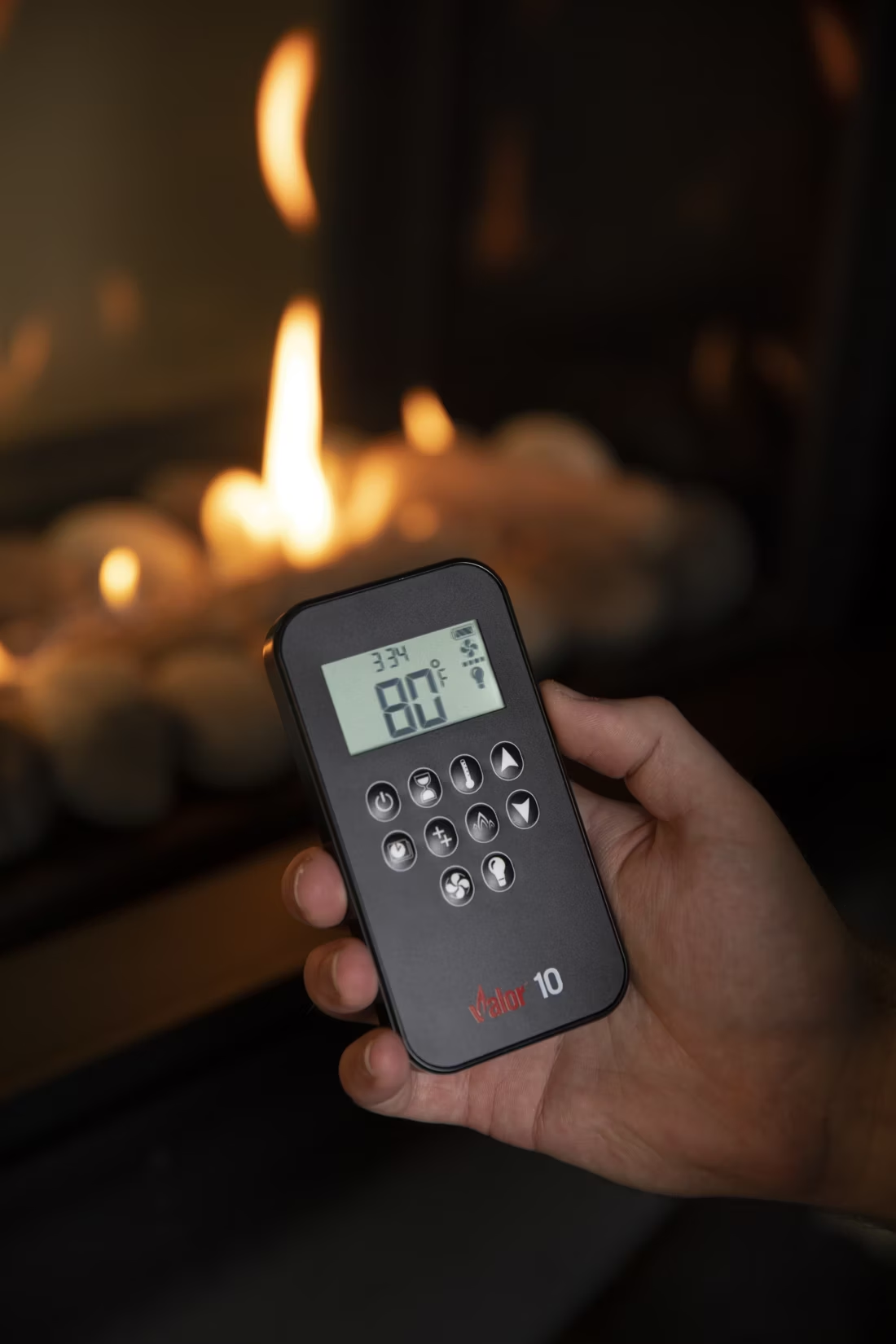
Most modern gas fireplaces will, as long as they have the right ignition system. Units with intermittent pilot ignition (IPI) run on a small battery backup that kicks in automatically when the power drops, so the fireplace still lights on demand. Some manufacturers, like Valor, go a step further and generate their own electricity from the pilot's thermocouple, meaning there are no batteries to remember at all. For rural Emery County homes where a winter storm along the Wasatch Plateau can knock out power for a stretch, that's worth asking about when you're comparing units.
What's the difference between a gas fireplace, gas insert, and gas stove?
A gas fireplace is a fully built-in unit framed into a wall, typically used in new construction or a remodel. A gas insert is built to slide into an existing masonry fireplace opening, turning a drafty old hearth into a sealed, efficient heat source using the chimney you already have. A gas stove is a freestanding cabinet-style unit that sits on the floor, similar in footprint to a wood stove. For the older homes scattered through Castle Dale, Huntington, and Ferron, an insert is usually the simplest upgrade; for new builds or rooms without an existing fireplace, a built-in fireplace or freestanding stove makes more sense.
Do I need a permit to install a gas fireplace in Emery County?
Yes—a building permit is required for new gas fireplace installations through the Emery County Building Department, and any new gas line work needs to be done by a licensed gas-fitter. Most established local dealers handle the permitting and coordinate the gas line, framing, and venting together, so you're not left managing separate trades yourself. If you're on propane rather than natural gas, your propane supplier will also need to sign off on the tank setup and line run.
What's the difference between vented and vent-free gas fireplaces?
Vented (direct-vent) gas fireplaces pull combustion air from outside and exhaust the gases back outside through a sealed vent—they're the cleaner, more universally recommended option and the one most local dealers install by default. Vent-free units burn directly into the room air without external venting; they're legal in Utah but come with strict room-size and ventilation requirements, and some states restrict them outright. For Emery County's tightly sealed, energy-efficient newer construction, direct-vent units are generally the safer call for indoor air quality—worth discussing with your dealer if you're weighing both.
How often should my gas fireplace be serviced?
Plan on an annual inspection, ideally before the heating season kicks in around October. A technician checks the burner, pilot assembly, venting, and gas connections, and cleans the glass and interior. This is a much smaller job than sweeping a wood chimney, but it matters just as much for safety—and it's worth doing every year given how many months out of the year Emery County homes are running the heat, given the long, cold winter the county sees.
Gas vs. wood—which is right for my Emery County home?
Wood—cut locally as pinyon, juniper, or aspen under permits from the Manti-La Sal or Fishlake National Forest—offers lower fuel cost, a real fire, and heat that doesn't depend on the power grid. Gas offers instant on-off convenience, no wood handling, and steady heat without smoke, which matters during summer wildfire smoke events when even winter burning habits get scrutinized. Many Emery County homes end up with both: gas for the main living space and daily convenience, wood as backup heat and for the tradition that's part of living in this part of Utah.
Why is a fireplace insert so efficient?
An insert does two things: it seals the chimney completely, so you stop losing air you already paid to heat, and it radiates warmth into the room through the firebox and glass. Most add a heat-exchange fan that pulls cool room air underneath, wraps it around the hot firebox, and pushes it back out warm. Your home is more efficient before you've even lit the first fire.
Why is my open fireplace making my house colder?
Open fireplaces suck—literally. As the fire burns, it consumes air your furnace already paid to heat and pulls it out through the chimney, so the house is actually colder after the fire goes out than before you lit it. An insert fixes this: it seals the chimney, puts fixed glass across the front, and turns that hole in your house into a real heat source.
Can I install a fireplace myself?
If you're putting a fire in your house on purpose, it's best to work with an expert. Unless you're genuinely experienced in framing, gas line, vent pipe, and the national code on clearances to combustibles, have a professional do it—and ideally the same company that sells you the fireplace, so warranty, service, and liability all live under one roof.
Does a fireplace add value to my home?
On average, a fireplace adds back to the home about the same amount you spent installing it. Add the monthly savings from heating the rooms you actually use instead of the whole house—often hundreds of dollars a year—and the value case is strong before you even count what a fire does for how your family uses the room.
Stove and Fireplace Dealers in Emery County
Listings include WhyFire partner dealers, dealers we have verified as authorized for the brands we recommend, and established local businesses that carry hearth products. Every listing shows which one it is. The ones marked Preferred run on WhyFire's software, so they can show you real pricing and book your appointment right here. No manufacturer pays for placement. How we verify dealers →
Dugmore Appliance
Southwest Plumbing Supply - Price
A. Johnson Heating & Air
Howa And Sons
Southwest Plumbing Supply - Ephraim
Get your Emery County gas fireplace project mapped out.
Tell us about your home and we'll match you with a trusted local dealer and send over a free Project Guide & Parts List—the exact parts, including the vent kit, and the right dealer for your Emery County gas fireplace project.
Find Your Fireplace →