
Electric heat that keeps up with Emery County winters.
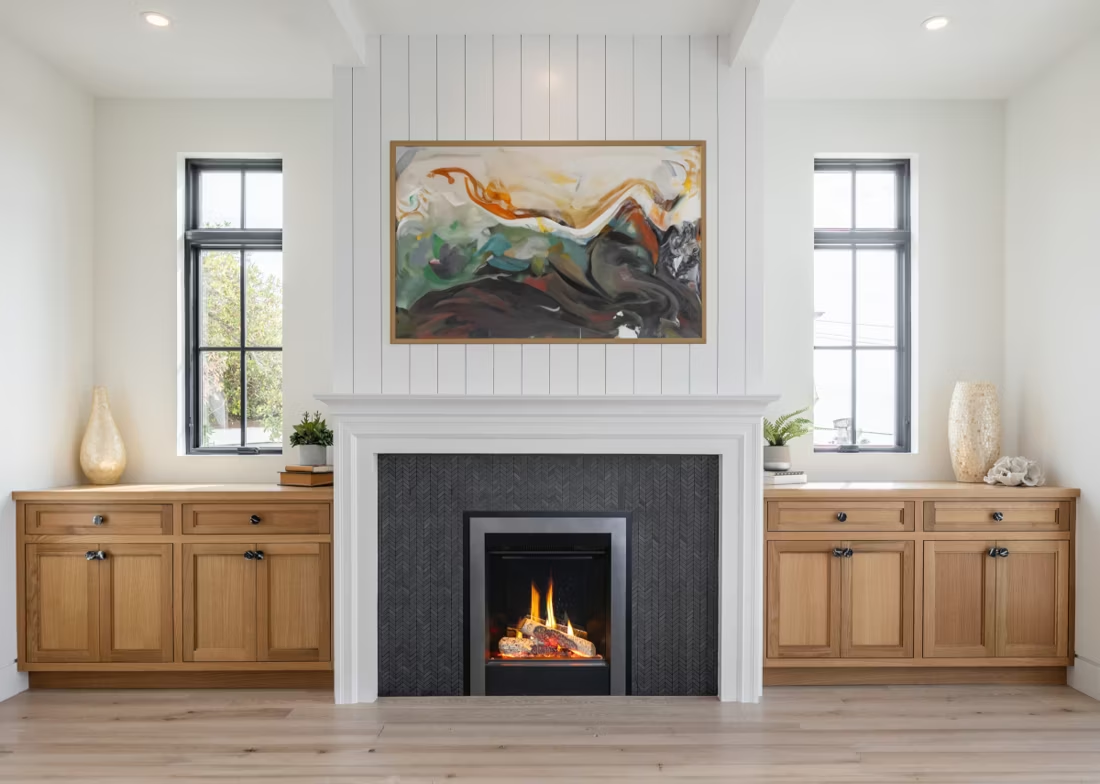
From Castle Dale and Huntington up in the valley to Green River down along the river bottom, Emery County sees average winter lows near 10°F and a long, cold heating season that stretches most of the year. An electric fireplace or insert adds clean, no-venting zone heat—and we'll match you with a local dealer who can size and install it right.
Every Project Starts From One of These Five Situations
Electricity generated right here in Emery County.
Emery County runs from the San Rafael Swell's red-rock canyons down near Green River, sitting around 4,070 feet, up to the Castle Valley towns of Castle Dale, Orangeville, and Huntington near 5,800 feet. That elevation swing means real microclimate differences within one county, but the shared reality is a Zone 5B winter—average lows around 10°F and a long, cold heating season that runs most of the year. Wood heat has deep roots here too, with pinyon, juniper, and aspen cut under Forest Service permits from the Manti-La Sal and Fishlake National Forests, but plenty of households—especially in newer construction, manufactured homes, and rooms far from the main chimney—lean on electric for supplemental warmth without dealing with venting or a woodpile.
There's a fitting local twist: Emery County is home to two of the largest coal-fired power plants in the West, PacifiCorp's Hunter and Huntington stations, which feed the regional grid that Rocky Mountain Power delivers to county homes. Electric heat here is about as close to the source as it gets. Wildfire smoke advisories in late summer can also make wood-burning less appealing on bad-air days, and an electric insert or built-in unit gives you fireplace ambiance and real supplemental heat without adding to smoke concerns or waiting on a cutting permit season that only runs May through October.
Three steps. No salesperson until you're ready.
Tell us about your project
Your zip code, your situation, and the fuel you're leaning toward—or let the answers point you to one.
See what's actually available
The brands dealers within 100 miles genuinely carry—real options, never a catalog mirage.
Get your dealer & Project Guide
A trusted local dealer, plus the free Project Guide & Parts List that names every component of the job.
Frequently Asked Questions
How much does an electric fireplace installation cost in Emery County?
There's no single county-wide number, but the range is fairly predictable based on the unit type. A plug-in electric insert that drops into an existing masonry fireplace opening typically runs $500 to $1,800 installed, since it just needs the existing outlet or a simple circuit. A built-in wall unit or a linear electric fireplace set into new framing runs higher, often $2,000 to $3,500, because it usually calls for a dedicated 120V or 240V circuit run by a licensed electrician. Homes in Castle Dale, Huntington, or Orangeville with an existing fireplace opening are usually on the lower end; new installs in a home addition or shop building in more remote parts of the county, like near Green River, may run slightly higher due to electrician travel time.
Will an electric fireplace actually heat my house through an Emery County winter?
Not on its own. With average winter lows around 10°F and a long, demanding heating season, most Emery County homes need a furnace or central heat as the primary system. An electric fireplace is best thought of as zone heat—it can comfortably take the edge off a living room or bedroom on a 20 to 30°F evening and reduces reliance on the furnace in that space, but it won't replace whole-home heating during a hard cold spell. Homeowners who want a fireplace that can genuinely carry more of the heating load in this climate typically look at wood or gas instead—a local dealer can walk through the tradeoffs.
Do I need a permit to install an electric fireplace in Emery County?
A plug-in insert that uses an existing outlet generally doesn't need a permit. If the installation requires a new dedicated circuit—common for built-in wall units and larger linear fireplaces—an electrical permit through the county building department is typically required, and the work needs to be done by a licensed electrician. Unlike wood or gas installs, there's no venting, chimney, or gas line inspection involved, which is part of why electric units are popular in manufactured and modular homes throughout rural Emery County.
What happens to my electric fireplace during a power outage?
It shuts off completely—electric units have no battery backup and no standalone ignition, so if the power drops, so does your heat and your flame effect. This matters more in Emery County's more remote stretches, particularly around Green River and out toward the Swell, where winter storms can knock out lines for hours at a time. Many households here pair an electric fireplace for everyday convenience with a wood stove or insert—burning locally cut pinyon, juniper, or aspen—as genuine backup heat that doesn't depend on the grid.
Can I convert my existing wood-burning fireplace to electric?
Yes, and it's a common project in older homes around Castle Dale and Orangeville with a masonry fireplace that's rarely used. An electric insert sits inside the existing opening, plugs into an outlet or new circuit, and gives you flame-effect ambiance plus supplemental heat without cutting firewood or cleaning a chimney. It's also a straightforward option if the existing masonry has cracks or venting issues that would be costly to bring up to code for continued wood burning.
What does it cost to run an electric fireplace day to day?
Most electric fireplace heaters draw around 1,500 watts on the heat setting. At Rocky Mountain Power's residential rates, running one for several hours an evening typically adds somewhere in the range of $15 to $35 a month to a power bill, depending on usage and current rates—worth confirming against your actual bill once installed. That's generally cheaper than running a full furnace cycle to heat just one room, which is the main economic case for using one as zone heat rather than a whole-home solution.
Are electric fireplaces a good fit for manufactured or modular homes in Emery County?
Often yes. Manufactured and modular homes are common throughout Emery County, and many have clearance or venting restrictions that complicate wood stove or gas fireplace installs. Electric units sidestep that entirely—no chimney, no gas line, no combustion air requirements—and a qualified electrician can usually add the needed circuit without major structural work. It's one of the more straightforward hearth upgrades available for this type of housing stock.
Electric vs. pellet stove—which makes more sense for supplemental heat here?
Pellet stoves, using regional brands like Bear Mountain, Lignetics, or Forest Energy, put out considerably more heat and can genuinely offset furnace use during a cold Emery County stretch, but they need electricity to run the auger and blower, plus a vent through the wall, and regular hopper loading and ash cleanup. Electric fireplaces need no venting or fuel handling at all, but they produce less usable heat and, like pellet stoves, stop working the moment the power goes out. If you want low-maintenance ambiance and modest room heat, electric wins on simplicity. If you want a real dent in your heating bill, pellet is the stronger performer.
Where can I find a dealer who installs electric fireplaces in Emery County?
Coverage is thinner out here than in bigger Utah markets, since Emery County's population is under 10,000 spread across Castle Dale, Huntington, Orangeville, Ferron, Cleveland, Elmo, and Green River. A dealer serving central Utah will typically cover the whole county, sometimes with a small trip charge for the Green River end. The safest path is getting matched with a trusted local installer rather than guessing from a big-box listing—that's exactly what Find My Fireplace's free Project Guide is built to do.
Can I put a TV above my fireplace?
Yes—with an asterisk. Fireplaces are hot and TVs don't like heat. Either put a mantel between them to deflect rising warmth, or choose a fireplace with heat-management technology that creates a cool zone on the wall above—the wall stays around 125 degrees, barely warm, while the room still gets full heat. If you like clean lines and don't want a mantel, heat management is the answer.
Do electric fireplaces actually produce heat?
Yes—most put out around 4,800–5,000 BTUs from a standard outlet, which comfortably warms a bedroom, office, or den as a comfort-zone heater. What they won't do is carry a whole house the way wood, gas, or pellet can. Think of electric as ambiance-first with honest supplemental heat: flames on with no heat in July, flames plus warmth in January.
What is an in-home preview and do I need one?
It's a visit where a hearth professional measures your space, confirms the model you picked actually works in your home, and walks the specs—framing, gas line, venting, finish work—before anything is ordered. Some details you just can't know until you see the house. Never make a down payment without one; it's the single most-skipped step that burns buyers.
Should the dealer who sells my fireplace also install it?
Ideally, yes. A fireplace project involves vent pipe, gas line, electrical, and often tile or stone. Hire three or four separate trades and you own the liability and the game of telephone between them. One company selling and installing means one accountable party, start to finish—ask about factory training, on-time completion records, and what happens if an inspection fails.
Stove and Fireplace Dealers in Emery County
Listings include WhyFire partner dealers, dealers we have verified as authorized for the brands we recommend, and established local businesses that carry hearth products. Every listing shows which one it is. The ones marked Preferred run on WhyFire's software, so they can show you real pricing and book your appointment right here. No manufacturer pays for placement. How we verify dealers →
Dugmore Appliance
Southwest Plumbing Supply - Price
A. Johnson Heating & Air
Howa And Sons
Southwest Plumbing Supply - Ephraim
Find your electric fireplace in Emery County.
Tell us about your home in Castle Dale, Huntington, Green River, or anywhere else in Emery County, and we'll match you with a trusted local dealer and send over a free Project Guide & Parts List—sized to your space, with the right unit and a clear plan for the circuit work.
Find Your Fireplace →