
Instant Heat, Zero Inversion Smoke.
American Fork sits in the Utah Valley basin, where winter inversions trap smoke for days at a time. A gas fireplace gives you real heat without adding to it. Find the right unit and connect with a trusted local dealer.
Every Project Starts From One of These Five Situations
The clean-air choice for Utah Valley homes.
At 4,613 feet in the Utah Valley, American Fork sits inside the Wasatch Front's PM2.5 nonattainment area—the same geography that traps winter inversions against the mountains for days or weeks at a stretch. With a winter heating season on par with a moderately cold climate and average winter lows around 24°F, the cold here is real but moderate compared to somewhere like Bozeman or Fargo. The bigger factor shaping heating choices in Utah County isn't the thermometer, it's the air. The Utah Division of Air Quality calls mandatory no-burn action days during red and orange air quality alerts, restricting solid-fuel burning devices—wood stoves, pellet stoves, fireplace inserts—across the valley for much of the winter.
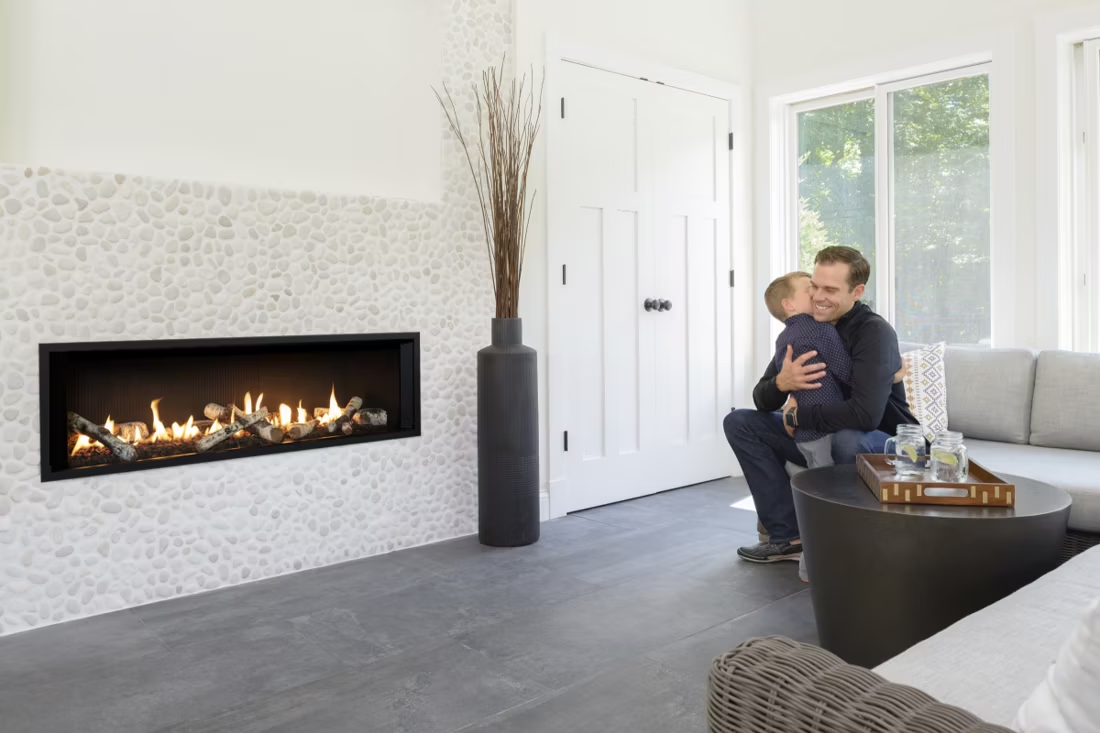
That's a big part of why gas has become the default hearth fuel along the Wasatch Front. Dominion Energy Utah serves natural gas throughout American Fork, so most homes already have a gas line to the meter, and adding a fireplace or converting an existing wood-burning unit is usually a straightforward tie-in. Unlike wood or pellet appliances, gas fireplaces aren't grounded by mandatory action days, which means the heat is there on the worst inversion days of the year—not just the clear ones. For homeowners who also want backup heat during PacifiCorp outages, certain gas models keep running without a wall outlet at all.
Three steps. No salesperson until you're ready.
Tell us about your project
Your zip code, your situation, and the fuel you're leaning toward—or let the answers point you to one.
See what's actually available
The brands dealers within 100 miles genuinely carry—real options, never a catalog mirage.
Get your dealer & Project Guide
A trusted local dealer, plus the free Project Guide & Parts List that names every component of the job.
Frequently Asked Questions
How much does a gas fireplace installation cost in American Fork?
A typical gas fireplace or insert installation in American Fork runs between $4,200 and $10,500. A direct-vent insert going into an existing masonry fireplace with a gas line already nearby sits at the lower end. A new built-in gas fireplace as part of a remodel—with framing, venting through an exterior wall or roof, and a fresh gas line run from the meter—lands in the middle to upper range. Homes needing longer gas line extensions or more complex venting paths through multiple floors can run higher. Local retailers will give you a firm number after an in-home walk-through.
Can I convert my wood-burning fireplace to gas?
Yes, and it's one of the more common projects in Utah County right now, partly because it sidesteps the mandatory no-burn restrictions that apply to wood and pellet devices during red air quality days. Most conversions install a gas insert into your existing masonry firebox using a stainless liner run through the existing chimney, typically for $4,200 to $8,500 depending on the insert model and whether new gas line work is needed. The result looks similar to your old fireplace but runs on demand, any day of the winter, inversion or not.
Do I need natural gas service, or can I use propane?
Most American Fork homes are already on natural gas through Dominion Energy Utah, which makes adding a fireplace simple if you have an existing gas water heater, range, or furnace. Propane is a fallback for the rare property outside the utility's service area or in unincorporated pockets of Utah County, but it's uncommon within city limits. Nearly every gas fireplace model on the market can be set up for either fuel—your installer swaps the orifice and regulator to match—so fuel type rarely limits which unit you can choose.
Will my gas fireplace still work during a power outage?
Most direct-vent gas fireplaces with intermittent pilot ignition (IPI) run on a small battery backup that kicks in automatically when PacifiCorp power drops, so the unit lights on demand just like normal. The one thing to stay on top of is keeping fresh batteries loaded—easy to forget until you actually need it. Valor fireplaces skip the battery question entirely: their pilot assembly generates its own electricity through a thermocouple, so the unit works during an outage with nothing to charge or replace. Worth asking about if outage backup matters to you.
What's the difference between a gas fireplace, gas insert, and gas stove?
A gas fireplace is a built-in unit framed into a wall—the standard choice for new construction or a full remodel. A gas insert slides into an existing masonry firebox, sealing it off and venting through the chimney you already have, which is the common path for the many American Fork homes built with a traditional wood-burning fireplace in the 80s and 90s. A gas stove is a freestanding cabinet-style unit that sits on the floor, useful when there's no existing fireplace and you don't want to frame a full built-in. Most conversions here go the insert route since it reuses existing masonry.
Do I need a permit to install a gas fireplace in American Fork?
Yes—American Fork City's Building Department requires a building permit along with a gas line permit for new fireplace installations or conversions, and the gas line work itself has to be done by a licensed gas-fitter. Most established hearth retailers handle both permits as part of the installation, coordinating the gas line, venting, and inspection sign-off so you're not managing separate trades yourself.
Are vent-free gas fireplaces allowed in American Fork?
Vent-free (unvented) gas units are legal in Utah, but given how often the Utah Valley already deals with trapped inversion air, most local installers steer homeowners toward direct-vent units instead. Direct-vent fireplaces pull combustion air from outside and exhaust it back outside through a sealed pipe, keeping combustion byproducts out of the house entirely—a meaningful difference in a basin where indoor air quality is already something residents pay attention to. Vent-free units are typically reserved for rooms where venting to the exterior genuinely isn't possible.
How often does a gas fireplace need to be serviced?
Plan on an annual inspection, ideally before the inversion season sets in each fall. A certified technician checks the burner, pilot assembly, venting, and gas connections, and cleans the glass and interior—a much lighter service than chimney sweeping on a wood unit, but still important for safe operation. Local gas appliance service providers typically charge $150 to $250 for this visit.
Why doesn't Find My Fireplace show wood or pellet options for American Fork?
Wood and pellet stoves aren't impossible here, but they're a poor fit for how this valley behaves in winter. Utah County sits inside a PM2.5 nonattainment zone, and the Utah Division of Air Quality calls mandatory no-burn action days during inversions that can restrict solid-fuel burning devices for stretches of several days at a time—sometimes even certified units, depending on the alert level. That makes wood and pellet appliances unreliable as a primary heat source in American Fork, even though pinyon, juniper, and aspen are all available from nearby Uinta-Wasatch-Cache and Manti-La Sal National Forest cutting permits. Gas doesn't carry that restriction, which is the main reason it dominates the local hearth market.
Why is my open fireplace making my house colder?
Open fireplaces suck—literally. As the fire burns, it consumes air your furnace already paid to heat and pulls it out through the chimney, so the house is actually colder after the fire goes out than before you lit it. An insert fixes this: it seals the chimney, puts fixed glass across the front, and turns that hole in your house into a real heat source.
Why is a fireplace insert so efficient?
An insert does two things: it seals the chimney completely, so you stop losing air you already paid to heat, and it radiates warmth into the room through the firebox and glass. Most add a heat-exchange fan that pulls cool room air underneath, wraps it around the hot firebox, and pushes it back out warm. Your home is more efficient before you've even lit the first fire.
How much should I budget for a fireplace?
For an average home—covering the fireplace, the vent pipe, and basic installation—a budget between $3,900 and $5,500 gives you a lot of options across wood, gas, and pellet. By the time you add finish work, gas line, and electrical, the average complete installation lands between $5,000 and $12,000 all-in. In a remodel or new build, a good rule is to put about 2.5% of the total project cost toward the fireplace.
Does a fireplace add value to my home?
On average, a fireplace adds back to the home about the same amount you spent installing it. Add the monthly savings from heating the rooms you actually use instead of the whole house—often hundreds of dollars a year—and the value case is strong before you even count what a fire does for how your family uses the room.
Nearby Dealers
Hearth shops serving American Fork and the surrounding area. Every listing shows whether it is a WhyFire partner, a dealer we have verified as authorized for the brands we recommend, or a local business carrying hearth products. No manufacturer pays for placement. How we verify dealers →
Modscapes Modern Living
First Class Fireplace
Modscapes Outdoor Living
Standard Plumbing
Southwest Plumbing Supply - Springville
Ignite Fireplace
Degrees Above Fireplaces
Wasatch Fireplace & Stove
Bills Comfort Systems
Delta Stone Products, Inc.
All Hours Plumbing, Drain Cleaning, Heating & Cooling
Uintah Fireplace And Design
(Sugar House) Alpine Fireplaces (In Breezeway Next To Theatres)
Find your gas fireplace in American Fork.
Tell us a bit about your home and we'll match you with a trusted local dealer and send over a free Project Guide & Parts List—the exact parts, vent kit included, for your American Fork gas fireplace project.
Find Your Fireplace →