
Keep Your Family Warm and Safe—No Matter What
With an average winter low of 27°F and just 3,264 heating degree days, Yoakum County doesn't need wood heat the way colder states do. But a few ranch homes around Plains and Denver City still want it—for backup heat during a hard freeze, or for the fire itself. We'll match you with a local dealer who can get it done right.
Every Project Starts From One of These Five Situations
In Yoakum County, mild winters make wood heat the exception, not the rule.
Yoakum County sits in the semi-arid plains of far West Texas, anchored by the county seat of Plains and the larger community of Denver City. The county's climate zone (4B, mixed-dry) and heating degree day count of just 3,264 tell the real story: winters here are short and mild. Compare that to Duluth, Minnesota, where heating degree days run closer to 10,000 and a wood stove is running most days from October through April. In Yoakum County, most homes barely need sustained indoor heating at all, which is exactly why wood-burning installations are the exception rather than the standard here.
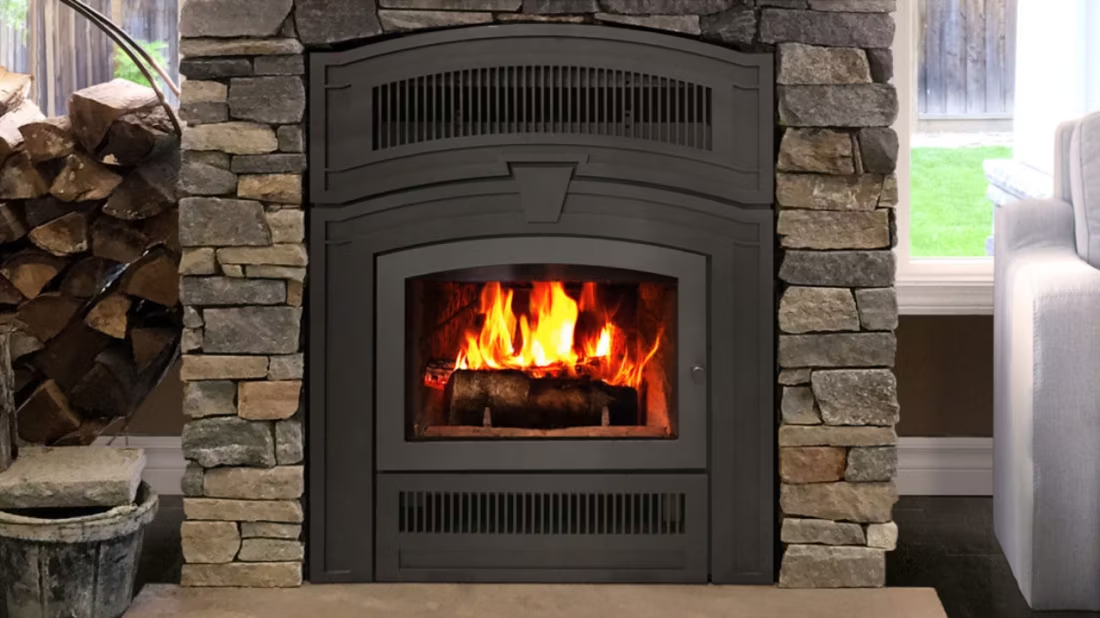
That doesn't mean nobody wants one. A handful of ranch properties around Plains and Denver City still install wood stoves—often as backup heat for the rare hard freeze (the February 2021 grid failure is still fresh in a lot of minds locally), or simply for the ambiance of a real fire on the coldest nights of the year. When people do burn, they're burning what grows locally: oak and mesquite off area rangeland, and pecan from orchards along the county's draws. Air quality isn't a limiting factor here—Yoakum County has no non-attainment designations or inversion concerns—so the barrier to wood heat isn't regulation, it's simply that most homes are built and heated for a much shorter, milder season.
Three steps. No salesperson until you're ready.
Tell us about your project
Your zip code, your situation, and the fuel you're leaning toward—or let the answers point you to one.
See what's actually available
The brands dealers within 100 miles genuinely carry—real options, never a catalog mirage.
Get your dealer & Project Guide
A trusted local dealer, plus the free Project Guide & Parts List that names every component of the job.
Frequently Asked Questions
How much does a wood stove installation cost in Yoakum County?
Because wood-stove installations are infrequent here, there isn't a deep local price history the way there is in colder parts of the country. Material and labor costs generally track the broader Lubbock and Midland-Odessa region, and a basic freestanding stove with new Class A chimney venting often costs a bit more in a market this small, simply because fewer contractors stock parts locally and inventory turns over slowly. Rather than guess, a trusted local dealer matched through Find My Fireplace will give you a firm, itemized quote as part of your free Project Guide & Parts List.
What size wood stove do I need for my Yoakum County home?
Most Yoakum County homes adding a wood stove are looking for supplemental or backup heat, not primary heating—so sizing skews smaller than it would in a place like Bozeman, Montana. A small-to-medium stove rated for roughly 1,000 to 1,500 square feet is usually enough to take the edge off a ranch house or shop building during a rare hard freeze. If you genuinely want whole-home primary heat, you'd size the same way any cold-climate homeowner would, but that's an uncommon request given the county's 27°F average winter low.
Where can I find a certified wood stove installer near Plains or Denver City?
Certified wood-stove installers are thin on the ground in a county with a population under 5,500, so most homeowners end up working with a dealer based out of Lubbock or Midland-Odessa who travels to Plains or Denver City for the install. That's normal for a market this size, not a red flag. What matters is that whoever does the work is NFI-certified or CSIA-trained specifically for wood-burning appliances, rather than a general contractor. Find My Fireplace matches you with a trusted dealer who already covers this part of West Texas.
Should I get a freestanding wood stove or an insert?
A freestanding wood stove sits on its own hearth pad and vents through new Class A chimney pipe—the more common choice in Yoakum County simply because most homes here weren't built with a masonry fireplace to convert. A wood insert fits into an existing fireplace opening and reuses the existing chimney; if your home happens to have an older masonry fireplace, an insert is often the cheaper, faster upgrade. For the newer homes and outbuildings in the county without an existing fireplace, a freestanding stove is the default option.
Do I need a permit to install a wood stove in Yoakum County?
Yes. New wood-stove installations in Yoakum County require a building permit through the county offices in Plains, and the unit itself needs to meet current EPA emissions standards. There's no air-quality curtailment program here the way there is in non-attainment areas—Yoakum County has no listed air quality concerns—but West Texas counties do periodically issue outdoor burn bans during drought, so check with the county before doing any outdoor debris burning tied to firewood prep.
What's the best wood stove for a climate this mild?
Given how short the heating season is here, most Yoakum County homeowners don't need the 20-hour catalytic burn times that make sense in a place like Fargo or International Falls. A smaller non-catalytic stove sized for occasional use, or one chosen specifically as emergency backup heat during a grid outage, tends to be a better fit than an oversized primary-heat unit that will smolder on the mild nights it's actually used. Ask your local dealer about a smaller-capacity model rather than defaulting to the largest one on the floor.
How often should my chimney be inspected if I only burn occasionally?
Even with light use, CSIA still recommends an annual inspection before the season's first fire. Because wood stoves in Yoakum County tend to run only a handful of nights each winter rather than daily through a long season, creosote builds up more slowly than in high-use climates—but the inspection still matters, especially after any stretch of non-use, to confirm nothing (nesting birds, debris, settling) has affected the flue.
Where does local firewood come from in Yoakum County?
Local firewood here tends to be mesquite and oak off area rangeland, with pecan available from orchards along the county's draws. Mesquite in particular burns hot and dense, so a little goes a long way for the kind of occasional-use fires most homeowners here are building. Because dedicated firewood delivery services are scarce in a county this size, many homeowners source wood directly from ranch land or local sellers rather than a commercial supplier.
Wood vs. gas—which makes more sense in Yoakum County?
In Yoakum County, gas—propane in most rural areas, natural gas where it's available—is the standard heating fuel, and it's what the vast majority of local homeowners choose for both fireplaces and whole-home heat. Wood is the niche choice: it's what you install if you want backup heat that works without electricity during a grid outage, or if you specifically want the ritual of a wood fire rather than the convenience of a switch. If dependable, low-maintenance heat is the priority, gas is almost certainly the better fit for this climate; if you want a real wood fire regardless of how often you'll use it, that's a reasonable choice too—just go in expecting a specialty installation rather than a routine one.
What's the difference between an insert and a zero-clearance fireplace?
An insert is a fireplace that slides into a pre-existing wood-burning fireplace—if you don't have one, there's nothing to insert it into. A zero-clearance fireplace is built into a framed wall, which makes it the answer for remodels and new construction. Simple test: existing masonry fireplace means insert; blank or framed wall means zero-clearance.
Why won't my new wood stove get going like my old one?
New wood stoves are 70%+ efficient, so far less heat goes up the flue—which also means less draft to get a fire established. The rule: build a genuinely hot fire for about 45 minutes before you choke it down. Skip that and you get smoke in the room, creosote in the chimney, and a fire that never takes off. Most performance complaints trace straight back to this.
What is an in-home preview and do I need one?
It's a visit where a hearth professional measures your space, confirms the model you picked actually works in your home, and walks the specs—framing, gas line, venting, finish work—before anything is ordered. Some details you just can't know until you see the house. Never make a down payment without one; it's the single most-skipped step that burns buyers.
How much should I budget for a fireplace?
For an average home—covering the fireplace, the vent pipe, and basic installation—a budget between $3,900 and $5,500 gives you a lot of options across wood, gas, and pellet. By the time you add finish work, gas line, and electrical, the average complete installation lands between $5,000 and $12,000 all-in. In a remodel or new build, a good rule is to put about 2.5% of the total project cost toward the fireplace.
Stove and Fireplace Dealers in Yoakum County
Listings include WhyFire partner dealers, dealers we have verified as authorized for the brands we recommend, and established local businesses that carry hearth products. Every listing shows which one it is. The ones marked Preferred run on WhyFire's software, so they can show you real pricing and book your appointment right here. No manufacturer pays for placement. How we verify dealers →
Ford Insulation And Fireplaces
Caprock Brick
Coastal Insulation
A & A Chimeny Sweep w/Texas Fp
Seal’s Energy Depot
Bill Placer's Chimney Sweep
Get matched with a wood fireplace dealer in Yoakum County.
Tell us about your home near Plains or Denver City and we'll match you with a trusted local dealer who installs wood stoves in this part of West Texas—plus a free Project Guide & Parts List with the exact parts, including the vent kit, for your project.
Find Your Fireplace →