
Find the right gas fireplace for your Wilson County home.
Mild winters and short heating seasons make gas the low-maintenance choice from Floresville to La Vernia. I'll match you with a trusted local dealer who can size the unit right and get it installed.
Every Project Starts From One of These Five Situations
Ambiance and backup warmth, without the upkeep.
Wilson County sits in climate zone 2A with only a short, mild heating season each year and an average winter low near 39°F—nowhere near the heating demands of a place like Bozeman, MT or Fargo, ND. Most homes here run heat for a handful of cold fronts each winter rather than months on end, which is exactly the profile where gas fireplaces earn their keep: instant on, instant off, and no tending a fire for a mild January evening.
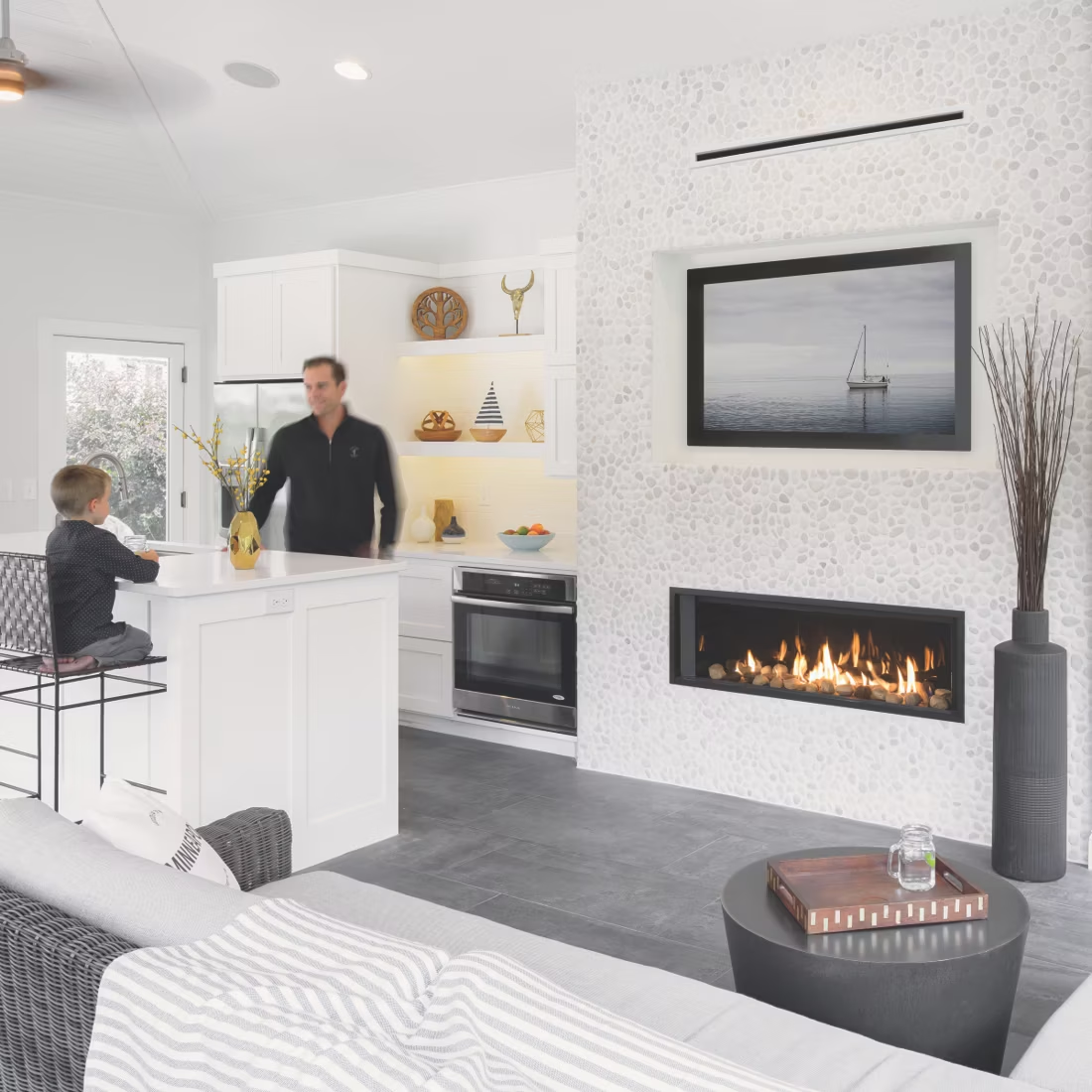
That said, plenty of Wilson County homeowners still want the fire in the room—over the mantel in a Floresville living room, in a new build outside La Vernia, or as a supplemental heat source for the rare hard freeze that rolls through Poth or Stockdale. Because winters are short here, sizing and venting matter more than raw BTU output: an oversized unit will run too hot too fast in a county this mild. A local dealer who installs in this exact climate will get that balance right, whether you're on natural gas or propane.
Three steps. No salesperson until you're ready.
Tell us about your project
Your zip code, your situation, and the fuel you're leaning toward—or let the answers point you to one.
See what's actually available
The brands dealers within 100 miles genuinely carry—real options, never a catalog mirage.
Get your dealer & Project Guide
A trusted local dealer, plus the free Project Guide & Parts List that names every component of the job.
Frequently Asked Questions
How much does a gas fireplace installation cost in Wilson County?
Costs vary with the unit, venting path, and whether new gas line work is needed, but expect a wide range depending on whether you're converting an existing masonry fireplace to a gas insert or installing a new direct-vent unit in a remodel. A gas insert into an existing fireplace with gas already run to the room tends to land on the lower end. New construction or additions requiring fresh gas line runs and full venting cost more. A local dealer can give you a firm number after an in-home look, which is part of what the free Project Guide & Parts List I put together for you is meant to set up.
Is natural gas or propane more common in Wilson County?
It depends heavily on where you are in the county. Homes closer to town in Floresville may have natural gas service, while more rural stretches around Poth, Stockdale, and La Vernia typically rely on propane with a tank on the property. Either fuel works fine for a gas fireplace or insert—your dealer sets the orifice and regulator for whichever you have. If you're building new or don't currently have gas service, propane with a buried tank is usually the simpler path outside city limits.
Can I convert my existing wood fireplace to gas?
Yes, and it's a common project for older Wilson County homes with a masonry fireplace that rarely gets used. A gas insert slides into the existing firebox and vents through a stainless liner run up your current chimney, so you keep the look of the fireplace while gaining instant, no-mess heat. Given the county's mild winters, a lot of homeowners choose this route specifically for ambiance and occasional supplemental warmth rather than as a primary heat source—which also means a smaller insert is often plenty.
Will my gas fireplace work during a power outage?
Most modern gas fireplaces with IPI (intermittent pilot ignition) run on battery backup and light on demand even with the power out—worth knowing given the ice storms that have hit the Texas grid in recent winters. Valor fireplaces take a different approach: the pilot's thermocouple generates its own electricity, so there are no batteries to remember or replace. For a county where a hard freeze can also mean a grid strain event, that's a real consideration when you're comparing units with your local dealer.
What's the difference between a gas fireplace, gas insert, and gas stove?
A gas fireplace is a built-in unit framed into a wall, typically chosen for new construction or a remodel. A gas insert drops into an existing masonry firebox and uses the chimney as its vent path—the right call for most older Wilson County homes with a fireplace that's currently just decorative. A gas stove is a freestanding unit on the floor, which works well in a room without an existing fireplace or chimney. For most homeowners here upgrading an old wood-burning fireplace, an insert is the straightforward choice.
Do I need a permit to install a gas fireplace in Wilson County?
Permit requirements depend on whether you're inside city limits (Floresville, La Vernia, Poth, Stockdale) or in unincorporated Wilson County, and both a building permit and gas line permit are typically involved for new installations. The gas line work itself needs a licensed gas-fitter. Most local dealers coordinate the permitting, gas line, and venting as part of the install so you're not managing separate trades yourself.
What's the difference between vented and vent-free gas fireplaces?
Vented (direct-vent) units draw combustion air from outside and exhaust it back outside through sealed venting—the cleanest and most universally code-compliant option. Vent-free units burn directly into the room without exterior venting; they're legal in Texas but require careful room-sizing and an oxygen depletion sensor, and some homeowners prefer to avoid the added humidity and combustion byproducts indoors. Given how mild Wilson County winters are, a lot of homeowners lean toward direct-vent for a cleaner installation without worrying about ventilation rules, but your local dealer can walk through both for your specific room.
How often should my gas fireplace be serviced?
An annual inspection is the standard recommendation—a technician checks the burner, pilot, gas connections, and venting, and cleans the glass and interior. Given how lightly gas fireplaces here typically run compared to colder-climate counties, wear is minimal, but the safety check still matters every year, especially before the first cold front of the season.
Gas vs. wood—which is right for my Wilson County home?
Wood offers real ambiance and works without electricity, and this county has good local supply—oak, pecan, and mesquite are all common regionally and burn well. But with only a short, mild heating season each year, most Wilson County homes don't need wood as a serious heat source, and the daily tending doesn't pay off for a handful of cold nights. Gas gives you instant flip-of-a-switch warmth and low maintenance, which fits the climate here better for most households. Some homeowners still choose wood for the authentic fire experience in a den or game room—it's a matter of preference more than necessity in this climate.
What's the difference between an insert and a zero-clearance fireplace?
An insert is a fireplace that slides into a pre-existing wood-burning fireplace—if you don't have one, there's nothing to insert it into. A zero-clearance fireplace is built into a framed wall, which makes it the answer for remodels and new construction. Simple test: existing masonry fireplace means insert; blank or framed wall means zero-clearance.
Why is my open fireplace making my house colder?
Open fireplaces suck—literally. As the fire burns, it consumes air your furnace already paid to heat and pulls it out through the chimney, so the house is actually colder after the fire goes out than before you lit it. An insert fixes this: it seals the chimney, puts fixed glass across the front, and turns that hole in your house into a real heat source.
How much should I budget for a fireplace?
For an average home—covering the fireplace, the vent pipe, and basic installation—a budget between $3,900 and $5,500 gives you a lot of options across wood, gas, and pellet. By the time you add finish work, gas line, and electrical, the average complete installation lands between $5,000 and $12,000 all-in. In a remodel or new build, a good rule is to put about 2.5% of the total project cost toward the fireplace.
Does a fireplace add value to my home?
On average, a fireplace adds back to the home about the same amount you spent installing it. Add the monthly savings from heating the rooms you actually use instead of the whole house—often hundreds of dollars a year—and the value case is strong before you even count what a fire does for how your family uses the room.
Stove and Fireplace Dealers in Wilson County
Listings include WhyFire partner dealers, dealers we have verified as authorized for the brands we recommend, and established local businesses that carry hearth products. Every listing shows which one it is. The ones marked Preferred run on WhyFire's software, so they can show you real pricing and book your appointment right here. No manufacturer pays for placement. How we verify dealers →
Area – San Antonio, Tx
Home & Patio
Orange County Bldg Materl
Installed Building Products, LLC
Get your free Project Guide & Parts List for a gas fireplace in Wilson County.
Tell me a bit about your home and I'll match you with a trusted local dealer, plus a free Project Guide & Parts List with the exact parts—including the vent kit—for your project.
Find Your Fireplace →