
Warm ambiance for Wilson County winters, without a chimney or gas line.
From Floresville to La Vernia, Poth, and Stockdale, Wilson County's mild winters make electric fireplaces an easy, low-hassle way to add real warmth and a genuine flame look to a living room, bedroom, or sunroom. Find the right unit and connect with a trusted local dealer.
Every Project Starts From One of These Five Situations
The right fit for a county that rarely sees a hard freeze.
Wilson County sits in IECC climate zone 2A, southeast of San Antonio, with an average winter low around 39°F and roughly 1,472 heating degree days a year—a small fraction of the heating load a place like Bismarck, ND or Duluth, MN carries every winter. Ranch homes and newer subdivisions around Floresville, La Vernia, and Stockdale rarely need a whole-home heating source; most households here run the central HVAC on the handful of genuinely cold nights and want something else for the rest of the season—a fireplace that looks and feels real without turning the living room into a furnace.
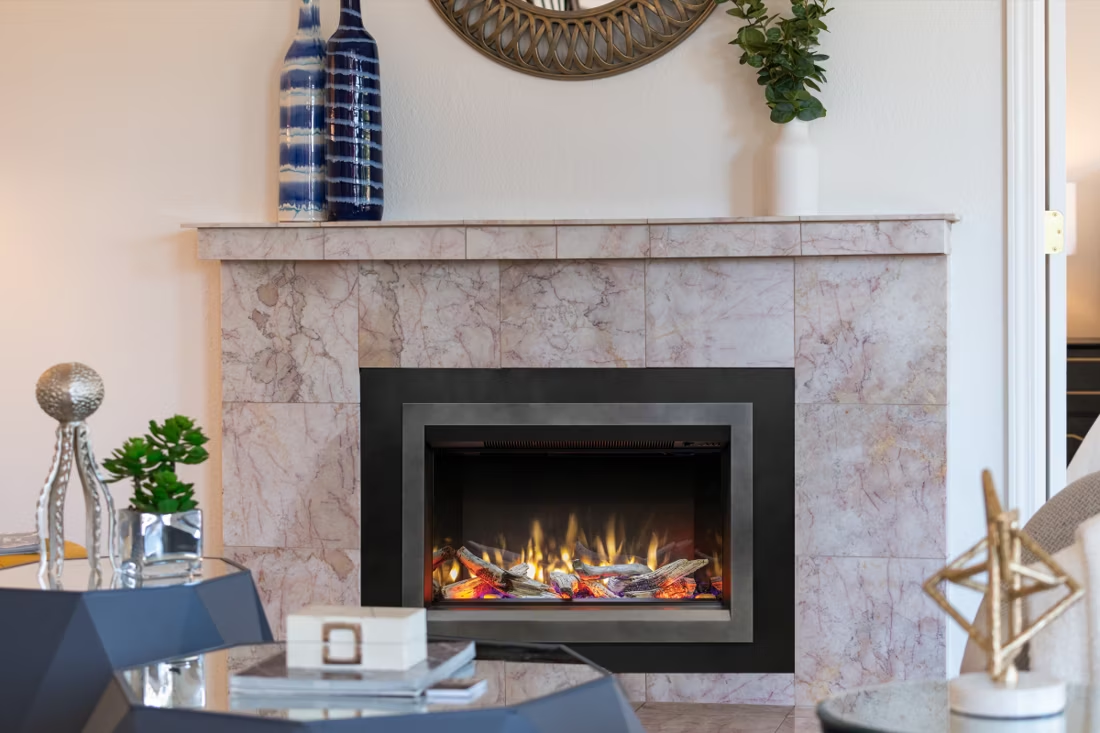
That's exactly where electric fireplaces earn their keep. A plug-in unit needs no chimney, no gas line, and no combustion venting—you mount it, plug it into a standard outlet, and you're done. Built-in or wall-recessed models that draw more current sometimes call for a dedicated circuit, which is a job for a licensed electrician rather than a general handyman, but even then there's no masonry work, no flue, and no gas permit to coordinate. For homes served by Guadalupe Valley Electric Cooperative (GVEC) across most of rural Wilson County, or CPS Energy where county lines edge toward San Antonio, electric heat is simply an extension of the power already running to the house—reliable, code-simple, and well matched to a climate that asks for supplemental warmth far more often than it asks for a full heating system.
Three steps. No salesperson until you're ready.
Tell us about your project
Your zip code, your situation, and the fuel you're leaning toward—or let the answers point you to one.
See what's actually available
The brands dealers within 100 miles genuinely carry—real options, never a catalog mirage.
Get your dealer & Project Guide
A trusted local dealer, plus the free Project Guide & Parts List that names every component of the job.
Frequently Asked Questions
How much does an electric fireplace cost to install in Wilson County?
A freestanding or wall-mounted plug-in electric fireplace typically costs $200 to $800 for the unit itself, with no real installation cost beyond mounting hardware—most homeowners in Floresville, La Vernia, or Poth handle that themselves or have a handyman hang it in an afternoon. Built-in, wall-recessed, or linear electric units that need a dedicated 20-amp circuit run higher, usually $800 to $2,500 installed once an electrician runs new wiring and a local carpenter frames or trims the opening. Because Wilson County's mild climate means most electric fireplace projects are about ambiance and zone heat rather than whole-home heating, homeowners here tend to land on the lower end of that range compared to colder parts of the state.
What size electric fireplace do I need for my Wilson County home?
Electric fireplace sizing is more about the room and the visual than raw BTU output, since Wilson County's 1,472 heating degree days mean you're rarely asking the unit to carry the heating load on its own. A 30- to 40-inch unit works well for a bedroom, home office, or secondary living space; a 50-inch or larger linear model suits an open-concept great room, which is common in newer builds around La Vernia and Stockdale. Most electric inserts and built-ins offer 4,600 to 5,000 BTU of supplemental heat with an adjustable thermostat, which is plenty to take the chill off a room on the county's occasional 30s-and-40s nights without overheating a mild-climate house.
Who installs electric fireplaces in Wilson County?
Plug-in units don't require a licensed tradesperson at all—most homeowners or a general handyman can mount and level one. For hardwired or built-in electric fireplaces that need new circuit wiring, you'll want a licensed electrician familiar with GVEC or CPS Energy service requirements, and ideally a hearth retailer who sells and installs electric units regularly and can advise on framing, trim, and mantel surrounds. Trusted local dealers coordinate the electrical work and the finish carpentry together, which avoids the mismatched-trim problems that come from splitting the job between separate contractors.
What's the difference between an electric fireplace, insert, and stove?
An electric fireplace is typically a built-in or wall-mounted unit designed to look like a traditional firebox, often installed in new framing or a media wall. An electric insert is sized to slide into an existing masonry or wood-burning firebox, letting Wilson County homeowners convert an old, rarely-used wood fireplace into a clean, no-maintenance heat source without touching the chimney. An electric stove is a freestanding cabinet-style unit that mimics a wood or gas stove's look and can go almost anywhere there's an outlet. For a home with an existing but unused masonry fireplace, an insert is usually the simplest upgrade; for new construction or a media wall, a built-in fireplace makes more sense.
Do I need a permit to install an electric fireplace in Wilson County?
In most cases, no—a plug-in electric fireplace that uses an existing outlet doesn't trigger a building or electrical permit in Wilson County. If your installation requires new circuit wiring, a dedicated outlet, or any change to your home's electrical panel, that work does need to meet code and is typically pulled by the electrician doing the job rather than the homeowner. Because there's no combustion, no venting, and no gas line involved, electric fireplace projects are by far the simplest fuel type to permit and inspect in the county—one reason they're a popular choice for a quick living room upgrade in Floresville or Poth.
What's the best electric fireplace for a Wilson County climate?
Because winters here are mild—an average low around 39°F and heating degree days well under half of what a Gulf Coast or Panhandle county sees, let alone a place like Buffalo, NY—the flame realism and room ambiance matter more than raw heat output for most Wilson County buyers. Look at linear models with LED ember beds and multi-color flame settings for a great room in La Vernia or Stockdale, or a smaller mantel-style unit with a simple orange flame for a bedroom or den. Most quality units, including options from major electric fireplace brands carried by local dealers, offer a 4,600–5,000 BTU heat mode you can switch on for the county's occasional cold snap and switch off the rest of the year for flame-only ambiance.
How much maintenance does an electric fireplace need?
Very little—that's a big part of the appeal for Wilson County homeowners who've dealt with wood or gas units elsewhere. There's no chimney to sweep, no gas line to inspect, and no ash or soot. Occasional dusting of the glass front and the heater vents keeps airflow clear, and LED flame lights are rated for tens of thousands of hours, so most units run for a decade or more before any bulb or LED strip needs replacing. If the blower fan gets noisy or the heat function stops working, that's usually a simple component swap rather than a full service call.
How much does it cost to run an electric fireplace in Wilson County?
Running an electric fireplace on flame-only mode (no heat) costs pennies an hour—the LED lights and light effects draw very little power. On heat mode at full output (roughly 1,500 watts, the standard for most units), you're looking at somewhere around 15 to 25 cents an hour depending on your GVEC or CPS Energy rate, which is still far less than running central heat to warm an entire house for the same comfort in one room. Given how few genuinely cold nights Wilson County sees each winter, most owners run the heat function only occasionally and rely on the flame effect the rest of the time.
Electric vs. wood or gas—which fits my Wilson County home?
Wood is still burned locally—oak, pecan, and mesquite are common in the county and prized for heat and flavor in outdoor cooking—but as a primary heat source it's overkill for a climate this mild, and most wood-burning setups here are used more for ambiance or occasional weekend fires than daily heat. Gas fireplaces and propane inserts offer instant flame and moderate heat output without wood handling, but they still require a gas line or propane tank and periodic burner service. Electric skips both the fuel logistics and the venting entirely, which is why it's become the default choice for homeowners in Floresville, La Vernia, and Poth who want a real-looking fire and a bit of supplemental warmth without adding a chimney, a gas appliance, or a wood supply to manage.
Can I put a TV above my fireplace?
Yes—with an asterisk. Fireplaces are hot and TVs don't like heat. Either put a mantel between them to deflect rising warmth, or choose a fireplace with heat-management technology that creates a cool zone on the wall above—the wall stays around 125 degrees, barely warm, while the room still gets full heat. If you like clean lines and don't want a mantel, heat management is the answer.
What fireplace styles should I know before shopping?
Four cover most of the market: screen-front traditional (mesh front, open feel, fits craftsman homes), traditional door set (the classic look you grew up with), modern linear (wide, low, the statement piece for entertaining), and clean face contemporary (no trim—your tile or stone runs right to the fire's edge). Walk in knowing those four terms and you're ahead of most buyers.
Can I install a fireplace myself?
If you're putting a fire in your house on purpose, it's best to work with an expert. Unless you're genuinely experienced in framing, gas line, vent pipe, and the national code on clearances to combustibles, have a professional do it—and ideally the same company that sells you the fireplace, so warranty, service, and liability all live under one roof.
Does a fireplace add value to my home?
On average, a fireplace adds back to the home about the same amount you spent installing it. Add the monthly savings from heating the rooms you actually use instead of the whole house—often hundreds of dollars a year—and the value case is strong before you even count what a fire does for how your family uses the room.
Stove and Fireplace Dealers in Wilson County
Listings include WhyFire partner dealers, dealers we have verified as authorized for the brands we recommend, and established local businesses that carry hearth products. Every listing shows which one it is. The ones marked Preferred run on WhyFire's software, so they can show you real pricing and book your appointment right here. No manufacturer pays for placement. How we verify dealers →
Area – San Antonio, Tx
Home & Patio
Orange County Bldg Materl
Installed Building Products, LLC
Find your electric fireplace in Wilson County.
Tell us about your home and we'll match you with a trusted local dealer and send over a free Project Guide & Parts List—the exact unit, mounting or framing needs, and electrical requirements for your Wilson County project.
Find Your Fireplace →