
Keep Your Family Warm and Safe—No Matter What
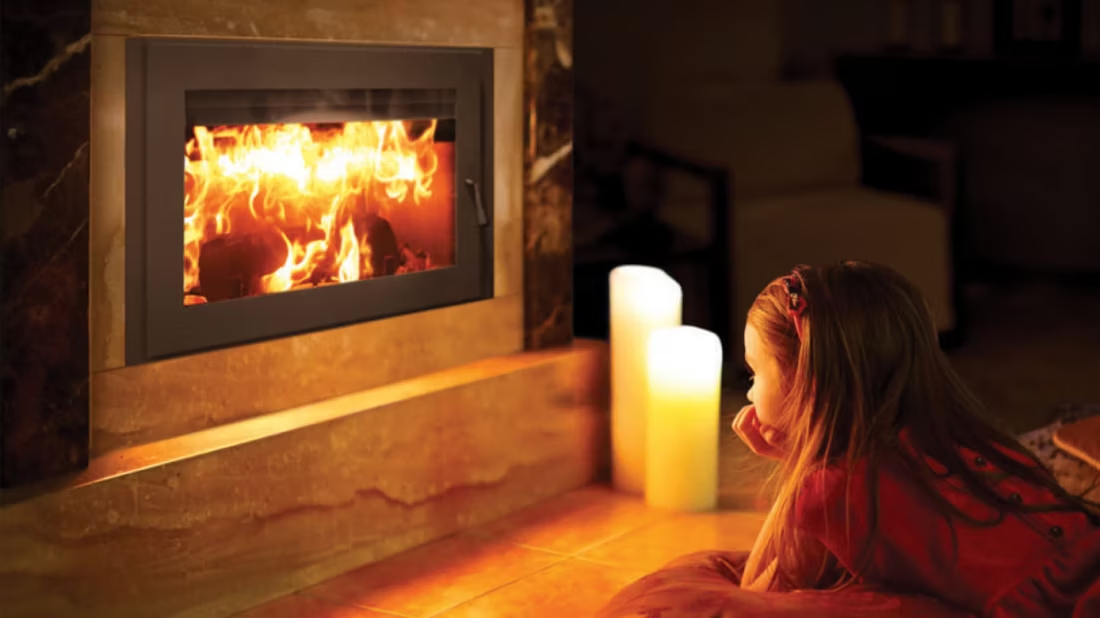
Willis rarely needs a primary heat source, but plenty of homeowners near Lake Conroe still want a real wood fire—for ambiance, for lake-house evenings, or for backup heat when the grid fails. We'll connect you with a local dealer who can tell you straight whether it's worth it.
Every Project Starts From One of These Five Situations
A Warm Climate That Still Gets Genuinely Cold Surprises.
Willis sits in climate zone 2A, hot and humid, tucked into the Houston exurbs along Lake Conroe in Montgomery County. Winter lows here average just 39°F, and the town has a light overall winter heating need—compare that to a genuinely cold-climate market like Duluth, MN, which can rack up more winter heating load in a single hard month. Wood is not a primary heating fuel in Willis, and it would be dishonest to pretend otherwise: most homes here get through winter fine without one.
That said, wood fireplaces and stoves do have a real, if smaller, role around Willis. Lake houses along Lake Conroe often install one for the ambiance of a live fire on a cool evening. Homes near Sam Houston National Forest have easy access to oak, pecan, and mesquite firewood. And after Winter Storm Uri in February 2021 left much of Montgomery County without power for days during a hard freeze, a good number of local homeowners added a wood-burning unit specifically as grid-independent backup heat—something no electric appliance from CenterPoint Energy, Entergy Texas, or San Bernard Electric Coop can offer during an outage.
Three steps. No salesperson until you're ready.
Tell us about your project
Your zip code, your situation, and the fuel you're leaning toward—or let the answers point you to one.
See what's actually available
The brands dealers within 100 miles genuinely carry—real options, never a catalog mirage.
Get your dealer & Project Guide
A trusted local dealer, plus the free Project Guide & Parts List that names every component of the job.
Frequently Asked Questions
Does a wood fireplace even make sense in a climate as mild as Willis?
For most Willis homes, wood isn't needed to stay warm—with a 39°F average winter low and a light overall winter heating need, this isn't a cold-climate heating market. Where wood still makes sense is ambiance (a real fire on the handful of genuinely cold nights each winter), lake houses around Lake Conroe used seasonally, and backup heat that doesn't depend on the electric grid. If your goal is whole-home heating, gas or electric will serve you better here. If your goal is a real fire for cool evenings or storm resilience, wood is a legitimate and honest choice—just go in knowing it's a lifestyle unit, not a necessity.
How much does it cost to install a wood stove or fireplace in Willis?
Install costs in the Houston exurbs generally track national averages rather than any cold-climate premium, since there's no need to oversize for extreme lows. A freestanding wood stove with new Class A chimney typically runs in the low-to-mid thousands; a wood-burning insert into an existing masonry fireplace is usually less since it reuses the chimney. New construction without an existing flue—framing, roof penetration, full chimney run—sits at the higher end of any estimate. A local dealer can give you a firm number after seeing your specific setup, since venting path is the biggest cost driver in a home like yours.
What firewood is actually available locally?
Oak, pecan, and mesquite are the common species around Montgomery County, and all three burn well once properly seasoned—oak for long, steady heat, pecan for a hot clean burn similar to hickory, and mesquite for a fast, intense fire with a strong aroma (it's more often used for grilling and smoking than sustained heating, but it works fine in a stove in smaller loads). Because Willis doesn't have a heavy wood-heating culture, most homeowners buy split, seasoned cords from local suppliers rather than self-cutting on national forest land, though Sam Houston National Forest is nearby if you want to source your own.
Do I need a permit to install a wood stove in Willis?
Most new wood-burning installations require a building permit through Montgomery County or the City of Willis, depending on your address, and any new stove sold needs to meet current EPA 2020 NSPS emissions standards. Because wood-burning installs are less common here than gas or electric, it's worth confirming with your installer that they've pulled permits in your specific jurisdiction before—a dealer who regularly works Montgomery County will already know the inspection requirements.
Is a wood stove a good backup heat plan for power outages?
Yes, and this is one of the strongest arguments for wood heat in a climate like Willis's. Winter Storm Uri in February 2021 knocked out power to much of Texas, including Montgomery County, during freezing temperatures—and homes with a wood-burning stove or fireplace kept generating real heat with zero dependence on CenterPoint Energy, Entergy Texas, or San Bernard Electric Coop staying online. You won't use it often, but the handful of times you need it, nothing else in the house will work without a grid connection or a generator.
Wood vs. gas—which makes more sense for a Willis home?
Gas is the more practical everyday choice here—natural gas and propane service both run through the area, installation is generally simpler, and a gas fireplace gives instant, consistent heat without wood handling or ash cleanup, which matters more in a climate where you might only light a fire a dozen times a winter. Wood wins on one specific point: it works with zero electricity and zero gas supply, which matters if you're planning for grid outages like Uri. Many Willis homeowners land on gas for the primary living space and skip wood entirely, while lake-house and rural buyers who value self-sufficiency go wood instead.
Should I get a wood stove or a wood-burning insert?
If you already have a masonry fireplace—common in older homes around Willis and Montgomery County—an insert is usually the better call, since it reuses your existing chimney and dramatically improves how much heat you actually get out of an open hearth. A freestanding stove makes more sense for a lake house, garage, workshop, or a room with no existing chimney, since it can be installed almost anywhere with the right clearances and a new Class A chimney run.
My wood fireplace only gets used a few times a year—does it still need maintenance?
Yes, and infrequent use actually creates its own problems. Chimneys and flues that sit unused for most of the year in Willis's humid climate are prone to moisture buildup, and uncapped or poorly capped chimneys attract wasps, birds, and other pests looking for a dry cavity. Get an annual inspection before burning season regardless of how little you plan to use it—a sweep will confirm the flue is clear, the cap is intact, and there's no nesting or moisture damage before you light the first fire of the year.
Where can I buy firewood near Willis?
Local firewood suppliers around Montgomery County sell seasoned oak, pecan, and mesquite by the cord or half-cord, often with delivery available to Willis and the Lake Conroe area. Because this isn't a high-volume wood-heating market, supply is generally easy to come by year-round rather than being seasonal or scarce the way it can be in colder states. If you'd rather cut your own, Sam Houston National Forest is close by, though most homeowners here find buying split, seasoned wood simpler than a self-cut permit process built around a much larger heating need.
What's the difference between an insert and a zero-clearance fireplace?
An insert is a fireplace that slides into a pre-existing wood-burning fireplace—if you don't have one, there's nothing to insert it into. A zero-clearance fireplace is built into a framed wall, which makes it the answer for remodels and new construction. Simple test: existing masonry fireplace means insert; blank or framed wall means zero-clearance.
Why is a fireplace insert so efficient?
An insert does two things: it seals the chimney completely, so you stop losing air you already paid to heat, and it radiates warmth into the room through the firebox and glass. Most add a heat-exchange fan that pulls cool room air underneath, wraps it around the hot firebox, and pushes it back out warm. Your home is more efficient before you've even lit the first fire.
Can a fireplace actually lower my heating bill?
Yes—by creating a comfort zone. A furnace heats every square foot of the house just to warm the one room you're in; a gas fireplace on low burns roughly a sixth of the gas a typical furnace does. Set the furnace around 55–60 degrees as a baseline, then heat the rooms your family actually uses. Families who heat this way commonly save $20–$60 a month.
How much should I budget for a fireplace?
For an average home—covering the fireplace, the vent pipe, and basic installation—a budget between $3,900 and $5,500 gives you a lot of options across wood, gas, and pellet. By the time you add finish work, gas line, and electrical, the average complete installation lands between $5,000 and $12,000 all-in. In a remodel or new build, a good rule is to put about 2.5% of the total project cost toward the fireplace.
Nearby Dealers
Hearth shops serving Willis and the surrounding area. Every listing shows whether it is a WhyFire partner, a dealer we have verified as authorized for the brands we recommend, or a local business carrying hearth products. No manufacturer pays for placement. How we verify dealers →
Fireplace & Patio Shop
Tri-Supply - Conroe
All Fired Up Fireplace & Outdoor
Creekstone Outdoors
Find your wood fireplace in Willis.
Tell us about your home and how you'd actually use a wood fireplace—ambiance, a lake house, or grid-outage backup—and we'll match you with a trusted local dealer and send over a free Project Guide & Parts List with the exact parts and vent kit for your project.
Find Your Fireplace →