
Pellet heat is rare in Weslaco—here's who still wants it.
Weslaco winters rarely dip below the 40s, and pellet stoves aren't a common install here—but if you want one for looks, backup ambiance, or a cabin up north, we'll connect you with a local dealer who can do it right.
Every Project Starts From One of These Five Situations
Why pellet stoves stay a niche choice in the Valley.
Weslaco sits at 77 feet above sea level in the heart of the Rio Grande Valley, in climate zone 2A—hot and humid nearly year-round. The numbers tell the story: about 580 heating degree days a year, compared to the roughly 9,000-plus a city like International Falls, Minnesota logs in a normal winter. Average winter lows here hover around 50°F, and a hard freeze is a rare, newsworthy event rather than a weekly occurrence.
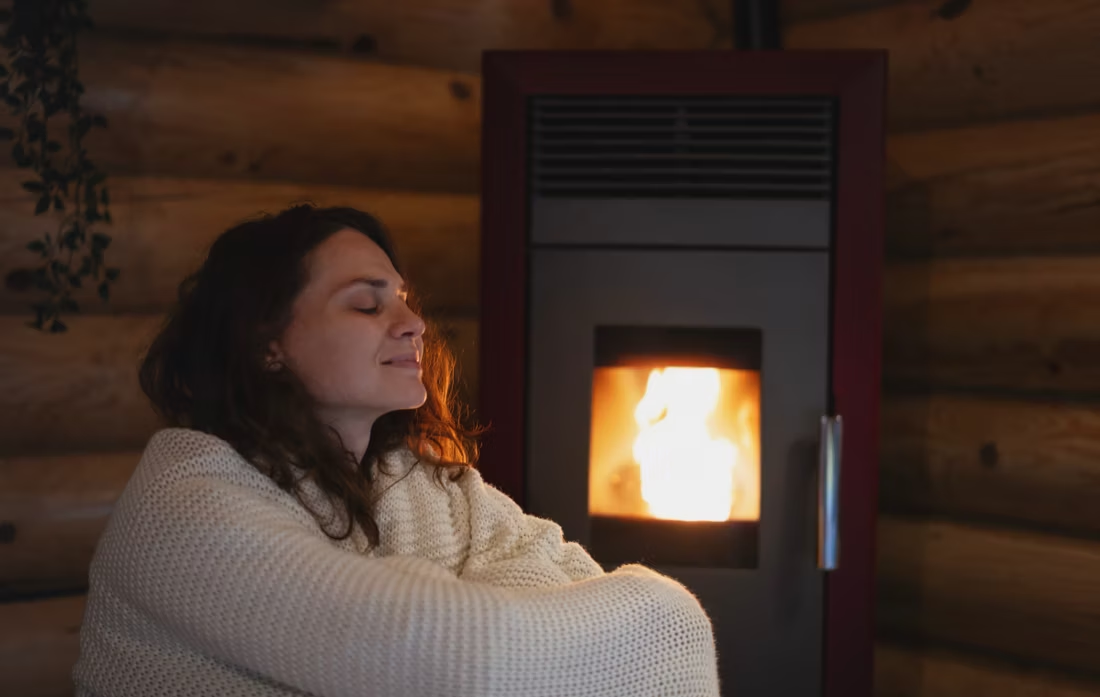
That climate means pellet stoves—designed to carry real heating loads through long, cold winters—don't have much of a job to do in Weslaco. Air quality isn't a driver either; there's no winter inversion or wood-smoke non-attainment problem pushing homeowners toward cleaner-burning appliances the way there might be in a mountain valley out west. The handful of pellet stoves installed locally tend to serve a single room, for a few chilly evenings a year, chosen for the look and ritual of a real flame rather than any real dependence on the heat.
Three steps. No salesperson until you're ready.
Tell us about your project
Your zip code, your situation, and the fuel you're leaning toward—or let the answers point you to one.
See what's actually available
The brands dealers within 100 miles genuinely carry—real options, never a catalog mirage.
Get your dealer & Project Guide
A trusted local dealer, plus the free Project Guide & Parts List that names every component of the job.
Frequently Asked Questions
Are pellet stoves actually used in Weslaco?
Pellet stoves are uncommon in Weslaco. With heating degree days around 580 a year—a fraction of what a cold-climate city like International Falls, Minnesota logs in a single month—and average winter lows near 50°F, most Rio Grande Valley homes have no real heating load to speak of. The handful of pellet stoves we see requested here tend to go into homes owned by transplants from colder states who miss the ritual of a stove, or into a room used mainly for looks and the occasional chilly December evening. If you're set on one, we can still match you with a dealer who can source and install a pellet stove—just know you're choosing it for atmosphere, not survival heat.
How much does a pellet stove installation cost in Weslaco?
Because pellet stoves are a rare request in Hidalgo County, there isn't a well-established local price range the way there would be in a heating-dependent market. Installation cost still depends on the usual variables—the stove itself, whether a new vent run through an exterior wall is needed, and any hearth pad or clearance work. The honest answer is that a Weslaco quote is best gotten directly from the dealer we match you with, since so few local installers stock pellet units and pricing here isn't standardized the way it is for gas fireplace work.
Do I need a permit to install a pellet stove in Weslaco?
Yes, in most cases. A new pellet stove typically requires a building permit through the City of Weslaco's permitting office, since it involves a wall penetration for venting and often a dedicated electrical circuit for the auger and blower. If you're outside city limits in unincorporated Hidalgo County, permitting runs through the county instead. Given how few installers in the Valley handle pellet work regularly, it's worth confirming with your dealer that they've pulled this specific permit type before—it's not a routine request for most local building departments here.
Would a gas fireplace make more sense than a pellet stove here?
For most Weslaco homes, yes. Natural gas and propane fireplace inserts are a standard, well-supported option in this market, while pellet stoves are not. Gas gives you instant on-off heat for the rare cold snap without the hassle of sourcing bags of pellets in a region where almost no one stocks them locally. If your real goal is a heat source for occasional winter mornings, we'd point you toward a gas unit first. If your goal is specifically the pellet-stove look and feel—the glass-front flame, the hopper, the ritual of loading fuel—that's a legitimate reason to still go pellet, and we can match you with a dealer who'll set expectations accordingly.
Can a pellet stove serve as backup heat during a power outage, like the February 2021 freeze?
No—and this is worth knowing before you buy. Pellet stoves rely on an electric auger to feed fuel and a blower to circulate heat, so when the grid goes down, so does the stove. That's exactly what happened to pellet-stove owners statewide during the 2021 winter freeze, when ERCOT-managed outages hit AEP Texas Central and other providers across the Valley. If backup heat during a grid failure is your real goal, a vented gas fireplace with a standing pilot, or a simple propane heater, will actually function without power. A pellet stove, however nice it looks, won't.
Where can I buy pellet fuel in the Rio Grande Valley?
Bags of pellets aren't something you'll find stacked at every hardware store in Weslaco the way they would in a heating-dependent state. Brands like Forest Energy and Lignetics are distributed regionally and can usually be special-ordered through farm supply stores or shipped via online retailers, but expect to plan ahead rather than pick up a bag on a whim. If you go the pellet-stove route, ask your dealer about realistic local sourcing before you commit—running out of fuel mid-winter is a bigger inconvenience here than in a market with year-round stove demand.
What size pellet stove do I need for occasional use in a Weslaco home?
Since almost no Weslaco home needs a pellet stove to actually heat the house, sizing here is less about square footage and more about the single room you want warmed for a few weeks a year. A small stove rated for 500 to 1,000 square feet is plenty for a living room or den on the handful of nights that dip into the 30s and 40s. There's rarely a reason to size up further, since a pellet stove will never be asked to carry a whole-home heating load here the way it might in Fargo or Minneapolis.
Is an electric fireplace a better fit for Weslaco than a pellet stove?
For a lot of homeowners here, yes. Texas's competitive electricity market keeps residential rates low—providers like AEP Texas Central, Oncor Electric Delivery, and Magic Valley Electric Cooperative serve the Valley around 10 cents per kWh—so running an electric fireplace or insert for ambiance costs very little. Electric units also skip venting entirely, install in a fraction of the time, and don't require sourcing fuel bags in a region where pellet stock is thin. If your main goal is the visual of a fire rather than heat output or the specific feel of a pellet stove, electric is worth comparing before you commit.
If pellet stoves aren't practical here, why does Find My Fireplace still list them for Weslaco?
Because some homeowners have a legitimate reason to want one anyway—a vacation property in the Hill Country or up north, nostalgia from living somewhere colder, or simply a preference for the look and sound of a pellet stove over gas or electric. Our job isn't to talk you out of it; it's to be straight about what's realistic in this climate and then match you with a local dealer who can source, permit, and install the unit correctly if you decide to go ahead. We just won't pretend pellet heat solves a problem Weslaco's mild winters don't really have.
Why is my open fireplace making my house colder?
Open fireplaces suck—literally. As the fire burns, it consumes air your furnace already paid to heat and pulls it out through the chimney, so the house is actually colder after the fire goes out than before you lit it. An insert fixes this: it seals the chimney, puts fixed glass across the front, and turns that hole in your house into a real heat source.
What's the difference between an insert and a zero-clearance fireplace?
An insert is a fireplace that slides into a pre-existing wood-burning fireplace—if you don't have one, there's nothing to insert it into. A zero-clearance fireplace is built into a framed wall, which makes it the answer for remodels and new construction. Simple test: existing masonry fireplace means insert; blank or framed wall means zero-clearance.
How much should I budget for a fireplace?
For an average home—covering the fireplace, the vent pipe, and basic installation—a budget between $3,900 and $5,500 gives you a lot of options across wood, gas, and pellet. By the time you add finish work, gas line, and electrical, the average complete installation lands between $5,000 and $12,000 all-in. In a remodel or new build, a good rule is to put about 2.5% of the total project cost toward the fireplace.
Does a fireplace add value to my home?
On average, a fireplace adds back to the home about the same amount you spent installing it. Add the monthly savings from heating the rooms you actually use instead of the whole house—often hundreds of dollars a year—and the value case is strong before you even count what a fire does for how your family uses the room.
Nearby Dealers
Hearth shops serving Weslaco and the surrounding area.
Pellet Brands Stocked Around Weslaco
Manufacturers will point you to the nearest stocking dealer.
Find your pellet stove in Weslaco.
Tell us a bit about your home and your reason for wanting a pellet stove, and we'll send a free Project Guide & Parts List with the exact parts and vent kit needed—plus a match to a trusted local dealer who can install it correctly.
Find Your Fireplace →