
Keep Your Family Warm and Safe—No Matter What
With winter lows averaging 42°F and just 1,254 heating degree days a year, wood heat isn't how Victoria County stays warm—but plenty of homeowners still want the real thing for ambiance and the rare cold front. Find the right setup and a trusted local dealer.
Every Project Starts From One of These Five Situations
Wood is decorative in Victoria County, not essential.
Victoria County sits in USDA climate zone 2A, on the Gulf Coastal Plain between San Antonio Bay and the Guadalupe River bottomlands. Winters here are short and mild—an average low of 42°F and only about 1,254 heating degree days a year, a fraction of what a place like Duluth, MN sees in a single hard winter. A traditional wood stove sized for cold-climate use would sit idle most of the year. That's a very different equation than the wood-dependent counties of the upper Midwest or Rockies, and it's the honest starting point for anyone comparing options here.
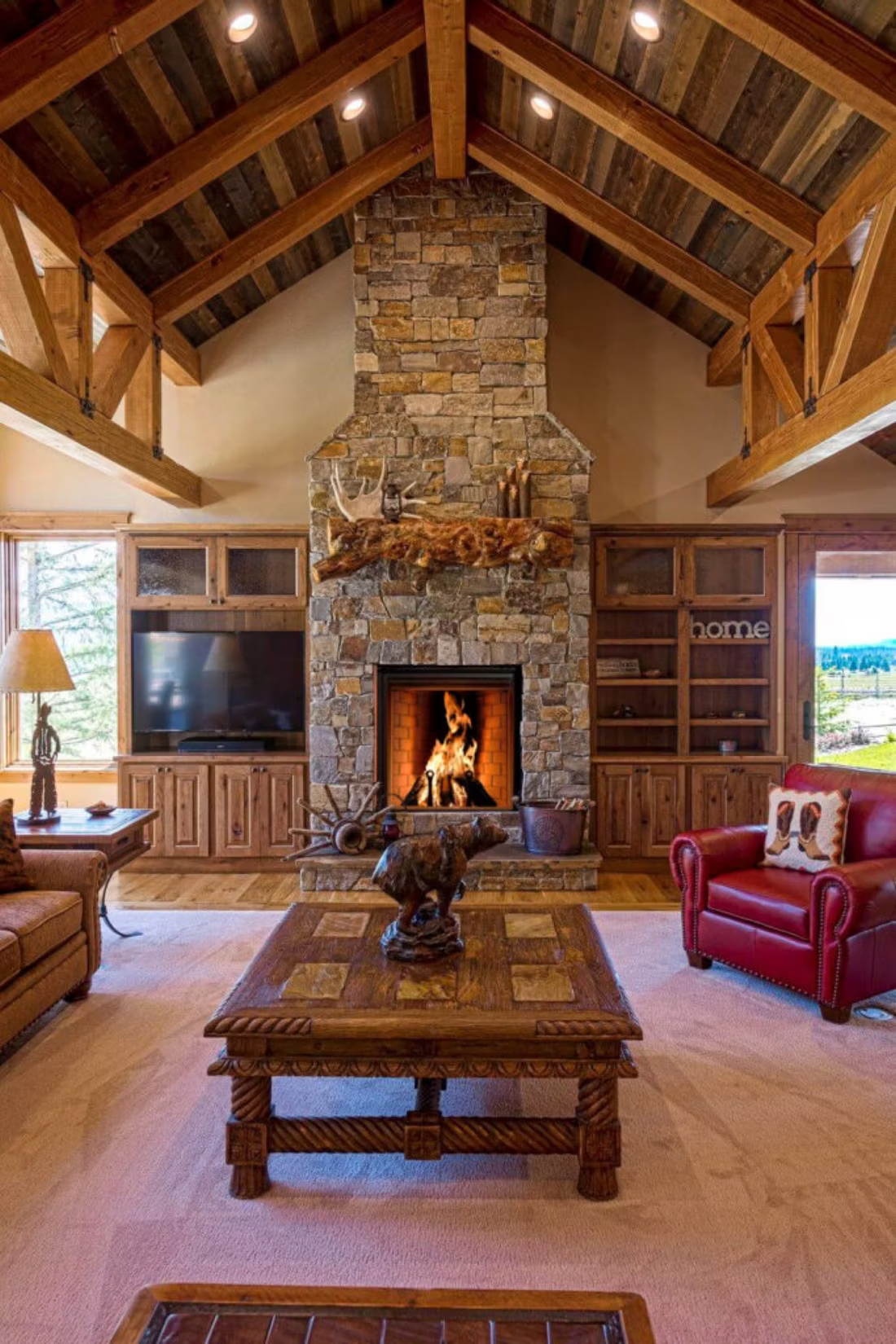
That said, wood fireplaces haven't disappeared from Victoria County homes—they've just shifted purpose. Local oak, pecan, and mesquite are abundant and popular for the handful of nights each winter when a cold front actually pushes temperatures near freezing, and for the ambiance of an open masonry fireplace on a cool evening. Homeowners building new or renovating an older Victoria home sometimes still want a real wood-burning fireplace for that occasional use, even knowing it won't be their primary heat source the way gas or electric units are for most of the county.
Three steps. No salesperson until you're ready.
Tell us about your project
Your zip code, your situation, and the fuel you're leaning toward—or let the answers point you to one.
See what's actually available
The brands dealers within 100 miles genuinely carry—real options, never a catalog mirage.
Get your dealer & Project Guide
A trusted local dealer, plus the free Project Guide & Parts List that names every component of the job.
Frequently Asked Questions
Is a wood stove or fireplace even worth installing in Victoria County?
For most Victoria County homes, no—not as a heat source. With an average winter low of 42°F and only around 1,254 heating degree days a year, a wood stove sized to actually heat a house would be overkill for the handful of cold nights we get. Where wood still makes sense is a traditional open masonry fireplace or a decorative wood-burning unit for ambiance, holiday use, or the occasional hard freeze. If year-round heating performance matters to you, gas or electric units are a better fit for this climate—a local dealer can walk you through why.
What kind of wood is available locally if I do want a wood-burning fireplace?
Oak, pecan, and mesquite are the most common species around Victoria County, and all three are well-suited to fireplace or stove use—mesquite in particular burns hot and dense, which is popular locally for both fireplaces and outdoor cooking. Because wood heat isn't a primary heating strategy here, you won't find the same cutting-permit infrastructure or firewood delivery networks common in colder states—most homeowners source seasoned oak or mesquite from local tree services, ranch operations, or small firewood sellers rather than public land permits.
How much does it cost to install a wood-burning fireplace in Victoria County?
Costs run comparable to national averages for the unit and installation itself—typically $4,500 to $9,000 for a stove or insert with proper Class A chimney venting, though exact pricing depends heavily on whether you're retrofitting an existing masonry fireplace or building new. Because demand for wood-burning installs is low locally, expect fewer dealers to stock a wide range of wood units compared to gas, so ask a matched local dealer for a firm, current quote rather than assuming national pricing applies exactly.
Do I need a permit to install a wood fireplace in Victoria County?
Yes—new wood-burning fireplace or stove installations require a building permit through the applicable jurisdiction, whether that's the City of Victoria or unincorporated Victoria County. Any EPA-certified stove will meet current emissions standards, though air quality regulation is not a significant local concern here—Victoria County has no non-attainment or inversion issues like you'd see in wood-heavy regions further west. A licensed installer will typically handle the permitting as part of the install.
Would a gas or electric fireplace make more sense for my home instead?
For most Victoria County homes, yes. Given the mild climate—just 1,254 heating degree days and winter lows rarely dropping much below the low 40s—a gas or electric fireplace delivers the ambiance and occasional supplemental warmth most homeowners actually want, without the chimney maintenance, ash cleanup, or firewood storage that comes with a wood-burning unit. Gas fireplaces are standard and widely available throughout the county, and electric units are a low-cost, no-venting option for rooms where even a gas line isn't practical.
Can I still get a real wood-burning fireplace if I want one for the experience?
Absolutely—plenty of Victoria County homeowners choose a traditional open masonry fireplace or a wood-burning insert specifically for the experience of a real fire, not for heating performance. If that's your goal, talk to a local dealer about units designed for occasional-use, ambiance-focused burning rather than all-night, cold-climate heat retention—you don't need the same overbuilt, catalytic, 20-hour-burn stove that a Fargo or Bismarck homeowner would need.
How often does a wood fireplace need to be inspected in a mild climate like this?
Even with light seasonal use, the Chimney Safety Institute of America recommends an annual inspection before burning season. Because Victoria County fireplaces typically get far less use than in cold-climate states, creosote buildup is usually minimal—but an annual check is still worthwhile before the first fire of the season, particularly to confirm the chimney and damper are in good condition after months of disuse.
Where can I buy firewood locally in Victoria County?
Because wood isn't a primary heat source here, Victoria County doesn't have the same forest-permit or bulk-delivery firewood economy you'd find in a wood-dependent region. Most residents buy seasoned oak, pecan, or mesquite by the rack or partial cord from local tree services, ranch suppliers, or seasonal roadside sellers, often stocking up ahead of the holidays or an expected cold front rather than for a full heating season.
What's the difference between a decorative fireplace and a heating-focused wood stove?
A decorative or open masonry fireplace is built primarily for appearance and ambiance and loses most of its heat up the flue—fine for Victoria County's mild winters. A heating-focused wood stove, by contrast, is a sealed, airtight unit designed to hold and radiate heat efficiently over long burns—the kind of equipment you'd size for a genuinely cold climate. Given Victoria County's 1,254 heating degree days, most local homeowners are better served by the decorative route, or by gas or electric alternatives that don't require overbuilt equipment for a mild climate.
Why is a fireplace insert so efficient?
An insert does two things: it seals the chimney completely, so you stop losing air you already paid to heat, and it radiates warmth into the room through the firebox and glass. Most add a heat-exchange fan that pulls cool room air underneath, wraps it around the hot firebox, and pushes it back out warm. Your home is more efficient before you've even lit the first fire.
Why is my open fireplace making my house colder?
Open fireplaces suck—literally. As the fire burns, it consumes air your furnace already paid to heat and pulls it out through the chimney, so the house is actually colder after the fire goes out than before you lit it. An insert fixes this: it seals the chimney, puts fixed glass across the front, and turns that hole in your house into a real heat source.
What is an in-home preview and do I need one?
It's a visit where a hearth professional measures your space, confirms the model you picked actually works in your home, and walks the specs—framing, gas line, venting, finish work—before anything is ordered. Some details you just can't know until you see the house. Never make a down payment without one; it's the single most-skipped step that burns buyers.
Can I install a fireplace myself?
If you're putting a fire in your house on purpose, it's best to work with an expert. Unless you're genuinely experienced in framing, gas line, vent pipe, and the national code on clearances to combustibles, have a professional do it—and ideally the same company that sells you the fireplace, so warranty, service, and liability all live under one roof.
Stove and Fireplace Dealers in Victoria County
Listings include WhyFire partner dealers, dealers we have verified as authorized for the brands we recommend, and established local businesses that carry hearth products. Every listing shows which one it is. The ones marked Preferred run on WhyFire's software, so they can show you real pricing and book your appointment right here. No manufacturer pays for placement. How we verify dealers →
Victoria Builder Supply Co Inc.
The Design Haus Of Victoria
Kitchen & Bath Showplace
Find your wood fireplace fit in Victoria County.
Tell us about your home and how you'd actually use it, and we'll match you with a trusted local dealer and send a free Project Guide & Parts List—sized honestly for Victoria County's mild winters, not a cold-climate catalog.
Find Your Fireplace →