
Keep Your Family Warm and Safe—No Matter What
With an average winter low of 38°F and a fairly light overall winter heating load, Tyler doesn't need wood heat to survive winter—but plenty of homeowners still want the real thing for ambiance or backup.
Every Project Starts From One of These Five Situations
East Texas winters rarely call for wood heat.
Tyler sits in climate zone 3A at 511 feet elevation, with mild East Texas winters—an average low of 38°F and a fairly light overall winter heating load. Compare that to Fargo, ND, which has a winter heating load more than four times greater in a typical winter, and it's clear why wood stoves aren't a survival necessity here the way they are farther north. Most Tyler homes heat with central gas furnaces or heat pumps, and a wood-burning appliance is rarely anyone's primary heat source.
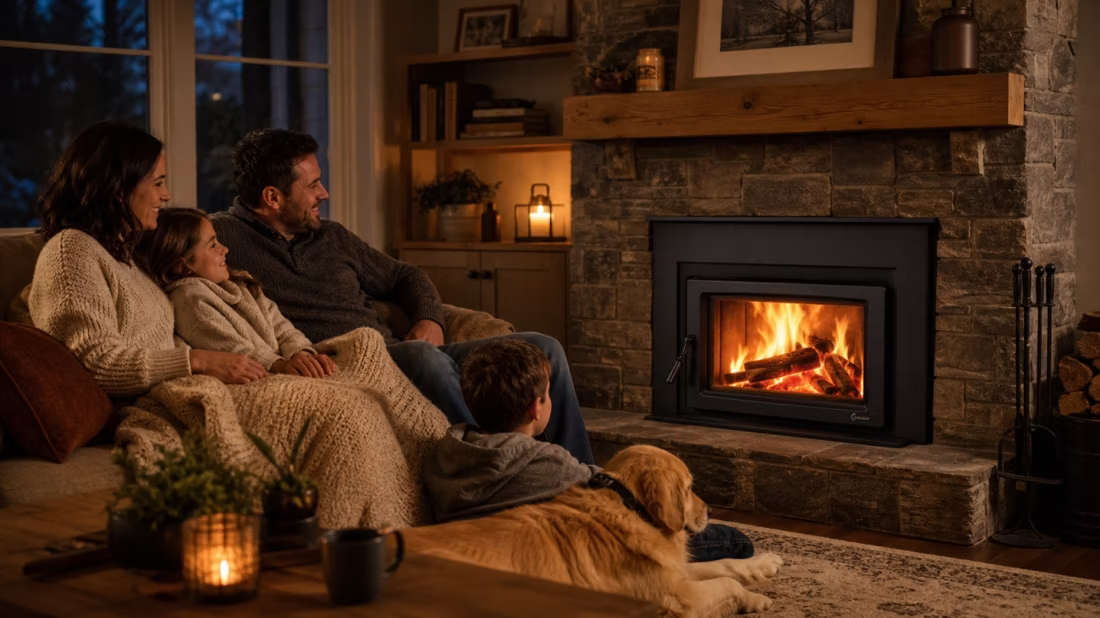
That said, wood fireplaces haven't disappeared from Tyler. Plenty of Smith County homes have existing masonry fireplaces that homeowners still want to use for ambiance on the handful of genuinely cold nights each winter, and local oak, pecan, and mesquite are all excellent, widely available burning wood. There's also a practical case for wood: the February 2021 winter storm Uri knocked out ERCOT-managed power across East Texas for days, and a wood-burning unit was one of the few heat sources that kept working when the grid didn't. For most Tyler homeowners chasing reliable everyday heat, gas is the more common and more practical answer—but for ambiance, resilience, or a specific existing fireplace, wood still has a place here.
Three steps. No salesperson until you're ready.
Tell us about your project
Your zip code, your situation, and the fuel you're leaning toward—or let the answers point you to one.
See what's actually available
The brands dealers within 100 miles genuinely carry—real options, never a catalog mirage.
Get your dealer & Project Guide
A trusted local dealer, plus the free Project Guide & Parts List that names every component of the job.
Frequently Asked Questions
Does a wood-burning fireplace make sense in Tyler's climate?
For most homes, not as a primary heat source. Tyler's fairly light overall winter heating load and 38°F average winter low mean the furnace or heat pump carries the load almost all season. Wood makes more sense here as a secondary feature—used a few dozen nights a year for ambiance, or kept as a genuine backup for the ice storms and grid failures East Texas has seen (2021's Winter Storm Uri being the obvious example). If you're picturing a wood stove as your everyday heat like it would be in Duluth, MN or Bozeman, MT, that's not really the Tyler use case. If you're picturing occasional fires and outage insurance, it fits fine.
How much does a wood fireplace or insert installation cost in Tyler?
Local installers typically quote somewhere in the $3,000 to $7,500 range for a wood stove or insert in Tyler, with the lower end covering a freestanding stove with a straightforward Class A chimney run and the higher end covering an insert into an existing masonry fireplace with a full stainless liner. Because Tyler doesn't see the installation volume that colder markets do, it's worth getting quotes from two or three hearth dealers rather than assuming a single ballpark number applies to your home.
What firewood is available locally in Tyler?
East Texas has good wood on hand. Oak is the workhorse—dense, long-burning, and widely sold by the cord around Smith County. Pecan burns hot and clean and is popular with homeowners who like a milder smoke smell. Mesquite is also common in the region and burns very hot, though it's often used in smaller amounts mixed with oak because it burns fast. Any of the three will work fine in a modern EPA-certified stove or insert; a local dealer can advise on seasoning time and moisture content for whichever you source.
Do I need a permit to install a wood stove in Tyler?
Yes—new wood-burning installations inside city limits go through the City of Tyler's building permitting process, and unincorporated Smith County addresses go through the county. Most hearth dealers who install stoves and inserts in the area handle the permit application as part of the job, so you typically aren't filing paperwork yourself. Because Tyler has no air quality non-attainment designation and no winter burn-ban history, there's no additional local air-quality permitting layer to worry about—it's a standard building permit for the appliance and venting.
Are there wood-burning restrictions or air quality concerns in Tyler?
No—Tyler and Smith County have no air quality non-attainment status and no winter inversion or wildfire-smoke concerns of the kind that trigger burn curtailment in parts of the West. That means there's no seasonal burn-ban system to check before lighting a fire here, unlike areas of Oregon or California with DEQ Heat Smart-style curtailment periods. The main practical consideration is simply that Tyler's mild winters mean most stoves here see light, occasional use rather than daily burning.
Wood vs. gas—which is right for my Tyler home?
For everyday heating in Tyler, gas wins for most homeowners—it's instant, low-maintenance, and matches how mild the winters actually are here. Wood's advantage is narrower but real: it keeps working without electricity, which mattered a great deal to East Texas homeowners during the 2021 grid failures, and it delivers the ambiance of a real fire that gas can only approximate. Many Tyler homeowners end up with gas as the daily-use option and treat a wood fireplace, if they have one, as a backup and occasional-use feature rather than the other way around.
Is a wood stove a good backup heat option for power outages in Tyler?
Yes, and it's one of the more compelling reasons Tyler homeowners still install one. Unlike an electric furnace or heat pump, a wood stove needs no grid power to produce heat, which matters after events like Winter Storm Uri in February 2021, when ERCOT-managed outages left large parts of East Texas without power for days during freezing temperatures. A stove won't heat a whole house the way central heat does, but it can keep one room livable and safe during a multi-day outage—worth weighing if you've been through an extended outage before.
How often should a wood stove or fireplace be inspected in Tyler?
An annual inspection before burning season is still the right call even with Tyler's light usage patterns—the CSIA recommends yearly inspections regardless of how many fires you actually burn. Because most Tyler stoves and fireplaces see occasional rather than daily use, creosote buildup is generally slower here than in a home burning wood as primary heat all winter, but animal nests, debris, and masonry issues can develop in an idle chimney just the same. A quick check each fall before the first fire of the season catches most problems early.
What about pellet stoves as an alternative in Tyler?
Pellet stoves are about as uncommon in Tyler as wood stoves used as primary heat—the mild climate simply doesn't generate the demand that drives pellet stove adoption in colder regions, even though regional pellet supply exists through brands like Forest Energy and Lignetics. Pellet stoves also need electricity to run the auger and blower, which erases the one advantage wood has for East Texas homeowners: working through a power outage. If you're drawn to wood specifically for ambiance or grid independence, a true wood-burning stove or insert is the more logical fit here than pellet.
Why won't my new wood stove get going like my old one?
New wood stoves are 70%+ efficient, so far less heat goes up the flue—which also means less draft to get a fire established. The rule: build a genuinely hot fire for about 45 minutes before you choke it down. Skip that and you get smoke in the room, creosote in the chimney, and a fire that never takes off. Most performance complaints trace straight back to this.
What's the difference between an insert and a zero-clearance fireplace?
An insert is a fireplace that slides into a pre-existing wood-burning fireplace—if you don't have one, there's nothing to insert it into. A zero-clearance fireplace is built into a framed wall, which makes it the answer for remodels and new construction. Simple test: existing masonry fireplace means insert; blank or framed wall means zero-clearance.
Does a fireplace add value to my home?
On average, a fireplace adds back to the home about the same amount you spent installing it. Add the monthly savings from heating the rooms you actually use instead of the whole house—often hundreds of dollars a year—and the value case is strong before you even count what a fire does for how your family uses the room.
How much should I budget for a fireplace?
For an average home—covering the fireplace, the vent pipe, and basic installation—a budget between $3,900 and $5,500 gives you a lot of options across wood, gas, and pellet. By the time you add finish work, gas line, and electrical, the average complete installation lands between $5,000 and $12,000 all-in. In a remodel or new build, a good rule is to put about 2.5% of the total project cost toward the fireplace.
Nearby Dealers
Hearth shops serving Tyler and the surrounding area.
Find your wood fireplace in Tyler.
Tell us about your home and how you'd actually use a wood-burning fireplace or insert—ambiance, backup heat, or both—and we'll match you with a trusted local Tyler dealer and send over a free Project Guide & Parts List with the exact parts, including the vent kit, for your project.
Find Your Fireplace →