
Keep Your Family Warm and Safe—No Matter What
With winter lows averaging in the mid-30s, wood isn't how Trophy Club homes stay warm—but plenty of homeowners still want the real thing. Get matched with a local dealer who can build it right.
Every Project Starts From One of These Five Situations
In Trophy Club, wood heat is optional—that's the honest answer.
Trophy Club sits in climate zone 3A on the northern edge of the Dallas-Fort Worth metroplex, with an average winter low around 36°F and only a light overall winter heating load—a fraction of what a place like Bismarck, ND or Duluth, MN sees in a single winter. Natural gas is the default heat source for both furnaces and fireplaces here, and that shapes what's actually installed in new Trophy Club builds: gas logs and direct-vent gas fireplaces dominate, not wood.
That doesn't mean wood is off the table. Some homeowners want a true wood-burning fireplace for the crackle and smell of a real fire on the handful of genuinely cold nights each winter, for backup heat during grid events like the February 2021 freeze, or simply because they grew up with one. Oak, pecan, and mesquite are all plentiful in North Texas—though locally they're better known for smoking brisket than heating a house. If you want a wood-burning setup done right in a market where most dealers are stocked for gas, working with someone who still installs and services wood units matters.
Three steps. No salesperson until you're ready.
Tell us about your project
Your zip code, your situation, and the fuel you're leaning toward—or let the answers point you to one.
See what's actually available
The brands dealers within 100 miles genuinely carry—real options, never a catalog mirage.
Get your dealer & Project Guide
A trusted local dealer, plus the free Project Guide & Parts List that names every component of the job.
Frequently Asked Questions
How much does a wood-burning fireplace cost to install in Trophy Club?
Expect somewhere in the $3,500-$8,500 range for a factory-built wood-burning fireplace or freestanding stove with proper Class A chimney venting, depending on the unit and whether you're retrofitting an existing gas-only chase or building new. Because wood is a specialty request in a gas-dominated market like Trophy Club, fewer local dealers stock wood units on the showroom floor—most will special-order the fireplace or stove and handle venting and hearth clearances as part of the install. Get a firm quote from a dealer who actually installs wood units regularly, not just gas.
Does a wood-burning fireplace actually make sense in Trophy Club's climate?
As a primary heat source, no—with average winter lows around 36°F and a mild overall winter heating load, Trophy Club just doesn't have the sustained cold that makes wood heat economical the way it is in places like Bozeman, MT or Fargo, ND. Where a wood-burning fireplace earns its keep here is ambiance and occasional-use warmth: holiday gatherings, the odd hard freeze, or backup heat if the grid goes down during a winter storm like the one in February 2021. If you want daily, dial-it-in heat, gas is the more practical choice for this area—but if you specifically want a real wood fire, that's a legitimate reason on its own.
Do I need a permit for a wood-burning fireplace in Trophy Club?
Yes. New construction or a retrofit that adds a chimney or changes framing requires a building permit through the Town of Trophy Club's building inspections department, and work outside town limits in unincorporated Denton County falls under the county building office. There's no air-district non-attainment status or wood-burning curtailment program here the way there is in parts of the West—Trophy Club has no flagged air quality concerns—so the permit process is mainly about structural and fire-code compliance, not emissions restrictions. A local installer familiar with wood units will typically pull this for you.
Where can I get firewood in Trophy Club?
There's no national forest land nearby with cutting permits the way there is in mountain states, so firewood here comes from commercial suppliers and local tree services rather than self-cut permits. Oak is the standard choice for actual heat output and long, steady burns; pecan and mesquite are popular too, though North Texans mostly reserve those for smoking meat given their strong aroma. Seasoned oak typically runs $250-$375 per cord delivered in the DFW area—buy it seasoned or split well ahead of the winter, since green wood doesn't have time to dry out in a mild North Texas season.
Wood or gas—which fireplace makes more sense for a Trophy Club home?
For most Trophy Club homeowners, gas is the practical default: it's what local builders install, it's instant heat with no ash or chimney maintenance, and it fits a climate where you're not relying on the fireplace to get through the winter. Wood makes sense if you specifically want the experience of a real fire, want a heat source that works without electricity during a grid outage, or already have a masonry chimney that's sitting unused. It's a lifestyle choice here more than a heating necessity—which is worth being upfront about before you spend on the install.
What wood species should I burn for heat versus ambiance in Trophy Club?
If you want heat output, oak is your best bet locally—it's dense, burns long, and produces solid BTUs per cord. Pecan burns hot too and is widely available given how much of it is grown for both timber and orchards in North Texas. Mesquite lights fast and burns very hot but tends to pop and throw sparks more than oak or pecan, so it's better suited to an enclosed stove than an open masonry fireplace. All three are more commonly sold locally for smoking and grilling than home heating, so ask your firewood supplier specifically for seasoned heating-grade splits rather than smoking chunks.
Are there any burn restrictions in Trophy Club I should know about?
Trophy Club doesn't carry any of the air-quality flags—no non-attainment designation, no winter inversion issues, no wildfire smoke concerns—that trigger burn curtailment programs in some Western cities. There's no local ordinance restricting wood-burning fireplace use tied to air quality here. The main practical consideration is Denton County's occasional burn bans during drought conditions, which typically apply to outdoor burning rather than an indoor fireplace with a proper chimney, but it's worth a quick check with the county if you're burning during a dry summer or fall.
What's the difference between a wood-burning fireplace, insert, and stove for a home like mine?
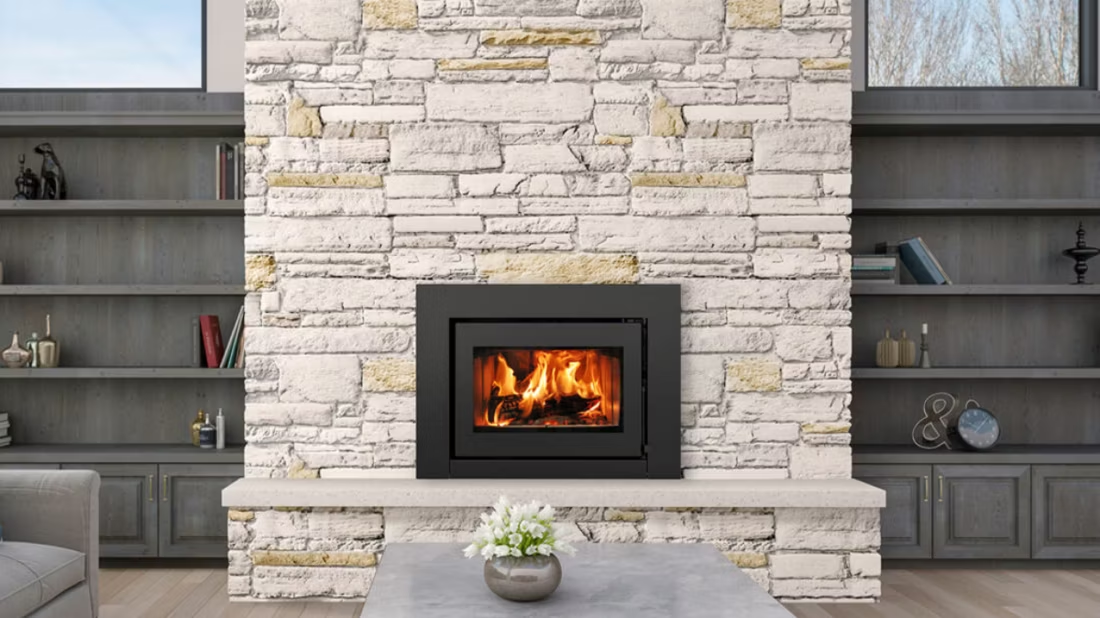
A factory-built wood-burning fireplace is a framed-in, zero-clearance unit—the most common option for new construction or an open-concept Trophy Club great room where you want the look of a fireplace built into the wall. A wood insert fits into an existing masonry firebox, which matters if your home already has a builder-grade wood fireplace you want to make more efficient. A freestanding wood stove sits out in the room on its own hearth pad and puts out the most usable heat per cord, which is worth considering if you actually want the fireplace to warm a space rather than just look good. Given how many Trophy Club homes were built with gas-ready masonry fireboxes, an insert conversion is often the simplest retrofit if you're starting from an existing fireplace shell.
Can I add a wood-burning fireplace to a newer Trophy Club home built for gas?
It depends on what's already there. Many newer Trophy Club homes were built with a masonry or framed firebox designed around gas logs and a direct-vent or B-vent flue sized for gas—not the Class A chimney a true wood-burning fire needs. Converting one of those to real wood burning usually means running new listed chimney pipe rather than just swapping the insert, which adds cost and sometimes isn't feasible depending on the framing. A local installer can look at your existing chase and tell you honestly whether a wood conversion is straightforward or whether a freestanding stove elsewhere in the home is the more realistic path.
Why is my open fireplace making my house colder?
Open fireplaces suck—literally. As the fire burns, it consumes air your furnace already paid to heat and pulls it out through the chimney, so the house is actually colder after the fire goes out than before you lit it. An insert fixes this: it seals the chimney, puts fixed glass across the front, and turns that hole in your house into a real heat source.
What's the difference between an insert and a zero-clearance fireplace?
An insert is a fireplace that slides into a pre-existing wood-burning fireplace—if you don't have one, there's nothing to insert it into. A zero-clearance fireplace is built into a framed wall, which makes it the answer for remodels and new construction. Simple test: existing masonry fireplace means insert; blank or framed wall means zero-clearance.
What is an in-home preview and do I need one?
It's a visit where a hearth professional measures your space, confirms the model you picked actually works in your home, and walks the specs—framing, gas line, venting, finish work—before anything is ordered. Some details you just can't know until you see the house. Never make a down payment without one; it's the single most-skipped step that burns buyers.
Does a fireplace add value to my home?
On average, a fireplace adds back to the home about the same amount you spent installing it. Add the monthly savings from heating the rooms you actually use instead of the whole house—often hundreds of dollars a year—and the value case is strong before you even count what a fire does for how your family uses the room.
Nearby Dealers
Hearth shops serving Trophy Club and the surrounding area. Every listing shows whether it is a WhyFire partner, a dealer we have verified as authorized for the brands we recommend, or a local business carrying hearth products. No manufacturer pays for placement. How we verify dealers →
Bbq Outfitters
Alliance Materials, Inc.
Acme Brick Tile & Stone
Brothers Supply Co.
Pittman Supply Company
Fireside Innovations
EarthCore Industries
Cosentino – Dallas
Overhead Door Co. Of Dallas
Distrinctive Outdoor Environments, LLC
Golden Blount
Texas Building Supply
Flames Fireplaces & Gas Grills
Jacksons Home & Garden
Rodak's Coffee And Bbq Grills
Find your wood fireplace in Trophy Club.
Tell us about your home and we'll match you with a local dealer who still installs real wood-burning units—plus a free Project Guide & Parts List with the exact parts, including the vent kit, for your project.
Find Your Fireplace →