
Find your pellet stove in Trinity County.
Clean, thermostat-controlled heat for the mild but real cold snaps of Trinity County's Piney Woods—from Groveton to Trinity to Apple Springs. Find the right unit and connect with a trusted local dealer.
Every Project Starts From One of These Five Situations
Steady, low-maintenance heat for East Texas's Piney Woods.
Trinity County sits deep in East Texas's Piney Woods, roughly halfway between Houston and Dallas, with just over 5,000 residents spread across small towns like Groveton, Trinity, and Apple Springs and long stretches of Davy Crockett National Forest. Winters here are mild by any national standard—average lows sit around 41°F and the county logs only about 1,637 heating degree days a year, a fraction of what a place like Duluth, Minnesota logs in a single month. But mild doesn't mean heat-free: East Texas still sees multi-day cold snaps and ice events—2021's Winter Storm Uri hit rural East Texas as hard as anywhere—plus plenty of damp 30-degree mornings when a stove that lights fast and burns clean earns its keep.
Trinity County's oak, pecan, and mesquite stands make wood heat a long local tradition, but a growing number of homeowners are choosing pellet stoves and inserts instead—no felling, splitting, or stacking, no creosote to sweep, and a thermostat-controlled burn that holds steady overnight. Regional pellet brands like Forest Energy and Lignetics are both sold within reach of the county, and a pellet unit's smaller hopper and lower BTU output are a good match for a climate that needs supplemental warmth more than round-the-clock primary heat. With no air quality restrictions or burn bans on the books here, pellet heat is a clean, low-hassle way to take the edge off a Piney Woods winter.
Three steps. No salesperson until you're ready.
Tell us about your project
Your zip code, your situation, and the fuel you're leaning toward—or let the answers point you to one.
See what's actually available
The brands dealers within 100 miles genuinely carry—real options, never a catalog mirage.
Get your dealer & Project Guide
A trusted local dealer, plus the free Project Guide & Parts List that names every component of the job.
Frequently Asked Questions
How much does a pellet stove installation cost in Trinity County?
Costs vary by unit, hopper size, and venting path—a pellet stove vents through a small-diameter pipe through an exterior wall, which is a much simpler job than the masonry chimney work a wood stove often needs. A straightforward stove install into a home with no existing hearth is usually the most affordable configuration, while a pellet insert going into an existing fireplace with a liner runs a bit more. Because Trinity County doesn't see the extreme cold that drives up install costs in colder states, pellet installs here tend toward the simpler end of the spectrum. A trusted local dealer can give you a firm number after walking your home—that's exactly what the free Project Guide & Parts List is built to set up.
Where can I buy pellet fuel in Trinity County?
Regional brands like Forest Energy and Lignetics are both distributed within reach of the county and available through hearth retailers and farm and feed stores across East Texas. Because Trinity County's mild climate—about 1,637 heating degree days a year—means most homes burn far fewer bags per season than a stove in a colder state, a lot of local homeowners buy pellets a few bags or a half-ton at a time rather than laying in a full season's supply. Buying a ton in the fall before the first cold snap still generally locks in the best per-bag price.
Do pellet stoves work during a power outage?
This is the one real tradeoff of pellet heat, and it matters here: pellet stoves need electricity to run the auger that feeds fuel and the blower that pushes heat into the room, so a standard unit goes cold the moment power drops. Rural Trinity County is served largely by cooperative and rural electric providers, and East Texas has seen real outages during ice events like Winter Storm Uri in 2021. If backup heat during outages matters to you, ask a local dealer about battery-backup accessories or pairing the stove with a small generator; homeowners who want guaranteed heat with zero electrical dependency often lean toward a wood stove instead, given how much local oak and mesquite is available for burning.
Do I need a permit to install a pellet stove in Trinity County?
Much of Trinity County is unincorporated, and like many rural East Texas counties, there's no countywide residential building code requiring a permit for a stove installation outside city limits. If your home sits within Groveton or another incorporated town, check with that town's building office first, since city limits can carry their own permit rules even where the surrounding county does not. Regardless of paperwork, having a certified installer handle the venting and clearances is worth it for insurance and safety reasons even where no permit is legally required.
What's the difference between a pellet stove and a pellet insert?
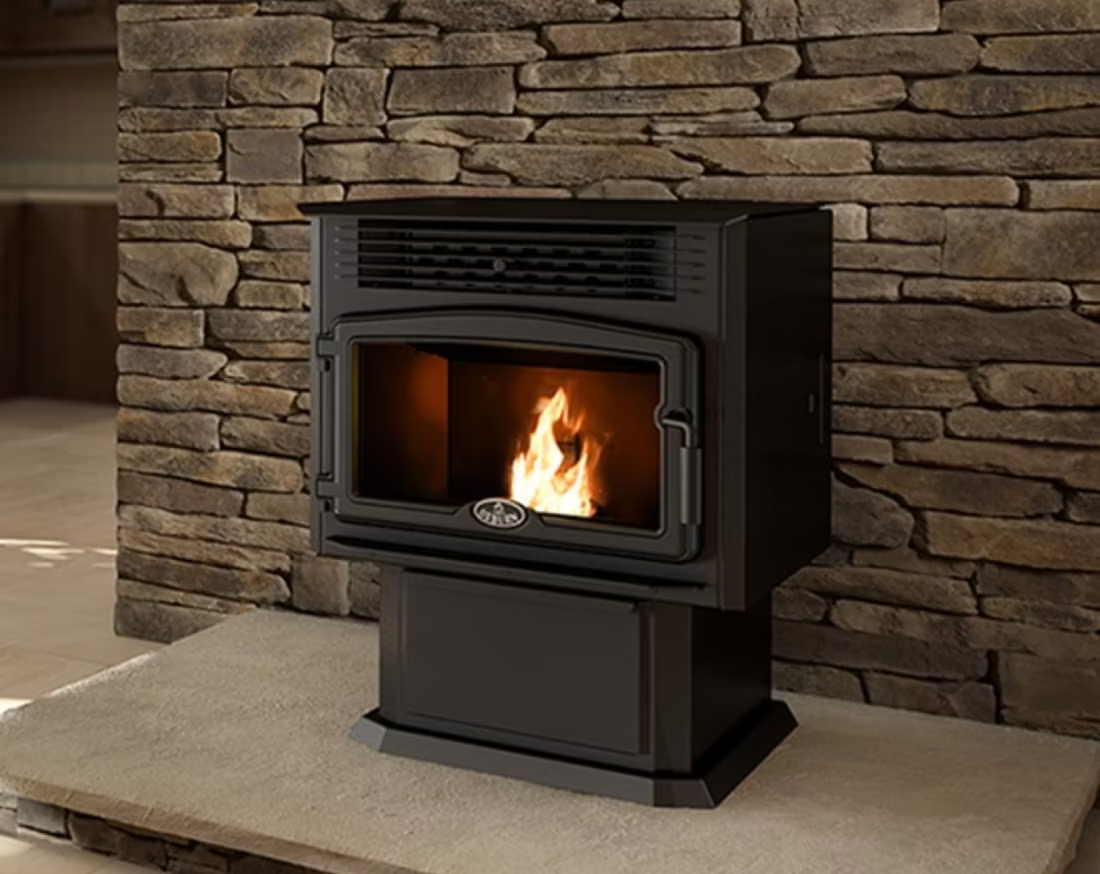
A pellet stove is a freestanding unit that sits on its own hearth pad and vents through a wall or existing chimney—it can go almost anywhere in a home with the right clearances. A pellet insert is built to slide into an existing masonry fireplace opening, turning an old wood-burning fireplace into a clean, thermostat-controlled heat source without touching the exterior of the house. For Trinity County homes with an older wood fireplace already in place, an insert is usually the simpler retrofit; homes without an existing fireplace opening are better suited to a freestanding stove.
What's the best pellet stove for Trinity County's climate?
Because Trinity County's winters are mild—average lows around 41°F and only about 1,637 heating degree days a year, compared to several times that in a place like Fargo, North Dakota—you generally don't need the largest-hopper, highest-BTU pellet stove on the market. A mid-size unit rated for zone or supplemental heating is usually plenty, and a smaller hopper means less bulk pellet storage to manage in a warm, humid climate where bagged pellets need to stay dry. A local dealer can match hopper size and BTU output to your square footage and how you plan to use the stove—supplemental warmth in a living room versus whole-home backup heat call for different sizing.
How much maintenance does a pellet stove need?
Pellet stoves need regular ash removal from the burn pot—often every few days during heavy use—along with routine glass cleaning and periodic vacuuming of the ash pan. Beyond weekly upkeep, plan on one professional inspection and cleaning a year, ideally before the coldest stretch of winter, to check the auger, exhaust fan, and venting for pellet residue buildup. Trinity County's shorter, milder burn season means less overall wear than a stove running nonstop through a Minneapolis-length winter, but the annual service is still worth keeping on the calendar.
Pellet stove vs. wood stove—which makes more sense in Trinity County?
Wood has deep roots here—Trinity County sits inside the Piney Woods with oak, pecan, and mesquite readily available, and a lot of longtime residents already have a firewood source or land to cut from. Wood stoves also keep working with zero electricity, which matters during ice-storm outages. Pellet stoves trade that self-sufficiency for convenience: no splitting or stacking, a cleaner burn, and thermostat control, at the cost of needing electricity to run. Given how mild the county's winters are overall, either fuel works fine for supplemental heat—the choice usually comes down to whether you already have a wood source and how much you value hands-off convenience.
How many bags of pellets will I need for a Trinity County winter?
Because the county logs only about 1,637 heating degree days a year—a fraction of the 8,000-plus some northern climates see—most Trinity County homes running a pellet stove for supplemental heat use well under a ton of pellets across a full winter, especially if the stove is warming one main living area rather than the whole house. Homeowners using a pellet stove as a true primary heat source, or heating a larger, less-insulated older farmhouse, should plan on more. A local dealer can estimate realistic consumption based on your square footage and how many hours a day you'll actually run it.
Why is my open fireplace making my house colder?
Open fireplaces suck—literally. As the fire burns, it consumes air your furnace already paid to heat and pulls it out through the chimney, so the house is actually colder after the fire goes out than before you lit it. An insert fixes this: it seals the chimney, puts fixed glass across the front, and turns that hole in your house into a real heat source.
How often does a pellet stove need cleaning?
A clean pellet stove is a happy pellet stove. Plan on cleaning the burn pot about once a week when you're burning regularly—ash and clinkers gum up the air holes just like a pellet barbecue. Most pellet stove problems trace back to skipped cleaning that nobody explained up front. Some designs make it easy with a trapdoor burn pot: pull a lever and the gunk drops into the ash pan.
What is an in-home preview and do I need one?
It's a visit where a hearth professional measures your space, confirms the model you picked actually works in your home, and walks the specs—framing, gas line, venting, finish work—before anything is ordered. Some details you just can't know until you see the house. Never make a down payment without one; it's the single most-skipped step that burns buyers.
Can I install a fireplace myself?
If you're putting a fire in your house on purpose, it's best to work with an expert. Unless you're genuinely experienced in framing, gas line, vent pipe, and the national code on clearances to combustibles, have a professional do it—and ideally the same company that sells you the fireplace, so warranty, service, and liability all live under one roof.
Stove and Fireplace Dealers in Trinity County
Listings include WhyFire partner dealers, dealers we have verified as authorized for the brands we recommend, and established local businesses that carry hearth products. Every listing shows which one it is. The ones marked Preferred run on WhyFire's software, so they can show you real pricing and book your appointment right here. No manufacturer pays for placement. How we verify dealers →
Fireplace & Patio Shop
Tri-Supply - Conroe
All Fired Up Fireplace & Outdoor
Creekstone Outdoors
Creekstone Custom
Pellet Brands Stocked Around Trinity County
Manufacturers will point you to the nearest stocking dealer.
Find your pellet stove in Trinity County.
Tell us about your home and how you plan to use the stove, and we'll match you with a trusted local dealer and a free Project Guide & Parts List—the exact parts, vent kit, and recommended installer for your Trinity County pellet project.
Find Your Fireplace →