
Keep Your Family Warm and Safe—No Matter What
With winter lows averaging 43°F, most Tomball homes don't need wood heat to get through the season—but for ambiance, cold snaps, and holiday gatherings, a well-installed wood fireplace still has a place here.
Every Project Starts From One of These Five Situations
A climate that rarely asks for wood heat.
Tomball sits on the Gulf Coastal Plain in Harris County at just 186 feet of elevation, in climate zone 2A—one of the mildest heating climates tracked anywhere in the country. The area logs roughly 1,368 heating degree days a year. For comparison, Duluth, MN racks up nearly 10,000, and Fargo, ND isn't far behind. Winter here means average lows in the low 40s, with maybe a handful of nights each year that dip into the 20s. It's a climate built around air conditioning, not wood stoves.
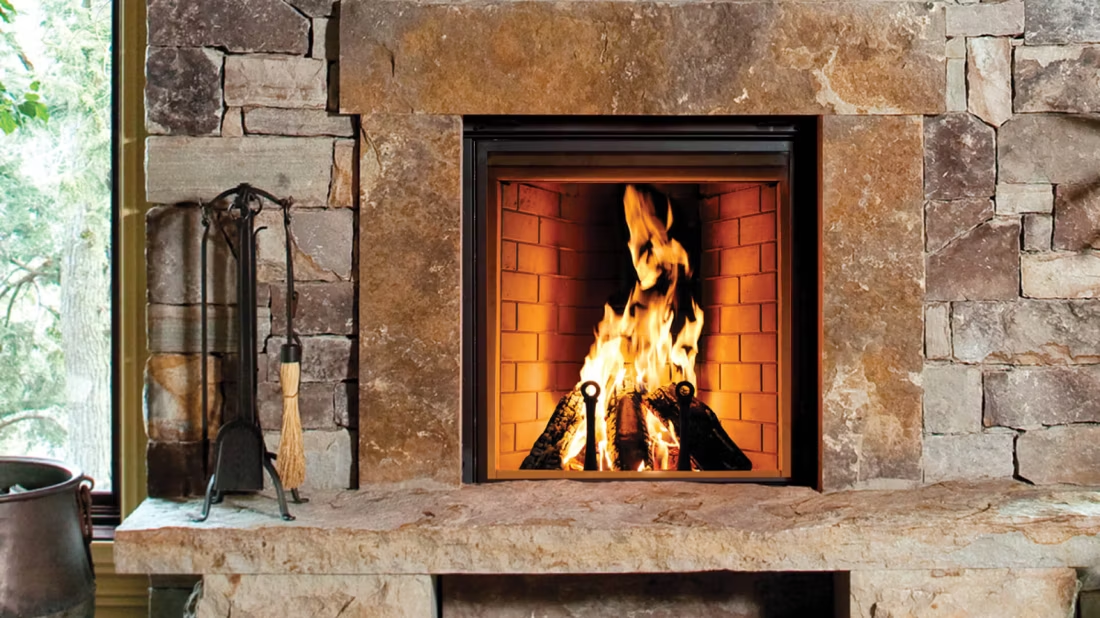
That doesn't mean wood-burning fireplaces don't exist in Tomball—they do, just not as a primary heat source. Homeowners install them for the look and feel of a real fire on the rare cold evening, for holiday atmosphere, or as a focal point in a den or living room. Local oak, pecan, and mesquite are plentiful—though around here they're just as likely to end up in a smoker for brisket as in a fireplace. If you're set on a real wood fire in Tomball, it's a lifestyle choice more than a heating necessity, and it's worth working with a dealer who's upfront about that.
Three steps. No salesperson until you're ready.
Tell us about your project
Your zip code, your situation, and the fuel you're leaning toward—or let the answers point you to one.
See what's actually available
The brands dealers within 100 miles genuinely carry—real options, never a catalog mirage.
Get your dealer & Project Guide
A trusted local dealer, plus the free Project Guide & Parts List that names every component of the job.
Frequently Asked Questions
Do people in Tomball actually install wood-burning fireplaces?
Some do, but it's a smaller slice of the market than you'd find in a colder region. With average winter lows around 43°F and just under 1,400 heating degree days a year, wood isn't functioning as anyone's main heat source in Tomball—central HVAC handles that. When homeowners here add a wood-burning fireplace or stove, it's usually for the ambiance of a real fire, a focal point during the handful of genuinely cold nights each winter, or because they're restoring an older home's existing masonry fireplace. It's a legitimate choice, just a niche one—expect fewer dedicated wood-hearth specialists in the immediate area compared to gas and electric dealers.
What does a wood fireplace or stove installation cost in Tomball?
Because Tomball doesn't need a high-output, cold-climate unit, installs here tend to run toward the lower end of national wood-hearth pricing—often somewhere in the $3,500 to $8,000 range depending on whether you're inserting a stove into an existing masonry fireplace or building out venting from scratch. Homes with an existing chimney and hearth are the cheaper path; new construction without a masonry fireplace already in place will cost more once Class A chimney pipe and roof penetration are added. A local dealer can give you a firm number after seeing your space.
Is firewood easy to find in Tomball?
Yes, though you'll be buying it rather than cutting it yourself—there's no national forest land immediately around Tomball with a public cutting-permit program, unlike much of the Mountain West or Pacific Northwest. Local firewood suppliers and tree services around Harris County sell seasoned oak, pecan, and mesquite by the rick or cord, and all three species are common locally because they double as prized woods for Texas barbecue smoking. If you're burning occasionally for ambiance rather than heat, a rick or two purchased each fall is typically plenty.
Do I need a permit to install a wood-burning fireplace in Tomball?
Any new fireplace or wood stove installation—whether it's a factory-built zero-clearance unit or a masonry rebuild—needs a building permit through the City of Tomball Building Department if you're inside city limits, or the Harris County Permits Office if you're in unincorporated areas nearby. There's no regional non-attainment status or winter burn-ban program affecting Tomball the way there is in some Western cities, so the permitting is mostly about structural clearances and venting, not air quality restrictions. A licensed installer will typically pull this for you as part of the job.
Why do most Tomball homeowners choose gas over wood?
Instant, no-mess heat and lower installation complexity. Natural gas service is available through providers in the area, and a gas fireplace or insert lights at the push of a button with no wood to store, split, or clean up after—a much better fit for a climate where the fireplace runs occasionally rather than nightly. Wood still wins on atmosphere and the experience of a real fire, and it works without electricity if the power goes out. If you're torn, think about how often you'd actually use it: a handful of cool evenings a year favors gas convenience; wanting the crackle and smell of a real wood fire favors sticking with wood.
Can I install a wood fireplace purely for ambiance, not for heat?
Absolutely, and that's the most common reason Tomball homeowners choose wood over the alternatives. A zero-clearance factory-built wood fireplace or a small EPA-certified wood insert into an existing masonry opening gives you a real, radiant fire for a living room or den without any expectation that it'll offset your heating bill. Just size it modestly—a large, high-BTU catalytic stove built for sub-zero climates is more firepower than a Tomball home will ever need, and it'll be harder to run efficiently at low, occasional-use burn rates.
What wood species work best in a Tomball fireplace?
Oak, pecan, and mesquite are the three you'll find most readily from local suppliers, and all three burn well in a fireplace or stove once properly seasoned (6+ months minimum, ideally a year). Oak is the standard all-purpose firewood—dense, long-burning, moderate spark. Pecan burns hot and clean with a pleasant smell. Mesquite burns very hot and fast with noticeable snap and spark, which is part of why it's more popular as a smoking wood than a fireplace wood—if you use it indoors, expect to reload more often and keep the screen closed.
How often should a wood-burning fireplace be inspected in Tomball?
Annually, per CSIA guidance, even with light use. Because a Tomball fireplace might only see a dozen or so fires a season, creosote buildup usually isn't the main concern—Gulf Coast humidity is. Masonry chimneys here are prone to moisture intrusion, mortar deterioration, and the occasional bird or wasp nest during the long unused stretches between cool snaps. An annual inspection catches those issues before the first cold front of the year, when you actually want to use the fireplace.
Wood vs. electric fireplace—which makes more sense for a Tomball home?
For a climate this mild, electric is worth serious consideration. Electric fireplaces and inserts run on standard household circuits, need no venting or chimney at all, and cost a fraction of a wood installation—often $400 to $1,200 installed. With local electric utilities including CenterPoint Energy, Entergy Texas, and San Bernard Electric Cooperative charging roughly 13.5 to 14 cents per kWh, running one occasionally for ambient heat and flame effect costs pennies. Wood still delivers something electric can't fake—real flame, real crackle, real heat radiating off the firebox—which is exactly why some Tomball homeowners choose it anyway, purely for that experience rather than practicality.
What's the difference between an insert and a zero-clearance fireplace?
An insert is a fireplace that slides into a pre-existing wood-burning fireplace—if you don't have one, there's nothing to insert it into. A zero-clearance fireplace is built into a framed wall, which makes it the answer for remodels and new construction. Simple test: existing masonry fireplace means insert; blank or framed wall means zero-clearance.
Why is my open fireplace making my house colder?
Open fireplaces suck—literally. As the fire burns, it consumes air your furnace already paid to heat and pulls it out through the chimney, so the house is actually colder after the fire goes out than before you lit it. An insert fixes this: it seals the chimney, puts fixed glass across the front, and turns that hole in your house into a real heat source.
Can I install a fireplace myself?
If you're putting a fire in your house on purpose, it's best to work with an expert. Unless you're genuinely experienced in framing, gas line, vent pipe, and the national code on clearances to combustibles, have a professional do it—and ideally the same company that sells you the fireplace, so warranty, service, and liability all live under one roof.
Should the dealer who sells my fireplace also install it?
Ideally, yes. A fireplace project involves vent pipe, gas line, electrical, and often tile or stone. Hire three or four separate trades and you own the liability and the game of telephone between them. One company selling and installing means one accountable party, start to finish—ask about factory training, on-time completion records, and what happens if an inspection fails.
Nearby Dealers
Hearth shops serving Tomball and the surrounding area. Every listing shows whether it is a WhyFire partner, a dealer we have verified as authorized for the brands we recommend, or a local business carrying hearth products. No manufacturer pays for placement. How we verify dealers →
Cunningham Gas Products
All Fired Up Fireplace & Outdoor
Creekstone Custom
Creekstone Outdoors
All Thingz U Need Inc
Tri-Supply - Conroe
Fireplace & Patio Shop
EarthCore Industries
The Fire Box Inc.
Tru Lite Gas Products
Patio 1
South Texas Brick
USA Supreme Services, LLC
Patio 1
Find your wood fireplace in Tomball.
Tell us about your home and how you'd actually use the fireplace, and we'll match you with a trusted local dealer plus a free Project Guide & Parts List—sized right for occasional Gulf Coast use, not a climate you don't have.
Find Your Fireplace →