
Gas fireplaces built for Gulf Coast comfort, not cold-climate survival.
With winter lows averaging in the low 40s among the piney woods of Montgomery County, a gas fireplace here is about ambiance and the occasional hard freeze—not keeping the pipes from bursting. Find the right unit and connect with a trusted local dealer.
Every Project Starts From One of These Five Situations
A fireplace for cool evenings, not survival heat.
The Woodlands sits in climate zone 2A at just 164 feet elevation, with a light winter heating load—a fraction of what a place like Bismarck, ND or Duluth, MN sees in a single hard month. Winter lows average around 43°F, and most years bring only a handful of nights near or below freezing. Wood and pellet heat make little practical sense in this climate, and homeowners here almost never install them for warmth. Gas is a different story: it turns on instantly, adds real ambiance to a living room or patio, and—as Winter Storm Uri showed Montgomery County residents in February 2021—can matter a great deal on the rare night the ERCOT grid falters.
CenterPoint Energy provides natural gas distribution to most of the established Woodlands Township villages—Panther Creek, Alden Bridge, Cochran's Crossing, and Grogan's Mill among them—and many homes already have a gas line run to the kitchen or water heater, which simplifies adding a fireplace. Newer developments on the edges of Montgomery County, including some pockets near Creekside Park and areas toward Magnolia, sit outside the mapped gas main and rely on propane instead. Either way, a properly sized direct-vent gas fireplace or insert gives Woodlands homeowners clean, controllable heat without the smoke, storage, or upkeep that wood demands in a climate that rarely asks for it.
Three steps. No salesperson until you're ready.
Tell us about your project
Your zip code, your situation, and the fuel you're leaning toward—or let the answers point you to one.
See what's actually available
The brands dealers within 100 miles genuinely carry—real options, never a catalog mirage.
Get your dealer & Project Guide
A trusted local dealer, plus the free Project Guide & Parts List that names every component of the job.
Frequently Asked Questions
How much does a gas fireplace installation cost in The Woodlands?
Most gas fireplace and insert installations in The Woodlands run between roughly $3,500 and $9,000, depending on the unit, the venting path, and whether a new gas line needs to be run. Homes in established villages like Panther Creek or Cochran's Crossing that already have a CenterPoint Energy gas line to the kitchen or water heater tend to land on the lower end, since the fireplace can often tap into existing service. Projects that require a fresh gas line run from the meter, a new propane tank in areas outside the gas main, or significant venting through a brick chimney chase push toward the higher end. A local retailer will give you a firm number after an in-home walkthrough.
Can I convert my existing wood-burning fireplace to gas?
Yes, and it's one of the more common requests we hear from Woodlands homeowners, especially in the older, tree-canopied neighborhoods built in the 1980s and 90s with traditional brick, wood-burning fireplaces. A gas insert or log set typically installs into the existing masonry firebox, often using the current chimney as the vent path with a liner. Given the area's mild winters, most homeowners here choose gas conversions purely for convenience and appearance rather than heat output—no ash, no smoke, no firewood storage taking up space in a garage that's already tight on room for lawn equipment and holiday decorations.
Do I need natural gas, or should I plan for propane?
It depends on where in The Woodlands you live. CenterPoint Energy serves natural gas to most of the incorporated Township villages, so if your home already has gas appliances—a range, water heater, or furnace—adding a fireplace is usually a straightforward tap-in. If you're in a newer development toward the outer edges of Montgomery County that hasn't been reached by the gas main, propane is the standard fallback, supplied by a regional propane provider with either a buried or above-ground tank. Most gas fireplace models can be configured for either fuel; your installer sets the correct orifice and regulator for whichever you have.
Will my gas fireplace work if the power goes out?
It depends on the ignition system, and this is worth thinking through given what Montgomery County residents experienced during Winter Storm Uri in February 2021, when ERCOT-wide outages left parts of the Houston area without power for days during a rare hard freeze. Fireplaces with a standing millivolt pilot light stay lit and operate with zero electricity—they're the most reliable choice if backup heat during a grid failure matters to you. Units with electronic intermittent pilot ignition (IPI) need a battery backup, usually AA batteries built into the unit, to fire up without wall power. Valor fireplaces take a third approach: the pilot's thermocouple generates its own electricity, so there's no battery to remember or replace. Ask your local dealer which ignition system a given model uses before you buy.
What's the difference between a gas fireplace, gas insert, and gas stove?
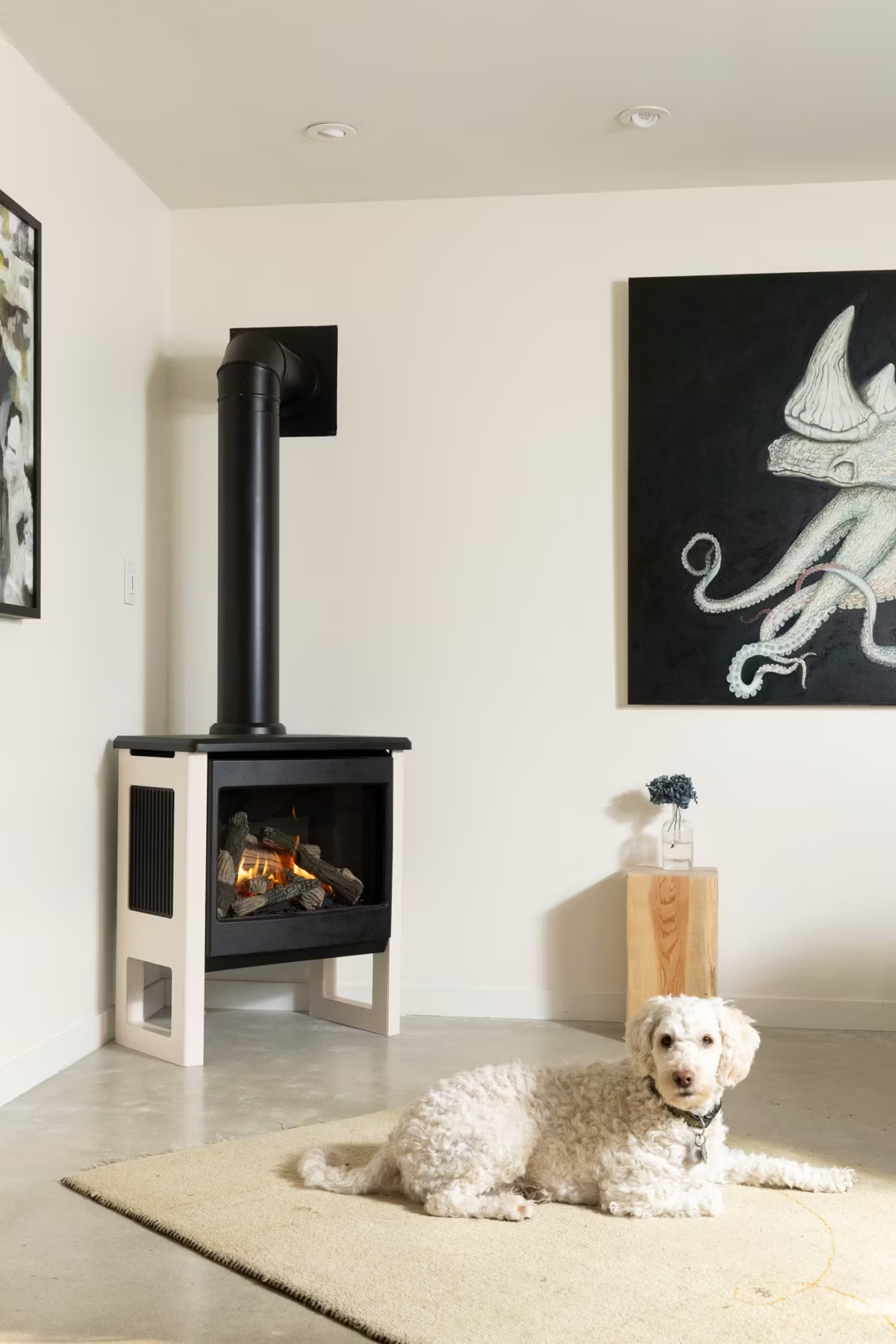
A gas fireplace is a fully built-in unit framed into a wall, typically chosen for new construction or a remodel in one of The Woodlands' newer builds. A gas insert drops into an existing masonry firebox—common in older homes throughout the Township that still have their original wood-burning fireplace—and uses the existing chimney as the vent path. A gas stove is a freestanding cabinet unit, less common here than in colder markets but occasionally chosen for a den, sunroom, or a home without an existing masonry opening. For most Woodlands homeowners with an existing brick fireplace, an insert is the simplest and most cost-effective upgrade.
Do I need a permit to install a gas fireplace in The Woodlands?
Yes. Depending on your specific village, permitting runs through either the Montgomery County Building Permits Office or The Woodlands Township Development Services, and any new gas line work requires a licensed gas-fitter and inspection regardless of jurisdiction. Most established hearth retailers in the area handle the permit application and inspection scheduling as part of the installation, which is one of the practical reasons to work with a certified local dealer rather than a handyman install—gas line work isn't something to leave loosely coordinated between trades.
Should I get a vented or vent-free gas fireplace?
Vented (direct-vent) units draw combustion air from outside and exhaust it back outside through a sealed pipe—they're the standard, code-compliant choice almost everywhere, including throughout Texas. Vent-free units burn directly into the room and release some water vapor and combustion byproducts indoors; Texas permits them with sizing and safety restrictions, but in a Gulf Coast climate that already runs humid much of the year, adding more interior moisture from a vent-free unit is worth thinking through carefully, particularly in homes prone to condensation on windows. For most Woodlands installations, a direct-vent fireplace or insert is the recommendation local retailers will steer you toward, and it avoids the indoor air quality trade-offs entirely.
How often should my gas fireplace be serviced?
Plan on an annual inspection, typically in early fall before the fireplace sees its heaviest seasonal use around the holidays. A technician checks the burner, pilot assembly, gas connections, and venting, and cleans the glass and interior. In a wooded community like The Woodlands, exterior vent terminations are also worth a visual check—wasps, mud daubers, and other insects occasionally build nests in vent caps over the humid summer months, which can restrict airflow. Local gas appliance service providers typically charge in the $150–$250 range for a standard annual inspection.
Should I get gas, electric, or wood heat for my Woodlands home?
Given the area's mild climate—winter lows averaging around 43°F and a winter heating season that's short and light—wood-burning fireplaces are largely impractical here; few homeowners want to store and season oak, pecan, or mesquite firewood for the handful of genuinely cold nights each winter, and dry spells in the surrounding pine forest can also raise fire-risk concerns. Electric fireplaces and inserts, served by CenterPoint Energy or Entergy Texas depending on your address, are a low-cost, no-venting option that works well for ambiance in a bedroom or secondary space. Gas remains the most popular choice for a primary living area because it delivers real, controllable heat with the look of a live flame, works during power outages if you choose a standing-pilot model, and doesn't require the wood storage or seasonal upkeep that makes little sense in this climate to begin with.
Why is a fireplace insert so efficient?
An insert does two things: it seals the chimney completely, so you stop losing air you already paid to heat, and it radiates warmth into the room through the firebox and glass. Most add a heat-exchange fan that pulls cool room air underneath, wraps it around the hot firebox, and pushes it back out warm. Your home is more efficient before you've even lit the first fire.
Can I put a TV above my fireplace?
Yes—with an asterisk. Fireplaces are hot and TVs don't like heat. Either put a mantel between them to deflect rising warmth, or choose a fireplace with heat-management technology that creates a cool zone on the wall above—the wall stays around 125 degrees, barely warm, while the room still gets full heat. If you like clean lines and don't want a mantel, heat management is the answer.
How much should I budget for a fireplace?
For an average home—covering the fireplace, the vent pipe, and basic installation—a budget between $3,900 and $5,500 gives you a lot of options across wood, gas, and pellet. By the time you add finish work, gas line, and electrical, the average complete installation lands between $5,000 and $12,000 all-in. In a remodel or new build, a good rule is to put about 2.5% of the total project cost toward the fireplace.
What is an in-home preview and do I need one?
It's a visit where a hearth professional measures your space, confirms the model you picked actually works in your home, and walks the specs—framing, gas line, venting, finish work—before anything is ordered. Some details you just can't know until you see the house. Never make a down payment without one; it's the single most-skipped step that burns buyers.
Nearby Dealers
Hearth shops serving The Woodlands and the surrounding area.
Find your gas fireplace in The Woodlands.
Tell us a bit about your home and we'll match you with a trusted local dealer and send over your free Project Guide & Parts List—the exact fireplace or insert, vent kit, and installation plan for your Woodlands home.
Find Your Fireplace →