
A gas fireplace built for mild Gulf Coast winters.
With winter lows averaging 43°F and only a short, mild heating season each year, Montgomery County homes want ambiance and occasional warmth more than a workhorse furnace. Find the right gas fireplace and connect with a vetted local dealer.
Every Project Starts From One of These Five Situations
Ambiance first, heat second—and that shapes the right unit.
Montgomery County sits in climate zone 2A, where the winter low averages 43°F and the heating season is short and mild by any national comparison—a fraction of what a place like Duluth, MN or Fargo, ND racks up in a single cold month. That doesn't mean gas fireplaces don't make sense here; it means the buying decision looks different. Most homeowners in Conroe, The Woodlands, Magnolia, and Willis are shopping for a clean, attractive focal point that adds real ambiance and takes the edge off the occasional 30-degree night, not a primary heat source that has to carry the house through a hard winter.
Natural gas service is widely available through much of the county via CenterPoint Energy, particularly in the denser corridors around The Woodlands and Conroe, while propane remains the go-to fuel in more rural stretches toward Willis and outside the utility footprint. Either way, a direct-vent gas fireplace or insert gives you instant flame at the flip of a switch, none of the wood-handling or ash cleanup that a woodburning setup demands, and a look that fits the newer housing stock common across the county. With air quality classified as a non-concern locally, there's no curtailment or burn-ban complexity to navigate—the decision comes down to venting, gas line access, and matching the unit to the room.
Three steps. No salesperson until you're ready.
Tell us about your project
Your zip code, your situation, and the fuel you're leaning toward—or let the answers point you to one.
See what's actually available
The brands dealers within 100 miles genuinely carry—real options, never a catalog mirage.
Get your dealer & Project Guide
A trusted local dealer, plus the free Project Guide & Parts List that names every component of the job.
Frequently Asked Questions
How much does a gas fireplace installation cost in Montgomery County?
Expect to spend between roughly $4,000 and $10,000 depending on the unit and the scope of work. A direct-vent gas insert going into an existing fireplace with a gas line already run nearby lands on the lower end. A new built-in gas fireplace for a remodel or new-construction room in Conroe or The Woodlands—with framing, exterior venting, and a fresh gas line—runs toward the middle to upper end. Homes relying on propane rather than CenterPoint Energy's natural gas lines sometimes see added cost if a new tank or line extension is needed. A local retailer will give you a firm number after an in-home look at the room and venting path.
Is a gas fireplace worth it in a mild climate like Montgomery County's?
Yes, though the case is different than in a cold-winter market. With a short, mild heating season and winter lows that average in the low 40s, a gas fireplace here is doing less BTU-per-square-foot heavy lifting than it would in, say, Buffalo, NY, and more work as a design centerpiece and an occasional-use comfort feature. Homeowners in Magnolia and Willis often choose gas specifically because it turns on instantly for a cold front or a chilly evening and shuts off just as fast—no need to build and maintain a fire for a night that might only dip into the 30s.
Do I need natural gas, or can I run a fireplace on propane?
Either works, and the right call usually comes down to where you live in the county. Natural gas through CenterPoint Energy covers a good share of the denser areas in and around Conroe and The Woodlands—if your home already runs gas appliances, adding a fireplace on that line is usually simple. Outside the utility's service footprint, particularly in rural pockets near Willis and Magnolia, propane is standard, either from an existing tank or a new one set by a local propane supplier. Most gas fireplace models can be configured for either fuel; your installer sets the correct orifice and regulator for whichever you have.
Will my gas fireplace still work if the power goes out?
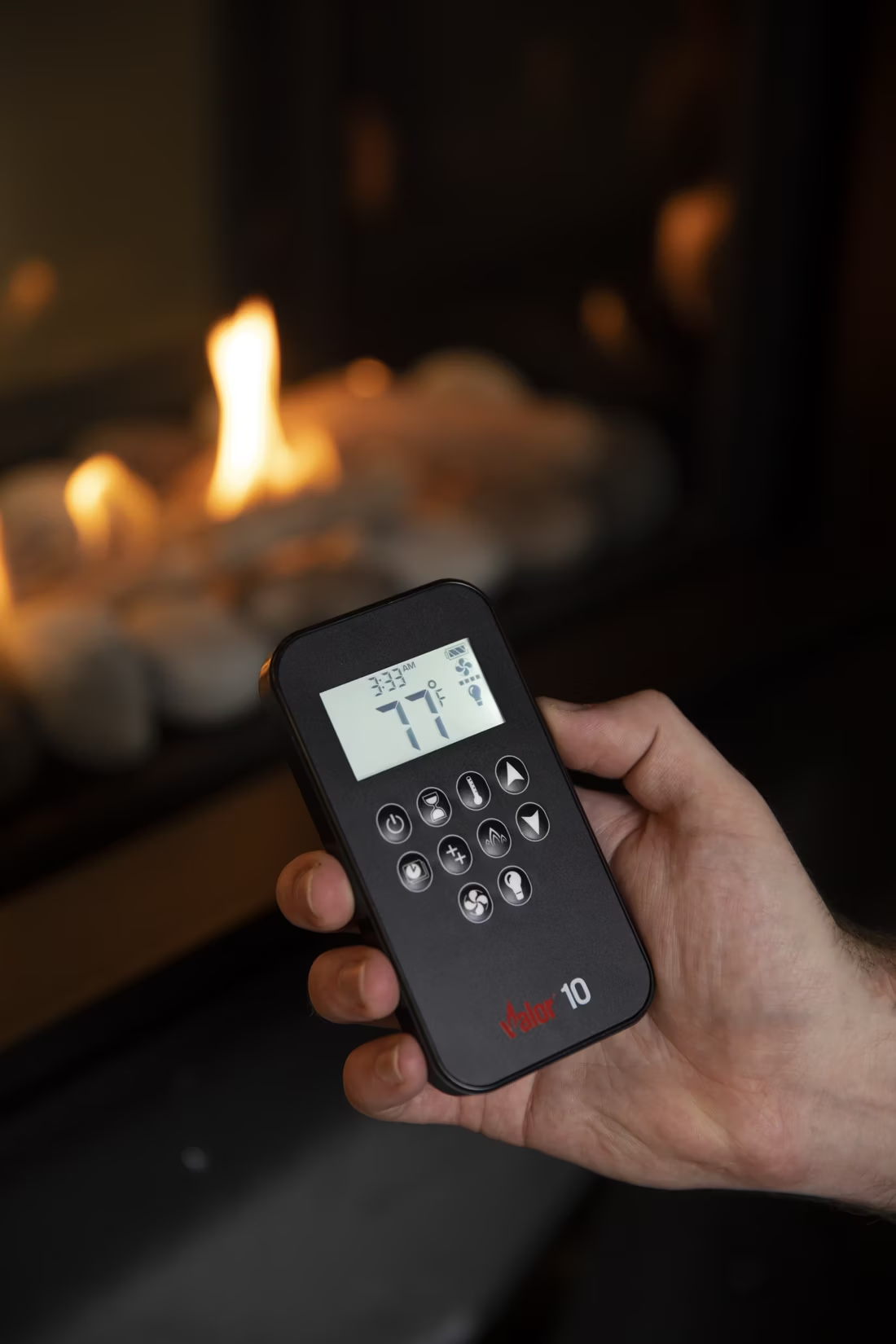
Most will, which matters in a county that sees its share of severe weather and grid disruptions. Units with intermittent pilot ignition (IPI) include a battery backup that keeps the fireplace lighting on demand even without utility power—just remember to swap the batteries periodically. Valor fireplaces take a different approach: the pilot's thermocouple generates its own electricity, so there's no battery to maintain at all. For a Montgomery County home that's lost power during a summer storm or an occasional winter ice event, that kind of self-powered ignition is a real advantage worth asking your local dealer about.
What's the difference between a gas fireplace, insert, and gas stove?
A gas fireplace is a fully built-in unit framed into a wall—the common choice for new construction and remodels throughout newer Montgomery County neighborhoods. A gas insert drops into an existing masonry fireplace, sealing it up and using the chimney as the vent path while dramatically improving efficiency and heat control. A gas stove is a freestanding unit, less common here than in colder-climate markets but sometimes chosen for a den or sunroom. Most homeowners in Conroe or The Woodlands with an existing wood-burning fireplace they no longer use are good candidates for an insert conversion.
Do I need a permit to install a gas fireplace in Montgomery County?
Yes—installations require a building permit, and the gas line work requires a licensed gas-fitter, whether you're inside Conroe or Willis city limits or in unincorporated parts of the county under the Montgomery County Building Department. A reputable local retailer handles this coordination as part of the install, pulling the permit, scheduling the gas line work, and setting up the inspection so you're not managing multiple trades yourself.
What's the difference between vented and vent-free gas fireplaces?
Vented (direct-vent) units draw combustion air from outside and exhaust gases back outside through sealed venting—they're the safest option and code-compliant everywhere, including Texas. Vent-free units burn directly into the room without external venting; they're legal here but release water vapor and small amounts of combustion byproducts into the living space, and they come with strict room-sizing and ventilation rules. Given that Montgomery County has no air quality restrictions working against either option, most local dealers steer homeowners toward direct-vent units for the cleaner indoor air and more realistic flame—but it's worth discussing both with a retailer for your specific room.
How often does a gas fireplace need servicing?
Plan on an annual inspection, even though a gas unit sees light seasonal use in a climate this mild. A technician checks the burner, pilot assembly, venting, and gas connections, and cleans the glass and firebox interior. It's a quick visit compared to wood chimney sweeping, typically running $150 to $250, but it's the step that keeps a fireplace that only runs a few months a year working reliably when that first cold front of the season rolls through Conroe or The Woodlands.
Why isn't wood or pellet heat common in Montgomery County?
Wood and pellet stoves are rare here for a straightforward reason: with a short, mild heating season and winter lows averaging in the low 40s, there's simply not enough sustained cold to justify a dedicated wood-burning heat source for most households, even though oak, pecan, and mesquite are all locally familiar firewood species used for cooking and outdoor fire pits. A handful of homeowners on larger rural properties near Magnolia or Willis do install wood stoves for backup heat or off-grid appeal, and pellet stoves using regional brands like Forest Energy or Lignetics show up occasionally, but gas and electric units are the practical mainstream choice for anyone wanting a fireplace as a primary living-space feature.
What's the difference between an insert and a zero-clearance fireplace?
An insert is a fireplace that slides into a pre-existing wood-burning fireplace—if you don't have one, there's nothing to insert it into. A zero-clearance fireplace is built into a framed wall, which makes it the answer for remodels and new construction. Simple test: existing masonry fireplace means insert; blank or framed wall means zero-clearance.
What does it take to replace an existing fireplace?
Fireplaces are like icebergs—bigger behind the wall than in front of it. Replacement means removing the surrounding tile or stone (the finish material laps onto the fireplace face), pulling the old unit, setting the new one in the same enclosure, and re-finishing the wall. A hearth professional can determine what's behind your wall without demolition during an in-home preview.
Can I install a fireplace myself?
If you're putting a fire in your house on purpose, it's best to work with an expert. Unless you're genuinely experienced in framing, gas line, vent pipe, and the national code on clearances to combustibles, have a professional do it—and ideally the same company that sells you the fireplace, so warranty, service, and liability all live under one roof.
How much should I budget for a fireplace?
For an average home—covering the fireplace, the vent pipe, and basic installation—a budget between $3,900 and $5,500 gives you a lot of options across wood, gas, and pellet. By the time you add finish work, gas line, and electrical, the average complete installation lands between $5,000 and $12,000 all-in. In a remodel or new build, a good rule is to put about 2.5% of the total project cost toward the fireplace.
Stove and Fireplace Dealers in Montgomery County
Listings include WhyFire partner dealers, dealers we have verified as authorized for the brands we recommend, and established local businesses that carry hearth products. Every listing shows which one it is. The ones marked Preferred run on WhyFire's software, so they can show you real pricing and book your appointment right here. No manufacturer pays for placement. How we verify dealers →
Fireplace & Patio Shop
All Fired Up Fireplace & Outdoor
Tri-Supply - Conroe
Creekstone Outdoors
Creekstone Custom
Cunningham Gas Products
The Fire Box Inc.
Get matched with a gas fireplace dealer in Montgomery County.
Tell us about your room and gas access, and we'll put together a free Project Guide & Parts List—the right unit, the vent kit, and a trusted local Montgomery County dealer to install it.
Find Your Fireplace →