
Pellet Heat Isn't the Norm Here—Here's the Honest Take.
The Colony's winters rarely call for a hopper of pellets. We'll tell you straight whether a pellet stove fits your home, or whether a gas or electric option makes more sense—then connect you with a trusted local dealer either way.
Every Project Starts From One of These Five Situations
North Texas winters rarely ask for it.
The Colony sits at 546 feet in Denton County, just north of Dallas, in climate zone 3A. Winters here average a low around 36°F, and the city sees a mild, short heating season—a fraction of what a pellet stove is built for. Compare that to a place like International Falls, MN, where winters are long and brutal and a pellet hopper runs nearly nonstop from November through April. In The Colony, most winters bring only a handful of nights cold enough to need supplemental heat at all.
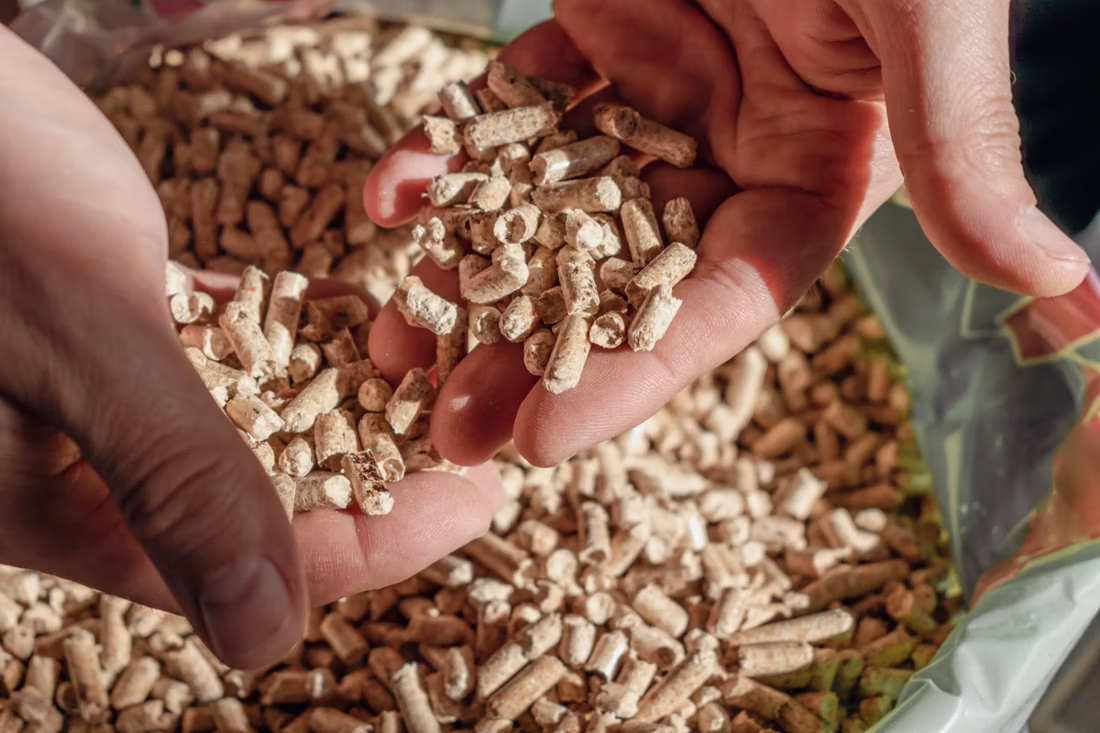
That's why pellet fuel is rated not-applicable for this market—it's not that pellet stoves don't exist here, it's that the local dealer network, venting infrastructure, and demand simply aren't built around them the way they are in colder states. What you will find on shelves at local hardware and farm-supply stores are bagged pellets from regional brands like Forest Energy and Lignetics—but around Denton County those are bought almost exclusively for pellet grills and smokers, not home heating stoves. If you still want a pellet stove for ambiance, a cabin elsewhere, or personal preference, it can be done—you'll just want a dealer who's honest about lead times and whether it's the right call for your specific situation.
Three steps. No salesperson until you're ready.
Tell us about your project
Your zip code, your situation, and the fuel you're leaning toward—or let the answers point you to one.
See what's actually available
The brands dealers within 100 miles genuinely carry—real options, never a catalog mirage.
Get your dealer & Project Guide
A trusted local dealer, plus the free Project Guide & Parts List that names every component of the job.
Frequently Asked Questions
Are pellet stoves a good fit for a home in The Colony, TX?
For most homes, no—and it's worth saying plainly. The Colony's climate zone (3A) and its mild, short heating season mean sustained cold is rare; a typical winter here brings only a few nights near freezing rather than months of it. Pellet stoves are engineered for places like Fargo, ND or Duluth, MN, where a stove runs for days at a stretch. That's why pellet fuel relevance is marked not-applicable for this area—most local hearth dealers don't keep pellet stoves in stock, and the ones who install them usually special-order on request rather than sell them as a regular product line.
Why don't more homes in The Colony use pellet stoves?
Primary heating here is already handled well by heat pumps and central gas furnaces served by Oncor, Texas-New Mexico Power, and Denton County Electric Cooperative, so a standalone heating appliance rarely earns its keep. When homeowners in The Colony do want a secondary fireplace for warmth and ambiance, they overwhelmingly choose a direct-vent gas insert or an electric fireplace instead—both install faster, cost less upfront, and don't require storing bags of fuel for a heating need that shows up only a few weeks a year.
Can I still install a pellet stove in The Colony if I really want one?
Yes—a trusted local dealer can special-order a unit and vent it much like a direct-vent gas appliance, through an exterior wall with the proper clearances. One thing to plan for: pellet stoves need continuous electricity to run the auger, igniter, and blower. During Texas grid emergencies like the February 2021 winter storm, a pellet stove without backup power simply won't run, so it shouldn't be counted on as emergency heat unless it's paired with a battery backup or generator.
I've seen bags of Forest Energy and Lignetics pellets at local stores—doesn't that mean pellet heat is common here?
Not really. Those regional pellet brands are widely stocked around Denton County, but in a barbecue-heavy area known for oak, pecan, and mesquite, the vast majority of those bags go into pellet grills and smokers, not home heating stoves. Seeing pellets on a hardware store shelf in The Colony is a much stronger signal of weekend brisket plans than of a neighborhood full of pellet-burning fireplaces.
What's a better alternative to a pellet stove for ambiance and occasional heat in The Colony?
Both gas and electric fireplaces are rated standard for this area, and either is usually a better match than pellet. A direct-vent gas insert gives instant heat at the flip of a switch and, with an IPI ignition system or a Valor unit that self-generates power through its pilot, can still operate during outages. An electric fireplace insert is even simpler to install—many plug-in models need no venting at all—and works well for a home that just wants a few cold nights of warmth and year-round flame ambiance.
How much does it cost to run a pellet stove versus an electric fireplace in The Colony?
With Oncor, TNMP, and Denton County Electric Cooperative delivering power at roughly $0.1377 per kWh, a typical 1,500-watt electric fireplace costs around 21 cents an hour to run. A pellet stove costs more to buy and install, plus ongoing bag purchases, and delivers far more heat output than a mild winter like The Colony's usually calls for. The math that makes pellet stoves pay off in a place like Minneapolis, MN, with a long, harsh winter heating season, just doesn't play out the same way in The Colony.
Do I need a permit to install a pellet stove in The Colony?
Yes. Like a gas fireplace, a pellet stove requires venting through an exterior wall or the roof, which means a building permit through the City of The Colony Building Inspections Department (or Denton County's permitting office for homes outside city limits). A certified dealer handling the installation will typically pull this permit as part of the job, which is one more reason to work with someone experienced rather than a general handyman.
Does a pellet stove make more sense for a cabin or second home I own outside The Colony?
Possibly, yes. If that second property sits somewhere with a genuinely cold, sustained winter—the Texas Hill Country in a hard year, or further north—a pellet stove can make a lot more sense there than at your primary residence in The Colony. For the home you live in day to day, in climate zone 3A with a 36°F average winter low, it's worth being honest that a pellet stove is solving for a cold season that mostly isn't happening here.
Pellet vs. gas vs. electric—what should I actually choose in The Colony?
For most homes here, a gas fireplace insert is the strongest all-around choice if natural gas already runs to the house—it delivers real heat on demand and can be configured to work through outages. An electric fireplace is the easiest and cheapest to install, especially for supplemental warmth or ambiance without any venting work. Pellet stoves are best reserved for the specific homeowner who wants the pellet-burning experience itself and doesn't mind storing fuel and managing extra install complexity for a heating need that only shows up a handful of weeks each winter.
How often does a pellet stove need cleaning?
A clean pellet stove is a happy pellet stove. Plan on cleaning the burn pot about once a week when you're burning regularly—ash and clinkers gum up the air holes just like a pellet barbecue. Most pellet stove problems trace back to skipped cleaning that nobody explained up front. Some designs make it easy with a trapdoor burn pot: pull a lever and the gunk drops into the ash pan.
What's the difference between an insert and a zero-clearance fireplace?
An insert is a fireplace that slides into a pre-existing wood-burning fireplace—if you don't have one, there's nothing to insert it into. A zero-clearance fireplace is built into a framed wall, which makes it the answer for remodels and new construction. Simple test: existing masonry fireplace means insert; blank or framed wall means zero-clearance.
Can a fireplace actually lower my heating bill?
Yes—by creating a comfort zone. A furnace heats every square foot of the house just to warm the one room you're in; a gas fireplace on low burns roughly a sixth of the gas a typical furnace does. Set the furnace around 55–60 degrees as a baseline, then heat the rooms your family actually uses. Families who heat this way commonly save $20–$60 a month.
Does a fireplace add value to my home?
On average, a fireplace adds back to the home about the same amount you spent installing it. Add the monthly savings from heating the rooms you actually use instead of the whole house—often hundreds of dollars a year—and the value case is strong before you even count what a fire does for how your family uses the room.
Nearby Dealers
Hearth shops serving The Colony and the surrounding area.
Pellet Brands Stocked Around The Colony
Manufacturers will point you to the nearest stocking dealer.
Get an honest answer on pellet heat in The Colony.
Tell us about your home and what you're hoping to get out of a hearth appliance. We'll connect you with a trusted local dealer who'll give it to you straight—pellet, gas, or electric—and put together a free Project Guide & Parts List for your specific project.
Find Your Fireplace →