
Real warmth for Terry County homes—no chimney or gas line required.
From Brownfield to the farm and ranch homes scattered across the South Plains, electric fireplaces add heat and ambiance to any room without venting, a gas line, or a stack of firewood. Find the right unit and connect with a trusted local dealer.
Every Project Starts From One of These Five Situations
Modest heating needs call for flexible, simple heat.
Terry County sits on the flat, wind-swept South Plains around Brownfield, at roughly 3,300 feet elevation with about 9,969 residents spread across farm and ranch country. Winters here are mild by national standards—an average winter low near 27°F and a winter heating load roughly a third of what a place like Fargo, ND logs in a typical year. That means most homes already lean on a central furnace or heat pump to get through the coldest stretches, and a fireplace here is more often about supplemental warmth and atmosphere in a specific room than survival heat.
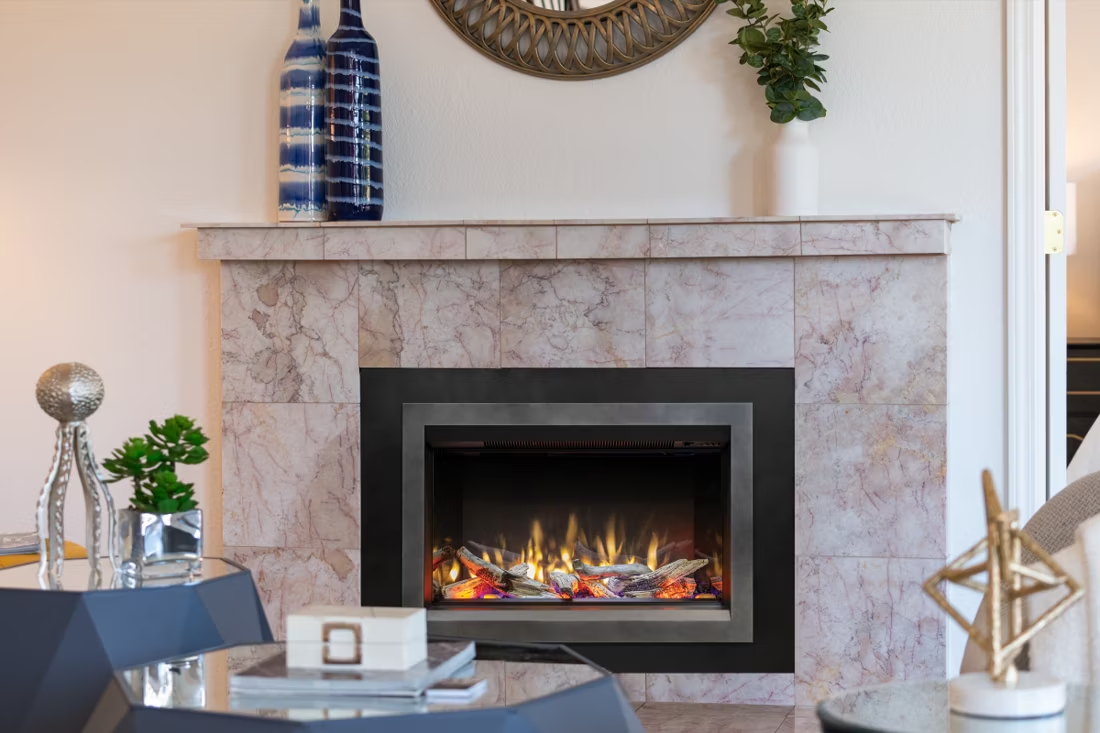
It also means wood and pellet heat never really took hold locally. The oak, pecan, and mesquite that grow in Terry County are prized for smoking brisket over a backyard pit, not for feeding an indoor stove—the plains are largely treeless, there's no national forest cutting-permit land nearby, and dry, wind-driven conditions make open wood burning a poor fit for most homeowners. Electric fireplaces sidestep all of that: no chimney, no gas line, no cords of firewood to manage, and an install that a licensed electrician can typically complete in an afternoon on a dedicated circuit—well suited to the manufactured and site-built ranch homes common throughout the county.
Three steps. No salesperson until you're ready.
Tell us about your project
Your zip code, your situation, and the fuel you're leaning toward—or let the answers point you to one.
See what's actually available
The brands dealers within 100 miles genuinely carry—real options, never a catalog mirage.
Get your dealer & Project Guide
A trusted local dealer, plus the free Project Guide & Parts List that names every component of the job.
Frequently Asked Questions
How much does an electric fireplace installation cost in Terry County?
Most electric fireplace projects in Terry County fall in a wide range depending on the unit type. A simple wall-mounted or freestanding electric fireplace that plugs into an existing outlet can run under a thousand dollars installed. A built-in wall insert or mantel package that requires a dedicated 120V or 240V circuit typically adds a few hundred dollars in electrical work on top of the unit cost, since most homes in Brownfield and the surrounding county need a licensed electrician to run that circuit. Larger linear or multi-sided units for a great room or ranch-style living area sit at the higher end. A local dealer can give you a firm number once they know the room and the unit you're considering.
Will an electric fireplace actually heat my house in Terry County's winters?
For most homes, no—and that's by design. With an average winter low around 27°F and a winter heating load that's fairly light for the year, Terry County's winters are moderate enough that a working central furnace or heat pump already handles the bulk of the load. A typical 1,500-watt electric fireplace is built to supplement that system in a single room—usually around 400 square feet—not replace it. Where electric units earn their keep locally is in a den, primary bedroom, or sunroom addition where you want extra warmth on a cold January morning without running the whole-house system harder than it needs to.
Do I need a permit to install an electric fireplace in Terry County?
A plug-in electric fireplace generally doesn't require a permit. If your install needs a new dedicated circuit—common for built-in inserts and larger units—the electrical work itself typically requires a permit through the City of Brownfield if you're inside city limits, or through Terry County if you're outside them, and should be pulled by a licensed electrician. Most local dealers either employ a licensed electrician or coordinate directly with one, so the permitting is handled as part of the install rather than something you manage yourself.
What's the difference between an electric insert, a mantel package, and a built-in wall unit?
An electric insert is sized to slide into an existing fireplace opening—a good fit if you have an old masonry fireplace in a Brownfield home that you want to convert away from an open hearth. A mantel package pairs a freestanding electric firebox with a surrounding mantel and is the easiest option for a room with no existing fireplace. A built-in wall unit is recessed into the wall itself, often flush-mounted, and is popular in newer construction or remodels where a cleaner, linear look is the goal. All three run on standard household electric with no venting, so the choice usually comes down to whether you're converting an existing fireplace or starting from a bare wall.
Will my electric fireplace still work during a power outage?
No—electric fireplaces require power to run the heater and flame effect, so they go dark along with the rest of the house. Terry County does see occasional winter ice events that knock out power in rural parts of the county served by Lyntegar Electric Cooperative, so if backup heat during an outage matters to you, a propane space heater or a gas fireplace with battery-backed ignition is a better complement than relying on electric alone. Many homeowners here pair an electric fireplace for everyday ambiance with a gas appliance elsewhere in the house for storm backup.
Why don't I see many wood or pellet stoves in Terry County?
It comes down to geography and climate. Terry County sits on the flat, largely treeless South Plains, with no national forest land nearby for cutting permits and none of the wildfire-smoke or winter-inversion air quality issues that push some regions toward stricter wood-burning rules—the concern here simply never developed because wood heat never became common. The oak, pecan, and mesquite native to the area are used almost exclusively for smoking meat, not indoor heating. Pellet stove brands like Forest Energy and Lignetics are available through regional retailers, but pellet heat isn't part of the local heating culture either. If you're set on a wood or pellet appliance, it's possible to source one, but expect it to be a special-order project rather than something a local dealer stocks regularly.
Where can I install an electric fireplace in my home?
Because there's no chimney or venting to route, an electric fireplace can go on almost any interior wall with access to power—a real advantage in the ranch-style and manufactured homes common across Terry County, where retrofitting a masonry chimney would be impractical. Popular spots include the main living area, a primary bedroom, a home office, or an enclosed sunroom addition. The main constraint is electrical: a small plug-in unit works with an existing outlet, while a larger built-in typically needs a dedicated circuit run by a licensed electrician, which is worth planning for before you pick a wall.
Electric vs. gas fireplace—which makes more sense in Terry County?
Gas fireplaces here run on natural gas within the City of Brownfield through Atmos Energy, or propane for homes further out in the county, and they deliver real, sustained heat output along with the ability to keep running (with the right ignition system) during a power outage. Electric fireplaces cost less to install, need no gas line or venting, and let you place a fireplace virtually anywhere power reaches, but they're best suited to supplemental warmth rather than serious heating load given the region's mild winters. If you want a fireplace mainly for atmosphere and flexibility in a room that doesn't already have gas service, electric is usually the simpler and cheaper route. If you want a fireplace that can genuinely carry heating duty or serve as backup during an ice storm, gas is worth the extra step.
What should I look for in an electric fireplace for a Terry County home?
Look for a unit with a realistic flame effect—brands like Dimplex, Napoleon, and Amantii are common choices carried by hearth dealers serving this part of West Texas—and confirm the heater output matches the room you're placing it in rather than buying for looks alone. If you're converting an existing masonry fireplace, measure the opening carefully before shopping for an insert, since fit varies by manufacturer. And if you're set on a built-in wall unit, talk to your dealer early about the electrical requirements so the circuit work is priced in from the start rather than becoming a surprise mid-project.
Does an electric fireplace need a vent or chimney?
No—that's its superpower. An electric fireplace needs a wall and an outlet, period. No vent pipe, no gas line, no clearances to design around, which is why it works in bedrooms, offices, apartments, and walls where venting a gas or wood unit would be impractical or impossible. Installation is typically the simplest and least expensive of any fireplace type.
What fireplace styles should I know before shopping?
Four cover most of the market: screen-front traditional (mesh front, open feel, fits craftsman homes), traditional door set (the classic look you grew up with), modern linear (wide, low, the statement piece for entertaining), and clean face contemporary (no trim—your tile or stone runs right to the fire's edge). Walk in knowing those four terms and you're ahead of most buyers.
Can a fireplace actually lower my heating bill?
Yes—by creating a comfort zone. A furnace heats every square foot of the house just to warm the one room you're in; a gas fireplace on low burns roughly a sixth of the gas a typical furnace does. Set the furnace around 55–60 degrees as a baseline, then heat the rooms your family actually uses. Families who heat this way commonly save $20–$60 a month.
How much should I budget for a fireplace?
For an average home—covering the fireplace, the vent pipe, and basic installation—a budget between $3,900 and $5,500 gives you a lot of options across wood, gas, and pellet. By the time you add finish work, gas line, and electrical, the average complete installation lands between $5,000 and $12,000 all-in. In a remodel or new build, a good rule is to put about 2.5% of the total project cost toward the fireplace.
Stove and Fireplace Dealers in Terry County
Listings include WhyFire partner dealers, dealers we have verified as authorized for the brands we recommend, and established local businesses that carry hearth products. Every listing shows which one it is. The ones marked Preferred run on WhyFire's software, so they can show you real pricing and book your appointment right here. No manufacturer pays for placement. How we verify dealers →
Ford Insulation And Fireplaces
Caprock Brick
Find your electric fireplace in Terry County.
Tell us a bit about your home and we'll put together a free Project Guide & Parts List for your electric fireplace project in Terry County—matched with a trusted local dealer who can install it right.
Find Your Fireplace →