
Find your fireplace in Terry County.
From Brownfield out to Meadow, Wellman, and Tokio, this hub rolls up the hearth options that actually fit a South Plains winter. Tell us what you're after and we'll match you with a local dealer who installs it correctly here—not a national catalog guess.
Every Project Starts From One of These Five Situations
3,268 heating degree days, a 3B climate zone, and a heating season built around gas, not wood.
Terry County sits on the Texas South Plains around Brownfield, at roughly 3,300 feet of elevation, in cotton country where the land is flat, dry, and mostly treeless outside of planted shelterbelts and creek bottoms. Winters here are mild by national standards—average lows around 27°F and 3,268 heating degree days put the county at less than half the heating load of a place like Duluth, Minnesota. Oak, pecan, and mesquite grow around homesteads and along draws, and mesquite in particular has a long history as a cooking wood in this part of Texas, but none of the three functions as the county's primary heating fuel the way it might in a colder, more forested region.
That mild-winter reality is why gas is the standard, default choice for hearth heat across Terry County, with electric fireplaces filling the supplemental and ambiance role in homes already served by central gas or a rural electric cooperative. Wood stoves and pellet stoves are both flagged as uncommon installs here—not because the fuel doesn't exist locally, but because a South Plains winter rarely demands the kind of sustained, high-output heat that makes a wood or pellet system worth the investment. This hub covers the whole county, from Brownfield's city limits out to Meadow, Wellman, Gomez, and Tokio, so pick a fuel below and we'll point you to what's genuinely available and installable at your address.
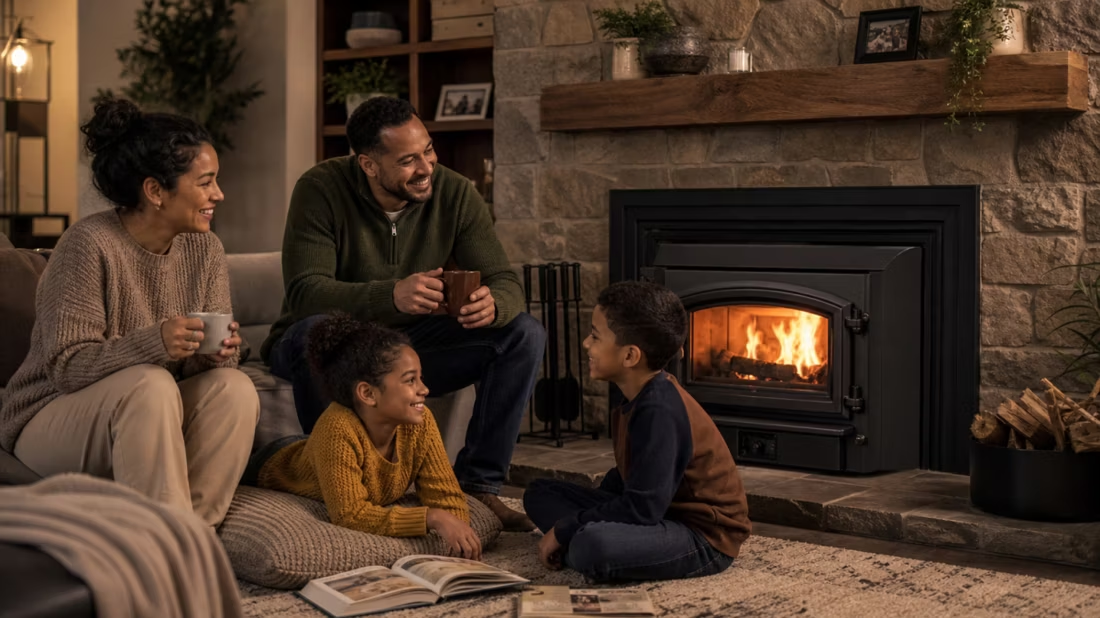
Four fuels. One honest answer for Terry County.
Three steps. No salesperson until you're ready.
Tell us about your project
Your zip code, your situation, and the fuel you're leaning toward—or let the answers point you to one.
See what's actually available
The brands dealers within 100 miles genuinely carry—real options, never a catalog mirage.
Get your dealer & Project Guide
A trusted local dealer, plus the free Project Guide & Parts List that names every component of the job.
Frequently Asked Questions
Which fireplace fuel actually makes sense in Terry County?
Gas is the practical default here. With average winter lows around 27°F and only 3,268 heating degree days, Terry County doesn't see the kind of sustained deep cold that pushes households toward a high-output wood or pellet system—a gas fireplace, insert, or freestanding stove covers the cold snaps and shoulder-season chill without asking a homeowner to manage fuel storage. Electric fireplaces are a strong secondary choice, especially for bedrooms, additions, or homes that already heat with central gas and just want supplemental warmth or ambiance in one room. Wood stoves show up occasionally—mostly as backup heat for homeowners who remember an ice storm knocking out power on the Caprock—and pellet stoves are rarer still, since the regional pellet brands distributed here, like Forest Energy and Lignetics, sell more into grilling and smoking than into home heating appliances.
Do I need a permit for a gas fireplace install in Terry County?
Yes, in most cases. If you're inside Brownfield city limits, the city's building permit office handles the inspection; outside city limits, Terry County's building permit process applies instead. Either way, any new gas line or gas appliance connection needs to be run by a licensed gas fitter, and the permit confirms the line size and venting are correct for the unit. Electric fireplace installs usually skip the permit process entirely unless you're adding a new dedicated circuit for a built-in unit. Most local retailers we match homeowners with pull the permit as part of the installation quote, so it's rarely something you have to track down yourself.
Is a wood stove a realistic option in Terry County, or is that just not done here?
It's genuinely uncommon, and it's worth being upfront about that rather than pretending otherwise. With a mild 3B climate and winters that rarely demand round-the-clock heat, most Terry County homes are built and heated around gas, and the wood-heat supply chain—seasoned cordwood dealers, chimney sweeps used to daily-burn maintenance—just isn't as developed here as it would be in a colder, more forested county. That said, mesquite, oak, and pecan are all locally available, and a small number of rural homeowners do install a wood stove specifically as backup heat for winter storms that knock out power on the Caprock. If that's your goal, it's a legitimate reason to install one—just know you're choosing a backup system, not the primary heat source your home is built around.
What about pellet stoves—are they available here?
Pellet stoves are the least common hearth appliance in Terry County, more so even than wood. The regional pellet brands that do reach this part of Texas, Forest Energy and Lignetics among them, are distributed mainly for grilling and smoking rather than for home-heating pellet stoves, and dealer stock and service support for residential pellet appliances is thin as a result. If you're set on a pellet stove, it's worth confirming with a matched dealer upfront that they can actually get parts and service technicians out to your address before you commit—for most Terry County homes, gas or electric will be the more supportable long-term choice.
How does installation and service work if I'm out in Meadow, Wellman, or Tokio instead of Brownfield?
Most retailers and service techs covering Terry County are based in or near Brownfield and run installation and service routes out to Meadow, Wellman, Gomez, and Tokio. Expect a trip fee on the farthest calls, and expect scheduling to compress some during cotton harvest season when rural roads see heavier equipment traffic. Booking your annual gas fireplace inspection in late summer, ahead of the first fall cold snap, is the easiest way to avoid a wait once temperatures start dropping.
What does a fireplace installation typically cost in Terry County?
Gas fireplaces, inserts, and freestanding stoves generally run $4,000–$9,500 installed, with the higher end reflecting new gas-line runs for homes without existing service to the room. Electric fireplaces are far less expensive—$200–$2,500 for the unit, plus $300–$900 in labor if you're adding a dedicated circuit for a built-in model rather than a plug-and-play insert. Wood stove installs, when a homeowner does go that route for backup heat, typically run $4,000–$8,000 including venting. The county + fuel pages above break these numbers down further with local retailer pricing.
What is an in-home preview and do I need one?
It's a visit where a hearth professional measures your space, confirms the model you picked actually works in your home, and walks the specs—framing, gas line, venting, finish work—before anything is ordered. Some details you just can't know until you see the house. Never make a down payment without one; it's the single most-skipped step that burns buyers.
Wood, gas, pellet, or electric—how do I choose?
Match the fuel to your life, not the other way around. Wood: lowest fuel cost and total power-outage independence, but you're hauling and stacking. Gas: press a button, set a thermostat, no maintenance to speak of. Pellet: wood economics with automatic feeding, in exchange for weekly cleaning and a need for electricity. Electric: plugs in anywhere with honest supplemental heat. Nobody regrets the fuel that fits how they actually live.
Does a fireplace add value to my home?
On average, a fireplace adds back to the home about the same amount you spent installing it. Add the monthly savings from heating the rooms you actually use instead of the whole house—often hundreds of dollars a year—and the value case is strong before you even count what a fire does for how your family uses the room.
Can I install a fireplace myself?
If you're putting a fire in your house on purpose, it's best to work with an expert. Unless you're genuinely experienced in framing, gas line, vent pipe, and the national code on clearances to combustibles, have a professional do it—and ideally the same company that sells you the fireplace, so warranty, service, and liability all live under one roof.
Stove and Fireplace Dealers in Terry County
Listings include WhyFire partner dealers, dealers we have verified as authorized for the brands we recommend, and established local businesses that carry hearth products. Every listing shows which one it is. The ones marked Preferred run on WhyFire's software, so they can show you real pricing and book your appointment right here. No manufacturer pays for placement. How we verify dealers →
Ford Insulation And Fireplaces
Caprock Brick
Get matched with a local Terry County dealer.
Pick your fuel below and we'll put together a free Project Guide & Parts List—the right unit for a South Plains winter, the vent kit or wiring it needs, and the local dealer we recommend for your project.
Find Your Fireplace →