
Keep Your Family Warm and Safe—No Matter What
With winter lows averaging 43°F and only a short, mild heating season each year, nobody in Sugar Land needs a wood fire to survive January. But plenty of homeowners still want the real thing—and we'll connect you with a local dealer who can build it right.
Every Project Starts From One of These Five Situations
Wood heat is the exception here, not the rule.
Sugar Land sits in climate zone 2A at just 69 feet of elevation, with an average winter low of 43°F and a short, mild heating season. Compare that to a place like Fargo, ND, which has a winter heating season roughly seven times as demanding, and it's clear why wood stoves aren't a fixture of daily life in Fort Bend County. Central HVAC and heat pumps handle the handful of nights each winter that dip near freezing, and even the occasional hard freeze rarely lasts more than a day or two.
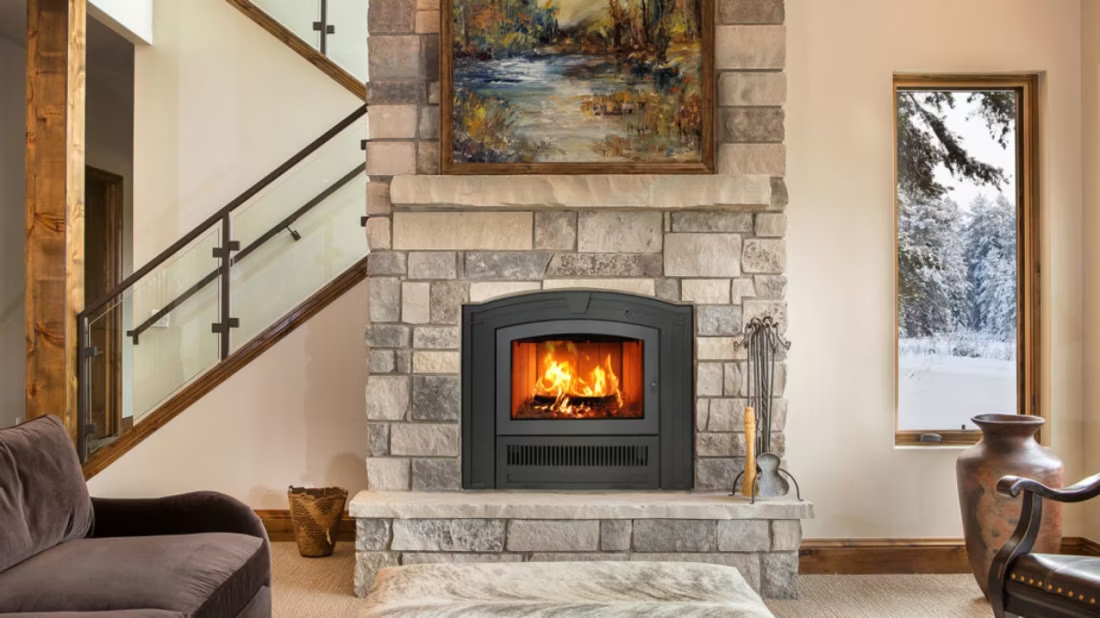
That said, a genuine wood-burning fireplace still has a place in a lot of Sugar Land homes—for the crackle and smell of a real fire during a rare cold snap, for the character it adds to a formal living room, or simply because a homeowner wants the option even if it's used a dozen nights a year. Fort Bend County firewood suppliers stock post oak, pecan, and mesquite, all of which season well in this climate and burn cleanly in a properly built masonry or factory-built unit. Gas remains the standard fuel choice locally through CenterPoint Energy's service territory, but for homeowners who want the authentic experience, a wood-burning fireplace is absolutely buildable here—it's just going to be about ambiance, not heating bills.
Three steps. No salesperson until you're ready.
Tell us about your project
Your zip code, your situation, and the fuel you're leaning toward—or let the answers point you to one.
See what's actually available
The brands dealers within 100 miles genuinely carry—real options, never a catalog mirage.
Get your dealer & Project Guide
A trusted local dealer, plus the free Project Guide & Parts List that names every component of the job.
Frequently Asked Questions
How much does a wood-burning fireplace cost to install in Sugar Land?
Cost depends heavily on what you're building. A factory-built, zero-clearance wood-burning fireplace framed into new construction is typically the most affordable path since it doesn't require masonry work. A traditional masonry fireplace and chimney built from scratch costs considerably more once brick, footing, and flue work are factored in. Because wood heat is a specialty request in this climate rather than a common retrofit, get a firm quote from a local hearth dealer who can walk the site—pricing swings a lot based on whether there's an existing chimney chase to work with or whether the whole structure is new.
Is a wood stove actually practical for heating a home in Sugar Land?
Not as a primary heat source. With average winter lows around 43°F and a heating season that's short and mild by national standards, your central HVAC system will carry the load on the rare nights that dip toward freezing. Homeowners here who install a wood stove or wood-burning fireplace are almost always doing it for ambiance, backup heat during winter storm power outages, or the experience of a real fire, not to cut a heating bill that's already low most of the year.
What kind of firewood is available locally?
Fort Bend County firewood and BBQ wood suppliers commonly carry post oak, pecan, and mesquite. Oak is the best all-around choice for an indoor fireplace—it seasons well, burns steady, and produces manageable coals. Pecan burns hot and has a pleasant aroma, making it a popular choice for living-room fires. Mesquite is abundant in the region but pops and throws sparks more than oak or pecan, so it's more commonly reserved for outdoor grilling and smoking than indoor fireplace use—ask your dealer about a spark screen if you plan to burn it indoors.
Do I need a permit to install a wood-burning fireplace in Sugar Land?
New construction involving a wood-burning fireplace or chimney typically requires a permit through the City of Sugar Land's Building Inspections Division, covering the chimney, hearth clearances, and any structural framing changes. If you're in unincorporated Fort Bend County, permitting runs through the county's development services office instead. Most hearth dealers and masonry contractors who build wood fireplaces in this area handle the permit application as part of the job, so confirm that's included in your quote.
Are there any burn restrictions or air quality rules in Sugar Land?
Sugar Land doesn't have the kind of formal wood-smoke curtailment program you'd find in a winter-inversion-prone area—there's no mandatory burn ban tied to air quality here. During Houston-area ozone action days in late summer, regional air quality alerts sometimes ask residents to limit unnecessary burning, but this is guidance rather than an enforced restriction, and it rarely overlaps with the short window most people actually use a wood fireplace.
Wood vs. gas—which fireplace makes more sense in Sugar Land?
For most Sugar Land homeowners, gas is the more practical everyday choice—natural gas service through CenterPoint Energy makes push-button, no-mess fires easy to install and even easier to live with, which matters in a climate where you might only want a fire a dozen evenings a year. Wood wins on authenticity: the sound, the smell, and the ability to burn during a power outage without relying on an igniter. If you already have or want to build a masonry fireplace and enjoy the ritual of a real fire, wood is a fine choice here—just go in knowing it's a lifestyle decision, not a heating strategy.
Can I put gas logs in a wood-burning fireplace instead?
Yes, and it's a common compromise in this climate. Vented gas log sets can be installed in an existing wood-burning masonry fireplace, giving you instant flame at the flip of a switch while keeping the option to burn real oak or pecan when you want the traditional experience. It's worth discussing with a local dealer whether you want a permanent gas log set or prefer to keep the fireplace strictly wood-burning—both are straightforward in a standard masonry firebox.
Does a wood fireplace need much maintenance if I only use it occasionally?
Yes—arguably more attention than in a colder climate, not less. Sugar Land's humidity means an unused chimney flue can develop moisture issues, odor, or even mold between burns, and any creosote that does form during light seasonal use doesn't get burned off the way it would in a stove that runs nightly all winter. An annual inspection before your first fire of the season, plus a cap and damper in good working order, keeps an occasionally-used wood fireplace safe and pleasant rather than musty.
What type of wood-burning fireplace makes the most sense for a Sugar Land home?
For most homeowners here, a factory-built, zero-clearance wood-burning fireplace is the practical choice—it's less expensive to install than full masonry, works fine for occasional use, and can be framed into an existing wall without a poured foundation for a chimney base. If you're after the look and permanence of true masonry for a formal room, that's buildable too, it just costs more. Either way, ask about a spark screen or glass doors, since mesquite and other regionally available woods can pop more than what you'd find in a colder-climate market.
Why won't my new wood stove get going like my old one?
New wood stoves are 70%+ efficient, so far less heat goes up the flue—which also means less draft to get a fire established. The rule: build a genuinely hot fire for about 45 minutes before you choke it down. Skip that and you get smoke in the room, creosote in the chimney, and a fire that never takes off. Most performance complaints trace straight back to this.
What's the difference between an insert and a zero-clearance fireplace?
An insert is a fireplace that slides into a pre-existing wood-burning fireplace—if you don't have one, there's nothing to insert it into. A zero-clearance fireplace is built into a framed wall, which makes it the answer for remodels and new construction. Simple test: existing masonry fireplace means insert; blank or framed wall means zero-clearance.
What is an in-home preview and do I need one?
It's a visit where a hearth professional measures your space, confirms the model you picked actually works in your home, and walks the specs—framing, gas line, venting, finish work—before anything is ordered. Some details you just can't know until you see the house. Never make a down payment without one; it's the single most-skipped step that burns buyers.
Does a fireplace add value to my home?
On average, a fireplace adds back to the home about the same amount you spent installing it. Add the monthly savings from heating the rooms you actually use instead of the whole house—often hundreds of dollars a year—and the value case is strong before you even count what a fire does for how your family uses the room.
Nearby Dealers
Hearth shops serving Sugar Land and the surrounding area.
Find your wood fireplace in Sugar Land.
Tell us about your home and what you're picturing, and we'll match you with a trusted local dealer plus a free Project Guide & Parts List—the exact parts, including venting, for a wood fireplace built right for Sugar Land's climate.
Find Your Fireplace →