
Comfortable Heat for Houston's Rare Cold Snaps.
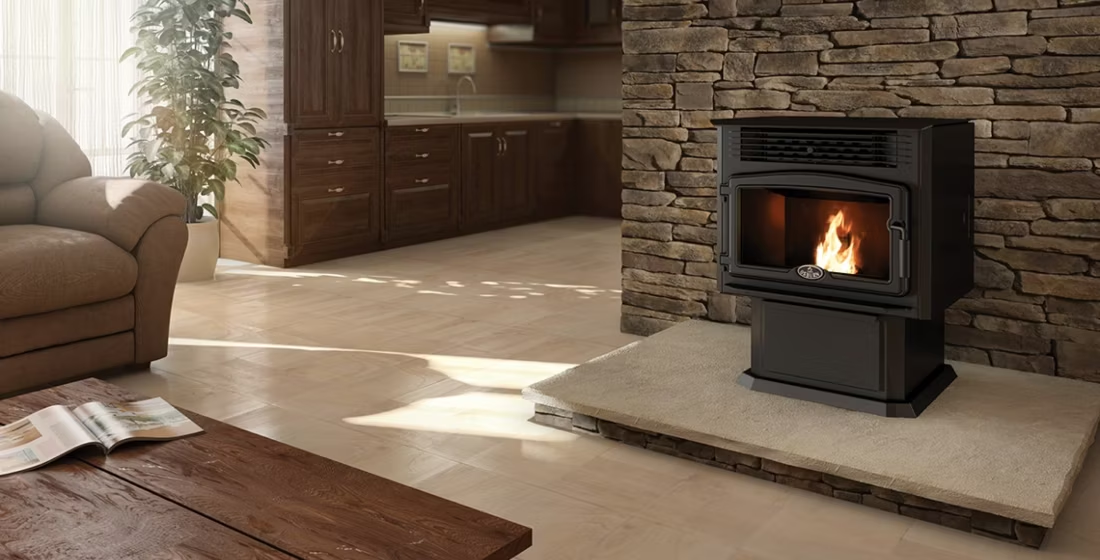
Spring Valley Village doesn't need a furnace running all winter—but the right pellet insert gives you clean, low-ash warmth on the nights that do turn cold, plus backup heat when the Gulf Coast grid gets shaky. We'll match you with a trusted local dealer.
Every Project Starts From One of These Five Situations
A supplemental heat source for one of the mildest heating climates in the country.
Spring Valley Village sits at just 70 feet of elevation inside Harris County's Memorial-area villages, with an average winter low around 44°F and only about 1,222 heating degree days a year—a fraction of what a place like Duluth, MN or Fargo, ND racks up in a single cold snap. That means pellet stoves here rarely function as a home's primary heat source. Instead, homeowners in this pocket of Houston install them for a warm, glowing focal point in a den or sunroom, low-maintenance supplemental heat during the handful of genuinely cold nights each winter, and—increasingly—as backup warmth for the kind of winter freeze events that have caught the Gulf Coast off guard in recent years.
There are no local air quality restrictions or burn curtailment periods in Harris County, so a pellet appliance here can run whenever you want it without the yellow/red curtailment days that wood burners face in more congested air basins. Regional pellet brands like Forest Energy and Lignetics are carried by Houston-area hearth dealers, and because pellet appliances need an electrical outlet to run the auger and blower, the appliance is only as reliable as the local grid—CenterPoint Energy and Entergy Texas both serve this area, and both have had multi-day outages during major storms. A local dealer can talk you through battery backup options so a pellet insert still functions when it's needed most.
Three steps. No salesperson until you're ready.
Tell us about your project
Your zip code, your situation, and the fuel you're leaning toward—or let the answers point you to one.
See what's actually available
The brands dealers within 100 miles genuinely carry—real options, never a catalog mirage.
Get your dealer & Project Guide
A trusted local dealer, plus the free Project Guide & Parts List that names every component of the job.
Frequently Asked Questions
How much does a pellet stove or insert cost to install in Spring Valley Village?
Most pellet installations in this part of Houston fall in the $3,000 to $6,000 range for an insert going into an existing masonry fireplace, since the chimney is already in place and the work is mostly a liner and electrical hookup. A freestanding pellet stove in a room without an existing fireplace runs a bit higher once venting through an exterior wall and a new hearth pad are factored in. Because Spring Valley Village is such a small, dense incorporated city, most homeowners are working with existing fireplace openings from the original build, which keeps costs toward the lower end. A local dealer will give you a firm number after seeing your fireplace or the room you're heating.
Does a pellet stove even make sense in a climate this mild?
It's a fair question—with only about 1,222 heating degree days a year and winter lows averaging 44°F, Spring Valley Village isn't a place where anyone needs a pellet stove to survive January the way a homeowner in Bozeman, MT does. Here, pellet stoves are installed for supplemental heat on the coldest nights, for the ambiance of a real flame without wood mess, and increasingly as a hedge against the multi-day freezes—Winter Storm Uri in 2021 being the obvious example—that have hit the Gulf Coast harder than the local grid was built for. If you're looking for whole-home heat, gas or electric zone heating usually makes more sense here; if you want a warm focal point that can also carry you through a cold snap, pellet fits.
What size pellet stove do I need for a Spring Valley Village home?
Given how few genuinely cold days this area sees, most homeowners here are better served by a small to mid-size pellet insert (rated for 1,000–1,800 square feet) than a large whole-home unit—you're heating a den, a great room, or a sunroom on cold nights, not fighting single-digit temperatures for months. Oversizing is the more common mistake locally, since sizing guides are usually written for colder climates. A local dealer can size the unit to the specific room you want warm rather than the whole house.
Where can I buy pellets in Spring Valley Village?
Forest Energy and Lignetics are the two regional pellet brands most commonly stocked by Houston-area hearth dealers, and you'll also find bagged pellets at larger home improvement and farm supply stores around the Memorial and Spring Branch area. Pricing in the Gulf Coast region typically runs a bit higher than in pellet-producing states in the Pacific Northwest or Southeast, since the product is trucked in rather than milled locally—budget roughly $250-$350 per ton depending on the brand and softwood-vs-hardwood blend. Because burn season is short here, most households only need a few bags to a pallet per winter rather than a season's worth of stacked ton bags.
Do I need a permit to install a pellet stove in Spring Valley Village?
Yes—as an incorporated city, Spring Valley Village requires a building permit for a new fireplace insert or freestanding hearth appliance, separate from unincorporated Harris County's process. Because the city is small, permitting is usually handled directly through the city's building department, and most hearth dealers who work regularly in the Memorial Villages area will pull the permit and schedule the inspection as part of the installation rather than leaving that step to you.
Will my pellet stove work if the power goes out?
Not on its own—pellet stoves rely on an electric auger to feed fuel and a blower to circulate heat, so a standard unit shuts down the moment the power does. That's an important distinction for Spring Valley Village specifically, since CenterPoint Energy's system has had extended outages during recent hurricanes and winter freezes. If backup heat during an outage is part of why you're considering a hearth appliance, ask your local dealer about battery backup packs sized for pellet stoves, or consider pairing the install with a small home generator. A wood-burning appliance is the more traditional zero-electricity backup option if that's the priority.
Pellet stove vs. a real wood-burning fireplace—which fits better here?
Houston-area homes have easy access to oak, pecan, and mesquite, and plenty of homeowners already burn these for backyard smoking, so firewood isn't hard to come by locally. But wood storage in this humid Gulf climate is a real drawback—stacked cordwood invites termites and mold faster here than in drier regions. Pellet fuel comes bagged, stores cleanly in a garage, and produces a fraction of the ash of a mesquite or oak fire. If you like the ritual of tending a wood fire and have somewhere dry to store it, wood still has appeal; if you want push-button convenience without the pest and moisture concerns, pellet is the lower-maintenance choice for this climate.
Pellet stove vs. gas fireplace—which makes more sense in this climate?
CenterPoint Energy provides natural gas service throughout much of the Spring Valley Village and Memorial area, and for a climate with only 1,222 heating degree days a year, a gas fireplace with instant on-off control is genuinely well suited to occasional-use heating—you're not tending a hopper for a fire you'll only want for a couple of hours. Pellet still wins for homeowners who want a real flame with a wood-fire look and don't have gas service readily available to their fireplace location, or who like the idea of a biomass fuel source rather than a fossil fuel. Many local dealers can walk you through both side by side before you decide.
How much maintenance does a pellet stove need in a climate like this?
Less than you'd think, and less than a wood stove requires. Plan on emptying the ash pan every few burns, a deeper cleaning of the burn pot and heat exchanger a few times per season, and an annual professional service to check the auger motor, blower, and venting—usually $150-$200 through a local hearth service company. Because Spring Valley Village's burn season is short, most units here see light seasonal use rather than months of daily fires, which means less wear on the auger motor and fewer cleanings needed than in colder climates where a stove runs from October through April.
Why is a fireplace insert so efficient?
An insert does two things: it seals the chimney completely, so you stop losing air you already paid to heat, and it radiates warmth into the room through the firebox and glass. Most add a heat-exchange fan that pulls cool room air underneath, wraps it around the hot firebox, and pushes it back out warm. Your home is more efficient before you've even lit the first fire.
How often does a pellet stove need cleaning?
A clean pellet stove is a happy pellet stove. Plan on cleaning the burn pot about once a week when you're burning regularly—ash and clinkers gum up the air holes just like a pellet barbecue. Most pellet stove problems trace back to skipped cleaning that nobody explained up front. Some designs make it easy with a trapdoor burn pot: pull a lever and the gunk drops into the ash pan.
Can I install a fireplace myself?
If you're putting a fire in your house on purpose, it's best to work with an expert. Unless you're genuinely experienced in framing, gas line, vent pipe, and the national code on clearances to combustibles, have a professional do it—and ideally the same company that sells you the fireplace, so warranty, service, and liability all live under one roof.
How much should I budget for a fireplace?
For an average home—covering the fireplace, the vent pipe, and basic installation—a budget between $3,900 and $5,500 gives you a lot of options across wood, gas, and pellet. By the time you add finish work, gas line, and electrical, the average complete installation lands between $5,000 and $12,000 all-in. In a remodel or new build, a good rule is to put about 2.5% of the total project cost toward the fireplace.
Nearby Dealers
Hearth shops serving Spring Valley Village and the surrounding area. Every listing shows whether it is a WhyFire partner, a dealer we have verified as authorized for the brands we recommend, or a local business carrying hearth products. No manufacturer pays for placement. How we verify dealers →
EarthCore Industries
Patio 1
Tru Lite Gas Products
USA Supreme Services, LLC
All Thingz U Need Inc
South Texas Brick
Patio 1
Cunningham Gas Products
The Fire Box Inc.
Creekstone Custom
Creekstone Outdoors
Pellet Brands Stocked Around Spring Valley Village
Manufacturers will point you to the nearest stocking dealer.
Find your pellet stove in Spring Valley Village.
Tell us a bit about your home and we'll match you with a trusted local dealer and send over your free Project Guide & Parts List—a clear plan for your pellet project, including the exact parts and vent kit you'll need.
Find Your Fireplace →