
Keep Your Family Warm and Safe—No Matter What
Santa Rita Ranch winters rarely demand a wood stove for survival heat—but plenty of homeowners here still want the real thing. We'll help you figure out if it fits your home, and connect you with a dealer who actually installs them nearby.
Every Project Starts From One of These Five Situations
Wood heat isn't essential here—but it still has a place.
Santa Rita Ranch sits in Williamson County at just over 1,000 feet elevation, in climate zone 2A—hot and humid, with an average winter low around 36°F and a mild, short heating season overall. Compare that to a place like Fargo, ND, which has a heating season roughly four to five times as long and demanding, and it's clear why wood heat is optional here rather than essential. Most winters bring a handful of nights near freezing and nothing close to the sustained cold that makes a wood stove a lifeline. Winter Storm Uri in February 2021 was the exception that proved the rule—a rare multi-day freeze that knocked out grid power across Williamson County and reminded a lot of homeowners that a wood-burning appliance is one of the few heat sources that doesn't care whether ERCOT is having a bad week.
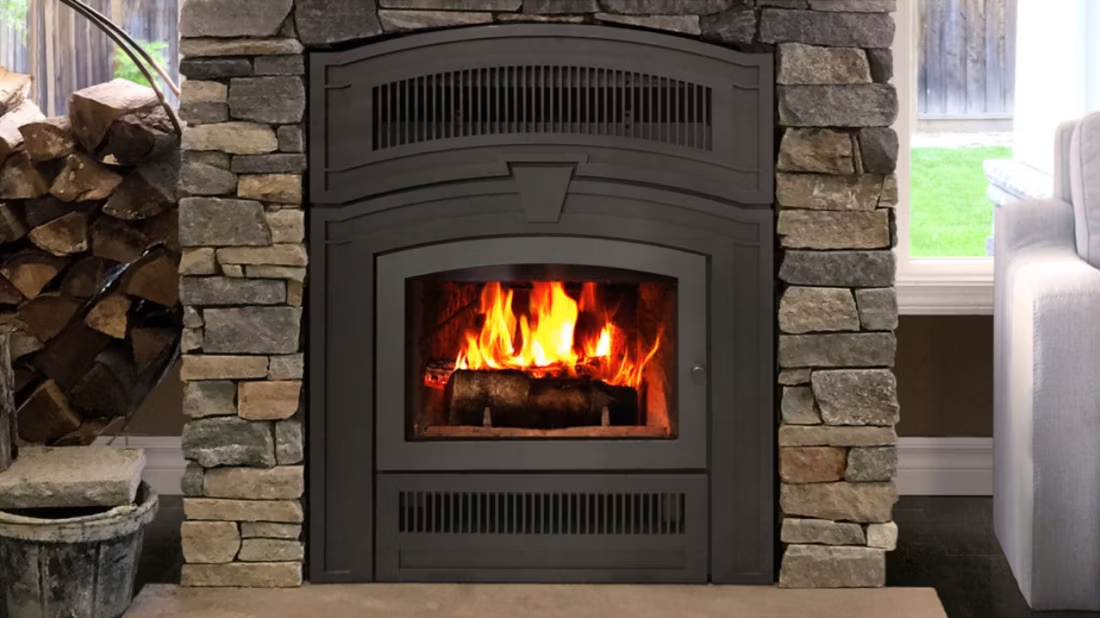
Because Santa Rita Ranch is a newer master-planned community—most homes here were built after 2016—very few properties came with a masonry fireplace and chimney already in place. Builders typically default to gas log sets or no fireplace at all, which means a wood-burning stove or fireplace is almost always a deliberate, custom addition rather than a retrofit of something that was already there. The homeowners who go this route usually aren't chasing whole-house heat; they want the smell of oak or mesquite burning on a cool evening, a backup heat source that works without power, or a real fire to match the ranch-style backyard. It's a smaller market than in Central Texas cities with older housing stock, but local hearth dealers serving the Georgetown-Liberty Hill-Austin corridor do carry and install EPA-certified wood stoves and zero-clearance wood fireplaces for exactly this reason.
Three steps. No salesperson until you're ready.
Tell us about your project
Your zip code, your situation, and the fuel you're leaning toward—or let the answers point you to one.
See what's actually available
The brands dealers within 100 miles genuinely carry—real options, never a catalog mirage.
Get your dealer & Project Guide
A trusted local dealer, plus the free Project Guide & Parts List that names every component of the job.
Frequently Asked Questions
How much does a wood stove or fireplace installation cost in Santa Rita Ranch?
Because most Santa Rita Ranch homes don't have an existing chimney, a wood-burning install is usually a full build-out rather than a simple insert swap. In the Austin-Georgetown market, that typically runs $5,000 to $10,000 for a freestanding EPA-certified wood stove with new Class A chimney pipe run through the roof, or a bit more for a zero-clearance wood-burning fireplace built into a new hearth wall. Homes with an existing masonry fireplace—rare in this neighborhood but not unheard of on older county lots nearby—can install a wood insert for less, often $4,000 to $7,000, since the chimney already exists.
Does a wood stove actually make sense for a Santa Rita Ranch home?
For most of the year, no—not as your primary heat source. With an average winter low around 36°F and a mild, short heating season overall, the HVAC system in a typical Santa Rita Ranch home handles the vast majority of winter comfortably. Where a wood stove earns its keep here is as supplemental or emergency heat: something that keeps a room warm during a genuine cold snap or grid outage like the one Central Texas saw in February 2021, and something that adds real ambiance the rest of the year. If you're mainly after daily convenience heat, a gas fireplace is the more common and more practical choice for this climate.
What permits do I need to install a wood-burning fireplace here?
Santa Rita Ranch is unincorporated, so building permits for a new wood-burning appliance typically run through Williamson County's development services office rather than a city building department, unless your section of the community falls inside Georgetown's or Liberty Hill's extraterritorial jurisdiction—worth confirming before you start. Any new stove needs to meet current EPA New Source Performance Standards for wood heaters, and your installer will typically pull the permit and schedule inspection as part of the job. Since air quality concerns are minimal in this part of Williamson County, there's no local wood-burning curtailment program to worry about, unlike some higher-density or non-attainment areas.
What kind of firewood works best around Santa Rita Ranch?
Oak, pecan, and mesquite are the three woods you'll find most readily in Central Texas, and all three burn well in a stove or fireplace—oak for a long, steady burn, pecan for good heat output with a pleasant smell, and mesquite for a hot, fast-burning fire that's more commonly reserved for grilling and smoking than indoor heating. Because this region doubles as prime BBQ country, firewood suppliers around Williamson County are used to selling seasoned oak and pecan by the rick or cord, and most will deliver. If you're burning mesquite indoors, season it well past a year—it pops and throws sparks more than oak or pecan when it's not fully dry.
Are there burn restrictions I should know about in Williamson County?
Williamson County issues outdoor burn bans during drought conditions, typically in summer, and those bans are about open burning of brush and debris rather than indoor wood stoves or fireplaces—an EPA-certified stove venting through a proper chimney is not affected. That said, it's worth checking the county judge's current burn ban status before any outdoor fire use on your property, since Central Texas droughts can trigger bans with little notice. Indoor use of a properly installed and vented wood stove is unrestricted year-round.
What size wood stove should I get for a mild climate like this?
Given the low heating demand in Santa Rita Ranch, most homeowners are better served by a small to medium stove—generally rated for 1,000 to 1,800 square feet—installed to heat one main living space rather than sized to carry the whole house. An oversized stove in a mild climate like this one is a real problem: you'll end up damping it down so much to avoid overheating the room that it smolders and builds creosote instead of burning clean. A local dealer sizing the unit for your specific room, not your whole square footage, will steer you right.
Should I get a freestanding wood stove or a wood-burning fireplace?
Since most Santa Rita Ranch homes don't already have a masonry fireplace, the real choice is usually between a freestanding wood stove on a hearth pad and a zero-clearance wood-burning fireplace built into a framed wall. A freestanding stove is generally less expensive to install and radiates heat more efficiently into the room. A zero-clearance fireplace gives you a more traditional built-in look and can be designed into a new hearth wall during a remodel or build. Either way, you'll need a full Class A chimney run since there's no existing masonry flue to work with.
Wood vs. gas—which is the more practical choice in Santa Rita Ranch?
For this climate, gas is the more practical everyday choice, and it's why most builder-installed fireplaces in the community are gas log sets rather than wood-burning units. Gas lights instantly, needs no fuel storage, and matches the mild, short heating season here. Wood's advantage is narrower but real: it works with no electricity at all, which matters if you remember the 2021 grid failure, and it delivers the kind of real, crackling fire that some homeowners simply want regardless of how many degree-days the winter brings. A number of local homeowners end up with gas as their everyday fireplace and skip wood entirely—but for those who want the authentic experience or a true power-independent backup, wood remains available through Austin-area hearth dealers.
Where can I buy firewood near Santa Rita Ranch?
Firewood suppliers throughout the Georgetown and Liberty Hill area sell seasoned oak and pecan by the rick or cord, with delivery common given how spread out Williamson County properties tend to be. Expect to pay in the range of $250 to $400 per cord for well-seasoned oak, with pecan running similar or slightly less. Because Central Texas has a strong BBQ and smoking culture, firewood sellers here are plentiful compared to areas where wood heat isn't part of the local economy—you're just as likely to find your supplier through a smokehouse or feed store as through a dedicated firewood yard.
Why is my open fireplace making my house colder?
Open fireplaces suck—literally. As the fire burns, it consumes air your furnace already paid to heat and pulls it out through the chimney, so the house is actually colder after the fire goes out than before you lit it. An insert fixes this: it seals the chimney, puts fixed glass across the front, and turns that hole in your house into a real heat source.
Why won't my new wood stove get going like my old one?
New wood stoves are 70%+ efficient, so far less heat goes up the flue—which also means less draft to get a fire established. The rule: build a genuinely hot fire for about 45 minutes before you choke it down. Skip that and you get smoke in the room, creosote in the chimney, and a fire that never takes off. Most performance complaints trace straight back to this.
What is an in-home preview and do I need one?
It's a visit where a hearth professional measures your space, confirms the model you picked actually works in your home, and walks the specs—framing, gas line, venting, finish work—before anything is ordered. Some details you just can't know until you see the house. Never make a down payment without one; it's the single most-skipped step that burns buyers.
Can a fireplace actually lower my heating bill?
Yes—by creating a comfort zone. A furnace heats every square foot of the house just to warm the one room you're in; a gas fireplace on low burns roughly a sixth of the gas a typical furnace does. Set the furnace around 55–60 degrees as a baseline, then heat the rooms your family actually uses. Families who heat this way commonly save $20–$60 a month.
Nearby Dealers
Hearth shops serving Santa Rita Ranch and the surrounding area. Every listing shows whether it is a WhyFire partner, a dealer we have verified as authorized for the brands we recommend, or a local business carrying hearth products. No manufacturer pays for placement. How we verify dealers →
Gas Logs Express & Bbq
Georgetown Energy
Area – Georgetown, Tx
Parrish & Company Inc - Round Rock
Webco Distributing Company, Inc.
Quality Fire
Hoover True Value Hardware
Top Hat Chimney Sweeps
Find your wood fireplace in Santa Rita Ranch.
Tell us about your home and how you plan to use it, and we'll match you with a trusted local dealer serving the Georgetown and Liberty Hill area—plus a free Project Guide & Parts List with the exact components, including the vent kit, your project needs.
Find Your Fireplace →