
Warmth That Doesn't Depend on the Grid.
Mild North Texas winters don't call for a wood-burning workhorse, but a gas fireplace still adds real ambiance and gives Tarrant County homes a heat source that keeps working when the power doesn't. Find the right unit and connect with a trusted local dealer.
Every Project Starts From One of These Five Situations
Built for Mild Winters and Occasional Grid Trouble.
Sansom Park sits in Tarrant County's Cross Timbers country just west of Fort Worth along the Trinity River, at about 734 feet elevation. Winters here are mild by any national measure—Climate Zone 3A, a light winter heating load, and an average winter low near 35°F. Most homes lean on a central heat pump or gas furnace for day-to-day heat, and that same mild profile is why wood stoves and pellet stoves are essentially absent here; a cordwood setup built for a place like Bozeman or Duluth just doesn't have a job to do in Sansom Park. A gas fireplace fills a different role: ambiance on the coldest nights of the year and a zone-heat option for a living room without running the whole-house system.
The bigger reason gas fireplaces get installed in Sansom Park isn't the average winter—it's the outlier week. Like the rest of ERCOT-served North Texas, Sansom Park felt Winter Storm Uri in February 2021, when rolling blackouts left homes without electric heat for days during a rare hard freeze. Homes here are served by ONCOR Electric Delivery, with natural gas available through Atmos Energy across most of the city. A direct-vent gas fireplace with a battery-backup or self-powered ignition system keeps producing real heat and light even when the electric grid doesn't—a detail that matters more here than in most mild-winter cities.
Three steps. No salesperson until you're ready.
Tell us about your project
Your zip code, your situation, and the fuel you're leaning toward—or let the answers point you to one.
See what's actually available
The brands dealers within 100 miles genuinely carry—real options, never a catalog mirage.
Get your dealer & Project Guide
A trusted local dealer, plus the free Project Guide & Parts List that names every component of the job.
Frequently Asked Questions
How much does a gas fireplace installation cost in Sansom Park?
A gas insert dropped into an existing masonry fireplace—using the existing chimney with a stainless liner—typically runs $3,500 to $7,000 in the Sansom Park area, depending on the unit and whether a new gas line needs to be run from the meter. A new direct-vent gas fireplace built into a wall, more common in newer construction on the western edge of Fort Worth, runs closer to $6,000 to $10,000 once framing, venting, and gas line work are included. Local installers typically coordinate the gas line tie-in with Atmos Energy as part of the job, so you're not managing separate trades.
Can I convert my existing wood-burning fireplace to gas?
Yes, and it's a common project in Sansom Park's older ranch-style homes, many of which were built with a masonry fireplace that saw light use given the mild climate. A gas insert uses your existing chimney as the venting path with a liner, so the conversion typically runs $3,500 to $7,000 depending on the insert and whether gas service already reaches that side of the house. You keep the look of the original hearth and gain real, on-demand heat instead of a fireplace that mostly sat empty nine months of the year.
Do I need natural gas service, or can I use propane?
Atmos Energy provides natural gas across most of Sansom Park and the surrounding Tarrant County suburbs, so if your home already has gas for a water heater, range, or furnace, adding a fireplace is straightforward. Homes just outside the service footprint, or on larger lots at the edge of town, sometimes rely on propane instead, with a tank supplied by a regional propane company. Most gas fireplace models can be set up for either fuel—your installer configures the orifice and regulator for whichever gas you have.
Will my gas fireplace keep working if the power goes out?
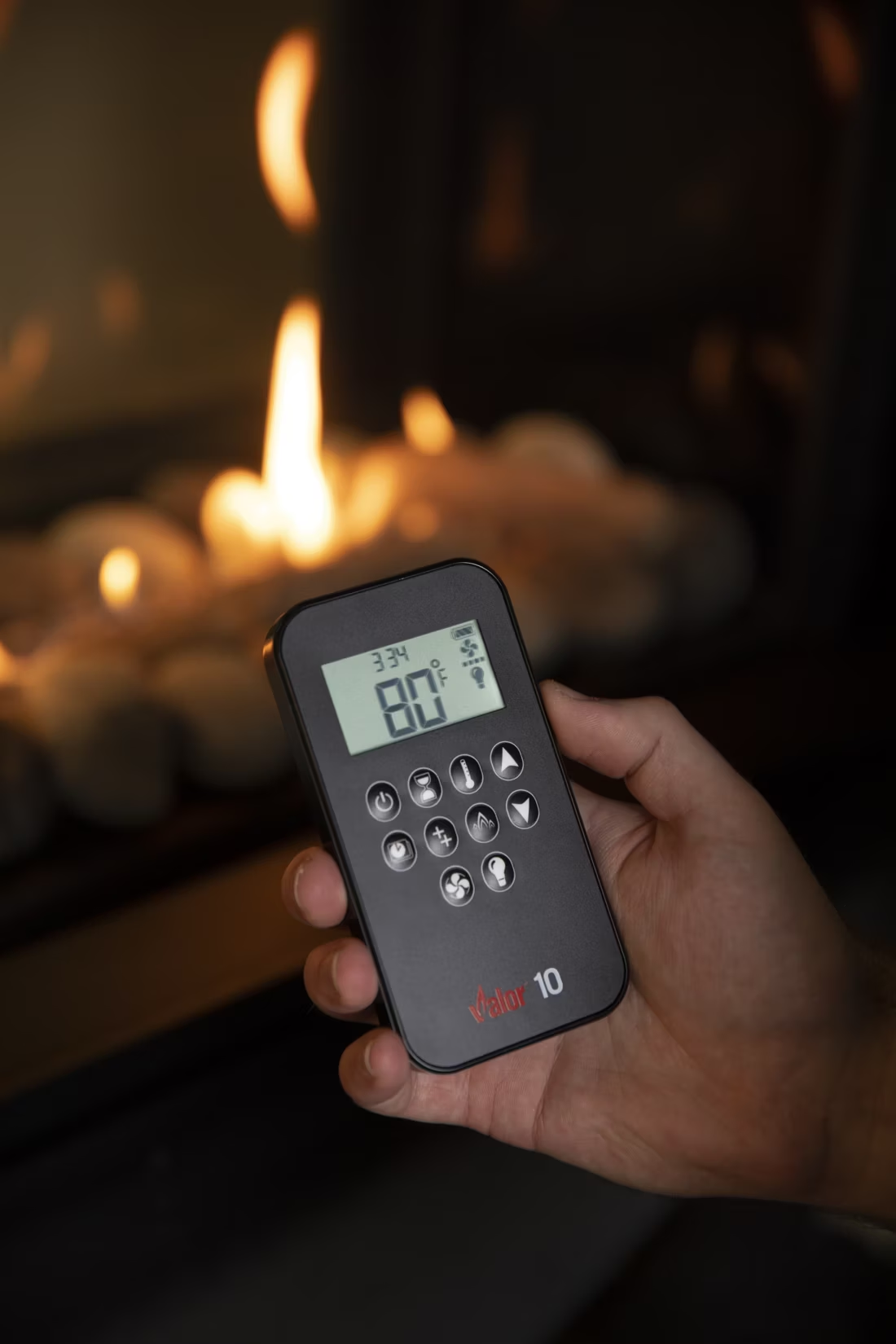
Most modern gas fireplaces will, which is exactly why they get installed here. Units with intermittent pilot ignition (IPI) run on AA batteries that kick in the moment power drops, so the fireplace still lights on demand. Valor's gas fireplaces go a step further—the pilot's thermocouple generates its own electricity, so there's no battery to remember or replace, ever. For a city that lived through the ERCOT blackouts during Winter Storm Uri, that distinction is worth asking about when you're comparing units with a local dealer.
What's the difference between a gas fireplace, insert, and stove?
A gas fireplace is a fully built-in unit framed into a wall, typically used in new construction or a remodel. A gas insert is sized to slide into an existing masonry firebox, which fits a lot of the older housing stock around Sansom Park. A gas stove is a freestanding cabinet unit, useful in a room without any existing fireplace opening. For most homeowners here with an existing hearth, an insert is the simplest upgrade; for a new room or addition, a built-in fireplace or freestanding stove makes more sense.
Do I need a permit to install a gas fireplace in Sansom Park?
Yes—a building permit through the City of Sansom Park is required for a new gas fireplace or insert, and the gas line portion of the work needs to be done by a licensed gas-fitter, typically pulled under a separate mechanical or gas permit. Most established hearth dealers in the Fort Worth area handle this coordination directly, scheduling the Atmos Energy tie-in and the city inspection as part of the installation rather than leaving it to the homeowner.
Vented vs. vent-free gas fireplaces—which does Texas allow?
Texas permits both. Vented, direct-vent units draw combustion air from outside and exhaust it back outside through sealed venting—they're the safer, more universally recommended choice and the standard pick for a primary living space. Vent-free units burn directly into the room and are legal here, but they come with strict room-sizing rules and typically include an oxygen depletion sensor. Given how mild Sansom Park winters run, a small vent-free unit can make sense as pure supplemental warmth in a den or bonus room, but for a main living area, most local dealers steer homeowners toward direct-vent.
How often should a gas fireplace be serviced?
Plan on an annual inspection, ideally before the first cold snap hits in November or December. A technician checks the burner, pilot assembly, venting, and gas connections, and cleans the glass and interior. It's a lighter lift than wood-stove chimney sweeping—most local gas service providers charge in the $150 to $250 range for a standard annual visit—but skipping it is still the main way small issues turn into no-heat calls on the one week a year you actually need the fireplace.
Should I get a gas fireplace or an electric fireplace insert in Sansom Park?
Wood heat is essentially a non-factor here given how mild the winters run, so for most Sansom Park homeowners the real choice is gas versus electric. Electric inserts need no gas line and no venting, install in under an hour, and run on power from ONCOR or the local electric co-ops at roughly $0.13 to $0.1377 per kWh—a good fit for a bedroom, apartment, or secondary room where real heat output isn't the goal. Gas delivers noticeably more heat, a more convincing flame, and—with battery-backup or self-powered ignition—keeps working during a grid outage, which electric units cannot do. For a primary living room, gas is usually the better investment; for supplemental ambiance elsewhere in the house, electric is hard to beat on cost and simplicity.
Is my gas fireplace wasting gas?
If it was installed more than 15 years ago, probably. Older gas fireplaces keep a standing pilot light burning all the time, and that little flame can cost a couple hundred dollars a year. Newer models use pilot-on-demand ignition—the pilot lights only when you use the fireplace and goes out when you turn it off.
Can I put a TV above my fireplace?
Yes—with an asterisk. Fireplaces are hot and TVs don't like heat. Either put a mantel between them to deflect rising warmth, or choose a fireplace with heat-management technology that creates a cool zone on the wall above—the wall stays around 125 degrees, barely warm, while the room still gets full heat. If you like clean lines and don't want a mantel, heat management is the answer.
How much should I budget for a fireplace?
For an average home—covering the fireplace, the vent pipe, and basic installation—a budget between $3,900 and $5,500 gives you a lot of options across wood, gas, and pellet. By the time you add finish work, gas line, and electrical, the average complete installation lands between $5,000 and $12,000 all-in. In a remodel or new build, a good rule is to put about 2.5% of the total project cost toward the fireplace.
Does a fireplace add value to my home?
On average, a fireplace adds back to the home about the same amount you spent installing it. Add the monthly savings from heating the rooms you actually use instead of the whole house—often hundreds of dollars a year—and the value case is strong before you even count what a fire does for how your family uses the room.
Nearby Dealers
Hearth shops serving Sansom Park and the surrounding area. Every listing shows whether it is a WhyFire partner, a dealer we have verified as authorized for the brands we recommend, or a local business carrying hearth products. No manufacturer pays for placement. How we verify dealers →
Rodak's Coffee And Bbq Grills
Texas Building Supply
Brothers Supply Co.
Alliance Materials, Inc.
Fireside Innovations
David's Stove Shop Inc
Acme Brick Tile & Stone
Bbq Outfitters
Start your gas fireplace project in Sansom Park.
Tell us a bit about your home and we'll match you with a trusted local dealer and send over a free Project Guide & Parts List—the exact parts, including the vent kit, for your Sansom Park gas fireplace project.
Find Your Fireplace →